Tango 1936
Dag Stenvoll y Michael Lavocah · 22 de jul de 2020 · 3:27:16
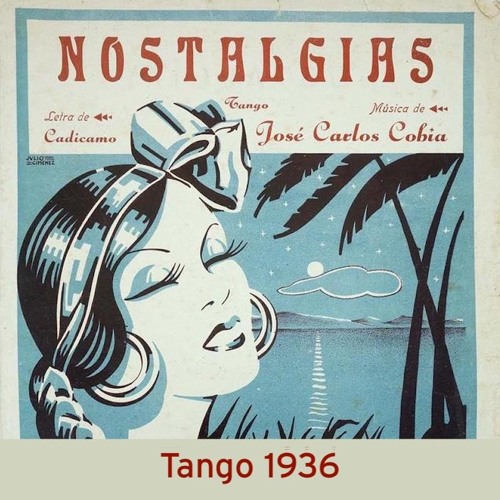
1936 sits in the shadow of Carlos Gardel's death the previous year: his body only reached Argentina in February and his last film opened in April, so his loss is still being processed as the new dance-orchestra sound keeps building toward Juan D'Arienzo's breakthrough the following year. D'Arienzo himself has an overlooked, joyful year: 24 sides, all with Rodolfo Biagi on piano, almost half of them waltzes, and one recording, Don Esteban, for which two completely different takes survive. Canaro is turning out around 50 titles a year, including novelty 'tangón' numbers, Fresedo is building a smaller, jazz-influenced band around harp and vibraphone, and Julio De Caro is experimenting with a thirty-piece 'international' orchestra and the all-star studio quintet Los Virtuosos. The emotional centre of the episode is Nostalgias: nearly cut from a 1935 Gardel tribute show for being too hard to sing, it only became a hit after Charlo heard it performed in a Buenos Aires nightclub and took it to the radio.
0% escuchado
faltan 3:27:16
Lo que sigue, como se publicó
Tango 1930Episodio 15 · 5 de ago de 2020 · 3:47:59Lo que este episodio dio a Tangopedia
Datos dichos en el episodio, cada uno citado al minuto en que se dice.
1936 is the bridge year between 1935, when Gardel's death opened the door to the new tango dance movement, and 1937, when D'Arienzo makes it mega big.
Cabral is a fine but overly refined voice for D'Arienzo, a long way from what the band gets the following year with singer Alberto Echagüe.
Carlos Gardel's body, who died in a plane crash in mid-1935, did not reach Argentina until February 1936, and his final film only opened in April, so his death still cast a long shadow over the year.
D'Arienzo recorded 24 sides in 1936, all with Rodolfo Biagi on piano and only four with a vocalist; almost half were waltzes, and across his 1935-36 two-sided discs there isn't one with a tango on both sides, because as a dance band he knows a waltz fills the floor.
Most dance bands recorded mostly instrumentally in the early-to-mid 1930s, with Canaro and Lomuto as exceptions; even Troilo's first 1938 disc was instrumental on both sides, and he only switched to vocals in the second half of that year.
Capítulo · 7:40
The violinist who tuned himself like a cello
One of D'Arienzo's violinists made his instrument sound like something else entirely.
D'Arienzo's first record of 1936, chosen for the bubbling, understated backbeat Biagi plays on piano.
Solo en el episodio
♪ Música · 0:03 · La letra, en la página del tango

The one milonga D'Arienzo recorded this year, paired on the B-side with La Guitarrita.
Verlo bailado · 37
One of D'Arienzo's fastest tangos of the period, with strong syncopation.
Solo en el episodio

A less-often-played D'Arienzo waltz, chosen deliberately instead of the usual top half-dozen; unusual for stressing the second beat of the bar.
Verlo bailado · 5

D'Arienzo's final record of the year; an exciting, dust-kicking number with wild violin slides.
Verlo bailado · 11

The B-side of D'Arienzo's last 1936 disc, quite fast though not his fastest.
Verlo bailado · 26
A tango chosen to show Donato's lighter, more playful sound next to D'Arienzo's harder edge.
Solo en el episodio
One of Stenvoll's favourite waltzes of all time, chosen for its joyful but bittersweet lyric and its audible piano accordion.
Solo en el episodio

A tango about waking up from illusions, its mood turning dark at the chorus.

A follow-up to Canaro's novelty 'tangón' rhythm, tried out at his theatre shows before being recorded; less exciting than the original.
Solo en el episodio
Verlo bailado · 3
Capítulo · 47:06
The song almost no one wanted
This tango was nearly cut from the show before it was even recorded.
Charlo's version, backed by guitars, is the one that made the song a hit after he picked it up from a nightclub performance.
Solo en el episodio
♪ Música · 0:01 ·
Played as a non-tango cortina: a flamenco with a guitar backing.
Solo en el episodio
Chosen to showcase Firpo's thick, wind-rich orchestral sound.
Solo en el episodio

A Firpo waltz prized for its groovy, deep-vibrato violins.
Verlo bailado · 7

Opens with bells; from Caló's still-complex, De Caro-influenced 1936 sound, before he simplified his style in the early 40s.
Verlo bailado · 3
A rarely-heard version by Simone herself rather than the better-known Lomuto recording, chosen for her darker, captivating voice.
Solo en el episodio

One of only four Fresedo sides this year, a quiet period for the band despite Ray already being its singer for several years.
Verlo bailado · 3

A solo recording by the actor-singer, whose phrasing reminded the hosts of Enrique Campos.
♪ Música · 2:46 · La letra, en la página del tango
Verlo bailado · 34
De Caro's own experimental 'Orquesta Melódica Internacional' version of a tango better known from D'Arienzo and Pugliese, with drums, trumpet and modulation.
Solo en el episodio

A surprisingly danceable De Caro waltz from this experimental period.
A creative, twice-modulating De Caro milonga, hard to find in good sound quality; the title references the folk-song dueling tradition, not counterpoint.
Solo en el episodio
Capítulo · 1:46:24
The dream quintet nobody actually voted for
Fans picked tango's five best musicians. Two of them said no.
Julio De Caro's own composition, played fast by the all-star studio quintet; later famous in Pugliese's 1944 recording.
Solo en el episodio
Chosen to showcase Ciriaco Ortiz's intimate, introverted bandoneón tone in his usual trio setting.
Solo en el episodio
♪ Música · 2:46 ·

A very sad, sentimental number chosen to close the night on that mood.
One of only two 1936 recordings of La Cumparsita (the other Japanese); a slow-burning version with a dense bandoneón variation.
Solo en el episodio
♪ Música · 5:37 · La letra, en la página del tango
Capítulo · 2:06:24
A sun that burns if you get too close
A Polish tango became the secret theme of a Soviet film about Stalin.
A huge Polish tango hit of 1936; its Russian-language version, 'Weary Sun', later became the theme of the Stalin-era film Burnt by the Sun.
Solo en el episodio
Chosen to showcase Aston, a hugely prolific Polish singer, during the Polish-tango segment of the show.
Solo en el episodio
♪ Música · 3:13 ·

One of Stenvoll's all-time favourite Fresedo tracks, with cascading falling melodies and real emotion from Ray, despite poor surviving sound.
Played as a listener quiz: a German foxtrot by a European band, known in Argentina under the localised title Amor en Budapest.
Solo en el episodio
A quartet the Victor label put together to play in the old quartet style, since everyone else was doing it too.
Solo en el episodio
♪ Música · 5:16 ·
One of two nice 1936 Caló waltzes, chosen over a Shirley-Temple-dedicated one.
Solo en el episodio
♪ Música · 1:56 ·
A Canaro waltz with an unusually long introduction, often shortened on later CD transfers; listeners heard an echo of Waldteufel's European waltz style in it.
Solo en el episodio

A favourite Firpo track the host couldn't let the year pass without playing; its 1936 date was double-checked live against discography sources.
Capítulo · 2:38:47
Two takes, one mistake
For decades, the world knew the wrong version of this D'Arienzo record.

A famous D'Arienzo track used in the film The Tango Lesson; its 1936 date was confirmed live against discography sources after a listener question.
La letra, en la página del tango
Verlo bailado · 330
Capítulo · 2:50:00
Why most of old tango's master discs are gone
In the 1960s, the record companies destroyed their own tango history.
The conventional, tamer take, the one most collectors outside Argentina knew for decades.
Solo en el episodio
♪ Música · 3:22 ·
The looser, jazzier first take, actually the one issued on the original 78 but rarely heard outside Argentina until recently.
Solo en el episodio
♪ Música · 3:23 ·
Praised by DJ Félix Picherna as a 1936 D'Arienzo track worth playing more often.
Solo en el episodio
The last tango before the closing waltz set, teased only as 'something irresistible'.
Solo en el episodio
♪ Música · 2:22 ·
Played as a non-tango closing bonus, a reminder that 1936 was a strong year for popular song generally.
Solo en el episodio
Seguir por todos los episodios
Tango By Year es de Dag Stenvoll y Michael Lavocah, publicado aquí con su permiso. El audio se reproduce desde SoundCloud.