Tango 1930
Dag Stenvoll and Michael Lavocah · 2020-08-05 · 3:47:59
1930 looks at first glance much like 1929 — another year of new, Julio De Caro-influenced sextets chasing a more sophisticated sound — but cracks are showing: Argentina's economy is starting to feel the Great Depression, the first band loses its recording contract, and a military coup on 6 September is cheered in the streets, the first of six that would follow over the decades. Canaro records an astonishing 330 sides this year, Pedro Maffia and Juan Maglio both have standout years, and several later-famous bandleaders (Carlos Di Sarli, Luis Petrucelli, the bandoneonist Minotto) are just getting started on their own after splitting from bigger orchestras. Two of the night's best stories have nothing to do with the hits: a would-be supergroup, the Vardaro-Pugliese sextet, flops completely and leaves violinist Elvino Vardaro pawning his bow to afford the train fare home, while Julio De Caro makes his only-ever recording of La Cumparsita, a sprawling four-and-a-half-minute arrangement that needed a bigger disc pressed just to fit it.
What this episode gave Tangopedia
Facts said in the episode, each now cited to the minute it is said.
1930 looks at first glance very similar to 1929 — an era of many new bands, especially Julio De Caro-influenced sextets trying to make more sophisticated music — though the Depression's effects are only just starting to show.
The first clear sign of the coming crisis is that bandleader Cayetano Puglisi — later first violin in D'Arienzo's 1940s orchestra — loses his recording contract in 1930.
On 6 September 1930 the Argentine government is overthrown in a military coup; people cheer the soldiers into town, not realising it is the first of six coups and the start of decades of political instability.
Donato came from a family of musicians: his brother Ascanio played cello and another brother, Osvaldo, played piano in the band.
Most bands at this time don't have their own vocalist; instead each record label supplies a house singer who sings the estribillo for every band on that label. On Brunswick in 1930 that singer is Luis Díaz.
Records played · 44
Transcript
Transcribed by machine from the audio, then punctuated; names may be misheard. Tap any line to hear it. The episode is in English, and so is its transcript.
Mike, that was the times. How are you? I see I have your favorite T-shirt on. Well, we're back in the era of the sextets. Yes. The golden age of the sextets. Yes. So I get to wear my sextet golden age T-shirt, 27 to 31. Yeah. How are you? How are you, Doug? I'm good. I'm good.
And it's been a joy to prepare for this night's program. I mean, 1930 is such a great year for tango, as we always say. It's the heart of the first golden age. So the effect of a world economic depression hasn't really hit Argentina yet, has it? So we're still going strong. Not really. Not really.
At first glance, the year is very similar to 1929, an era of many new bands. It's like De Caro has buddied many children who were thinking, oh, let's make sophisticated music where all the different members of the band get to do something. So there's lots and lots of these new bands trying to make interesting music. There aren't that many big changes, musically speaking. Not at first glance, anyway. Minotto, Canaro's style band, a neon player, he's left him and he's formed his own band, so that's a change. And Donato's and Sirigio have split, so now Donato's forming his own band. So on the surface, things are much the same. Look a bit closer and it's not quite so much the same.
I notice if I listen to Canaro from 29 and 30, 29's my favourite year. And the same with Le Muto. You were playing Happy Days Are Here Again as one of the warm-up songs. And that's like a, there's no problem with the depression song. That's what that song's about. The Depression is beginning to have effects. We see that the first band lose its contract in 1930, which is the band of Cayetano Pulisi, who's the first violin of the D'Arienzo Orchestra in the 40s. So that's a sign that things are going to change.
And, of course, there are big political changes in Argentina. The government's had to cut back a bit on public spending because of the Depression. So therefore everyone is very happy on the 6th of September when there's a military coup, the people cheer as the soldiers walk into town. Um, do you remember the story about Pugliese? Pugliese says that he went, he came home that day and his brother was having like a, an argument with his dad. And his brother was going, oh yeah, the military coup, it's great. And Pugliese's dad was going, no, it's not good. And those of you who know a little bit about Argentine history, you'll know that it wasn't the last coup in Argentina. There were six. So yeah, didn't work out quite so well for them. Yeah, so politically it was a biggest time. Yeah, very much so.
“Everyone is very happy on the 6th of September when there's a military coup. The people cheer as the soldiers walk into town.”
Uh, we'll listen to some of the best recordings from this year and some of the orchestras we know from later years, but some of them we don't know because in the coming crisis they lost their recording contracts. So it's an interesting year in that sense. And we really enjoyed 1929, didn't we? So it's, and I also feel it's a kind of, it's a follow-up on 29. It's not very different, but it's the same type. Yeah. Yes, very much. Really nice songs. And I'm afraid, I'm a bit afraid that, but my playlist is too long tonight because it's really difficult to narrow it down. There are so many bands I want to play.
I think everyone's missed you and they missed the show, Doug, so no one is going to be complaining that it's a long show. I've even had a private message from someone saying, I don't have to go to work tomorrow. I can stay up late. Inesh writes in the chat window, we go to 1 a.m. tonight. And that's British time, so that's 2 a.m. Yeah, okay, let's see. But let's get started. And I wanted to start, you mentioned Donato, and he was still having this companionship with Sirigio this year.
Yes, he changes during the year. They're both violin players. Sirigio falls in love with the woman singer that they've been working with, and they go off to Spain together. So it's a happy partying, very unusually for tango. Yeah. Um, well, I'm going to play two songs by Donato Sirigio. Madrugada, which is an instrumental tango. Yes, really nice one. I love the cello in this one. And Se Va la Vida with singer Luis Díaz. And this is interesting because it's a joint composition by the two. And uh, it's recorded by Donato some years later, and I find the arrangement is quite similar to the one, I think it's late 30s, recording by Donato.
So just to remind everyone that Donato was from a family of musicians. So the cellist that we'll hear is his brother Ascanio Donato. And the pianist as well is his brother Osvaldo. Cool. Family business. And he's recording on the Brunswick label. And mostly at this time, the bands don't have their own vocalist. But if the label has a vocalist, then he sings for all the bands. So Luis Díaz is working for Brunswick. And you'll see him singing on all the bands in the Brunswick label in that year, who happen to need an estribillista. We'll hear more of Díaz later, actually, because of this. But let's now listen to Donato Sirigio with Madrugada and Se Va la Vida.
An instrumental tango chosen for its cello line, from the partnership before the two leaders split.
A joint composition by Donato and his partner, recorded again by Donato alone some years later in a similar arrangement.
What about that? I love the blue notes in the violin. So in tango violin, there's always a lot of glissando, sliding from note to note, but quite slowly and in a blue way. And sometimes with a bit of portamento too, which is like putting an emphasis on the note when you arrive there. And for classical players, it's often a bit of a shock. But it's very expressive, isn't it? Yeah.

From Donato's second recording session ever as a solo leader, after the split; chosen to show the bouncy house piano style of the year.
Danced to it


An instrumental Donato solo recording showcasing the same bouncy piano feel, played by his brother Osvaldo.
Let's switch to Donato, because he went, like you said, they split up in spring and he recorded like 60 tracks just by himself the rest of the year from May and through the year. And I listened to it and it's really nice stuff and it's very different from the Donato that we know from later that's usually played with Malerba. So I want to play a song, a tango called Adelina, which is also with Díaz singing. And this is from his second recording ever on May 15. And then the instrumental Mi Sueño Dorado.
I love the also, I'm sure everyone could hear it, but the style of the piano accompaniment is very bouncy in these recordings. It really sort of gives you this feeling just from the way the piano is playing. And it's exactly the same in the Orquesta Típica Brunswick at the same time where the pianist is Antonio Polito. So it's not even the same pianist, it's just a style of the year that's trying to keep us happy. Nice. Let's get happier with Donato.
Drunken violin, you say, Michael. It is drunken. People love it. Look at the feedback on the chat window. And the cello. It's the Donato's brother who plays the cello. It's a family band, yeah. Ascanio on cello and Osvaldo on piano. And the bandoneon players, we're not sure who the first bandoneon was. It could be Miguel Bonanno, but there are two other musicians playing bandoneon there and they're not big names.
Yeah, I remember you said, I think it was in the 1929 program, that Donato kept the cello in the band for a long time. But uh, it gets kind of submerged as soon as the music gets more and more happy, you kind of lose the sound of the cello. But here you can really hear it, it's beautiful. Yes, the times change, don't they? If we think of D'Arienzo, that's not really a cello sound. So the cello later drops out of most bands, and then when Troilo puts a cello in his band in 1942, everyone thinks it's this huge innovation. Of course, Donato and Pedro Maffia especially were doing it already at this time. Yeah, we'll get back to Maffia a bit later.
But now let's go to Orquesta Típica Brunswick, which you mentioned that they have the kind of same kind of piano sound. This bouncy piano that makes you feel happy and want to bounce a little bit. Yeah. And then I like the recordings. And I want to play the instrumental and Penado Catorce. And as a dancer, as you know, this from the D'Arienzo, a Chagwe version from 47, probably. Maybe Calo also, I think he recorded it. And the second song is, that's an instrumental. And the second song is Mosca Muerta, Dead Fly, with Luis Díaz again singing.
It's amazing. He's singing in all the bands and all the records. Well, it's easy for him to do because the singing is not too demanding. He just walks into the studio, you know, has his 30 seconds of fame and walks out again. Great job. So, Orquesta Típica Brunswick with El Penado Catorce and Mosca Muerta.
“He just walks into the studio, has his 30 seconds of fame, and walks out again.”

Known to dancers from D'Arienzo's 1947-ish Echagüe version; chosen to show the label's own house sound.
♪ Music · 0:01 ·
Another Luis Díaz vocal turn, played for laughs: Díaz sings for every band on the label.
Oh, love those violins. Easy to enjoy, isn't it? Yeah, it is. Really easy to enjoy. Yeah. So, we need to listen to some vocal tango, I think. Let's play some Carlos Gardel. Ah, I was wondering if we might get some Gardel tonight. Now what have you got in mind for us?
Well, I was thinking about uh his um milonga recording Tortazos. It's a very rare thing because there are not many milongas camperos at this time, so it's one of the few like milongas we have before 32, 33. Yeah, there are a handful. It's good to recognize that it exists as a form within the national repertoire. Yes, so there's Tortazos in 1930 and Soy Una Fiera, which I think is as early as 1926. All right. Yeah. We'll get back to that in the 1926 program. It'll be a difficult program, I think. Could be a difficult program.
Yeah, so but Gardel, yeah, he's singing with, backed by guitars obviously, that's what he's doing at this time. So he also has some uh, he sings with Canaro a few tracks, but I wasn't very impressed by those tracks. So no, well, they're two big stars with the same label. And I think there's eight songs overall where Gardel is backed by Canaro, and it's very much in that order, Gardel top, Canaro second. And I imagine that this came at the initiative of the record label. There's nothing really special about them, although there is a version of Je ne sais que me necho tus ojos, this famous waltz of Canaro, with Gardel singing it, and you could almost dance to that one, which, that's unusual, isn't it? It's not so easy to dance to Gardel. All right. Okay, let's listen to Gardel and Tortazos.

A rare milonga campera, backed only by guitars; chosen to show a genuinely angry, street-attitude side of Gardel.
♪ Music · 2:31 ·
That's a lot of street attitude for Gardel. He sounds almost like one of those really hardcore street singers. Gardel could be really angry. He had a very wide range in terms of his songs. Song with attitude, someone wrote. It is a song with attitude. A guy sees his ex with a toy boy, really, you know, with a posh guy, and she's taken on airs and graces, and now she's speaking French. And he says, so if I see you in the street, and he gets so angry, and he says, if I see you in the street with that thing on your arm, talking about the boyfriend, don't be surprised if I break your face with a punch. That's a tortazos, if I, you know, if I punch you because I can't stand it. Yeah, really serious attitude. Yeah, yeah, you hear that from his tone in his voice, even if you don't understand the Spanish words. Yeah. Uh, so PC someone says it's a hundred years ago, people. Yes.
Let's go to another musician, Carlos Marcucci. And we listened to one of his compositions before, and I think it was in 1950 program we listened to Mi Dolor, because he joined the De Caro orchestra as a bandoneon player. And here he is with his own típica, his own section and his own composition. I want to play it because it's his. I mean, we know this from a lot of different versions. I never heard this before, before this week. It's a really good band. Yeah. And it's interesting to see what he does with his own composition. Yeah. So, Carlos Marcucci, Mi Dolor is an instrumental.

Marcucci's own composition, played by his own típica after he left Julio De Caro's band; chosen because it's rarely heard in this original version.
Danced to it


♪ Music · 2:45 · The lyrics, on the song's page
Yeah, someone wrote in the chat window, finally, a song I already know. That's the truth about 1930. There's a lot of good music, but most of it we never hear at milongas because it's, uh, yeah. I guess there's 1200 songs as well. Yeah, so yeah, but I had, I know the feeling. Yeah, yeah, great. Uh, yeah, Marcucci's a great play, but I love the timing. I kept typing in the window, listen to the timing, and it. And time after time, there was this subtle play with the timing. That's what's special about this era, 1930, this era of the sextets. There were little bands that were experimenting in this way.
Yeah, and I typed wrongly in the chat window that it was an instrumental, but it was a singer, Roberto Diaz this time. So it's another Diaz that sings. Yes, so now we're on the Victor record label. And Roberto Diaz is singing with all the bands once again. Yeah.
Speaking of singers, there's another singer we've listened to before and liked, Ignacio Corsini. And he makes 16 recordings this year with guitar backing. And I want to play Botines Viejos. Old boots. Yeah, old boots. I think we listened to this earlier in an earlier program. It's the word song by Filiberto. Yeah, he's the composer as I recall. It is, yeah.
A Filiberto song with a funeral feel, backed by guitars; one of sixteen Corsini recordings this year.
It's that very funeral kind of feeling of the song. This is, it's still sad, but it's a different feeling with the guitarist backing. I love it. And Corsini's voice, the birds of Sicily singing. Mm-hmm.
Oh, Corsini. His voice just gets me every time. Yeah, and it's so characteristic. There's nothing like it. Nothing at all. And okay, Filiberto's interpretation was funeral, but the lyric gets you like a dagger when he says, okay, well, I didn't get what I wanted in life. It's no use. So I'll just stick myself in this corner, like this pair of old boots here. Seeing my dream die like old boots that never used again. It's heavy stuff.
What are you doing, Dag? We need cheering up. Yeah, let's go to Canaro. That's true. Is it Canaro next? Yeah, Canaro next. Oh, you've paced the program perfectly. We need some Canaro now.
Yeah, and he makes, in 1930, he makes astonishing 330 recordings. That's almost one recording every day. And it's not all time. Yeah, well, it's not, is it? Because it's like he records once a week, but he records seven or eight at a go, or twice a week. Let's say he goes in the studio twice a week. Yeah. And there's a lot of instrumentals, and there's a lot of vocals by Charlo or Ada Falcón. Yes, there's a lot also backing Ada Falcón, aren't they? Yeah.
And you talked in the 1929 program, I think it was, about his Serie Sinfonica, the first arranged music in tango. Actually, yes, he doesn't get the credit for it, but it truly is the first arranged music in tango. Yeah. And I want to play one of those from 1930, La Guitarrita, which has some really sweet piano playing. And we know the song from D'Arienzo recordings. Yeah, we know it from lots of bands actually, like Guitarrita is half a dozen, really enjoyable interpretation. But this is an interesting discovery, it's an early version. And then I play the waltz, Con tu Mirar, this is with Charlo singing.

An early version of a song known from many later bands (including D'Arienzo); part of Canaro's Serie Sinfónica, the first arranged music in tango, with unusually free piano from Luis Riccardi.
Danced to it
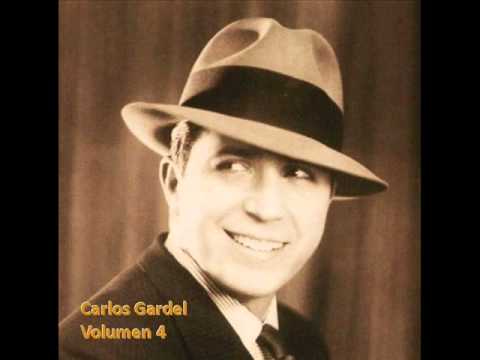

Played straight after the Serie Sinfónica track to show the contrast: the waltz puts every musician firmly back in a conventional dance-band role.
Danced to it · 5 of 6


♪ Music · 5:53 ·
Keep it like Charlo. It's the best. Is not the best one of the best, when I'm listening to him, he's the best. Yeah, one of the best orchestra singers without a doubt, really beautiful. And, um, when the waltz began it was so different to what we had before, wasn't it? It was really a big contrast between those two numbers. So if we can just remember how La Guitarrita, one of the Serie Sinfonica tracks, sounded, one of the interesting things about that is all the musicians had a lot more freedom and you could hear the pianist a lot more. The pianist is Luis Riccardi and he said when I joined Canaro it was, it cost me a lot. He said it was really hard work to adapt myself to the style of the orchestra. So for them it must have been very enjoyable to work on the Serie Sinfonica arrangements because they could play with more freedom and show more of what they could do. But as soon as we got to the waltz it's just back in your box, back in your box. Yeah, I can see that as a pianist, probably the first track is much more interesting to perform.
Yeah, yeah. Um, let's go to, uh, Ada Falcón, which you mentioned because she sang for Canaro, but, uh, she has one recording in 1930 without Canaro, just one recording, and that's the world's Contando Camino, where she's backed by guitars. So I want to play this one because it's kind of unusual. Yeah, very unusual. It's very special, yeah. Because most of these, it's very unusual for the situation we've got with Ada Falcón, where she's linked romantically and professionally with a band leader, with Francisco Canaro, and works almost exclusively with him. And that doesn't really happen. I guess with Libertad Lamarque it does because she marries happily, what's his name, Marano. And then when she needs a backing orchestra, he's the backing orchestra, but she still works with other people. Yeah, Ada Falcón has like this exclusive arrangement. She's so bound up. So that's, this would be lovely to hear her with guitars. Yeah, you don't know the background why she recorded this. It's probably for a film or something, could be. I don't know. No, interesting to find out. I didn't, I didn't have time to look into it, but yeah, let's listen to, um, Ada Falcón singing Contando Camino.
At first assumed to be Ada Falcón; it's actually her similar-sounding sister Adelma, backed here by guitars Gardel lent for the session.
Well, we just had an explanation why Ada wasn't recording this song with Canaro. Because it's not her, it's her sister, Adelma. I thought that was just an artist's name, like a short for Adelma. But like, if she wanted to record with someone else, you'd have to use another name. No, it's a sister. And of course, the voice is very similar because they're sisters, but not quite so rich, not so much mezzo in the voice, but a very nice recording, which I didn't know. So I'm super glad you played it, even if it wasn't what you thought it was. And I just had a look and she's being backed by Gardel's guitarists. Gardel has lent her his guitarist for this recording. Very unusual.
Chapter · 56:16
The sister nobody expected
Everyone assumed it was the famous singer. It was actually her sister — using guitars borrowed from Carlos Gardel.
Yes, and maybe lots of people worked it out. We know this from Di Sarli with Rufino being played at twice the speed without the pauses in 1941. Nice waltz. Right, yeah. So sometimes mistakes can lead to something interesting. Absolutely.
An instrumental with an irresistible walking beat the hosts call a direct precursor of the D'Arienzo sound.
Played partly as a listening game, to hear whether the singer actually says what the 'seven words' of the title are.
Let's move on to more non-territory. I'm sure this is not his brother, it's Juan Maglio. And he records about 40 tangos and waltzes this year and I want to play the instrumental tango Almagro, and yes, sorry, also with Carlos Vivan singing. Great, two, two great songs. Yeah, you know, Maglio is storming in these years, 30, 31, then he gets ill and, you know, we have the end of his production pretty much except for a couple of tracks in 34. And the beat is just irresistible. It's the precursor of the D'Arienzo beats. You know, a lot is made about Donato, but Donato was merely fast. In terms of quality, this is the precursor of the D'Arienzo sound. Also, a lot of the repertoire, not the tracks that you're going to play, but a lot of the repertoire from D'Arienzo comes directly from Juan Maglio, El Orgullo del Plata, which he not only performed, but he wrote. And if you hadn't played Almagro, I would definitely have played it in the after party. That's how good it is. This is top stuff. It's fantastic.
And I write comments in iTunes on my songs and from this on this one I just wrote. And then the Siete Palabras, this, if I recall correctly, there's an estribusio, there's a singer, yeah, Carlos Vivan. And he sings what the seven words are, but does he? All right, because this is, this is a song we know from Di Sarli's instrumental, maybe. I mean, it's in the lyric. Actually, I can't recall whether he sings. I didn't notice. Let's listen for it. Let's listen out, see if we can find out what these seven words of farewell are. Yeah. Juan Maglio, Almagro, and then Siete Palabras.
Great stuff. It's got such a pulse, isn't it? When Almagro comes on, I just feel it in my chest. One of the walking beat orchestras, actually. This is why you say it's a kind of precursor to that D'Arienzo. Also for the style, the way the instruments are used, like at one point there was one of these very simple violin solos on one string, that's something that D'Arienzo copied too. Final bandoneón variation, it's got a lot of the elements of the D'Arienzo orchestra.
Yeah, so, um, yeah, okay, let's move on. It's Pedro Maffia time. Ah, yeah, now time for a bit of sophistication. Yeah, it's sophisticated stuff. He recorded 62 titles this year and on two different record labels, I don't know why, but he did. Halfway through the year he deserted Brunswick for Colombia, I don't know why. I remember that, are you? I think you wrote it in, uh, probably in a Troilo book that Fiorentino, uh, he joined Maffia as a band unknown player and he decided, no, I'll never be that good, so he decided to become a singer instead. So that's a good, good turn of events. Yeah, that was his education. Yeah, it worked out well for us, didn't it?
So did he play, did he play bandoneón with Maffia in this year, you know, in 1930, or, I don't know if he's, if he's here in 1930. It doesn't matter, it'll probably be like fourth bandoneón or something anyway. Exactly, yeah. Let's listen to Gira, Gira, which is, um, a song we know from later recordings. I think we played it in the late 40s with, uh, Troilo, Rivero, I think Rivero, yes.
Played as a quiz — the singer's identity withheld at first; the song is one of the first this year whose lyric names the Depression directly rather than hiding it.
Now with Gira, Gira we enter the world of the depression because it's a depression era tango. Yeah, which so far the lyrics haven't really brought us, they've kind of keeping the depression hidden, but Gira, Gira is about just how tough it is when you haven't got any money. Yeah, um, the second verse is something else, something like when you lean on the doorbell until the battery runs down and no one answers. Brutal. Disheppler, of course, the tango's prophet of despair. And the vocalist here, it's a quiz time because I don't want to say who it is. It's someone you don't know from Maffia but from some other orchestra later. So let's see who it is. And if you know it, don't write it.
“With Gira, Gira we enter the world of the Depression.”
Yeah, someone said early on it's Roberto Maida, he sings for Canaro, of course. Yeah, someone was fast! Well done, Svetlana. Yeah. Someone asked, who is the violinist? Gerardo asked. You know? Was it the violinist that we were really hearing or was it the cellist? Because that was the low obligato string work, was the cello. Finally, it's Neron Ferrazano. The violin player, I don't know, but for me, the cello is the string player who really stands out there.
Yeah. Cello should be much more used in, should have been much more used in also in a later tango. In the tango we dance to also would have been great. Can you mind just dancing to these cello tones? So yeah, I think we have to go back to this era to really have the cello given such a large role, and it's there in Troilo's arrangements but threaded, woven in with all the other strings.
Yeah, let's go to someone we know from many other years, Francisco Lomuto. He recorded some 26 numbers this year, almost only tango, and the vocals are also with Charlo, like, and Príncipe Loco, but I don't really like these vocals, to be honest. So I'm going to play two instrumentals, by the way. So Knock Out D'Amour, which means knockout d'amour, which must be some kind of influence from the English language. Like, yeah, yeah, exactly. Yeah, the films that we talked about. Yeah, film song. Yeah. And the second one is Penurias, also instrumental. And I love this beat. And there's some really nice violins also. Do you want to say something about Lomuto?
I'd agree with you. When I had a look through myself, I enjoyed the instrumentals more than the vocal numbers. And again, it's the beat. A related orchestra to Canaro, but with a real earthy feel. Earthy feel, yeah, that's a good expression. You really feel grounded. So Lomuto, Knock Out D'Amour and Penurias.
An instrumental with an English-tinged title, reflecting the era's film-song influence; preferred over Lomuto's vocal sides this year.
♪ Music · 0:01 ·

Another Lomuto instrumental, chosen for its beat and strong violin lines over the vocal tracks this year.
My God, isn't that amazing? You know, it's interesting because I listen to all these tracks preparing for the program, but I'm liking them much more now than when I was listening because they don't shout out. It's not really drawing attention to itself, but now that I'm in the 1930 mood with all of you, I love it. I think we'll definitely have some Lomuto in the after party because there's a lot at the same level of quality from this year. It is a lot, and it's including, here's a little preview, there's a Lomuto version of Colorado, Colorado that we were able to play in the Troilo program. Finally, yes. And what you're saying is it's underlining what you also talked about earlier, that listening to music with other people, it's not the same as just sitting by yourself listening, it's a different feeling. Even for me, I prefer it here with all of you.
Yeah, good. Let's go to an obscure corner and something that probably none of you have heard before, or some of you of course will have heard it, like you, Michael, but you never know. No, you never know. It's a Cuban singer called Pilar Arcos. I know what you're gonna play. I knew you would. Yeah, she said in New York and she recorded, I think, just two or three tangos in this period, and one of these, Mamá, Yo Quiero Novio, and she's backed by, you know, the backing orchestra. Should we have, should people guess? Not yes, so if you know, don't type it in. Yeah, let's see. And a lot of people don't know that this orchestra was in New York at the time, so it's not trivial to guess, but musically you've got a good chance, I should say. Yeah, this is fun. I was just thinking, oh look, we've got this, but no, I love the way you've done it, this is great. Yeah, this is, and this song, Mamá, Yo Quiero Novio, it's a very fun song and it's written and sung from a woman's perspective. So it's good that a woman singer. Yeah. Mum, I want a boyfriend, one who doesn't have bill cream in his hair. I'll post the lyrics so I will listen to it in the chat window. Yeah. Pilar Arcos, Mamá, Yo Quiero Novio.
A rare Cuban-singer tango recording, from Fresedo's time working in New York; played partly as a guess-the-orchestra game.
♪ Music · 2:41 ·
Yeah, sorry I ruined the guessing game by posting the backing orchestra. Can you say something about Fresedo's work in New York at the time? Well, for me, the shocking thing about it is it's almost the same as the work he does everywhere else. Tango was pretty much unsuccessful in North America right through the whole Golden Age. So when tango became famous in Europe, which was 1911 in Paris, sure, it went to the United States. El Cachafaz, no less. One of the most famous tango dancers of all time journeyed to New York in 1912, and he had some impression but not much, and when Canaro went there he had some impression and not much. And they, all the orchestras who went, reported that the Americans were very shy to dance tango, and don't forget they weren't dancing the tango that we dance now, they were dancing something much simpler. But for the Americans, for the North Americans, it was something very exotic and a bit difficult. So I was pleased when I listened to Fresedo there that it sounds very similar. I mean, the violins came in at the beginning and for me, in, you know, less than one second I knew it was Fresedo because of the romance of those violins. I loved it. Yeah, this is the most romantic song we've heard so far for me, despite the humor of the lyric. And it's interesting that he coupled up with a Cuban singer because she sang mostly other stuff but just a very few tangos.
Well, he had to work with the singers who were there. That was probably also partly due to the record company, because if he'd have just recorded instrumentals, he did record one or two instrumentals, but mostly they're backing singers and he backs her, but mostly he backs a male vocalist called Genaro Vega, who again is probably Cuban, you know, somebody who's Hispanic, in other words, and can sing a lyric in Spanish. And there were far more Cuban folk there than there were Argentines because it was so much closer. So maybe we'll hear that at the after party. I won't play the Cuban guy, but I will play the instrumental. Oh good, yeah, looking forward to that.
So let's move on to another woman singer, Tania. She records about 20 solo recordings this year and she's backed by an orchestra called, with Orquesta Alberto Castiglione. I never heard about it. I guess it's not so important. Do you know the orchestra? Well, Castiglione works mostly directing one of the radio orchestras. So he's well known and respected, but not as a freelance guy. And Tania is Di Cepolo's girlfriend, and they're already together at this time. And later on, Di Cepolo himself directs an orchestra to back her. And they stayed together for a long time, right? Because you talked about it in the 50s. They did, although they had an extremely tortured relationship. It's a whole program. I'm not even going to go there. But they did stay together. Yeah, they did stay together through trials that would have separated many other couples. Let's do a separate Tania Di Cepolo program in a few months or two years. Yeah, we could. Yeah, okay, let's listen to this one. Ilusiones is the tango, it's called Tania.
One of around twenty solo sides this year by Tania, already Enrique Santos Discépolo's partner at this point, backed by a respected but non-freelance radio-orchestra leader.
♪ Music · 2:51 ·
Beautiful and very atmospheric. Brings me into a special mood, listening to her voice. Yeah, people were just asking about her name. Tania's her stage name. She was actually Spanish and not Argentine. All right. But, yeah, settled in Argentina, met Di Cepolo, and they decided just like that. He invited... Okay, let's tell a little story. You know, in Argentina, coffee can mean many things. So he invited her around to his flat for a coffee, and she came and she brought a suitcase and never left. How about that? She just decided, yep, I'll take this one. Maybe she just needed a place to stay. No, she was very successful. She didn't need a place to stay.
Let's move on to the forgotten hero, Roberto Firpo. Yes, he recorded about 70 tangos and waltzes this year, which is only beaten by Canaro, I think, in terms of output. So it's just, yeah, he's a big name at the time. He is a big name. I mean, at the very beginning, Firpo was a bigger name than Canaro. Firpo and Canaro are contemporaries. And if we go back to the beginning of their career, like wind the clock back to, well, 1915, say, Firpo is the bigger name. Odeon are recording him. And not only that, Firpo has an exclusive contract with Odeon that they're not allowed to record any other tango orchestra. So then when Canaro starts recording, he has to pay for a, a royalty of six cents a disc for every disc that he sells in order to have permission. But slowly, like a weed growing in the cracks in your pavement, he gets his way in and he starts displacing Firpo from venues and he overtakes him. And by this time, in terms of success and prestige, he's overtaken him, but in terms of feeling, no, I don't think so. Firpo has got this sense of deep melancholy and beautiful melody and romance about him. Very strong beat in 1929, 1930, a similar beat to the Maglio orchestra that we heard earlier, but with more of an arrastre. So, sort of halfway between Maglio and Di Sarli at this time. Yeah, I love it. And yes, 1930, playing some Firpo is essential.
Now, what are we going to hear? I think we know from the chat on Facebook today that one of the tracks... Vieja Recova. I was planning to play this one and I can't get around it because it's so beautiful. Yes. Vieja Recova is the old market. Now, when they say the old market, they mean the really old market, the market that was built in the central plaza in 1802, became the meat market and was demolished already in 1884. So it's already a super nostalgic tango in 1930, you know, it's talking about years ago. Yeah. That's exactly... Argentina, nostalgia comes as standard. You know, it's built in. Yeah. And we know it from the Pugliese version for much later. Of course, beautiful. A magnificent transformation, as is Pugliese's want. Take a song and transform it to something you almost can't recognize.

About the old central-plaza meat market, demolished in 1884 — already pure nostalgia by 1930; later transformed almost beyond recognition by Pugliese.
Now, I'm going to guess... You tell me what the other song... Are you going to play two? I'm going to play two. I'm going to play a waltz called Ojos que Lloran with Carlos Varela singing. Yes. Yeah, I like the Firpo waltzes from early programs, you know that. Firpo waltzes are unique. They still move you, they still move the body, but there's a sense of melancholy about them. And this one's no exception. Melancholy waltzes, we love those, don't we?

A melancholy Firpo waltz, still danceable despite its sadness — the hosts' favourite kind of Firpo waltz.
Did you ever see anything like that, Michael? We've unleashed the punning capability of the international tango community. That was amazing. For those of you whose English is not so strong, we apologize for this terrible English form of joking around. But you've mastered the art of the pun. Yeah, I did after I made the mistake of thinking the first song was for the soul. Beautiful song. Very melancholic. As Firpo's want.
Let's move on to Carlos Di Sarli. Sorry for that one. Stop it. Stop it. At this point, he was just one of the many... Or I'll give you a tortazo. I'm glad you're all the way in Norwich, Michael. He was just one of the many sextets this year. Very, like, secondary, I guess, or not very famous. And he recorded 18 tracks, which is nothing compared to the big names. But they're really good ones. They still sound fantastic today, don't they? It's a bit ahead of its time. When we compare the sound of the Di Sarli sextet and the sound of the Di Sarli orchestra from 39, 40, really very similar. The two versions of Rosa Mer, it's the same arrangement. So he's already very clear in his mind about the music he wants to make.
And who's the vocalist for Di Sarli in this year? There are two vocalists, Ernesto Fama and Santiago Devine. Yes. So we're going to listen to both those. Yeah, I think the tracks with Ernesto Fama are really appreciated and very well known, but I do myself love the sound of Santiago Devine with Di Sarli. Yeah. And Tango Tunes came out with a Di Sarli Sextet edition some years ago, and so those tracks are, I guess, more known in the dancing and DJ community. But I want to play a song with the Ernesto Fama. It's not on the Tango Tunes edition, it's called Por la Pinta. It's a nice one, I think. And the second one is on the Tango Tunes. It's Cicatrices with Santiago Devine. Beautiful song.

A rare Di Sarli sextet side not included on the well-known Tango Tunes sextet reissue.
Oh, Cicatrices is one of my all-time favorite Di Sarli recordings. Really special, he really captures the mood. Cicatrices incurables de una herida, scars, the things you can't cure from a wound. So it's not about the physical scar, is it? It's about the wounds we carry in our soul. And it's known from, is it D'Arienzo with Mauro who sings this? D'Arienzo and Mauro, a very beautiful interpretation from 1943, from D'Arienzo's slow period, which was very short. This is the one we will dance to, but this is also very nice. Di Sarli, Di Sarli, sorry, Por la Pinta and Cicatrices.

A favourite of Lavocah's: about scars carried in the soul rather than on the body, later recorded by D'Arienzo with Mauré in 1943.
Danced to it
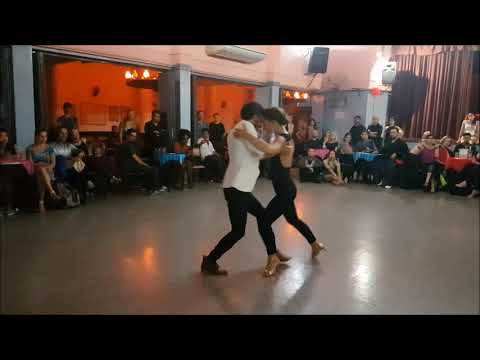


Scars. Wow. I have to say I really prefer Santiago Devine's voice to Fama's voice. I think his voice has a little bit of restraint that really suits the sound of the orchestra. And Fama, I think, will go on to sound better in '32 with Canaro. Fama had been, I think Fresedo took him to Europe on his tour, because Fresedo went off to Paris and then he went on to New York, and Fama decided not to go on to New York, and he came back to Buenos Aires and he was penniless.
And Di Sarli said to him, well, you could record with me, but I can't give you any money. So Fama said okay, and he recorded it, and the records did very well, and then a few weeks after the record came out they bumped into each other in the street, and Di Sarli turns to Fama and he says, oh, the record did really well, reaches in his pocket, takes out 50 pesos, which is quite a lot of money. A record is 2 pesos. Yeah. Just sticks it in Fama's pocket.
Chapter · 1:50:08
The 50-peso tip on the street
A broke singer agreed to record for free. The record sold. His boss paid him anyway — in cash, in the street.
And Fama recalls this later, and he said to himself, Fama, you are saved. Very informal arrangements they had for Fama.
Well, as you were saying, Di Sarli's not a big band, is he? He's a very small band at this time. It's not famous music. What happened to Fama after the mid-30s? He's working as a soloist, but with less success. So he tries to be an independent. And he never went back to singing with one of the orchestras in the 40s. Well, he does, doesn't he? He goes back to Canaro in 1939. He's with Francisco Amor. And then the two of them, did they leave together? They tried to go solo again and form their own band, but it doesn't work out. Yeah, it doesn't work out. Well, it wouldn't have worked out with the Canaro either at that time. Well, those tracks are very popular today. Not with myself, but many people enjoy that period of Canaro with Fama.
So did you hear the first tones on the next song I was trying to play? Listen to this. Who is it? The piano reminds me of Enrique Delfino. I've got to guess who's going to sing in a few moments' time, have I? Yeah, it's Agustín Irusta. You know the piano then. It's Demare, Lucio Demare. This is another one of these really difficult to find songs that Bernhard has slipped you under the counter. Sorbos Amargos, it's a tango recorded in 1930.
And I remember, I think in 1932, we played Mentira with Demare playing the piano and Irusta singing, which was uncommon because usually he sings together with Fugazot, they were a trio. But I think you wrote to me, I don't know if you wrote just to me personally or in the event. Did I not explain to people what had happened? I can't remember. You can tell the story about this 1932 recording. Stop me if I've already told this.
Chapter · 1:52:51
The lift crash that ended a trio
An elevator plunged three floors with a famous tango act inside. One broken leg changed everything.
So, yeah, like you say, they were a trio, Demare on piano, and then the duo of Irusta and Fugazot, the Trío Argentino, as someone typed in the chat window. And they came back again from working in Paris with Canaro this time, and they'd worked together successfully, and they were booked in the theatre as the trio, and there was an elevator, a lift accident. Fugazot was in an elevator together with Enrique Cadícamo and a third person and it plunged from the second floor. Don't worry, nobody dies. Okay, I'll just tell that right now, nobody dies. It plunges three stories and the only person who's injured is Fugazot, who breaks his leg. So he can't sing anymore, which is a disaster for the stage show, which closes, but that's why we had that really interesting recording.
Yeah, I remember you told this story and I was surprised that I found this also recording from 1930 with the same setup with Irusta singing this solo with Demare on the piano. Yeah, now Sorbos Amargos, is this the same tango that we're going to hear from the orchestra of Lucio Demare in the 1940s? Yeah, we know this one. I think it's this composition also, so it's Demare's own composition. Yeah. But a much earlier version than the one we know from the milongas.
And I'm going to play one more song, and that's with the whole Trío Argentino, also Fugazot singing. And that's a special song. It's called La Trojana, I think it's pronounced. And it's a chacarera. A very early chacarera. Special.
We didn't really listen to chacareras earlier during these programs. Was it common to play chacareras at this time? No, it's extremely rare.
Yeah. Chacarera is part of the national repertoire. So someone like Corsini might, just might do something like a chacarera. But it was very rare. There were lots of rancheras, which, don't forget, is a fake genre. It's not a traditional folklore genre. It's something that's invented around in 1930, actually. This is around the year it's invented and becomes a thing. It's so successful that after a few years, people are talking about the traditional melody called the ranchera. It's a traditional melody in Brazil, the ranchera, but not in Argentina. And there's also a few zambas, but chacarera from a típica. I can't think of a single one from a típica. It's very rare.
And the sound quality is bad, so I apologize for that. But I thought it was just so interesting that I want to play it. So let's listen to Demare playing the piano on the first song. It's just Irusta singing Sorbos Amargos, and on the second one it's chacarera with Irusta and Fugazot singing.
Demare's own composition, in a much earlier solo-with-piano arrangement than the full-orchestra version known from the 1940s.
An unusually early chacarera on a tango-adjacent recording — extremely rare for the period.
Is that interesting? Yeah, chacarera, 1930. I never heard either of those tracks. No. Yeah. Someone just asked me privately. Bandoneon and chacarera, that's not going to work, is it? No, it's not, but an accordion might. And I just had a quickly a quick look in my own library, I couldn't find anything contemporary. Carlos Gardel records a couple of chacareras and quite a few of the bands record numbers called La Chacarera, but they're not chacareras like the Biaggi one is a tango. Donato records one that's a ranchera, but I can't find one from a típica, not in this time. Yeah, it just won't work.
I miss the events, going to tango events and dancing chacarera in between all the hours of tango. It changes the energy, doesn't it? It's more innocent and light and fresh after all the intensity. I think it's intense in a different way because you have the eye contact and it's sort of different. Yeah, different way of intensity, good, nice contrast.
Um, let's go to the orchestra I'd never heard before, we didn't play during the Tango By Year. It's Ricardo Luis Brignolo. You know him, the author of Chiquet, oh you know this? Yeah, exactly, of course, had his own orchestra, um, had a very short life because, um, you know, no sooner had he got his record contracts than the Great Depression snuffs it out. Yeah, it's very short recording history. Yeah, I think it records just, uh, some 40 tracks from 1929 to '31 when Brunswick goes bust, and, um, we didn't play it in 1929 I think, but let's listen to two tangos, one called Sigue Juventud, it's an instrumental, and a vocal again with Luis Díaz singing for the Brunswick label, La Retirada.
And there's a cello in the first song, I'm sure, but the second one I'm not quite sure if it's a cello or a violin, but if there's a cello in the band then it's probably a cello if we're not sure. Probably, yeah. And I find these songs introvert and nice. I like this kind of feeling. Yeah, it's one of the... this proliferation of sextets where people had the chance to make some really heartfelt music. Yeah, but not successful enough. No. So let's listen to Ricardo Brignolo, which I've never heard at milongas, Sigue Juventud, La Retirada.
An introverted, intimate sextet side from a short-lived band whose contract ended when Brunswick went bust in the Depression.
A Pedro Maffia composition with lyrics by Brignolo himself, in the same intimate sextet style.
Oh, wow. It's not amazing, these songs. And yeah, violin, the cello. Intimate. It's intimate music, isn't it? So intimate. Yeah, introvert and intimate. Exquisite timing as well while still having a fixed underlying tempo. Yeah, that was a nice surprise. I wasn't expecting to hear those. Yeah, you're saving all your aces for the end of the show, Dag. Yeah, I'd love to finish on a good thing. Yeah, we're getting close to the end, speaking of that.
And the last song, La Retirada, as I wrote in the chat window, so it's a Pedro Maffia composition and Brignolo wrote lyrics for it. So it's, yeah, it's interesting that sense. Yeah, that's unusual. So we have a few orchestras left, two before La Cumparsita. And the second last one is Minotto. Yes. Bandoneonist and bandleader from Montevideo in Uruguay.
Minotto's own band, formed after he left Canaro at the end of 1929; hearing it shows how much of the classic Canaro sound was really built around this one bandoneón player.
Well, he spent a lot of time shuffling from one side of the Río de la Plata to the other, didn't he? Even in 1919, Canaro, there's different stories. Some people say that Canaro sent a telegram and said, get over here, I need you. And other people say that three bands competed for him. Already in 1919, that's how much of a reputation that he had. Maybe both are true, actually. That's quite possible.
So he leaves Canaro on at least two occasions to do his own thing. So at the end of '29, he's gone, and he starts his own band, and it's wonderful for us that we have this band first of all because it really allows us to identify his contribution to the Canaro orchestra, because when you hear the bandoneon in Minotto's orchestra you know that it's Minotto and then you immediately recognize the style of the Canaro orchestra. It's based around Minotto. The Canaro orchestra is based around a fixed beat and one musician, Minotto. Wow. And yeah, it's extraordinary. And super important. And all the bandoneon players who come after Minotto have to copy his style. So the first bandoneon now in the Canaro orchestra is a guy called Angel Ramos, and he's just trying to do what Minotto did, but of course he can't do it as well.
Chapter · 2:11:16
The bandoneón player one orchestra was secretly built around
When he left, everyone realised the whole sound depended on one musician.
So it's great that the orchestra exists just for that reason, but it's also really good music, you know. He takes a few more risks than Canaro does. The music's a bit more phrased, let's say, than the Canaro was in 1930. That's another flavor which is also very nice. Yeah, let's listen to Bella Vista, which is a tango with Antonio Bruglione singing.
So, and yeah, like I said, he was, he's been going for a long time. And I also read that he recorded La Cumparsita already in 1917 in the trio, must be one of the first recordings of La Cumparsita. Yeah, so there's, for a long time, we thought this was the first recording of La Cumparsita. 1917 Minotto on bandoneón and a guy called Alonso on violin in Montevideo. But then it turned out that Firpo's Cumparsita was even earlier, in 1916, which is only fitting, actually, as Firpo really is the author of La Cumparsita, even though it's got Matos Rodríguez's name on the sheet music.
Chapter · 2:13:03
The tango so famous its own composer didn't know
He wrote the most famous tango in the world, then spent years abroad having no idea.
So why wasn't Firpo credited for the composition? Well, he did it as a favour. Matos Rodríguez was like a student, he was a really young guy and he'd written a march and he took it to Firpo and said, I want to make it into a tango but I can't do it. So Firpo arranged it and then took for the third section, he took a piece out of one of his own compositions called La Gaucha Manuela, stuck that in as the trio section, arranged the whole thing and went, here you go. And, you know, he brought, oh, it's just some students, you know.
Friend saver. Yeah, I'll just do it as, you know, because I'm a nice guy and I'll just do that for them. And then, of course, it turned out to be the most famous tango of all time. And he'd spent the rest of his life really regretting that he hadn't put his name on the sheet music as co-author. Yeah, it must have been a great financial importance of that.
Because La Cumparsita wasn't famous at the beginning. It kind of faded from view. And then somebody wrote this lyric, the lyric Si Supieras. Si supieras que dentro de mi alma. And that kind of revived the song. And that's when it first became really successful. And Matos Rodríguez, but by this time, had got a job in Paris as a consulate, I can't remember, I think it was the Uruguayan consulate, not the Argentine consulate. And then Canaro's over there on his, you know, conquer the world, world domination tour of 1925, and of course Matos Rodríguez comes to hear him play and they start chatting and he goes, yeah, yeah, La Cumparsita, your song, it's really famous now. And Matos Rodríguez is going, is it? I didn't know. He didn't know, and not only that, he's not pleased because he wrote a lyric for La Cumparsita which was rubbish and it's famous now with this new lyric. And, um, his legal battle starts, which takes 11 years to resolve, and he lost.
“La Cumparsita, your song, it's really famous now. And Matos Rodríguez is going, is it? I didn't know.”
Canaro went in there and, um, what's the word, bumped heads, banged heads together. He just took the guys and said, look, sort yourselves out, put both your names on the music and that's it. So when you look at the sheet music now, it's always got two lyricists' names on there, the one that he'd approved originally from Enrique Maroni and then Pascual Contursi as well. Yeah, so well, we'll get back to La Cumparsita, of course, at the end, but first we listen to Minotto with Paco di Fuiste and then there's one more band before we finish.
I like the vocalist. I like the vocalist very much. Yeah. Yeah. Bruglione. Did he sing for anyone else? You know, I don't recognize the name. I don't think so. No.
Yeah, we're approaching the end and I have one orchestra left on my list and people are asking in the chat window. They want... Well, they're asking for at least three orchestras that we haven't heard yet, so you've got a tough job to play them all. It won't be pretty easy and it won't be a castedifico guitar. It will be Luis Petrucelli. Yes. Which is the king of 1930, I think. This is how I want to finish with him. It's wonderful music. Band on East. And yeah, we played a couple of tracks from him in the 1929 program also.
Yeah, I mean, Luis Petrucelli is a really important musician, isn't he? He was with Pedro Maffia in the De Caro lineup in 1924. He's on the first record and then he gets pissed off with, um, De Caro and he quits before, before Laurenz, and well, Laurenz is the guy who comes in to replace him. So he was first bandoneón and Maffia second bandoneón, then Petrucelli quits, Maffia is the main guy and Laurenz joins. So what does he do after that? He becomes a founder member of the Orquesta Típica Víctor. And there's no band leader in the Típica Víctor, but he's effectively the leader. So a great musician, really important musician, good player.
And one of the comments in the chat window to describe the style of these sextettes is a chamber approach. And I think Petrucelli does that more than anyone. There's such nuance, shading and texture in the sound of this orchestra. It's excellent. Orchestra, I think so too. And the violin, who's playing the violin? I don't know. No, sorry. No, that's okay. I'm just saying because I was listening to these songs and I think in the violin could it be Vardaro, but let's listen to it and see. Actually, it's very likely to be Vardaro because this is on the Victor label and Vardaro is playing on a lot of the recordings produced by the Victor label. But I think we'll know in a few seconds if we hear that distinctive fast vibrato. We'll see. All right, so it's Luis Petrucelli time. Caminito del Olvido, instrumental, and accompagnando la vejez with Pedro Lago singing.
I'm speechless. Wow! Why didn't you play that first? I wanted to end with this. It's so good. I can earn. There's so much energy running through my body now and I've got so many things to say. So the first one is, Petrucelli's a fantastic bandoneón player, isn't he? He's got amazing phrasing. You can hear how he would have been a good pair with Maffia, quite similar to Maffia in a way. A very different pairing with De Caro than Maffia, Laurenz, but dark tones. He's up there with the top 10, isn't he? Easily mention him in the same breath as Maffia, Laurenz and Fresedo. Really. I also feel this really feeling when he plays the bandoneón. It's so intimate and introvert also.
So that's the first thing I wanted to say. The second thing was in the second track that you played, Acompañando la Vejez, so yes, at the beginning we heard Vardaro. And then there were three violin lines, three. So Vardaro and the third violin played in harmony a high line, while the second violin, who's got to be Manlio Francia, I don't know if it's Manlio Francia, but it has to be Manlio Francia, because he was the best second violin of all time and he's very active, he's playing something completely different. He's playing the low tone and that's dominant. So the skill of second violin in a tango orchestra is completely different to the skill of first violin. You need a different set of qualities. You literally have to play second fiddle, as we say in English, but there you can hear these musicians respect each other because he's allowed to shine as the first violin. So he's the best second violin in tango and you, well, you get two lines but three instruments quite clearly audible in the playing. So wow, that's what I wanted to say about that.
And then listening to Vardaro as well, that's also got me really excited because of course there's one band that we haven't played tonight, because we can't play it tonight, because they didn't record, because they were a failure, which is the Vardaro-Pugliese sextet of 1930. These two guys got together. Goodness knows what their set list must have. Pugliese and Vardaro in 1930, people. Can you imagine it? Can you imagine it? And the record companies gave like 330 recordings to Canaro and none to this sextet. It's like, oh. You know, they don't like taking risks, do they, these people? Yeah, it was a flop. It was a flop.
You know the story. They had to play small towns outside Buenos Aires. They ran out of money. A well-wisher in the public had to pay the hotel bill of the band. And Vardaro had to pawn his bow, his violin bow, to pay for the train tickets back home. Which was a Sartori. Now, if there's any professional violinists here, it's the top make maybe of violin bows ever. They were handmade bows from Paris and highly sought after items. If you go on Google now and search for them, they're changing hands for thousands and thousands of euros. And it took him, I think, six months to save up the money to go back and get it.
Chapter · 2:30:24
The sextet that never got a record deal
Tango's best violinist and best pianist formed a band together in 1930 — and it flopped so badly one of them had to pawn his bow.
“Vardaro had to pawn his violin bow to pay for the train tickets back home.”
Yeah, what a band, but at least we could hear Vardaro there. I think Petrucelli, another thing I want to say about that, it's like, for me it's better than De Caro in a way, because it's using the ideas that De Caro has generated but it's got a bit more body to it. So I can't say better, De Caro is more playful, but this has got more body. I respond to it more than De Caro does, but you can hear that they're musically related in their conception. Yeah. One of our contributors in the chat window calls it like a chamber music style. Yeah.
And speaking of De Caro, we're going to finish with La Cumparsita by De Caro from this year, because this is the only year, the only recording by De Caro of La Cumparsita ever. So, of course, you have to play it. Now, is this this mammoth four and a half minute epic? Yeah, exactly. It's like almost a minute introduction. It's very complex, experimental stuff. Yeah, so we'll listen to that. But that's the ending. So before, I think we should say thank you for tonight to our listeners. And thank you, Michael, for another nice conversation.
I really missed you. I mean, these two weeks programs, it's good in a way because I get more time to prepare. But I also, when we get together, I really feel that I missed you. I feel very warm, literally I feel warm in my body to be back with everyone. So I'm very grateful. It's summer, there were only 137 people here today and it's lovely to be back with you as well, Dag. And I love this format where I don't know what you're going to play and sometimes you even play songs that I've never heard. I played songs that I never heard before last week, so thanks to you, Dag.
I'm up for a little bit of an after party if the rest of you are, but before that I want to announce next, not next week but in two weeks, we'll have another two weeks before next time. And we'll go to the, because now we were in 1930s, like the middle of the old Epoca d'Oro, but next year, yes, look at that, next year we go to the middle of the dancing Epocadoro, 1942, which is a fantastic tango year in terms of everything. It's going to be a challenge to make a selection, to stay within the, well, there will be lots of good music to choose from. Yeah, wonderful music.
So yeah, thank you to everyone and goodnight, not goodnight because we're going to have an after party, but goodnight from me and Michael take over. After this, Julio De Caro, La Cumparsita, a four and a half minute instrumental version of this classic, epic song. They had to make the disc bigger to fit it on. Great, let's hear it.

De Caro's only-ever recording of this tango, a sprawling, nearly-minute-long-introduction arrangement that needed an oversized disc pressed to fit its four and a half minutes.
Danced to it · 5 of 7


♪ Music · 4:00 · The lyrics, on the song's page
Film ending there on this song, that's one of the most sophisticated De Caro numbers, actually. Got all his best qualities, great musicianship, playful, rich. Yeah, very nice. Crazy rich. So I will stop sharing the music and you will take off, right? Okay, yeah, it's me, right. Go for the music sharing. Play whatever you want, but from 1930 please. Okay, yeah. I'll do that. There are a few tracks left, I think, after. Yeah, you're sharing now. Right, great. Gosh, where to go after that?
Let's play one of the orchestras we didn't hear yet. Yes. Yes. And I'm going to play something from the Típica Víctor. Ooh.
They were on my list until last minute, I must admit. Yeah, okay. But it's a quiz for everybody. There's an extra instrument playing in this recording. And in fact, in most of the Típica Víctor recordings from this year, that's not in the normal Típica. And I want you to tell me what it is.
OK, and I'm going to give you a clue because it's not an easy question. Unless you're a classical musician, you'll, you know, bang, you'll get it like that. But for the rest of us, it's not an easy question. So, um, I'm going to play the Típica Víctor Recuerdo, and you know that, um, is it Luis or Roberto Díaz, doesn't matter, he comes in and sings his Mujer, and then the strange instrument can be heard in the following passage, but I'm not going to tell you what it's doing.
Played as a quiz about an extra instrument (a bassoon, doubling the hard-to-record double bass) heard in many 1930 Típica Víctor sides.
♪ Music · 3:11 ·
What was it? We believe that it is a bassoon. We really do. So what it's doing is it's reinforcing the double bass because the double bass is hard to record. So you don't hear the bassoon by itself. You're hearing the sound of the bassoon and the double bass together.
And we even know the name of the musician. And it was quite common in classical music in the acoustic era, they often used bass saxophones instead of double basses on the recordings because you just couldn't record the double bass properly. Now we're in the electrical era. The problem's not nearly as bad as before, but for some reason they decided they wanted to reinforce the bass and they used a bassoon. And you can hear that in a lot of the Típica Víctor recordings from 1930.
So that was a bit serious. Let's have some fun. This is Canaro.
Ha! That's nice, isn't it? Now there's a lot of good Canaro from 1930, but we're not just going to play Canaro because we'll be here all night. But I want to play one tango and I've just chosen it now. I've chosen one of the less common ones, but I think you'll really like this. This is called Príncipe Loco, which means Crazy Prince.

One of the less common Canaro titles from this year, chosen for its unusual flavour out of roughly ninety candidates considered.
♪ Music · 3:00 ·
Yeah, so that was the Hawaiian guitar playing there, and not just in Canaro's orchestra, it appears in some other bands as well. But there's a lot of tracks with Canaro. Svetlana's been helping me. I can't remember, I think we've got up to 90 now in our list. It was fashion at the time. You also hear in European tangos in the early 30s, there are Polish tangos with Hawaiian guitars, there's even a Polish recording of a Hawaiian guitar band, but it's not from 1930 so we're not going to play that now. Um, as we accidentally didn't play Con tu Mirar, I think we should.
One of only a handful of recordings where Ada Falcón sings the shorter estribillo part for dancing, rather than as featured soloist.
Very glad you liked that. There's only a handful of recordings where Ada Falcón sings as estribillista with Canaro, and there's like 300 recordings as a soloist, or in total 301 I think it is, but a handful where she sings for dancing, and that's one of them. So there's a song we could hear more of in the milonga. And I really like the singing violin, the violin solo, singing violin we call that kind of style with Piscotto playing. Um, let's play a couple of waltzes beginning with one of my all-time favourite Canaro waltzes, which his title is I Will Always Love You.

One of Stenvoll's all-time favourite Canaro waltzes.
♪ Music · 5:25 · The lyrics, on the song's page
Canaro's great. When Canaro's good, he's very, very good. He's like the girl with the curl. When he's good, he's very, very good. And when he's bad, he's horrid.
Now, time to move on from Canaro. So let's listen to what it meant to Canaro that he lost Minotto. And to do that, we'll listen to the tango Don Segundo Sombra. Don Segundo Sombra is a famous gaucho. You can find his photograph on the website of the Archivo General de la Nación, the Argentine National Archive. And there's tango written about him. And I think there's a book written about him as well.

Played briefly (just the opening) to compare against Minotto's own version of the same tango, named for the famous gaucho character.
And we have a version from Canaro and we have a version from Minotto, which is one of Minotto's top tracks, actually. And of course in the Canaro version, Minotto's not playing. So I'm just going to play like the first 20 seconds of the Canaro version and then immediately we'll go on to the Minotto version, and you can hear what Minotto does. That enriches the tango but also reminds you of the Canaro sound because he invented it.
Now, that was very nice and of course, Charlo started singing, can't beat that. But now, listen to this.
Minotto's own version of the tango he used to play with Canaro, showing what his bandoneón playing added to the sound.
♪ Music · 2:10 ·
It's good, huh? I mean, not Omo Noto is that good, but that's good. Love it. I need some more emotion. What do we got? Another track of Juan Maglio. We already had two, but it's one of his best years. I think we're allowed one more.
And then I'll play a couple more orchestras we haven't heard. And I'll probably finish up with Mosca Muerta. That's my rough plan at the moment. That's how it's going. Let's see how we go. This is quite a rare track of Juan Maglio called Bella Vista.
A rare Maglio track, played in the afterparty because this was one of his strongest years.
♪ Music · 2:37 ·
Juan Maglio, 1930. He's great. Yeah, wonderful pianist as well, whose name I can't pronounce, begins with G. Let's have a couple of Maglio more before we go on because he's so good in this year. One that most of you will know and one that most of you won't know. So we'll start with El Orgullo del Plata, famous from D'Arienzo, simple to enjoy, not so complex. And then after that we'll play Flor Otoñal, Autumn Flower, which is really quite crazy and deserves a close lesson. So Juan Maglio, this, El Orgullo del Plata and Flor Otoñal.
A simple, enjoyable title made famous later by D'Arienzo.
A more complex, less-known Maglio side played right after the simpler Orgullo del Plata.
So time for one orchestra we haven't yet heard. The orchestra of Antonio Bonavena. This is an Argentine orchestra from 1930. I'm in the mood for waltz, so let's carry on with waltz. And what's really interesting about this one is the unusual way that the band uses the cello.
An unusual use of the cello in a waltz, with a tempo that speeds up then slows again near the end.
I think you like that. And did you notice, well, there were lots of nice things to notice. What I noticed just playing it now was the tempo change. After about two minutes, it sped up and accelerated towards the end before it slowed down, which I really liked. I like the dialogue between the instruments, which was a bit more subtle than the way that Canaro does it. The dialogue between the band and the violin, it would go you, me, you, me, us like that. So not just alternating simply. And the cello is fantastic.
A vocal follow-up from the same orchestra, chosen to show more of its distinctive cello use.
Let's risk one more. One more from the same band, from Antonio Bonavena, with a vocal this time. This one is Echos from the Soul, Ecos del Alma.
Yay! And there's more! But we're not going to play more. Now the last novelty of the night comes from Paris. This is the Brodmann-Alfaro Orchestra. So it's one of these initiatives, clapping. It's one of these orchestras with a double-barrelled surname. Now many people would say, and I'd agree, that this is the orchestra with the highest technical level that played in Paris. But there's not a single Argentine in the group.
Brodmann is a Frenchman and Alfaro, I mean, they sound Argentine names, they could be, couldn't they? Well, Brodmann's probably German. I don't know. I can't find out anything about him. Alfaro is a Frenchman who's got a French sounding name. So he's changed his name to Alfaro because it sounds more Spanish, more Hispanic. And the two bandoneon players are both Italians.
We'll just play one track from them. This is Lorenzo, very famous tango. So you're familiar with the tune, but in a very unusual version that I think will surprise a lot of people.
A very famous tango in an unusual arrangement, from an all-European, Paris-based orchestra with a double-barrelled bandleader name and two Italian bandoneón players.
♪ Music · 2:00 ·
So if you like that, there's more of that. I'll let you discover that. Brodmann-Alfaro. There's, you know, a couple of albums worth, or one big album's worth. Let's plunge straight on with the Firpo tanda, because there's lots of great Firpo from 1930. And then I'll play a Lomuto tanda and that will be it for tonight. So two more real tandas. First Firpo, beginning with Verdad que no te Irás, with Carlos Varela.

The opener of a short closing run of Firpo tracks, since there was so much good Firpo from this year left to play.
Danced to it

♪ Music · 7:40 ·
So that's the end of our little Firpo interlude. One thing I really like about these programs is that we get to play a much wider variety of music and to listen to it than we do in the milonga, where it's hard to take risks. So, of course, some of it's not for dancing, but maybe it's going to broaden our idea of what dance music is. Because, of course, we think we know from going to the milonga, but we just get a selection.
So let's finish with something more traditional. I'm going to play some Lomutos. Finishing, I want to finish with Colorado, Colorado, because that's going to be a link to the next program. Because in 1942, of course, we have the Troilo Colorado, Colorado. So I'll finish with that. But we'll have three Lomuto tangos of, first of all, one of the really famous tangos. Not a really famous recording, but a really famous tango. Cuando Llora la Milonga. When the milonga weeps.
A famous tango, though not a famous recording of it, chosen to close the night on something more traditional.
♪ Music · 3:30 ·
Okay, now a tango you know from another orchestra. Which other orchestra do you know this from?
Chosen deliberately as the last track, to link forward to the Troilo version played in an earlier episode and to the next show's 1942 theme.
♪ Music · 5:23 ·
“That's it for 1930. Cracking year.”
So everyone, that's it for 1930. Cracking year. I hope you enjoyed it. We really enjoyed it. We love being back. We love sharing music with you. It's a really rich experience for both of us. And we'll be back in two weeks' time for 1942.
Thanks as well to all of you for your support and to our sponsors, Tango Bergen, Norfolk Tango and the Marabu Nightclub in Buenos Aires. It's been great. Thank you very much. Thank you.
Tango By Year is Dag Stenvoll and Michael Lavocah's, published here with their permission. The audio plays from SoundCloud.