Tango 1936
Dag Stenvoll y Michael Lavocah · 2020-07-22 · 3:27:16
1936 sits in the shadow of Carlos Gardel's death the previous year: his body only reached Argentina in February and his last film opened in April, so his loss is still being processed as the new dance-orchestra sound keeps building toward Juan D'Arienzo's breakthrough the following year. D'Arienzo himself has an overlooked, joyful year: 24 sides, all with Rodolfo Biagi on piano, almost half of them waltzes, and one recording, Don Esteban, for which two completely different takes survive. Canaro is turning out around 50 titles a year, including novelty 'tangón' numbers, Fresedo is building a smaller, jazz-influenced band around harp and vibraphone, and Julio De Caro is experimenting with a thirty-piece 'international' orchestra and the all-star studio quintet Los Virtuosos. The emotional centre of the episode is Nostalgias: nearly cut from a 1935 Gardel tribute show for being too hard to sing, it only became a hit after Charlo heard it performed in a Buenos Aires nightclub and took it to the radio.
Lo que este episodio dio a Tangopedia
Datos dichos en el episodio, cada uno citado al minuto en que se dice.
1936 is the bridge year between 1935, when Gardel's death opened the door to the new tango dance movement, and 1937, when D'Arienzo makes it mega big.
Cabral is a fine but overly refined voice for D'Arienzo, a long way from what the band gets the following year with singer Alberto Echagüe.
Carlos Gardel's body, who died in a plane crash in mid-1935, did not reach Argentina until February 1936, and his final film only opened in April, so his death still cast a long shadow over the year.
D'Arienzo recorded 24 sides in 1936, all with Rodolfo Biagi on piano and only four with a vocalist; almost half were waltzes, and across his 1935-36 two-sided discs there isn't one with a tango on both sides, because as a dance band he knows a waltz fills the floor.
Most dance bands recorded mostly instrumentally in the early-to-mid 1930s, with Canaro and Lomuto as exceptions; even Troilo's first 1938 disc was instrumental on both sides, and he only switched to vocals in the second half of that year.
Discos que suenan · 39
Transcripción
Transcripción automática del audio, luego puntuada; puede haber nombres mal oídos. Toque una línea para escucharla. El episodio es en inglés, y su transcripción también.
From Blue Suits two weeks ago and Troilo Special to Blue Illusion. No suits and no champagne tonight. How are you? Very well. Very well.
Lovely to be back, you know, it's well, it's two weeks since we did the Troilo special, but it's actually, it's three weeks then since we did the Tango By Year program. I don't know if I could remember how to do it. Yeah, me too. I was a bit nervous actually before, I was like, how do I do this, you know, how do you organize it? Yeah, it's all right. 36 is an easy year. Yeah, so welcome back to everyone. We've missed you last two weeks. Yeah, yeah, welcome back. Good to see people, yeah. People joining all the time. Yeah.
We did the 1935, I think, about two months ago, Michael, and we finished with the two D'Arienzo songs from New Year's Eve that year. Yes. Yeah, so D'Arienzo, I guess, is going to be a theme for this year. What can you say about 1936?
Well, I think this is the first time that we've done the year either side already, isn't it? Because I think we've done 1937 as well. We did, yeah. So now I like saying things that sound really stupid. Here we go. 1936 is the bridge between 1935 and 1937. Surprise. Now, surprise. But what do I mean? I do mean something. So, 37 is the year that D'Arienzo makes it mega big. Yeah, that's your one-line takeaway from 37. D'Arienzo makes it mega big.
“1936 is the bridge between 1935 and 1937.”
But 35 is the year that the door is opened to the whole dance movement by the death of Carlos Gardel in the middle of the year in that plane crash. And it's a slow transition. The death of Gardel convulsed the nation, and people who work in bereavement, doing grief counselling and so on, they say it takes two years to get over a death, and it's pretty much like that for the Argentine nation. Now, there's a phrase in English, dead and buried. You wouldn't use that about a person. When something's really finished, it's dead and buried. Now, as 1936 opens, Gardel's been dead six months, but he's not buried. He's not even in Argentina. His corpse is winding its way back over land through the most tortuous route. And it doesn't even get to Argentina until February. So then there's another huge outpouring of grief. And then in April, his final film opens because they haven't seen that yet. So Gardel is still very much present, casting a long shadow.
“Gardel's been dead six months, but he's not buried.”
And so it's a slow process, but D'Arienzo is really finding his feet. His music is really enjoyable. And I think it's an overlooked year, 1936, for D'Arienzo, because we choose the punchier, faster years. But 1936 is a joyful year for D'Arienzo's music. So even the shadow from Gardel doesn't mean that the music is all depressive and sad. There's also joyful music from this year.
There's a lot of joy from a lot of bands. Canaro is doing his thing with Roberto Maida. The sound doesn't change at all from 35 to 38. Lomuto is doing very nicely as well. He's quite overlooked, and De Caro is kind of losing his way because the new dance phenomenon is pushing him to the margins, and having contributed so much, he doesn't really know what kind of music to make. I find those margins interesting though, because I want to get back to De Caro and listen to some of his recordings. Well, it would be good to listen to him, but we'll talk about him later. Yeah, well. All right.
So for new listeners or for those of you who forgot, since it's been two weeks, I picked the music from the year and Michael doesn't know what I'll be playing. So, yeah. But let's start with D'Arienzo, since we finished 35 there. And he recorded 24 songs in 36, all of them with Biagi on piano, of course. And just four vocal numbers. That's not much. And almost half of the recordings are waltzes. Yes.
Well, D'Arienzo's discs, two faces to the disc, two songs, from 35 and 36, there isn't a single one that has a tango on both sides. That's unusual. Well, it's unusual for everybody else, but it's not unusual for D'Arienzo because he's a dance band. And he knows that when you put a waltz on, people get up to dance. The DJs here, you all know that. You know, put a waltz tanda on, vumph, the floor will fill. So he plays the old Creole waltzes, the kind of waltzes that would be played at a wedding. Not a posh wedding, not a society wedding, but a working class wedding. And that fills the floor. So it's, yeah, half the output isn't tango and most of that is waltz.
I want to start with his first record, with La Guitarrita, which is tango, and the milonga Silueta Porteña. That's the one milonga records this year, the Silueta Porteña. Well, there are no bad versions of this milonga, I don't think, but it's really remarkable, the D'Arienzo version, because of what Biagi is doing on the piano in the background. So he's not going to be doing the, you know, the sharp fills between the phrases. You have to listen much more attentively than normal for Biagi to hear what he's doing. And there's this bubbling backbeat. And that's the thing to listen out to all there. Yeah. He's a versatile pianist. Yeah.
What about La Guitarrita? When I hear it, there's a lot of syncopation in it. So that creates this kind of dancing push, I think. And there's a violin duet about a minute into it. I really like it. Who were the two violinists?
In the D'Arienzo band, there's the low road and the high road. The real first violinist is Domingo Mazzeo. He's playing the low notes just on the fourth string of his violin, using a viola bow to get this really deep tone. He's the real first violin in the band. And then the high notes are played by Mancuso, Domingo Mancuso, who's probably not as good a violinist, actually. But every now and then, Sábado Inglés from 35 was a nice example. But also here, you get the two of them together in quite simple harmonies. Okay, right, good. So let's listen to these two, the answer songs. La Guitarrita, the tango, that's an instrumental. And Silueta Porteña, it's a bit of Walter Cabral singing.
Capítulo · 7:40
The violinist who tuned himself like a cello
One of D'Arienzo's violinists made his instrument sound like something else entirely.
D'Arienzo's first record of 1936, chosen for the bubbling, understated backbeat Biagi plays on piano.
♪ Música · 0:03 · La letra, en la página del tango

The one milonga D'Arienzo recorded this year, paired on the B-side with La Guitarrita.




Yeah, so it's not that easy to hear what Biagi's doing, but when there's a little gap, you hear this, and then other stuff starts happening, but he doesn't stop doing that. So, homework. We've got second song in and you've got your homework. So your homework is listen to that song again with your cans on and train yourself for that, listen for the, when there's silence in the rest of the band, and then see if you can still hear it all the rest of the time. But you'll probably need headphones for that. It just bubbles. Lovely.
There was a question in the chat window, what you meant with backbeat. And that's exactly what I mean, this continuous... What about the singer, Cabral? He's not one of the big voices of tango, is he? He's not one of the big voices of tango, and he's not one of the big voices of D'Arienzo. It's a fine voice, but it's such a long way from what's coming next year, which is Echagüe. It's a bit too refined, but I suppose it goes well enough with this slightly slower, more relaxed D'Arienzo that we've got here in 1936.
We'll hear him sing another song, a ball, Irene. That's another record that I will play both sides there too. La Payanca, it's an instrumental tango. And I think you write in your D'Arienzo book, Michael, that this is one of the fastest D'Arienzo tangos. Do I write that? It's certainly one of the fastest ones at this time. La Payanca, or did you mean the waltz, Irene? No, no, I meant the tango. I think you wrote this really fast one and very strong syncopations. Yatta, yatta, yatta.
One of D'Arienzo's fastest tangos of the period, with strong syncopation.
And Irene itself is one of the less often played waltzes. I think we tend to be a bit lazy and just play like the top half a dozen, but they're all good. So it's nice that you're going to play one of the slightly less well-known ones. It has a good swing that we say about. Okay, let's see a list of those. La Payanca and Irene, Juan D'Arienzo.

A less-often-played D'Arienzo waltz, chosen deliberately instead of the usual top half-dozen; unusual for stressing the second beat of the bar.


It's a very unusual waltz, isn't it? Because it keeps on putting the emphasis on the second beat of the bar. Dun, da, da, da, ba, da. These offbeats. And this is what gives it this swinging feeling that we enjoy so much. Yeah, it's nice.
Sasha's asked, loves the voice, how come he didn't record so much? The answer is because most bands are playing instrumental at this time. Canaro is an exception. The dance tango is instrumental in the early 30s and remains so largely till the middle of 38. Canaro and Lomuto do something different, but the hardcore dance bands are still not really using vocalists. We even see that with Troilo, don't we? When Troilo records his first disc in 1938, both sides are instrumental. It's only at the end of the year, second half of the year, that he really switches to vocals.
I play a last record by D'Arienzo. Only three records, I know they're all good, so you can't go wrong. It's the final from this year, from December 30th, and it has a tango on the A side and the waltz on the B side, both instrumentals. Yes, great choices, both. La Viruta. Viruta is dust or sawdust. So either there's sawdust on the floor because it's a really old, dirty place. When I was a child, they still had sawdust in the butcher shops. And the lyric says, kick up the dust, sacale viruta. It's a very exciting number. There's the bit with these wild violin slides, that's the thing to listen out for there. And then Visión Celeste, as I recall, is quite a fast one, not the very fastest but quite fast. Yeah, yeah, okay, that's going to be our dose of D'Arienzo tonight after these two.

D'Arienzo's final record of the year; an exciting, dust-kicking number with wild violin slides.


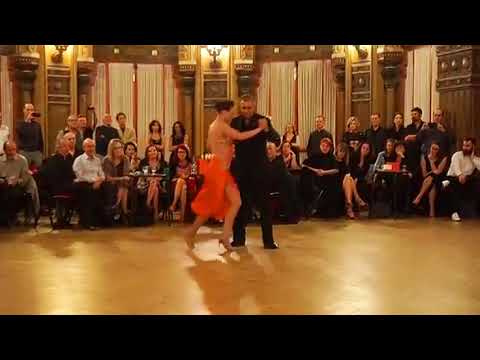

The B-side of D'Arienzo's last 1936 disc, quite fast though not his fastest.


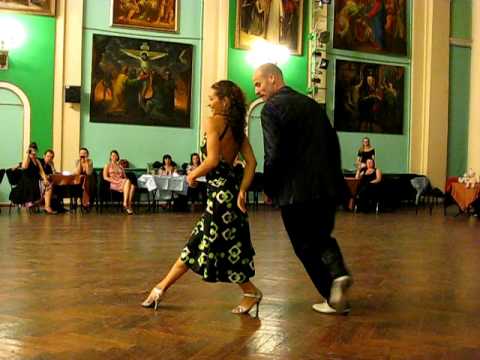
Come on.
People want to dance, Michael. It's hard to sit still to this. So exciting. And when the Variacion suddenly goes to double speed, just as we heard with those 1937 waltzes on that show, the band are not holding it together. Not exactly. And I like that. I find it exciting. That's a slightly dirty sound that you get.
“The dirt of D'Arienzo.”
The dirt of Dorenzo. Talked about that before. What about the dirt of Donato? We talked about Donato earlier. Not as a kind of proto-Dorenzo, but there is some kind of feed and energy to some of his recordings. It's playful, isn't it? It's lighter. It doesn't have the hard edge, which on this disc, for me it was completely obvious as soon as you started playing Levin Ruta.
There's a much harder beat. Dang! It was much harder than any of the four songs you played previously. So it was really obvious to me, oh, that must be nearly 1937. And you said, yep, it's what did you say, 30th December? Yeah. Yeah, so nearly the last day of the year. So you can hear that in the music. And that hardening edge is something that Donato doesn't have. It's playful, it's accelerated, but it's also lighter. Nothing wrong with that. That's just the quality that it has, and that fits with his personality. He was a very absent-minded person. They say he lived in the moon.
I want to play two songs for him. Tango, Mevoj, Baraja, with Lagos, Horacio Lagos. And the waltz, La Trapera, which is a really nice one, I think, with Félix Gutiérrez. La Trapera is one of my top favourite Bernardo waltzes. It's one of my top favourite waltzes, actually. Definitely. Why? It's just so joyful. So joyful. Yeah.
A tango chosen to show Donato's lighter, more playful sound next to D'Arienzo's harder edge.
One of Stenvoll's favourite waltzes of all time, chosen for its joyful but bittersweet lyric and its audible piano accordion.
In the beginning, I think also it's very easy to hear the accordion that is in the band instead of the band. It's much lighter, as you say. It's a playful sound. Yeah. I think Pietzola said it the best. He said the accordion makes happy music and the bandion makes sad music, which is a bit of a simplification, but that will do. So in the bandagnon line, there were five players, and the middle one didn't play bandagnon. He played a piano accordion, and he was this boy wonder, Bertolin, who eventually left and formed a duo with a guitarist, I think. Right, so it's Donato time. Hit it.
Lovely bursts with the band on there. Yeah, but you know, you asked me, why do you like it so much? And I said, it's joyful, but it's not that joyful. But it's joyful, but there's a non-joyful side to it as well. Somebody commented, Jana, a touch of melancholy. And I paid more attention to the lyric, and there's a sad lyric as well. So there's a bittersweet quality to this waltz and that I enjoy.
Canaro has been mentioned. So we need to play some Francisco Canaro also. You've got to play some Canaro. He records a lot this year, so always like 50 tangos, waltzes and milongas. Now is this the year, is it only 50? Yeah. Okay. It's way above everyone else. Yes, double, minimum double everyone else. Is this the year that he records Buen Amigo of Julio De Caro? I'm not sure. I wasn't planning to play that one. Oh, well, that's for me for later then.
So let's hear the tango. Yo También Soñé with Maida singing. I Too Dreamed. Yeah. Yes. What's it about? It's about coming back to reality. Yo También Soñé, Sueños d'Ilusions de mi Nunez. I too dreamed exciting dreams since my youth. And it carries on. But then when you get to the chorus, the mood changes. And he starts, he sings, it's so tough to wake up. And then you hear these chimes of doom as he sings. So it's a tango about waking up from your dreams. Sounds painful. Bit of edge. Yeah. Yeah.

A tango about waking up from illusions, its mood turning dark at the chorus.

A follow-up to Canaro's novelty 'tangón' rhythm, tried out at his theatre shows before being recorded; less exciting than the original.
Lo bailan · 2 de 3


After that, I want to play El Porteño, which is a so-called tangon. Can you explain what that is? Well, Canaro was always improvising and trying to do new things, novelties, lots of novelties, and he had all the theatre shows that he did beginning in 32 I think was his first one, and that was an ideal place to try out new stuff, stuff that you couldn't necessarily just try at a dance. So a lot of these novelties like Tangon and El Porteño, and I'm trying to remember another title but its name's slipped my mind, he would try them at the theatre shows first and then record them. So tangon, he called first of all new rhythm. And then when that was a hit, he thought, oh, that was good. I'll do another one. And that's where El Porteño comes. But you'll hear it's not quite as exciting maybe as tangon. And then he doesn't do any more of this rhythm. Yo También Soñé and El Porteño, both with Maida singing, Francisco Canaro.
Yeah, I'm glad it didn't have a big success, then we would have been dancing to Milongon Tandas instead of Milonga. I think I prefer Milonga, actually. Yeah, I think so too. It's more for marching, that one, isn't it? Yeah, it's more marching, it's true.
So one or two people will have Roberto Maida as their favourite of all of Canaro's singers. I do like Maida very much with Canaro because of the softness. You know, the beats themselves are quite square, and then Maida's voice is like honey poured over the top. So it softens the harder edges of Canaro and makes it more digestible. So I like the combination very much. Or if I had to choose a favourite singer with Canaro as a dance outfit, even as a dance outfit, I would choose Charlo, who was singing with him much more in 28 to 31. Yeah. But at this time, yeah, Maida, perfect. Yeah, the good Maida, I mean, it was easy to pick, I could have picked five, six songs with Maida, like tangos. It was a good high quality of the recordings from the 36.
Speaking of Charlo, he records only two solo numbers this year. It's a Cancion Criogia, which I'm not going to play, and the tango, which is of our interest, Nostalgias. So that was recorded in October, and within three weeks, there were three other recordings of the same with Charlo, Lomuto, and the soloist Hugo del Carril, but I prefer the one with Charlo. So nice. And we have this as event photo also. Exactly. Yes. So I'm glad you're going to play this now because now I can tell the whole story about Nostalgias rather than telling it in two parts. So Nostalgias was very nearly a flop.
Capítulo · 47:06
The song almost no one wanted
This tango was nearly cut from the show before it was even recorded.
It's composed by Juan Carlos Cobián, who's one of the great pianists of tango and one of the great composers, but he kept on leaving Buenos Aires. So that's why he's not better known as a band leader, because he kept stopping because of his disastrous love life. Anyway, at the end of 1935, a theatre impresario wanted to put on a stage show about Carlos Gardel. And he approached Cobián to write the songbook. And Cobián said, yes, I'll do it. And he engaged Enrique Cadícamo, great tango lyricist, to do the words. He'll do the music. Cadícamo do all the lyrics, and they very rapidly came up with a full songbook for the show. And the theatre guy, he listened through to the songs, and when they did Nostalgias, probably already at the end of 35, he said, no, get rid of this one. Don't do this one.
Now, I'm going to tell you why. Because we're going to hear it, except you're not going to notice. The Nostalgias is not that easy to sing in the chorus. Now I've just written the words out for myself here, where have I got them? Yeah, in the chorus you get to this point, you'll know it's coming because he sings that point there, yeah, then you know the difficult part's going, and the difficult part goes. Now you have to be quite good to do that really well. And Charlo does it way better than I do. So when Charlo does it, you're not going to notice that it's hard. You're going to go, oh yeah, that was nice. But when you listen to the other versions, like if you listen to the Lomuto version very attentively and you listen to that part, you can hear it's not quite as smooth.
So the impresario was right. So the song's rejected. It's not in the show. And Cobián is performing it in a nightclub. It's a new nightclub. It gives you an idea. This is funny. This is because the nightclub is a new club. It's not a new building. It used to be the Wagner Society, the Wagner Operatic Society. But Tango is now selling more tickets than Wagner. So it's converted into a nightclub, and Cobián's performing there with his band.
Now, this band is the precursor of the Troilo band because who's in it? Cobián on piano, yeah, obviously, but the band unions are Troilo and Ciriaco Ortiz, one of the big influences on Troilo's band union playing and his orchestra. And the singer is Lezende, Rodriguez Lezende, who's the guy that Troilo wanted to be his singer when he started his band but turned him down. So this is a missing recording for the Cobián version, but they sang it in this little club, and Charlo was in the audience, and he said, oh, that's nice, took the sheet music, sang it on the radio in the next days, and that's when the song became big, only once Charlo picked it up and started performing it. And then, as you say, we get the performances from the dance bands, and the song goes global. There's a Polish version from 1937 I was just listening to today. So one of the great tangos actually, I should say. Yeah, and Charlo's singing of it is wonderful, and he's backed by guitars. I really like that also. I really enjoy Charlo with guitars, yeah.
I'm going to play a second song which is a bit off the theme here because it's not a tango. It's a flamenco. But it has a guitar backing and it's a beautiful song. We'll see it as a kind of Cortina. Okay. It's with one of my favorites, Imperio Argentina. So it has a Spanish flavor to it. And yeah, so let's hear these two. Charlo with Nostalgias and Imperio Argentina with Peter Neraz, Flamenco.
Charlo's version, backed by guitars, is the one that made the song a hit after he picked it up from a nightclub performance.
♪ Música · 0:01 ·
Played as a non-tango cortina: a flamenco with a guitar backing.
Wow. I wasn't expecting it to end there. Suddenly, and it's done.
Yeah, it's very quick. And Charlo's voice. Those two voices, those are both lovely. Yes.
There's some comments in the chat window about some other versions of Nostalgias. So someone, I think maybe it was Heike, mentioned that Libertad del Marque records it in the 60s. That's one I haven't heard. So now I've got some homework to go away and listen to.
Yeah, effortless. Charlo's voice is just effortless. He makes it sound so easy.
Let's move on to another old friend, Roberto Firpo. He records about 25 tracks in the tango genre this year, and also some marches and rumba and paso dobles. I mean, is that typical for this period that bands are just recording a lot of different stuff?
Well, it's typical of the old guard. So Canaro and Firpo, and to a lesser extent Lomuto, they're not part of the new wave, are they? And they're not even part of the movement that begins with De Caro. Well, that doesn't begin with De Caro, is spearheaded by De Caro in the mid-20s. They're from the generation before that. They were the guys who were top of the world in 1910 and still in 1920. And in those days, tango wasn't a dominant force. And the tango bands played a lot of jazz as well. Sometimes it even said jazz band on the labels. So they're still doing that.
The interesting thing about Firpo, well, I guess you're going to be playing tracks by his orchestra. I don't know, but 36 is the year that Firpo starts to record with a quartet or a quintet, once again, in the old style. So the Quintetto Perincio, which we know, starts life in 37 or 38, although with a different name. That's Canaro's old-time quintet. Starts off as the Quintetto Don Pancho. But Firpo was before him. He did it even in 36.
Maybe it's to do with the D'Arienzo phenomenon, because D'Arienzo goes back in a way to a simpler style of making music with a faster pace, and all the bands have to follow that. So this is one way maybe that he's able to do it. But even Firpo wasn't the first. There were others earlier in the 30s. But the orchestra carries on with the special Firpo sound of the orchestra, which is not sufficiently well known, I don't think. I really like the orchestra sound.
I do too, and especially the waltzes, they have this really groovy dirty violins. Yes, the wailing violins. This really deep vibrato.
I play the waltz Barreras de Amor, but first the tango, this Consuelo, both with Carlos Varela singing. Let's listen to Firpo. They're forgotten heroes, that's what we call them, isn't it? I call them that, yeah. 2800 tracks, people. Here we go.
Chosen to showcase Firpo's thick, wind-rich orchestral sound.

A Firpo waltz prized for its groovy, deep-vibrato violins.


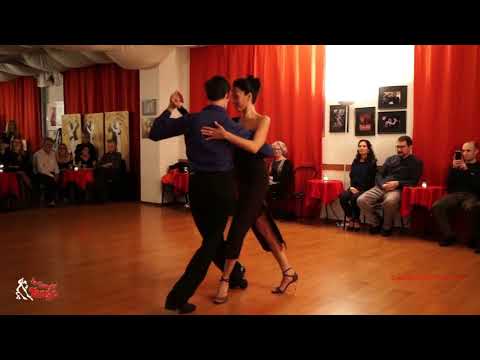
Some discussion in the chat window, Sir. A lot of interesting discussion in the chat window. I think there is a flute in there, but playing... It's a really thick, rich sound that the orchestra has. And yeah, in there, there's a lot of wind instruments, which someone was asking, oh, is something out of tune? And sometimes with wind instruments, that's a problem, because they're designed to play in certain keys. And if you have different keys, some of them are convenient, and some can be really difficult. But I don't know if that's the reason or not. I'm just speculating. Yeah.
Next orchestra, Miguel Caló. Yay! He records just four tangos on the walls this year, plus some other stuff. Yeah, he's not mega big. He doesn't get mega big until he changes his style, which is 41, 42. And at this time, he's... Well, he's almost one of the De Caro-style orchestras. If you listen to the couple of tracks he records in 32, it's really quite complex. And here it's still more complex music than what he's going to do later on. So he's one of these guys like Fresedo who starts making complex music and then changes his mind. No, I don't want to do that. I'm going to do something simpler.
1936. Could be that Pugliese is the piano player. We're not sure, but it's not important because the piano style of the band has been established two years previously by another guy, not Moderna, a guy called Miguel Nijansson. He's created a lot of the style of the orchestra because he was the arranger as well. An interesting orchestra in 1936. I like it. I didn't know that. Yes, but not for the whole year, just for about 6 months, and then he quit and formed another one of his attempted bands. Yeah.

Opens with bells; from Caló's still-complex, De Caro-influenced 1936 sound, before he simplified his style in the early 40s.


We're going to hear Las Campañas with Alberto Morel singing, with the bells at the beginning. Yeah, exactly. Yes. It's not so often heard at milongos because it's kind of hard to make a tanda out of this. There are a few nice... I play it. Yeah, I also played it, but I mixed it with other orchestra. I know you wouldn't do that, but... I'd never do that, no. Not with a tango tanda. Yeah.
Because you've got Soy Milongero, haven't you? Dulce Amargura. Dulce Amargura. And what's the other one? Cabagito de Insuigno? I can't remember. But you can use the one from 34 as well, and they mix with it fine. So, no problem. But you have to use the other years. Yeah, they're not all going to be from 36. And there's some nice waltzes from Miguel Caló in 1936, although they're really hard to get in a good Fidel. I don't think Tango Tunes has released those years yet, so fingers crossed. Yeah, could be the next one. So, Las Campañas with Miguel Caló.
I was thinking about... What was I thinking about? I lost my thoughts. Yeah, it's something like... it sounds, it reminds me actually a bit of Firpo. I think there's something with the sound. It's more typical of other orchestras from the same period. It doesn't sound like it's going to sound, does it? There's some comments about that on the chat window. The quality of the beat is different, the quality of the beat is more typical of other orchestras, and the violin playing in particular very staccato, not what we're going to get later on from people like Francini. So yeah, different sound, an orchestra in search of its own style really, because that's not as complicated as the 32 songs, where it really sounds like a De Caro influenced orchestra. But the really romantic style they don't get till the end of 41, beginning of 42, so it's an orchestra in transition.
So we need to listen to a song by Mercedes Simone, one of my favorite singers also. At least one. At least one, yeah. Yeah, I was thinking two maybe, but the other one is Ana Banera, so I'm not sure about that one. But I'm planning to play the waltz, Damisela Encantadora. Charming damsel. What a title. And the version that we tend to know, perhaps not so well known, is the one by Francisco Lomuto. Yeah, it's very nice to dance to, but it'd be nice to hear the one from Mercedes Simone. What a wonderful voice, a darker voice that could go with a dance orchestra, but she made very few recordings with dance orchestras, just a handful. Yeah, she has a nice voice. It's darker than some of the other women singers. Yeah, let's hear it.
A rarely-heard version by Simone herself rather than the better-known Lomuto recording, chosen for her darker, captivating voice.
I get really nostalgic from that beautiful voice. I'm speechless. Her voice is just captivating. It just takes you to another world. She could sing anything and it would be interesting. Probably, yeah. She could sing a shopping list and we'd all be going.
“She could sing a shopping list and we'd all be going [wow].”
Yeah, yeah. Very special voice. Wonderful voice. Yeah.
It's a great thing with this program that we can listen to these songs that we never hear at milongas, because it would be hard to dance to this, of course. Almost impossible. So let's continue the sentimental mood and go to Fresedo. Great. Yes.
Who is it who normally types in the chat window, normally about half an hour before now, any Fresedo tonight? Is it Jana? Your wish has come. There are very few recordings from this, you're just four tangos on their walls. Um, I'm gonna play Adiós Para Siempre with Roberto Ray singing.

One of only four Fresedo sides this year, a quiet period for the band despite Ray already being its singer for several years.


Uh, goodbye forever, is that what it means? Yes, that's a sad title. Yes. What's for say though, I mean, what do you know why he records so few numbers, uh, this year? I don't really, because he's found his sound. I mean, he's had Roberto Ray with him for quite a few years now. At the beginning, there was some resistance from the record company, but he was already recording in 34, maybe even in 33, I think, as well. And then he goes on to be, to make lots of recordings with Roberto Ray a few years later. So I don't know why they're so few in 36. Okay, Fresedo. Adiós Para Siempre.
So bittersweet. There's so much to say about the sound of the band, actually. This band is not constructed the same as other tango bands. It's got a different engine.
So the backbone of most tango bands in this time, and right through the 40s, is the piano. But it's not here, because the piano is being played much more like the piano is in a jazz band. And I don't mean like Louis Armstrong, I mean a jazz band like the Glenn Miller Orchestra. It's not doing very much. So in the gaps between the phrases you hear this ding ding in the piano, but that's pretty much all it does. When the band is just comping, chunk chunk chunk, you can't hear the piano. He's doing something, but he's playing super quietly, and you can hear a guitar. So the job that the piano is doing is completely different. Fresedo has already been to the United States twice and to Europe by this time. So he's really influenced by what we call Western music, by jazz and the different possibilities that he's seen there. And he's not afraid to try new stuff. So we had the harp right from the beginning, the vibraphone.
Yeah, so there were three different instruments, weren't there? Harp, vibraphone, and guitar that you don't have in other bands. It's structured a bit more like a Western dance orchestra from the 30s, and a bit less like a Typica. And it's really obvious when you listen to what the piano is doing.
Piano has here a different role, but it's still beautiful melodies and nice clear beat for dancing. And the violins, the way he uses the violins hasn't changed since the 20s. Lovely, lovely violins, romantic violins. And Fresedo is a band-a-gnon player, of course. So it's especially interesting and touching that he gives so much importance to the strings and the romance that they bring.
Does he play in the band himself? Not any longer. But when you listen to the 20s sextet, he is playing bandagnon, and there's even a bandagnon solo by Fresedo from that time. He was good. Not one of these guys who had to stop because he wasn't good enough. He was good.
Next song is a bit in what I will call the obscure corner. Not super as obscure, but it's probably something many of you haven't heard before. It's by a solo singer called Hugo del Carril, and he appeared with Donato in the year before this, in 35, and he's a film star as well. He's a good looking guy. So nice voice, not good-looking, you don't get in films, it's just the same as today, but nice voice, good-looking, you're in the films, I think. Mostly he recorded solo, and I just had a few numbers with Donato in the beginning. So this year he recorded a song, it was called Me Besó y Se Fue. She kissed me and she left. Yeah, he only sits back there and regret, nothing, nothing changes. Yeah, and there's, um, when I heard this, uh, I heard his voice, it really reminds me of another singer. I'm just curious if you also will think about another singer when you hear the song, so we can talk about that maybe after. Do you know who it is that he reminds you of? Yeah, I know. Okay. Yeah. Hugo del Carril with Me Besó y Se Fue.

A solo recording by the actor-singer, whose phrasing reminded the hosts of Enrique Campos.
Lo bailan · 5 de 34


♪ Música · 2:46 · La letra, en la página del tango
A different suggestion. Gardel comes back as a suggestion. I was actually thinking about Campos. The way he phrases reminds me of Enrique Campos singing. Yes. Yeah. I agree. I couldn't work it out, but as soon as you say it, yes, I hear what you're hearing.
So I said in the beginning that we were going to listen to some Julio De Caro today and tonight. He made just nine recordings this year, and it's pretty experimental stuff. It's a very experimental year for De Caro. He assembles a symphony orchestra with, I'd have to look it up, but something like, there's more than 30 musicians. Wow. And he gets two external arrangers in to write the arrangements. Now, he's already got Francisco De Caro in his band as the pianist, someone who's quite capable of doing a superb arrangement for a typica, but for what he wants to do, which is a tango symphony orchestra, he needs an external arranger. So there's two guys that come in to do that, one to like do the master plan of the arrangement and the other to do the orchestration. He like to write out the chords for the different members of the string section, stuff like that.
And this he does in order to get back in the cinemas, because all the bands have lost their jobs in the cinemas because of talking pictures. But if he does something really different and outstanding, then he can get back into the cinemas, so he tries to do that. That's one of the motivations, because he's not playing for dancers really very much.
Yeah, I want to play Derecho Viejo, which is a song we know from other recordings by D'Arienzo and Pugliese, maybe the most two known ones. And the De Caro's is, let's say, interesting. There are drums, there's a trumpet, there's another wind instrument, and there's modulation and a couple of other surprises. So it takes me more towards smiling than wanting to dance, actually. It's the same for me.
De Caro's own experimental 'Orquesta Melódica Internacional' version of a tango better known from D'Arienzo and Pugliese, with drums, trumpet and modulation.
And on the record labels, he uses different titles to describe the band. And I think a lot of these, it doesn't say Orkesta Typica. It says Orkesta Melodica Internacional. It's International Melodic Orchestra. That's a pretentious title.
Yeah, so the tango, Derecho Viejo, and then I want to play also the waltz, Dulce Esperanza, with Pedro Laugo singing. I was surprised by this waltz. It's very danceable. I like the waltzes of De Caro from this period, but they're really hard to find in good quality. Yeah, we'll see about the sound quality here. Yeah, hope it's not too bad. Let's hear it.

A surprisingly danceable De Caro waltz from this experimental period.
Wow! So creative! Really interesting. So creative. So much going on. These little flourishes that appear out of nowhere in lots of different instruments. Very nice. Yeah, very danceable too. Yeah, it is. I mean, that's different from the first one, which is more crazy, like people were commenting. Yeah, he's been smoking all kinds of stuff. Yeah, um, I was thinking also maybe it's just play a milonga by De Caro, because yes, he's got great milongas at this time as well. He has, and the most known is Saca Chispas, but that's from 38. That's played a lot. But there's one from 36, Contrapunto, they come from the country. It's not, I had trouble finding it in acceptable sound fidelity. Yeah, there's a CD from Winners, I had his tango club, that's the only place I found it.
All right. Maybe you have a better version than me, you can compare, I don't know. It was, it's not that great. Yeah, yeah, well, and it's very danceable. It's interesting. Uh, I don't think I've heard it played at milongas, so, uh, it'll be, uh, there's not so many milongas recorded, so it's interesting to stumble across new milongas.
Yeah, I'm just thinking about the title because it relates to something I've been researching this week. Contrapunto doesn't mean counterpoint. Contracanto is counterpoint, two melodies in Spanish. And contrapunto refers to the pajada. That's when you had two folk musicians, singer-guitarists, and they would duel with each other, like in the film Dueling Banjos, but singing. So they just start a rhythm and then someone would improvise a verse and then the other guy would have to improvise a verse and then the first guy would have to improvise a verse responding to him and so on and so on. Now that, and these contests were called contrapunto, this particular way of ding dong, that's the counterpoint they're talking about. The minimum length for one of these contests would be about three or four hours. And some of them went on for two days. And that's what contrapunto is.
So now when we listen to the Contrapunto, I'm curious, are we going to hear like this ding dong call and response thing? I think, I don't think we do actually. So I don't know why he called it that, but maybe we will, you know, that's something to listen out for. Let's check it out.
A creative, twice-modulating De Caro milonga, hard to find in good sound quality; the title references the folk-song dueling tradition, not counterpoint.
The fireworks of a milonga. Isn't it brilliant stuff though? Yeah, creative, but the milonga format keeps it on the rails. Very enjoyable. And it has a, it modulates twice actually, which is kind of. Usually they do that to accommodate the singers, but here's an instrumental, it's just for fun. Yeah, well, sometimes Lomuto and Fresedo do it just at the end. The Fresedo song that you played earlier, that modulated. But two modulations, I don't think I've heard that anywhere else in tango. Yeah, it's strange. Modulation is like taking it up a tone or a half, yeah.
Yeah, so that was De Caro, but we're not quite finished with him yet because there's a phenomenon in 1936 called Los Virtuosos. I wondered if you were going to play this. Yes, because it's just so interesting with the band, with the fire musicians who are in there. Do you want to tell us about them?
Capítulo · 1:46:24
The dream quintet nobody actually voted for
Fans picked tango's five best musicians. Two of them said no.
There was a competition. The magazine Sintonia, which was owned by the Haynes Company, that's the company that had Radio El Mundo and also the newspaper El Mundo. They also had a magazine with song lyrics and stuff in it, came out every week. That was called Sintonia. There were a number of similar magazines from the other big houses. And they ran a competition to say, who are your top five favourite musicians? And the public came in with their votes. And then they contacted these five people and said, you've been chosen. Would you like to form a quintet? And now I don't know if you know this part of the story, because the five musicians on the records are not the same five who won the competition, because for the bandoneon section, the public voted for Maffia and Laurenz.
But they said they weren't available. So they had to be replaced by Marcucci, and I forget who, I can look it up, or you can tell us.
Siria Cortes, I think. Siria Cortes, that's right.
The violins are Julio de Caro and Elvino Vardaro. And a pianist is Reminder Stagg. I think it's Francisco De Caro. That's right, Francisco De Caro.
So it's really a luxury lineup and they record just like four songs or something. I wonder if Maffia and Laurenz just didn't want to work with the De Caro brothers again and that's why they said no rather than we're busy. But we don't know. It doesn't matter because the replacements are also great players.
And they make really inventive music and they play fast, don't they? The tempo is really upbeat, which I think for them is because it's Los Virtuosos. That's the name of the quintet. So they decide maybe to show what they can do.
Yeah. It struck me also that it sounds almost a bit too fast because it becomes a bit hectic in my view.
Yeah, but they're just showing off, aren't they? They're not trying to make something anyone can dance to. They're just showing off, you know, because they can.
Maybe it's the D'Arienzo shift also that's putting their stamp on. In 36, a little bit, but this is way faster than D'Arienzo was. Yeah. Yeah.
Julio De Caro's own composition, played fast by the all-star studio quintet; later famous in Pugliese's 1944 recording.
Okay, let's listen to Tierra Querida, which is an instrumental, and it's Julio De Caro's own composition. And we know this from Pugliese, is it? Yeah, Pugliese recording later, 40s. That's the most famous one, yeah, the Pugliese one from 44. All right. Los Virtuosos.
It's the violin play that stands out in that song, isn't it? Yeah, when Vardaro takes that really high line, just exquisite. And I'm not going to shock or surprise anyone, I don't think, when I say you can hear that Vardaro is a much better violin player than Julio De Caro. Julio De Caro has been chosen for his contribution to music, not for his preeminence as a musician. He's not one of the top two violin players in Buenos Aires.
No way. And you could hear that. So this is a society of equals and Vardaro is always a very modest person. So when the second solo violin part comes, he gives it to Julio De Caro and he just plays pizzicato in the background. And the violin tone, it's nice, but it's not as good as Vardaro. Yeah.
I'm going to try something tomorrow because people are saying, you know, it's so fast we almost can't hear what's going on, it's too fast to be beautiful. So tomorrow I'm going to slow it down like 10 or 20%, keep the tone the same and slow it down, and if it sounds worthwhile afterwards, if I don't think, oh, that was a stupid idea, if I think, oh, interesting, then I'll publish it on the group page. I'll experiment, see how it sounds.
Right. And one of the two bandoneon players, Siria Cortes, you can really hear his special play in this song, I think it's maybe too fast or that it's subdued by the other instruments. But he recorded himself this year with the trio, the usual trio. And I just find this introvert tone of his bandoneon playing just really beautiful. So I want to play.
Yes, it's a very intimate music always with the trio. Some people are saying they think Maffia is in Los Virtuosos. Okay, I'll check that. I really didn't think he was, but I will check that again.
Chosen to showcase Ciriaco Ortiz's intimate, introverted bandoneón tone in his usual trio setting.
♪ Música · 2:46 ·
All right, so Trío Ciriaco Ortiz with the Juro, which is an instrumental.
Yeah, you can really hear what you're talking about in your trailer book, Michael, that influence. Yeah, yeah, totally beautiful. We're approaching the end and we have two more songs. I waited with this orchestra because it has this year's La Cumparsita. It's Lomuto.
And there are just two recordings of La Cumparsita this year, the 36th. There's one Japanese. And since we already listened to a great Japanese Cumparsita at some earlier program, I think it was 1941, let's go for the Lomuto one. But before that, I want to play another song by Lomuto called Arrepentido with Jorge Omar singing. It's very sad, I'll say, very nice, sentimental. So it'll be a sentimental ending on this program.

A very sad, sentimental number chosen to close the night on that mood.
La Cumparsita is nice also, I think. I haven't heard it much at milongas, but there's a nice, I think there is the bandoneon variation is quite... I think for a long time it was impossible to find in a good quality. It was either just too noisy or too dull to play. I guess you're going to play the Tango Tunes transfer, which is rather better than the previous ones.
So maybe we should say thank you to our listeners again. Yes, it's great to see all the familiar faces back again. Yeah, it's very nice.
So I think we will, for the summer, for this next month maybe, we will probably stick to the every second week concept since there are a lot of things happening and holidays. So I guess we'll see you again in two weeks. And have you decided on the year for two weeks' time?
I have. I think we should go further back to the roots again. So I'm thinking about 1930. Yeah. Because people love 1929 and 1930 seems to me is somewhat the same. A lot of people were really surprised by 1929. So I think they'll have a nice surprise in 1930 as well.
And 1930 is a great year in terms of a number of recordings. According to the statistics I made based on the database, it's the year where the most recordings in the whole period from mid-20s to late 50s. So, so many... Because you didn't have to arrange tango music at that time, it could be done much more spontaneously. So it was an easier job to record a lot of tangos in those days. Canaro was doing 300 a year. That's more than some bands, you know, ever in their whole life.
One of only two 1936 recordings of La Cumparsita (the other Japanese); a slow-burning version with a dense bandoneón variation.
♪ Música · 5:37 · La letra, en la página del tango
Let's see Lomuto with Arrepentido and then La Cumparsita.
Slow burn, that one, but it picks up, I think, quickly, with the bandoneon especially. Yes, I really like that Lomuto Cumparsita. It's kind of got a density about it. Like you say, it's a slow burner. Yeah. Right.
So it's time for some more music. Gosh. Well, I want to play something Polish to start off with. Let's start off with the soft intimate stuff. 36 was a really good year for tango in Poland. First of all, let's play you something which I think you'll know, a huge, huge song in 1936.
Capítulo · 2:06:24
A sun that burns if you get too close
A Polish tango became the secret theme of a Soviet film about Stalin.
A huge Polish tango hit of 1936; its Russian-language version, 'Weary Sun', later became the theme of the Stalin-era film Burnt by the Sun.
I first came across the Russian version of that song, which one or two people mentioned. I think we've got more Poles than Russians amongst our audience. But there's also a Russian version, Weary Sun. And there's a wonderful film about the Stalin time called Burnt by the Sun.
The metaphor that the film offers is that Stalin is like the sun, but if you get too close to him, you'll get burnt. And it's the theme song of that film. Really superb bit of cinema, which I really recommend to you. Yes, there's more good Polish stuff, but maybe one's enough.
Maybe one's enough? No, maybe one's not enough. I think we should have another one. Here we go. This is Adam Aston. Adam Aston, huge singer, recorded over a thousand songs. This one is called A Million Stars. Look, A Million Stars. I won't attempt to pronounce the Polish title, but you'll hear him sing it, something like Sporz.
Chosen to showcase Aston, a hugely prolific Polish singer, during the Polish-tango segment of the show.
♪ Música · 3:13 ·
So sweet and tender, love it. And there's plenty more where that came from. Polish tango in the few years just before the Second War is so interesting and tender. Now let's just make a gentle transition.
I think it's time for a little bit more Fresedo. And I want to play you one of my all-time top favorite Fresedo tracks which does come from 1936 but the sound is not great. It's called No Aflojes Corazón, which means be strong heart, don't fail, don't fall down. And typical Fresedo melodies, little cascading falling melodies which we also hear in Di Sali. It's Roberto Ray singing, Fresedo's most emblematic singer. I'll try and adjust the sound here while it's playing to improve it for you as well as I can. No Aflojes Corazón.

One of Stenvoll's all-time favourite Fresedo tracks, with cascading falling melodies and real emotion from Ray, despite poor surviving sound.
Isn't it sweet? I love that. Real emotion. Crusader doesn't always convince me with his emotion, but there he does.
Okay, now it's competition time. I'm going to play a song by a European band that we all know from Argentina, and you have to type the name of the track in. Okay, now if you already know the answer, please don't take part, okay? It's by the German band, Barnabás von Géczy. I'll just type him in there. Very big band here in the old continent in the 1930s.
Played as a listener quiz: a German foxtrot by a European band, known in Argentina under the localised title Amor en Budapest.
And the name of the song, I can give you the name of the song because the name that we all know is different, okay? Here's the name of the song. It's a foxtrot. Pusztafox. Now, if you already know, don't play. Okay? It's easy. You're going to get it straight away.
Yes, of course, it's Amor in Budapest, isn't it? Amor in Budapest, 1936. Pusztafox. If you've got the Hungarian or a Finnish version, please post a link. We'd love to hear it.
So let's get back on normal ground. Yes, we were talking a little bit about the quartets and the quintets that formed around this time. Often playing upbeat, fast music. So here's something. I think we've only got three or four tracks. I've only got two tracks I think from the Cuarteto Víctor de la Guardia Vieja.
The Victor company put together a little quartet to play in the old style as well. I mean why not? Everybody else is doing it. And this is called ¡Araca!, which means Let's Start.
A quartet the Victor label put together to play in the old quartet style, since everyone else was doing it too.
♪ Música · 5:16 ·
I don't even know how he does half of that stuff. Some of the effects, really wild. Okay, so I'm just going to play one of the Colo Waltzes and then we'll have the Mad D'Arienzo session, and then I'll have a glass of wine.
So, a Callow Waltz from 1936. There's two that are quite nice. One of them is dedicated to Shirley Temple. Do you remember Shirley Temple? The American child film star, actress. She made her first big movie, I think, the previous year, 1935, which was called something like The Little Soldier, The Little Colonel. Let me just check. What was it called? The Littlest Rebel.
The Spanish title, La Pequeña Correnella. So there was one to her, which is nice, but I'm going to play the other one, which is called Bailar, Soñar, which means to dance, to dream.
One of two nice 1936 Caló waltzes, chosen over a Shirley-Temple-dedicated one.
♪ Música · 1:56 ·
OK, I changed my mind. One more waltz. But not a Caló waltz. A Canaro waltz. Noches de Amor. Nights of love.
A Canaro waltz with an unusually long introduction, often shortened on later CD transfers; listeners heard an echo of Waldteufel's European waltz style in it.
Now, a lot of you will have this on your laptops, but you may not have the whole song because it's got quite a long introduction. And the version that ended up on the Argentine CDs, they thought, oh, that introduction's really long. What if we made it a bit shorter? So this may sound ever so slightly different. It sort of pretends it's going to start and then it stops and then you get the introduction that most of us think is the introduction. There's another extra bit of false start introduction beforehand.
Someone said, just what we need, Noches de Amor. I think that's absolutely right. It's exactly what we all need, nights of love.
So, really interesting comments in the chat window. A few people said, oh, maybe a bit Volteufel. So if you don't know who Volteufel was, he's the number two European waltz guy after Strauss who wrote, for instance, The Skater's Waltz. And yeah, I hear it. I do hear a connection. There's still a difference. Canaro performs European waltzes at this time. And we've got Canaro Volteufel waltzes on record and they sound different and people danced European waltz to them. Yeah, we know that. There were even bands that just played Viennese waltz at this time, especially at Carnival.
One more Firpo track, a really favourite track of mine. Dag, earlier you played the delicious Arrepentido, I think, but I don't think you played La Despedida. I can't let 1936 pass without playing La Despedida. So, pure emotion with Roberto Firpo.

A favourite Firpo track the host couldn't let the year pass without playing; its 1936 date was double-checked live against discography sources.
Capítulo · 2:38:47
Two takes, one mistake
For decades, the world knew the wrong version of this D'Arienzo record.
Definitely 36. I just checked. Tango, you can't trust tango.info guys. I mean, it's good, but it's, you know, not that good. In Lefcovich it's 36 and someone's posted the correct date. Thank you, George.
Right, D'Arienzo time. Let's start with El Flete. It really took me a long time to understand what El Flete meant, because I was doing business with the CD export company, and whenever the invoices came, at the bottom instead of postage and packing it was written flete. So I thought flete meant delivery, delivery lorry or something, but actually it means a fast horse.

A famous D'Arienzo track used in the film The Tango Lesson; its 1936 date was confirmed live against discography sources after a listener question.
Lo bailan · 5 de 328


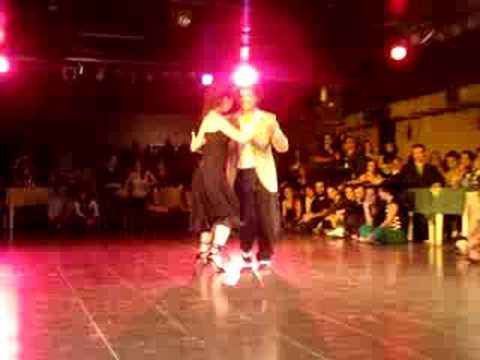

It's a classic. I don't know any other versions. Bizarre. Quick geeky moment. Well done, Paul and Bärbel, who said, does this version skip? So sometimes when a disc is transferred to LP or to CD, if the needle jumps from one groove to the next, then a very, very short bit of music is missing. So short that if you're not really paying attention you don't notice it. Now, this track, El Flete, it's a really famous D'Arienzo track, isn't it? It was used in the film The Tango Lesson, and it was on the first D'Arienzo CD on the FM Tango label, which I don't have in the room so I can't show it to you. It's upstairs, but it was one of the best tango CDs of all time.
The best tango CD of all time was Todo Juan D'Arienzo para usted, Volume 1. Yeah, I stand by that, even today. The best tango CD of all time, and I've got one. I don't listen to it anymore, but I've got one. Now, on this transfer, and I didn't notice for 10 years, just before the Variación comes and it goes, boom, boom, boom, da-ba-da-ba-da-ba-da, there's a little bit missing. And once you've heard it, it's like, you know, you can't get it out of your head. But, you know, we have other choices now. That was the tango tunes transfer, which is really nice. Let's have some more.
Any requests? Um, you know, I've just realized what we can do. We can do something really unusual. D'Arienzo related. So D'Arienzo mostly recorded everything in one take. And if there was more than one take, it was all the same. But there's an exception, a single exception to this, which is the tango from 1936, Don Esteban, where two different takes were recorded and they were different.
So D'Arienzo recorded two takes of Don Esteban and they're different. Now when I say different, I don't mean they're a bit different. I mean they're completely different. It's a different arrangement, and they were taken on the same day in consecutive takes in the studio. What the hell happened? Yenzingo Brodese has an interesting theory, which is that D'Arienzo didn't turn up for the first take so the band jazzed it up and then D'Arienzo turned up and they had to play it properly.
So we're going to play both takes, and the second take appeared by accident. For a long, for a long time we only had one version, the second version was printed by mistake. So you may or may not know that all the tango masters were destroyed in the early 60s by both companies, both Odeon and Victor. They destroyed all their masters because the masters were big physical objects and everyone thought tango's finished, it's old people's music, this stuff's just taking up space. Dag's got his head in his hands. So they trashed all the stuff.
Capítulo · 2:50:00
Why most of old tango's master discs are gone
In the 1960s, the record companies destroyed their own tango history.
“Everyone thought tango's finished, it's old people's music, this stuff's just taking up space.”
Everyone talks about Victor because the head of the company wasn't an Argentine, but Odeon did the same thing at the time. Anyway, D'Arienzo is with Victor and we think it was 1962 that all this stuff was trashed. But in 1961, some new D'Arienzo releases were made in Uruguay and they printed the other version of Don Esteban by mistake. It was an accident. No one intended to do it by mistake. But, you know, they probably sent a message to Victor in Argentina. It's just across the water. Yeah, it's 200 kilometers, half an hour in the ferry. Send this stuff over for us to print, and they sent the wrong one. Nobody knows what happened.
They're completely different. So first of all, I'll play the second version, which is the conventional one, and then we'll play the first version. And you can see if you can hear the difference.
The conventional, tamer take, the one most collectors outside Argentina knew for decades.
♪ Música · 3:22 ·
So that was take two, and after 30 seconds when we got to the chorus the piano went... Yeah, you got that? I'm showing the beats with my hand. That's vanilla flavour. Now have a listen to the other take.
The looser, jazzier first take, actually the one issued on the original 78 but rarely heard outside Argentina until recently.
♪ Música · 3:23 ·
Yay! Which one did you like? I think, you know, it's really clear, isn't it? So the jazzy one is the one that was actually released on the record. That second one, which is much jazzier, the first take. But in Europe, it's not the one we knew. Well, outside Argentina, for most people, it's not the one they knew because we didn't, we weren't collecting 78s, were we? We bought CDs or LPs and the CDs were all prepared from LPs and on the LP they put the second one, but the first one is the one they released, so I guess that's good.
So I'm getting a bit tired, it's lovely being here with you, so I'm going to stop talking and I'm just going to play D'Arienzo until you all get bored and fall asleep, which I guess will never happen, not with D'Arienzo. I need another orchestra for that. I see a problem with my strategy. Okay, let's just play some nice music and enjoy it. Until it gets dark in Norway.
You're lucky he's not in Throntheim this week. Dag, you are back in Bergen, aren't you? Yeah, I'm in Bergen now. It's getting a little bit dark now, actually. I can still see a bit of blue in the corner of your window. Well, you see, there's light outside. Is that as dark as it gets? Yeah, a lot of dark is good. That's it. It's quarter past 11 here. Okay. Great. I hate you. Right. Let's have some D'Arienzo. Let's have Retintín.
Praised by DJ Félix Picherna as a 1936 D'Arienzo track worth playing more often.
Yay! Cracking stuff. D'Arienzo 1936. It's a little bit softer than 1937, so to all the DJs, please play more D'Arienzo 1936. Félix Pecerna, our DJ godfather, said to us, play D'Arienzo 36. I think that's good advice. One more tango before we hit the waltzes, because the D'Arienzo waltzes in 36 are just amazing. How about something Irresistible?
The last tango before the closing waltz set, teased only as 'something irresistible'.
♪ Música · 2:22 ·
No, you're not getting any romantic, calming music. It's now time for the ultimate D'Arienzo waltz tanda, and then it will be time for a bit of Grieg. I'm sorry, it's just the best music in this year, apart from Nostalgias, which is awesome. I'm so glad, Dag, that you played the Charlo version. I wasn't sure if you were going to play it or not, because we don't talk about, we really don't, we really don't talk about this unless it's an emergency. And yeah, it was great that we heard it at the beginning of the evening.
So we've got these two strands, haven't we? We've got the traditional strand and then this evolutionary strand of D'Arienzo, but that's the bigger strand right now. It's going to take Troilo to make the other one bigger. So now I can do what I wouldn't be allowed to do in a normal milonga. So when I play a waltz tanda, unless it's a short milonga, I like to play four waltzes, but I think I'll play more.
We've already heard Visión Celeste. No, you played Irene. Which one did you play, Dag? You played Irene. I played both of those. Irene and Visión Celeste. So that leaves, I think, another seven or eight. I think I'll play six. Yeah? And then we'll play Grieg and, you know, we can all go to bed. You ready? Yeah, we are. Here we go.
Played as a non-tango closing bonus, a reminder that 1936 was a strong year for popular song generally.
It's no problem just picking one year, is it? Absolutely no problem at all. 1936, a fantastic year for popular music in the original sense of the word. Popular music, what do you think it means? It means music of the people. It doesn't mean popular in the sense of being light and it doesn't mean pop, which is how we think of it now. Popular music means music of the people. 1936, fantastic year for popular music. Really lovely to share this evening with you all. Thank you very much indeed.
“Popular music means music of the people.”
Tango By Year es de Dag Stenvoll y Michael Lavocah, publicado aquí con su permiso. El audio se reproduce desde SoundCloud.