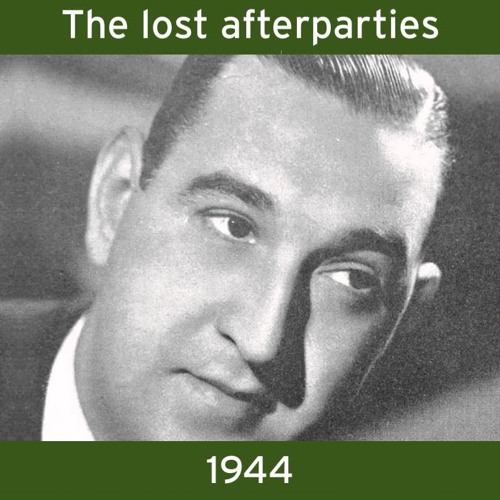
TBY Lost Afterparty II - 1944
Dag Stenvoll y Michael Lavocah · 20 de ene de 2021 · 3:12:11
This is the recovered after-show talk from the second-ever Tango By Year episode, 1944, led by Michael Lavocah rather than Dag Stenvoll. Lavocah recaps what Stenvoll played in the original broadcast (Laurenz, Di Sarli, Tanturi, Caló, D'Agostino, D'Arienzo and Troilo) and then plays roughly forty more 1944 recordings the main show never had time for, with Stenvoll joining partway through. The talk circles back to Osvaldo Pugliese, whose orchestra is 'bursting onto the scene' in 1944 even though recording quotas kept him from cutting some of his best compositions, and to Alberto Echagüe, whose more nuanced singing with D'Arienzo this year strikes both hosts as a real discovery. Along the way they place 1944 tango against wartime popular music in the United States, explain the Cuban pregón form behind a flower-seller's tango, and close by setting 1953 as the next year on the show.
0% escuchado
faltan 3:12:11
Lo que sigue, como se publicó
Tango 1953Episodio 29 · 27 de ene de 2021 · 3:26:02Lo que este episodio dio a Tangopedia
Datos dichos en el episodio, cada uno citado al minuto en que se dice.
With most young men at the front, the record-buying public was largely female, which pushed Frank Sinatra's romantic ballads to popularity over Tommy Dorsey's swing numbers and reportedly annoyed Dorsey.
Argentine tango's 1944 lyrics run between the same emotional poles as American wartime pop, soft romance against darker, heavier material, but tango's dark songs go further into gloom than anything from the Northern Hemisphere that year.
Doris Day's 'Sentimental Journey', recorded in the last days of 1944, only became a million-selling hit in 1945, after the war ended and people made their own journeys home.
Echagüe's 1944 singing with D'Arienzo shows a new nuance that both hosts call the discovery of the night, in tune with the times rather than looking back to the 1930s the way D'Arienzo's own band later would.
By 1944 Varela was arranging and effectively running D'Arienzo's orchestra.

Opened the second half of 1944 recordings the main show skipped, with a bright De Angelis number.
♪ Música · 2:36 ·

Played to showcase a violin solo by Francisco San Martino inside the Malerba sound.
♪ Música · 2:50 ·
Verlo bailado · 1

A D'Agostino-Vargas number to round out the pairing's 1944 showing, already represented once in the main show.
♪ Música · 3:23 · La letra, en la página del tango
Verlo bailado · 2

A second D'Agostino-Vargas title, back to back with the first.
La letra, en la página del tango
Verlo bailado · 2

Chosen to hear violinist Raúl Kaplún's playing inside the Demare orchestra.
♪ Música · 2:19 · La letra, en la página del tango
Verlo bailado · 108

A Laurenz title with Bermúdez singing, filling out the orchestra's 1944 recordings.
♪ Música · 2:23 ·

Played because Lavocah rates Laurenz's version of this song even more beautiful than Troilo's, which introduced it.
♪ Música · 2:22 · La letra, en la página del tango
Verlo bailado · 2

A D'Arienzo-Mauré side chosen to hear pianist Fulvio Salamanca solo.
♪ Música · 3:08 ·
Verlo bailado · 16

Part of building the case that Echagüe sings with new nuance in 1944.
♪ Música · 3:15 · La letra, en la página del tango
Verlo bailado · 73
Capítulo · 49:05
Echagüe's secret 1944 upgrade
The singer everyone thinks they know still had a surprise left in 1944.

Chosen partly to hear Héctor Varela's bandoneón counter-melody under Echagüe.
♪ Música · 1:45 ·
Verlo bailado · 54

First of a pair of Típica Víctor waltzes played together.


A Lomuto waltz played before moving into his tangos.
♪ Música · 2:08 ·
A Lomuto-Rivera tango added to the main show's single Lomuto pick.
Solo en el episodio
♪ Música · 2:07 ·

A second Lomuto tango, this time with Galarza singing.
♪ Música · 2:12 ·

First of several extra Di Sarli sides to balance the single Podestá track from the main show.
♪ Música · 3:03 · La letra, en la página del tango
Verlo bailado · 1

An instrumental Di Sarli pick, despite the milonga-sounding title actually a tango.
♪ Música · 2:00 · La letra, en la página del tango
Verlo bailado · 2
A second Di Sarli-Podestá vocal to go with the instrumentals.
Solo en el episodio
♪ Música · 2:47 ·

Closed out the run of extra Di Sarli recordings with another instrumental.
♪ Música · 2:30 · La letra, en la página del tango
Verlo bailado · 2
A carnival-themed Troilo-Marino tango, added to the one Troilo side the main show had time for.
Solo en el episodio
♪ Música · 3:14 ·

Troilo and Marino's version of Homero Manzi's lyric, played before the night's surprise alternate take.
♪ Música · 3:16 · La letra, en la página del tango
Verlo bailado · 6
Capítulo · 1:36:53
A heartbreak hiding in a love song
The night's surprise wasn't a new tango, it was who sang it.
A second, radio-era take of the same song sung solo by Nelly Omar, the woman Manzi wrote it about; billed as the surprise of the night.
Solo en el episodio
♪ Música · 2:58 · La letra, en la página del tango
A Troilo-Marino milonga, a change of pace after two tangos.
Solo en el episodio
♪ Música · 0:30 ·

A candombé-flavoured Caló milonga played right after Troilo's.
Solo en el episodio
Verlo bailado · 2

Framed as one of two very different, equally delicious versions of this tango, the other being Troilo's from the main show.
♪ Música · 3:16 · La letra, en la página del tango
Verlo bailado · 38
A rich, complex, poorly-recorded De Caro side, a surprise pick and a treat for his fans.
Solo en el episodio
♪ Música · 2:36 ·
Capítulo · 1:57:01
The song Pugliese wasn't allowed to record
Osvaldo Pugliese wrote one of his best tangos in 1944 and still couldn't put it on record.

Played to imagine what Pugliese's 'Recién' would have sounded like in 1944, even though recording quotas stopped him cutting it that year; he had asked Lucio Demare, on the same label, for permission to record it himself.
♪ Música · 0:06 · La letra, en la página del tango
Verlo bailado · 33

An underplayed, still-transitional Pugliese instrumental, picked as one of the less intense tracks before the finish.
♪ Música · 2:30 ·
Verlo bailado · 18
Capítulo · 2:10:53
The bass you could hear from the street
Before amplification, one bass player's sound carried out the door of a 300-person milonga.

An older De Caro-era tango getting the heavier 1944 Pugliese treatment, with a near double-bass solo.
♪ Música · 3:00 ·
Verlo bailado · 18

A tango usually associated with Laurenz, who wrote it, played here in Pugliese's version.
♪ Música · 1:10 · La letra, en la página del tango
Verlo bailado · 38
Capítulo · 2:19:48
The tango at the end of the universe
One held bandoneón note, and the whole room stops.

The closing, most intense Pugliese track of the night, built around a long held bandoneón note from Osvaldo Ruggiero.
♪ Música · 2:29 ·
Verlo bailado · 21

A De Angelis waltz from early in the year with Floreal Ruiz, before he moved on to sing for Troilo.
♪ Música · 2:05 ·
Verlo bailado · 101
Played partly because the music may be an early composition by Horacio Salgán, before his own band succeeded.
Solo en el episodio
♪ Música · 1:51 ·

A rarer Tanturi waltz with Campos rather than Castillo, in good Tango Tunes transfer quality.
♪ Música · 2:14 ·
Verlo bailado · 2

A sad-lyric Caló waltz with Iriarte and a chorus, traced back to a Peruvian original.
♪ Música · 1:57 · La letra, en la página del tango
Verlo bailado · 6

A very slow waltz mostly known from Di Sarli, played here in Biagi's version with a famously odd ending.
♪ Música · 2:37 · La letra, en la página del tango
Verlo bailado · 3
Capítulo · 2:50:01
The flower seller's trumpet
Why does this milonga just sing 'tarí tarí' over and over?

A Laurenz-Podestá milonga, picked over a better-known 1937 vocal version to play something different.
♪ Música · 1:42 ·
Verlo bailado · 1

Introduced as one of two lighter, less intense D'Arienzo-Echagüe milongas from 1944, less played than the orchestra's 1930s milongas.
♪ Música · 3:29 ·
Verlo bailado · 7
Capítulo · 3:02:57
From Gardel's backing band to his own orchestra
A violin virtuoso who once played behind Carlos Gardel got his own band, and it barely survived.

Picked to introduce Antonio Rodio, a violin virtuoso who once backed Gardel and later led his own short-lived orchestra.
Solo en el episodio
♪ Música · 1:51 ·

Closed the night with a female singer not yet heard, on a song several orchestras recorded that year.
Solo en el episodio
♪ Música · 4:17 · La letra, en la página del tango
Seguir por todos los episodios
Tango By Year es de Dag Stenvoll y Michael Lavocah, publicado aquí con su permiso. El audio se reproduce desde SoundCloud.