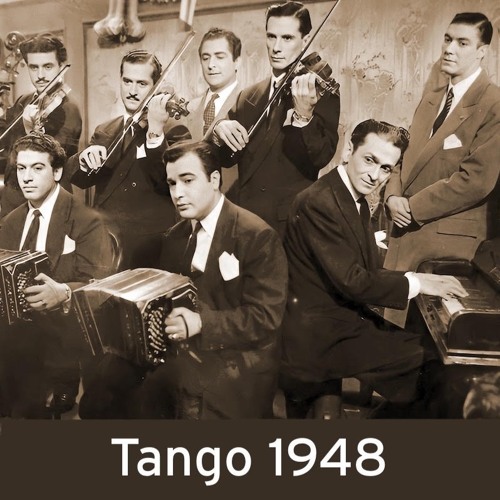
Tango 1948
Dag Stenvoll y Michael Lavocah · 25 de nov de 2020 · 3:24:52
Lavocah calls 1948 a curious year: tango is at a low point, with very few recordings (Canaro makes the most at 13, D'Arienzo 12, Biagi four, Laurenz none) as the censorship enforced from 1943 and the Perón government's pressure dry up new material and wear down the bands. Eva Perón's calls asking orchestras to play free concerts for her foundation helped drive some to disband, and Pugliese was banned in the whole country and nearly lost singer Roberto Chanel, yet his music became sharper and more complex (Negracha, Patético). Troilo (Sur, Cafetín de Buenos Aires, Ojos negros) and Pugliese are the year's stars, with Gobbi an honourable mention; D'Arienzo is already moving toward his 1950 style, Francini-Pontier, De Angelis and Tanturi offer a quieter, prettier sound, and Di Sarli records only two tracks. Stenvoll also plays Finnish tango, Cuban music by Arsenio Rodríguez and a Polish song in the after-party.
0% escuchado
faltan 3:24:52
Lo que sigue, como se publicó
Tango 1955Episodio 24 · 9 de dic de 2020 · 3:14:43Lo que este episodio dio a Tangopedia
Datos dichos en el episodio, cada uno citado al minuto en que se dice.
1948 has hardly any recordings: Canaro records 13, D'Arienzo 12, Biagi four, Laurenz zero. Tango is at a low point, partly because the censorship enforced since 1943 has dried up new material.
The orchestra showing the most development in 1948 is Pugliese; Troilo's work is very sophisticated; and the year offers many recordings by Alfredo Gobbi, an orchestra the community is still discovering. At the end Lavocah says the year belongs to Troilo and Pugliese, with an honourable mention for Gobbi.
Gobbi and Pugliese are both followers of De Caro, wanting complex but danceable music.
Maciel's first recording was Remembranza with Gobbi in 1948; he later brought the repertoire to Pugliese after Morán left in 1954. With Pugliese he is a dramatic singer with two gears, hold back then wham; with Gobbi he is more modulated and softer.
The calmer Rufino of the Francini-Pontier years was getting ready for marriage in 1949.
Suena ahora
Big Mama's back in townLouis Armstrong · Velma MiddletonWarm-up number before the programme starts; Stenvoll greets 'Big Mama, Velma Middleton and Tango Bayera back in town'.
Solo en el episodio
♪ Música · 0:58 ·
Capítulo · 1:52
Tango's quietest year
In 1948 Laurenz recorded zero tracks.

Jorge Maciel's first recording ever, years before he brought this repertoire to Pugliese; played so listeners can compare his voice with the later Pugliese rendition.
♪ Música · 3:30 · La letra, en la página del tango
Verlo bailado · 4

A super danceable, rhythmic instrumental where the rhythmic pattern changes every eight bars, so dancers have to stay awake.
Verlo bailado · 3

A ranchera, a rare genre for the programme, and the only ranchera Berón ever recorded.
Solo en el episodio
♪ Música · 2:04 ·

One of only two duets of Rufino and Berón together, a surprisingly good vocal match.
♪ Música · 2:23 ·

A waltz in which Rufino sings to his mother, more swingy and less typical of the orchestra.
♪ Música · 2:14 · La letra, en la página del tango

An early Sassone instrumental, between Fresedo and Di Sarli in sound, heavier and more playful than the later creamy Sassone.
♪ Música · 2:12 ·
Capítulo · 34:44
Eva Perón is calling
When Evita phoned your orchestra, you did not say no.

One of only two Di Sarli tracks of the year, with new singer Serpa; a beautiful, if less punchy, interpretation of a sailor's lament for a girl who left with a captain.
♪ Música · 3:11 ·
A waltz about a mother that was only on one rare CD, so is seldom played; it moves with a punchy beat.
Solo en el episodio
A milonga with the beat accent put on the off-beat before the one, creating an up feeling that dancers can swap between rhythm and melody; Canaro recorded another version the same year.
Solo en el episodio
♪ Música · 2:38 ·
Ray returned to sing with Fresedo after his solo years; it is risky to play because of the famous 1947 version with Troilo and Floreal Ruiz.
Solo en el episodio
From the new Tango Time Travel transfers; a reworked 1930s arrangement with more punch, already hinting at the 1950 style, about 5 bpm slower than usual.
Solo en el episodio

The second of two D'Arienzo instrumentals with the old 1930s arrangement, with Fulvio Salamanca's left hand clearly audible.

Instrumental waltz, played with the year's only D'Arienzo milonga.
A galloping milonga, 'like a racehorse', that is unusually long at 3:07, where Echagüe's street voice and Salamanca's improvised piano stand out.
Solo en el episodio
A Finnish tango, 'The moment of parting is beautiful', sent by a listener; Finnish tango developed on its own after the war.
Solo en el episodio
♪ Música · 2:57 ·
Capítulo · 1:18:36
Troilo: 'Not in my orchestra'
Troilo said he never heard Castillo sing a wrong note. And still said no.
A fast waltz often played at marathons; Castillo speeds up to the end almost like rapping. The older version is Canaro with Charlo, 1931.
Solo en el episodio
Vargas, backed by a conductor who can imitate D'Agostino's style, sounds like 1941-42 except for some daring piano harmonies.
Solo en el episodio
A heartbreaking song from a film, sung by Lamarca, who left Argentina after falling out with Eva Perón.
Solo en el episodio
Capítulo · 1:35:05
Banned in the whole country
In 1948 a policeman showed Pugliese a telegram: banned everywhere.

'One of the best tangos ever', composed by the second bandoneonist Jorge Caldara, with a rising opening motif and a dead stop in the band.
Verlo bailado · 424
Introduced as 'Leave me in peace' (a tango with a surprising full stop in the break); Whisper lyrics 'déjame en paz, quiero vivir'.
Solo en el episodio
♪ Música · 1:44 ·
Capítulo · 1:47:10
Too modern for 1948
Pugliese recorded a tango so advanced he dropped it after a year.

An exercise in polyrhythm, introduced by a special gloss; Pugliese dropped it after about a year because it was too modern for his audience.
Verlo bailado · 93
Gómez with guitars, a version Stenvoll prefers to Caló's and De Angelis's.
Solo en el episodio
♪ Música · 2:41 · La letra, en la página del tango

Piazzolla's own composition from his own band: a modernist track with 'marcato en ocho' (counted in eight), with so many ideas that Lavocah says it is 'less complete' than Negracha.
♪ Música · 3:00 ·
Capítulo · 2:06:01
What 'Sur' really means
One three-letter word, and every porteño hears the whole barrio.
One of Troilo's three best tracks of the year, a jealousy song ('aunque me muera de celos'); Stenvoll calls it 'Desvelo'.
Solo en el episodio

Lavocah's 'monster of a tango' in his Troilo book: Manzi's lyric encodes his lost love and impending death, and 'south' means the authentic poor side of the city.
Verlo bailado · 13
After-party: a Polish song, 'There is sun after the rain', released in the US as the Tuli Uli Duli Polka.
Solo en el episodio
♪ Música · 2:45 ·
After-party: a candombe-feel milonga by a Uruguayan band with new singer Julio Sosa, who became one of the most important 1950s singers.
Solo en el episodio
♪ Música · 2:18 ·

A waltz duet, starting with an octave piano introduction.
♪ Música · 2:10 ·
The second Canaro duet waltz; lyrics speak of looking for love and a woman's heart. Lavocah mentions a more complex version by Gobbi and one by a folk singer from 1949.
Solo en el episodio
'The second most important waltz of 1948', with a Tanturi version too; Stenvoll prefers Pugliese-Morán.
Solo en el episodio
♪ Música · 2:42 ·

A less conventional high voice (Ribó) that Lavocah asks listeners to give a chance; title means cut paper.
♪ Música · 2:15 ·

A complaint about how much attention foreign music (the bolero) gets, also recorded by Pugliese in 1947.

A nice D'Arienzo-Laborde track; Lavocah prefers Laborde in the second half of the 1940s.
♪ Música · 1:30 ·
An instrumental not recorded as often as other D'Arienzo repertoire like Felicia or Hotel Victoria.
Solo en el episodio

After-party: a very significant tango from 1948.
♪ Música · 3:30 · La letra, en la página del tango
After-party: also known as Cabeza de novia, a listener explained as being so absorbed in love you forget the world.
Solo en el episodio

The last tango of the night: Vicente Greco's composition (perhaps from 1910) in which Troilo finds more in it than was written.
♪ Música · 3:05 · La letra, en la página del tango
Verlo bailado · 19
Capítulo · 3:20:00
A blind man's song
He was told he would never see again. He wrote a song within the hour.
After-party: a Cuban song Rodríguez wrote the moment he was told in New York that his blindness could not be cured.
Solo en el episodio
♪ Música · 2:36 ·
Seguir por todos los episodios
Tango By Year es de Dag Stenvoll y Michael Lavocah, publicado aquí con su permiso. El audio se reproduce desde SoundCloud.