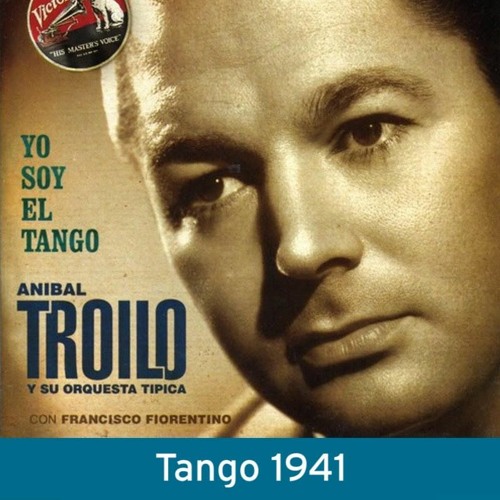
Tango 1941
Dag Stenvoll y Michael Lavocah · 9 de abr de 2020 · 1:59:57
Dag Stenvoll and Michael Lavocah spend their first Tango By Year on 1941, one of Lavocah's favourite tango years and the last year of the music's initial fast, rhythmical explosion. Troilo finally escapes a three-year dead-end record contract and signs with Victor, launching his breakout year; D'Arienzo, a year into a rebuilt orchestra arranged by Héctor Varela, is playing as fast as he ever will and gains singer Héctor Mauré. Biagi, D'Agostino, Laurenz, Caló, Fresedo, Di Sarli, Firpo and Tanturi are each finding or defending a personal sound, while Julio De Caro, tango's great modernizer, has lost direction chasing D'Arienzo's success and now makes music too undanceable for the milonga. All of it plays out against the war in Europe, which Buenos Aires' Italian and Spanish immigrant communities follow in the daily papers even as the tango world dances on.
0% escuchado
faltan 1:59:57
Lo que sigue, como se publicó
Tango 1944Episodio 2 · 15 de abr de 2020 · 2:35:33Lo que este episodio dio a Tangopedia
Datos dichos en el episodio, cada uno citado al minuto en que se dice.
1941 is the year Troilo finally signs his record deal with Victor, after being stuck for three years in a dead-end contract with a label that would not record him.
1941 is the last year of tango's accelerated, fast-tempo explosion that began at the end of the 1930s, playing out while first- and second-generation Spanish and Italian Argentines followed the European war daily in the papers.
By 1941 D'Arienzo had lost his whole orchestra over money; the new band, a year old, was arranged and run by Héctor Varela.
The orchestra D'Arienzo lost had recorded La Bruja, Pénsalo bien and (probably) Mandria; none of its members carried over into the 1941 band.
Mauré joined D'Arienzo in 1941 as a young singer with a rich, creamy voice that would have a big impact on the band over the following years.
Capítulo · 4:15
The year Troilo finally got his deal
Three years stuck in a contract that wouldn't record him. Then 1941 happened.

The first recording with D'Arienzo's new singer Héctor Mauré, whose rich, creamy voice would shape the band for the next couple of years.
♪ Música · 2:46 · La letra, en la página del tango
Verlo bailado · 11

Picked for violinist Cayetano Puglisi's solo in the final 30 seconds, which Lavocah compares in his book to the sound of a bee.
Capítulo · 13:13
The bee in the violin
Listen for the bee in the last 30 seconds.
Capítulo · 14:15
The pianist who got fired and landed on his feet
D'Arienzo's star pianist got fired in June. By August he had his own band.

An instrumental chosen to show Biagi's super-sharp, surprising marcato, with the piano filling in everywhere without dominating.
♪ Música · 2:51 ·
Verlo bailado · 29

A Biagi composition sung by Jorge Ortiz, played to show the bandoneón's low tremolo under the vocal and Biagi's trick false ending.
Verlo bailado · 23

One of the D'Agostino-Vargas classics most dancers already know, from the first batch D'Agostino recorded that year starting in July.
La letra, en la página del tango
Verlo bailado · 144
Stenvoll changed his mind and played this dialogue song instead of the planned El Choclo, to show D'Agostino's softer, more relaxed sound after the high-energy tracks before it.
Solo en el episodio

One of Troilo's best-known 1941 recordings, with lyrics by Cadícamo describing a real room he and his friends used to rent.
♪ Música · 1:55 ·
Verlo bailado · 51
An energetic Troilo instrumental played to show the band's more complex music: the left-hand piano runs, a David Díaz violin solo, and a true counter-melody from second violin Barrales.
Solo en el episodio
Capítulo · 44:51
The orchestra nobody could dance to
He invented modern tango. By 1941 he'd lost the plot.

Played to demonstrate De Caro's missing marcato: the double bass just plays another melodic line instead of marking the beat, so dancers lose the pulse.
♪ Música · 1:57 ·

A well-known, inventive, rhythmically rich Laurenz instrumental, chosen to show how he made De Caro's complexity more danceable.
♪ Música · 3:00 ·
Verlo bailado · 11

A rarely-played track Stenvoll had just rediscovered, only available in poor sound quality, recorded near the end of December.
Capítulo · 1:00:53
Argentina's only two record labels
After 1931, tango had just two record labels left - and one of them barely bothered with you.
One of only four sides Caló recorded in 1941 after years stuck in Odeon's contract limbo; Stenvoll played the vals from that session.
Solo en el episodio
♪ Música · 3:20 ·
A well-known tango that Troilo also recorded the same year; Stenvoll chose to play Caló's version of it.
Solo en el episodio

Played to contrast Fresedo's smooth, romantic sound against the high-energy orchestras heard earlier in the evening.
♪ Música · 2:21 ·
Verlo bailado · 7

A deeply characteristic Fresedo mood piece, recorded on the last days of the year and, Lavocah notes, probably the last 1941 recording played that night.
La letra, en la página del tango
Verlo bailado · 299

Stenvoll's one exception to his rule against playing Canaro from this era: an instrumental he felt was good and not recorded by other orchestras.
♪ Música · 1:00 ·
A track Lavocah calls a perfect three-minute story, building to a beautiful climax, and an underplayed example of Lomuto's work.
Solo en el episodio

A choppy, energetic Di Sarli instrumental from May, played to contrast with the more lyrical December track that follows.
♪ Música · 3:00 ·
Verlo bailado · 21

A far more lyrical December recording with new singer Roberto Rufino, showing how quickly Di Sarli's 1941 sound matured away from his choppier early-year, D'Arienzo-like tracks.
La letra, en la página del tango
Verlo bailado · 17
Capítulo · 1:46:14
The doctor who could sing
Tanturi found his singer at a hospital dance.

An early-year, up-tempo Tanturi-Castillo track showing the pairing that had just found its footing.
♪ Música · 1:06 · La letra, en la página del tango
Verlo bailado · 244

One of only four full-orchestra tangos Firpo recorded in 1941, chosen to show him chasing relevance in the D'Arienzo era.
A slower, more lyrical instrumental from later in the year, played to show Tanturi's sound shifting over 1941.
Solo en el episodio

The second of two rarely-heard 1941 Firpo instrumentals, with busy, octave-handed piano playing (likely Carlos García, conducting by this point).
Capítulo · 1:54:56
Tango's missing year
Over 300 recordings of La Cumparsita. Only two years have none.

Closing track: no version of La Cumparsita exists from 1941 at all, so Stenvoll used the closest recording, from mid-November 1940.
♪ Música · 4:00 · La letra, en la página del tango
Verlo bailado · 4
Seguir por todos los episodios
Tango By Year es de Dag Stenvoll y Michael Lavocah, publicado aquí con su permiso. El audio se reproduce desde SoundCloud.