Tango 1944
Dag Stenvoll and Michael Lavocah · 2020-04-15 · 2:35:33
1944 marks the full handover from Juan D'Arienzo's rhythmic dominance of the late 1930s to Aníbal Troilo's lyrical, more complex style, which every other orchestra is now following. Pedro Laurenz, Carlos Di Sarli, Ricardo Tanturi and Ángel D'Agostino all slow down and thicken their melodies, while singers reshuffle: Alberto Marino and Floreal Ruiz join Troilo as Francisco Fiorentino departs, Enrique Campos has already replaced Alberto Castillo at Tanturi, and Domingo Federico leaves Miguel Caló to start his own orchestra. Argentina's wartime neutrality cuts tango off from outside musical influence, letting the genre develop on its own terms, even as a global shellac shortage makes records physically noisier. Osvaldo Pugliese, not yet famous, and the fifth-ranked, lightly-regarded Alfredo De Angelis both get their first look-in on the show. The episode doubles as a birthday celebration for Michael Lavocah, recorded on his real birthday.
What this episode gave Tangopedia
Facts said in the episode, each now cited to the minute it is said.
1944 is 'the year of lyricism': Troilo's slower, more complex, lyrical style has replaced D'Arienzo's rhythmic, up-tempo dominance of the late 1930s, and even D'Arienzo himself is now following it.
Laurenz recorded 16 tracks in 1944, his most productive year ever, after changing record labels; he lost singer Alberto Podestá early in the year to Di Sarli and replaced him with new singers Carlos Bermúdez and Jorge Linares.
Di Sarli's sound changes the least of the big orchestras: from 1941 to 1958 it stays essentially the same elegant, subtle style built around a smooth violin surface, even as what's underneath grows more complex.
Di Sarli is quoted as saying 'if there is a melody which does not have the qualities I want for my orchestra, don't play it' — read at the time as a criticism of D'Arienzo's less selective repertoire.
Podestá made his recording debut at 17 singing 'José el tango' with Caló in 1941, and by 19 had recorded roughly 50 tracks across three major orchestras (Caló, Di Sarli, Laurenz) — a rare singer who sounded equally good with all of them.
Records played · 23
Transcript
Transcribed by machine from the audio, then punctuated; names may be misheard. Tap any line to hear it. The episode is in English, and so is its transcript.
Happy birthday, Michael. Thank you, Dag. Lovely to be here. Yeah, I'm extremely happy to have you here and that you want to celebrate your birthday with us. I can't think of a better way to do it. I mean, I've never been to a birthday party with this kind of setup. So, have you? No, my first.
Yeah, before this corny birthday tango, I played some Foxtrot from 44 by Rodriguez. But 1944, Michael, it's not really a Foxtrot year, is it? I mean, Foxtrot is a very happy kind of... It's the year of lyricism. That's what it is. It is.
“It's the year of lyricism. That's what it is.”
Our last event was in 1941, which was a fantastic tango year. And we started with D'Arienzo, which kind of defined the first part of the golden decade leading up to 1941. And we listened to more than 10 other orchestras recording from that single year, 1941. But tonight it's 1944. So welcome to 1944, everyone.
And it's amazing how much the music has changed in these years. In what way? Well, um, tango's turned around. But in 41 we were hearing already the beginning of that. So D'Arienzo exploded into popularity at the end of the 30s and everyone had to make music his way a little bit, which meant rhythmical and up-tempo. And in 41 we're hearing the end of that way, things are beginning to change. But it's kind of like everyone's doing the D'Arienzo thing and now that's not true anymore, you know. In the years that we've skipped over, 42 and 43, tango first of all slowed down and then it became a bit more complicated and that's maturing now. And the lyrical tango which Troilo is pushing, that's taken over and now everyone's got to follow Troilo's style, which is the lyrical, sophisticated tango. Even D'Arienzo, he's not immune. Look at all these birthday messages. Thank you, everyone. Yeah, so Troilo's style is now dominating the scene. So the slower music allows you to make more complex and lyrical music and that's what we see happening from everyone, even an orchestra like Enrique de Rodriguez.
Slower and more lyrical, does it mean that it's less good for dancing than 41? No, it just means it's different for dancing. I mean, if you want to go bang, bang, bang, bang, no, you can't do that. But you can do something else. It's much more expressive, let's say.
We will listen to Troilo, of course, but I think we'll start with another orchestra because since it's your birthday, Michael, I wanted to play your favorite orchestra first. Yes! And we did talk about the 1941 recordings of Pedro Laurenz. He recorded very few numbers actually, all in all. Of the bigger orchestras, he recorded less than 100 recordings in 45 years. But in 44, which was his most productive year in terms of numbers, he recorded 16 tracks.
Well, there's two things that are happening there. One is that he's changed record label. So that's going to contribute to, presumably that's on the understanding, look, give me more records and I'll sign with you. I'm famous now. Sign me, sign me. But I think of all the orchestras, he's the one that's changed most in these three years since our last episode. For a long time, for me, the Laurenz of 1944 is almost unrecognizable from the Laurenz of 1941. And it took me a long time to really feel the connection and to feel what was the same.
So when you say it's your favorite orchestra, do you prefer the 41 tracks or the 44 tracks? Oh, I think I prefer the 41 tracks. We get a little bit more of his special quality there, but this quality is still present in these songs and there are some wonderful performances.
Yeah, he loses his good singer Podestá early in the year, I think. And Podestá leaves him and goes back to Di Sarli, where he's been singing before. And most of the recordings from 44 are with the new singers, Carlos Bermúdez and Jorge Linares. And we're going to listen first to one of the waltzes with this duet with these two singers, Mendocina. Nice. I think although we've lost Podestá, and of course it's a wonderful voice, the voices that come afterwards suit the orchestra very well. So I don't think we lose so much with this change.
We're going to listen to Podestá as well, of course. So the second song, we're going to play two songs now, the first the waltz and the second song will be a tango sung by Podestá, recorded in March 44. So it's the same month that he leaves Laurenz to never return. And it's called Muchachos, mi último tango. Guys, my last tango. Let's listen to these two.

Dag opens with one of the new duet singers Laurenz took on after Podestá left early in 1944.
Danced to it · 5 of 19


♪ Music · 3:42 · The lyrics, on the song's page
Podestá's last recording with Laurenz, made the same month he left for Di Sarli.
And that's what's constant about these tracks that we're listening to now and the ones from the earlier period. Not so much in the waltzes. Waltzes are always a bit more generic. Every band waltzes, it's more regular. But here in the tangos, D'Arienzo is doing that a little bit, but it's very digital, isn't it? It's very, very loud and then suddenly it's very, very quiet, which works. But Laurenz goes like that, so you feel the lift off and he does it fast. It's a very fast change in volume and that's the way to recognise him.
What do we want to Di Sarli? Because Laurenz, he lost his first singer Podestá to Di Sarli in March 1944. And Di Sarli then loses him again to the solo career at the end of that year. But for a long time, or for several months in 44, for the star sings with Di Sarli.
But I'm gonna start with a question from last time that slipped our sharp minds, that came from Manuel Franz. He asked about 41, why was Di Sarli so much ahead of the time, moving already then in 41 to a slower pace and much more drama, at the same time Troilo was still playing super up-tempo. What do you think about that, Michael? I don't know if we can ever say why. I guess he's come quite late to the party, hasn't he? That's one thing, he hasn't been making music through these years, so 35, 36, 37, 38, he hasn't been running an orchestra. So he comes back at the end of 38 and well, we don't know exactly how it sounded, but Corazon when he starts in 39 it's still very fast, up tempo. And the first tracks that we hear, think about the instrumentals that follow on from Corazon like Catamarca, they don't really sound like, I mean, I don't know what you're gonna play.
So just to say something to all the people who are joining us tonight, Dag doesn't tell me what he's gonna play, that's the arrangement we have. I don't know which songs he's going to play, I don't even know which orchestras he's going to play. Of course I can make a guess, you know. I spend an hour or two before we come on air having a look at what I think is the interesting songs of the year, but he chooses the songs, not me. So I don't know what he's going to play.
So yeah, going back to Di Sarli, he's also made music that's untypical of what he's going to do and now in 1944 it's super elegant and really quite stripped back and subtle. Maybe his most elegant music. So, you know, Di Sarli holds his line, doesn't he? In many ways, he's the orchestra that changes the least. With the exception of this first couple of years, 39, 40, from 41 to 58, it pretty much sounds the same. Okay, style changes, different recording technique, bigger violin section, but more or less he just does his thing. So I think he gets in touch with what his thing is quite early and it's not a super sophisticated thing. So what Troilo is doing is more sophisticated, so then it's kind of natural that it's going to change as he thinks, oh, I can do that and I can do that and I can do that. But Di Sarli's not thinking, oh, I can do that, he knows what he's doing and he just carries on doing it.
See, I was listening through the Di Sarli tracks for 44 and it's rugby, they're incredibly high level. I think they're so even and when you look to the other, listen to the other big three orchestras like Troilo, D'Arienzo, Pugliese, there are some really nice songs but there are also some like average songs and even some that are a bit boring. But it's hardly, I could have played all 14 recordings in 44, I could have played all of them, it's such a high level. We'll see more like, picky with his recordings, we'll see more perfectionist than the other orchestras? Well, he was picky but we can't say more picky than the others. I mean, very particular about the repertoire, there's this wonderful quote which was interpreted at the time, correctly I may say, as criticizing D'Arienzo. He said, if there is a composition, a melody which does not have the qualities that I want for my orchestra, don't play it.
“If there is a composition, a melody which does not have the qualities that I want for my orchestra, don't play it.”
Now Troilo is also really, really picky, but I think Di Sarli is more. Because Di Sarli has got this beautifully elegant violin surface layer, so if you just listen to that it's so easy to get into the music. You don't really need to hear how complex the music is to enjoy it. So listen to the violins, yeah, it's great, it kind of sounds the same if that's all you're listening to. Now Troilo, that's not true, the complexity is much more obvious, but Troilo was probably even more choosy than Di Sarli, but he demands more from us as listeners.
Okay, let's listen to two songs by Di Sarli from 1944. Vuelve a llover from May with Podestá singing, it means it's raining again, it's a title we can really relate to here in Bergen. And the second one is an instrumental. You said last time that the 40s, early 40s instrumental by Di Sarli is a bit underplayed because there's so much more, so much alternatives for DJs from the 50s and also great singers in the 40s. So I play Un lamento from November, which means a kind of passionate expression of grief or sorrow. It was recorded also back in 29 actually by Sexteto. And for me this track really shows a couple things that you write about in your Di Sarli book. Firstly, the use of his left hand on the piano, this kind of growling bass that just compels you to walk. And secondly, you hear this really well, this weeping violins and counter melody that you've been talking about in your books and your lectures. So let's listen to these two masterpieces by Di Sarli, Vuelve a llover, and then after, Un lamento.
Dag translated the title as 'it's raining again'; the exact Spanish title was not said clearly.
♪ Music · 3:17 ·

An instrumental Dag picked to show off Di Sarli's growling left-hand piano bass and weeping-violin counter-melody.


I was wondering, Michael, if you could say a few words about Podestá, because we played a song from him. He recorded in 1941 when he was singing with Caló, and I think it was his first recording when he was 17 years old. He came in and sang Josué el Tango. And then he played for Di Sarli, I think. I sang for Di Sarli and then Laurenz and now back to Di Sarli again. So at the age of 19 or something, he's been like recording 50 tracks for three great orchestras. Why did he move around so much?
“The amazing thing about Podestá is that he sounds good with everyone.”
Because he could. The amazing thing about Podestá is that he sounds good with everyone. Now, that's not true of lots of voices like Raúl Berón, for example. For many people they go, Berón with Caló, but then with De Marley they don't like him so much. Or whichever singer you pick, you say, this singer and this orchestra, that's the right combination. But Podestá is good with everyone that he sings with. He's great when he sings with Caló, he's great when he sings with Di Sarli, and he's great when he sings with Laurenz. And even the two periods with Di Sarli are almost like two different orchestras. The 42 and the 44 sound are so different.
He got a little bit of a reputation for being one of these guys who changed orchestra a lot, just like his colleague Ruffino in Di Sarli's orchestra did too, but he was a much more mature singer than Ruffino so it didn't cause him any problems and he was just enjoying his success. Because Ruffino was also really young, wasn't he, so they were just like enjoying their success. Also very young but didn't have such a strong head on his shoulders. Podestá was a more mature individual.
Okay, let's go on to another orchestra that, like Di Sarli, had some recordings around 1940 that was almost a D'Arienzo style, rhythmical, but he makes a successful transition, like Di Sarli, to a slower and much more lyrical style, and that's Ricardo Tanturi. Because in 41 it was Castigio who was singing for Tanturi and we listened to a song of him at their last event. He left in the middle of 43 and from then Tanturi records the new singer Enrique Campos. And Michael, you write in your book Tango Stories that in Argentina they say Castigio has the better voice, but Tanturi, Campos is better for dancing. Yeah, what can you say about this?
I'll never forget that, who said it? Well, many people, but oh gosh, story time. Maria Vigilobos, I think most people listening won't have a clue who that is, but you know who Tete was. And when Tete first became known outside Argentina, he was dancing with an amazing milonguera called Maria Vigilobos, a very, very strong woman, very much his equal. And that's what she told me, actually. That's the first place that I heard that. It was kind of like a quiz question. You know, when you go to Argentina, they ask you questions and there's a right answer and a wrong answer.
Coming back to the topic, Tanturi Campos. So Tanturi Castillo, rhythmically very strong, particularly the early tracks that you just talked about.
Now, what do we get with Tanturi Campos? Rhythmically, it's still strong, but the melody has come up. The violins have become thicker and creamier. So there's a very nice balance between the rhythmic part and the melodic part. And I think that's what makes the music so enjoyable for dancing. Gives a lot of choice to the dancer.
All right. We'll listen to a couple of his recording. He made 20 recordings actually in 1944. 18 tangos with Campos singing and two instrumental waltzes.
So since it's your birthday, we're going to listen to one of the waltzes. The Dead El Alma, the last one. But for that, we're going to listen to Calla, bandoneón, which means like, keep quiet, bandoneón, or something like this. This is lyrical stuff, isn't it? It's a different feeling from Tanturi 1941. Enjoy!
A waltz played for Michael's birthday, picked to contrast with Tanturi's rhythm-first 1941 sound.
♪ Music · 4:39 ·
It's kind of a coincidence that you chose Desdé Al-Alma. Again, I had no idea which Tanturi tracks you might have chosen, but I've just been looking through how many participants are we now, Dag? I think we're up to 130 or something. Oh, well. It's your birthday party.
Of the participants with us is Teresa Faos, a very well-esteemed colleague and friend from Munich, and I don't know whether, well, I'm sure that some of you watching and listening with us have been following the series that Teresa's been doing on Facebook, where she's been taking a well-known tango and comparing different versions, not necessarily from the same year but just picking out the qualities of the different interpretations. And Diz de Alama is a track that she picked about a week ago, and really talking about what's special about the Tanturi version. And on the one hand it's got this great swing, and on the other hand the quite staccato feeling. So it's got these two elements that I was talking about before. So, Teresa, thank you for that, and we look forward to the next songs you're going to compare, and it's nice that you're with us tonight.
Yeah, I want to just say that too. I mean, thank you, Teresa, and your others, check out our website, it's really interesting, and Teresa, just feel free to also write your website address in the chat, but you can also find it on Teresa's Facebook page.
Okay, so let's move on to two bands we listened to last week, um, from 41, according to 41, Ángel D'Agostino and Miguel Caló. We'll listen to both of them, but with D'Agostino there's not so much new since 41 is, sir, because already there then he was kind of playing slow, lyrical, um, so it's not that big difference, I feel. What do you think?
Well, it is and it isn't. I mean, okay, it doesn't sound so different, but it's got a lot more complicated. Why is it that with D'Agostino, if you know, what's the lazy choice as the DJ with D'Agostino or the safe choice with D'Agostino? You're going to pick El Jacare, Tres Esquinas, Adios Arrabal, maybe Ora No Me Conocces, oh, or the 41 tracks. That's kind of interesting, isn't it? Your mind wouldn't leap to the 1944 tracks because when you really pay attention to the rhythmical part of D'Agostino it's become a lot more complex, but it's not so obvious, so it's a bit hidden, that complexity.
Yeah, we're going to listen to Mano blanca, from, which means white hand, and my friend, our friend Gabriel told me that you write that somewhere, that this is actually about a donkey with white hooves, is it, and why would someone record a tango about the donkey this year of big drama?
Chapter · 39:10
The Tango About a Donkey
A huge drama year, and someone records a love song to a horse.
I'm only glad that we're not listening to Notiapuras Cara Blanca.
So in the old days, the old days, Buenos Aires was La Gran Aldea, the big village, and I think it's difficult, most of the people listening here are Europeans, and if you're European and you live in a city, then you live in a probably quite an old city which is very much defined spatially by its geography, like they're in Bergen, you know, you cling to that little bit of coastline and it's not that easy just to carry on developing the city in land. Now that takes work. Now in the Americas that's not true.
There's just land and it just goes. I remember visiting a suburb of Dallas in my former life as an engineer, and the edge of town, it doesn't really end, it just peters out because there's this space and the roads just keep going. And Buenos Aires was like that, so there was this very free interchange between city and countryside. There's a tango called El Lechirito, which means the milkman, and farmers used to walk their cows into town, and if you wanted a liter of milk, a pint of milk, they would just squeeze it fresh for you. So these things were part of life. Not the put his Cara Blanca, the guy sings to his horse, Cara Blanca, white face, and it's an extremely sad song, so I don't want to listen to that my birthday.
But anyway, that's from 1942, so I'm safe actually. I have to say I never paid attention to the lyric, but, um, yeah, it's interesting because it has a bit strange structure, not strange, sorry, an original structure. It starts with a verse, um, and then, uh, Vargas comes in and sings the chorus, so it's, there's more singing than it's usually in tangos of this time. So listen to that change, isn't it?
And again, listeners, viewers, thanks. Choosing the years, I mean, I know what the year is going to be, that's all I know. So he's decided 41, and now he's decided 44, but 45, which is not going to be next week, I'm quite sure, you really see this change happening. And again, it's Troilo who's pushing the change. It's like, well, the lyrics are important and we're writing really nice lyrics, wouldn't it be nice if we could hear a bit more of the lyric? So that starts to change. Now we start to get more of the lyrics, so that's already creeping in this year. Probably that's why we can hear so much of the lyric in this song. So let's listen to Mano Blanca with Ángel D'Agostino and singer Vargas, of course.
A song that sounds romantic but is actually about a milkman's cart-horse with white hooves.
♪ Music · 2:16 ·
Oh, that's sweet, isn't it? A lot of singing, but it doesn't really feel too much.
It's so subtle, the audio singing. It's perfect, isn't it? It's always very balanced.
Let's go on to another orchestra that sings smoothly or has smooth singers, Miguel Caló. Last week on Tango 1941 we talked about his just starting recording again after a break. He was also in this Odeon record company, Deadwater, that Troilo was stuck in for almost three years. And we listened to two tracks from that year with Alberto Podestá.
But Caló's real breakthrough came in 1942 with Raúl Berón, wasn't it? Who had been singing in the band.
We can talk about that another time maybe, but yeah, he accidentally created a unique style in 1942. Yeah, and Berón became identified with the orchestra, and in 44 Berón it was only a few months with Caló, in spring and summer he recorded a few tracks. So in 44 Podestá is also gone from the Caló orchestra because he sang with, for this, with Laurenz, and then, desirely, and the singer with most Caló recordings in 1944 is Raúl.
Can you say something about Iriarte as compared to Berón, for instance?
For a long time I didn't really like him. I have to confess, but maybe it's for many people it's a taste that takes longer to develop. Once you acquire it, it's nice. As far as Berón goes, he's become famous, so he's also trying his luck, and when he leaves Caló it's in fact to really become a soloist, and he starts the ill-fated, in the ill-fated orchestra of Orlando Gogni.
Chapter · 46:48
The Orchestra of the Stars, Breaking Up
In 1944, Miguel Caló's dream team started walking out the door.
He's briefly with Gogni. We have to wait until he joins Troilo before he really makes great music again, I'd say. And specifically with Caló there's, there was a constellation of musicians in these early years ending in 43 really, which looking back they called the orchestra of the stars because everyone was just a great musician, and it's already beginning to break up.
So Domingo Federico, I don't know if you're gonna play Domingo Federico tonight, or I have no idea. We'll see. Yeah, it's a mystery. So he's one of the band of your players in the club orchestra, one of the main band of your players, and he's left now to start his own orchestra. And then next year, so not 44, 45, this orchestra of the stars is gonna go supernova, and all the big names are gonna go their own way. So we're just coming to the point where people are thinking, nice music, but I'm done with it now, time to do my own thing.
My impression maybe is that you're not a big personal fan of Caló, is that true?
Um, yeah, it's not my favorite, I have to say. Like, um, a lot of the time Caló is kind of competing with Troilo now. If I phrase it that way, I'm already going to lose, aren't I? Yeah, so maybe the secret is not to look at it that way, but there was a rivalry between these two orchestras that was remarked upon at the time.
So there's quite a big overlap between the repertoire as these things go, and if you have to choose either the Troilo version or the Caló version, which version you're going to choose? La Vigérard, I don't know if we're going to hear that tango tonight, a tango that begins with this beautiful violin solo. Now completely different interpretation from the two orchestras, with Caló you get this beautiful sweet violin of Francini opening the piece, but for me that's the best bit of the interpretation, is Francini's violin. With Troilo you get very dark violin tones, but that's just setting the scene for what's to come, which is going to be much more complex.
So if I compare the two, Troilo's always going to win. And in fact, if you compare Troilo with anyone, mostly Troilo's going to win.
I agree on you with that. And I'm not going to play a recording that's recorded by Troilo, I think. But the first song is La Bonne, You Know Savia. It's with Berón. And it's also recorded by Tanturi with Campos on exactly the same day, actually, on April 27.
And can we just find out, it's also recorded that year by Pugliese, so we've got three interpretations by three really strong orchestras. Yeah, so you should go after this, uh, this event and listen to the other ones, so maybe Teresa wants to do a comparison of them on her site.
Anyway, the lyric of this one is about, uh, tragic love, surprise, at least the guy realizes he's been an idiot, you know, that's a plus. Second song I'm gonna listen to is quite special, it's called Fantasma, it's with Iriarte. Fantasma means ghost, and it's a song about a woman coming back to the guy who's singing. So, um, let's listen to these songs. And Fantasma by Carl.

Picked for its strange, unique mood; actually played before the next track despite being announced second.
A tragic-love song recorded the same day as Tanturi's Campos version and also cut by Pugliese that year.
Yeah, I guess you heard that this was played in the opposite order, and I said, it's quite spooky, the first song, isn't it? It, this, uh, Fantasma, what do you think, Michael?
Sorry, I was muted there. I really like that Fantasma and, um, established its own mood, so I liked it first of all because it was quite a strange mood, but also because it was really quite a unique sound, and Caló's are not really copying the repertoire of the style of anybody else there, so it's a really nice experiment, not a track I know very well.
Yeah. Okay, let's move on. Um, in your book Tango Stories, which everyone should read if they haven't already, you have chapters on, of course, the four big orchestras, and then you have, uh, chapters, like 15 chapters on what you call second tire orchestras. A lot of them we listened to, uh, last week, 41. We're gonna listen to some more today, but there was one orchestra you just mentioned, Federico, that you didn't include in Tango Stories because you call it a third tire orchestra, among with Francine Pontier, Salgan, Varela and Maderna and even Sassona.
And I think this, I mean, it's your birthday, so I'll say this in a nice way, but this is an insult, because Federico is definitely a second entire orchestra and you should have had a chapter on it in your book.
Yeah, you're absolutely right. You should have been there. So there will be a chapter in the second edition. Well, of course, there'll be a third edition now. We're already on the second edition.
There's somebody else that I left out that's even more of an admission, and that's Gobby. Gobby should have been there, but yeah, you're right that Domingo Federico started his orchestra in 44, so before my 1945 watershed cut-off year, and with a special mood creates his own style and has his own repertoire.
Yuyo Verde, that was a hit first of all for Domingo Federico, not for Pugliese with Moran, for example, and Senda Florida. Yeah, and something I think that's become really quite appreciated and loved, in say, in the past five years on the scene. Yeah, I guess it's become more popular, as you say. Of course, I didn't hear it like 10 years ago. I didn't hear Federico, but you hear it more and more.
And yeah, he was a band on a player for Caló, but he was also an important composer, like he composed Josué El Tango, which was Podestá's debut with Caló. He also composed El Compas del Corazón, which was so important for Caló's fame in 42, and even Per Cal was, so he wrote really good stuff.
What are we gonna hear, Dag? We're gonna hear Saludos, it's an instrumental from April, is his first recording, that's also his own composition. And then we're gonna hear Yuyo Verde with the singer Carlos Vidal from September, and that's also Federico's composition. As you said, it was recorded, and maybe it's more known also in the versions of Pugliese, Troilo from early 45, and also Biagi recorded it in 45.
Okay, so one comment now before we listen to the Federico track, and it's not about these tracks in particular, is listen to the bass line in the piano, because what you get is, it's like a walking bass actually. That's like in pop music we talk about a walking bass. It's a very similar effect in the left hand of Domingo Federico's. A pianist whose name has escaped me for the moment. And that's part of the unique example of his sound.
All right, great, let's listen to Saludos and then Yuyo Verde by Federico.

Federico's own composition and his new orchestra's first recording, played to show his walking-bass piano style.
Danced to it · 5 of 15


♪ Music · 2:00 ·

Federico's own composition, later better known from Pugliese's and Troilo's 1945 versions and Biagi's 1945 recording.
Danced to it · 5 of 34





I think the sound of Federico, there is some Caló in there obviously, but it's more powerful. As you said, the walking beat is very strong. And I remember last week you talked about the caro, that it was very interesting music because it gets into your head and your heart, but it doesn't go any lower. And for me, Federico, it really gets lower. I mean, it's super sexy to dance to Federico. It has this really strong, strong walking beat.
Yeah, and that beat is very clear and simple to walk on, so it's very easy to connect to as a dancer. Simpler than the Caló tracks you played, because when we listened to Caló, Caló was another orchestra, it's one of the musicians orchestras, in the sense that everyone in the orchestra was very able, could compose, and they wanted to do stuff that was interesting. So, okay, Caló's already one orchestra back now, but they're changing the, call it the model of marcato. The marcato is how the orchestra is marking out the beats, so you can go, or you can go whatever the model is, or with syncopation. And when you listen to Caló, he's messing around with that quite a lot, and for me sometimes it's too much, and that reduces the appeal for me of Caló as a dance orchestra. And Federico's gone the other way, he's always going to keep it really simple. The bass notes ring out legato, so either the pianist is using the pedal, but quite unlikely, that's what pianists do nowadays, so probably every time he hits the key he's holding his finger on the key so that simple bass note can ring out. And that's very easy to connect to for dancers.
Yeah, okay, so let's move on to an orchestra we haven't heard today, or and he wasn't recording yet in 41, Lucio Demare. He was a pianist and he also had the Barón singing for him for a while, but in 44 it's Horacio Quintana that's his singer. Yeah, and a romantic orchestra but also quite muscular and strong, particularly in the early years. Horacio Quintana, I think we can say something similar to what we were saying about Iriarte with Caló, maybe not the best singer but still really good with the orchestra. Quintana is chosen because he sounds a bit like Miranda, Juan Carlos Miranda, who's the guy who sings Malena with Demare, great singer. I don't know why he goes, actually probably he just gets bored and wants to do something else, but Quintana's in a similar mode. So again, I don't know what you're going to play. Maybe you're going to play Igual que un bandoneón. But for me, it really suits the orchestra very well.
We're going to listen to Oriente, actually, because I really like this track. It's something that stands out that's very different in the sound. There's a clue of that in the title, isn't it? Oriente, meaning the Orient, not Uruguay in this case, but the East. So you get a different musical mode that's got a slightly Arab feeling. It does, doesn't it? Let's listen to Oriente by Demare, with singer Quintana.

Picked for its distinct, slightly Arab-sounding musical mode, named for the East rather than Uruguay.
♪ Music · 2:23 ·
Yeah, it's very orientalist, isn't it, in the sound? Is there much inspiration from North Africa in tango in general, Michael? Yeah, it's a different musical scale. That's what we mean by mode. So, normal Western major mode, and then the minor mode, but you can make many, many different combinations of these notes, and here we've got another one, so it's a flavor that we don't often get.
All right, let's go on to another orchestra that's quite well-known, Troilo. And as you said in the introduction to today's event, so Troilo was really important for this sound in the 40s, this period. And in 1944, his star singer Fiorentino leaves him. He makes his last recording in March. And Alberto Marino, who's been recording with Troilo since 1943, becomes the main singer. And then the third guy comes in, Floreal Ruiz. He is at the time singing with De Angelis, actually. But he comes in and makes very few recordings at the end of 1944.
And I was thinking about what we talked about earlier, that what the Argentinians say about Tanturi's vocalists, that Castigio is a better singer, but Campos, the best for dancing. But they wouldn't say that about Fiorentino and Marino, would they? Fiore is irreplaceable. We could spend a whole evening just listening to Fiorentino and what he did with Troilo, or let's turn that around, what Troilo was able to do with him. Because Fiorentino was a very adaptable singer. But Marino, who comes in now, is a very different singer to Fiorentino. And I'm not just talking about the qualities of his voice or his qualities of expression, like saying, well, one's good for this kind of repertoire and one's good for that kind of repertoire. Marino has had a full opera training, a bel canto training. He's been to opera school.
So that means his voice as an instrument, as a musical instrument, is more highly trained than Fiorentino's is, and it can do things that Fiorentino's voice can't do. I'm not saying it's a better voice, but it can do other things. So for example, he can go super, super loud and then immediately drop to going very quiet, but not whispering, still singing really clearly. And that's something that's very important for Troilo, because Troilo is looking for what's the most expression I can put into tango music and it doesn't break the box. So this ability for a singer to go from there to there like that, it's very important for Troilo, and it's something that Ruiz is able to do as well. And then the singer after Ruiz, Rivero, think about Sworn when he sings in a whisper, like that.
So just coming back to what you introduced, the music's getting more complex as we go through the 40s. We're now in a year where that's really quite obvious, and maybe Fiorentino couldn't have done the kinds of things that Troilo's now going to start doing with Marino. So sad as it is, and we don't know what Fiorentino would have done with Troilo if he'd stayed, this change to Marino and Ruiz, it kind of enables the further development of the Troilo Orchestra.
Yeah, let's listen to Marino actually, and I picked a song called Alhucema, which is interesting because it's about a funeral and a black magic woman. And I was thinking back to Demare's song Oriente. It has the same kind of, you say, ethnic or exotic theme, some kind of African theme in tango, and you see that quite a bit in tango, don't you? The black theme, not as much as we'd like to, but yeah, it's often there. I think often we don't notice it.
Okay, so play that, and after that an instrumental which I really like, it's called Piropos, which means pick up lines. That's the best translation I've ever heard for piropo. It's exactly right. So let's listen to first Alhucema with Marino singing and then Piropos.

A song about a funeral and mourning for a Black woman, picked to echo the exotic theme of Demare's Oriente.
Danced to it · 5 of 8


♪ Music · 2:46 ·
An instrumental whose title Dag translates as 'pick-up lines'.
All right, that's a powerful song, isn't it? Very lyrical. There's a question from Ines. You see that, Michael? Yes, that's a good question. So maybe some of the viewers don't realise that there's a chat window. If you can't see the chat window then you need to go to the Zoom menu and you can get it up and see all the comments that people are making as we're listening along. And Ines asks us about the lyric, it seems to be talking about foreign or ethnic women, is it just a coincidence? And she's asking specifically about the lyricist.
Now about the lyricist I'd have to look it up, but what does foreign women mean? The Argentine nation isn't fully formed yet and there are still all these foreign influences. There are still a lot of black people there, and excuse me for just using the words very boldly, but mulato, mulato, that's a word you hear in the lyrics, meaning half-castes, the people who are half black, half white. So all these different ethnicities are much more obvious at this time, and tango has always been about nostalgia, so it's always talking about stuff from the past. Go to Argentina today, you don't see black people. It's kind of a bit of a mystery where they all went. Or Asia Sanguinetti, yeah, that's he's an Argentine, there's stories about him, he came to a very sticky end. I don't know enough about his story to say whether that really relates to these particular lyrics, but there are many people making lyrics about women of different ethnicities, so not just about Sanguinetti.
“The black theme, not as much as we'd like to, but yeah, it's often there. I think often we don't notice it.”
So that was Troilo. I mean, it's very nice to listen to Troilo from this period because it's so emotional. I think it's very, very deep. If you think about the head, the heart and the feet, I think it goes straight to the heart. I think it goes everywhere, yeah, I guess. And Piropos, you know, when I started dancing, you'd never heard that, way too complex. But now we dance it and we like it and we find that complexity accessible. So as the community, we've all evolved so much. I think that's wonderful.
Okay, let's go on to another orchestra that we haven't listened to before. Alfredo De Angelis. He was a pianist and he made his debut in 41, but the first recording was in 43. Now to be honest, De Angelis is not really my cup of tea, but I really like his recordings, his early recordings. You mentioned that Floreal Ruiz, who sang for Troilo from the late 44, and he was singing with De Angelis when he was, I guess, poached by Troilo. It must have been a great call from Troilo to get Ruiz, to be asked to sing for him instead of De Angelis, don't you think?
Well, yeah, and Floreal Ruiz was, it's not like getting Podestá to sing for your orchestra, a singer who's already established his credentials. He's a nobody really, wouldn't, when Troilo discovers him. And let's say something about De Angelis, which is maybe going to provoke the viewers. So like De Angelis today is looked down upon, let's be honest, you know, as a light orchestra, light being spelt L-I-T-E, like Coca-Cola light. That's how he's viewed. And even back in the day, he was sometimes called una orquesta de calesita, the calesitas, the merry-go-round, the kind of music that you'd hear at the funfair. So basically not taken seriously.
And in the mid-40s, so in 1944, there's the big four orchestras. Yeah, they actually, oh gosh, now I've dug a hole for myself because Pugliese isn't famous yet, we haven't got to him, but he's not famous. Pugliese is not famous till next year, did you know that, viewers? Even if we accept these big four, number five is De Angelis. In the mid-40s De Angelis is the number five orchestra in Buenos Aires. Dag's holding his face in his hands. And like today, he's not in the top 10 and he only gets into the top 20 because there's not that many orchestras that make recordings. So he's really dismissed. He's not taken seriously musically.
“De Angelis today is looked down upon, as a light orchestra, light being spelt L-I-T-E, like Coca-Cola light.”
It's gone so far. I mean, I'm not going to pretend that he's at the level of the big four. And the reason that he's number five, he's appealing to a different audience. That's something to bear in mind. So every orchestra has got a nickname, uh, D'Arienzo's, uh, um, De Angelis's nickname is la típica de la simpatía. Simpatía means niceness, it's the nice orchestra, it's an orchestra that you can take your children to and they won't be offended. Yeah, and it's lightness. Maybe that's also why his, uh, his waltzes are quite a lot played. I mean, these are kind of playful, the waltzes? They're playful and the two voices, the duo of Julio Martel and Carlos Dante, blends together very well, and there's a lot of waltzes, and the serious orchestras like Di Sarli, Pugliese, Troilo, we're not recording many waltzes. So when you're looking for waltzes you're going to turn to De Angelis. But I think in a way he's now underrated. The pendulum has swung too far in this direction and even when he does have something good to say we're kind of ignoring it.
But yeah, coming back to where you brought us in, Dag, Ruiz starts with De Angelis, and Marionetta, is that Ruiz's first recorded with Troilo? I think it is. It's also something he recorded with De Angelis, so we can compare those two, we can compare those two recorded very close together in time. I really like Ruiz, his recordings with Troilo, some of them are just outstanding. And I also find some of these early recordings with De Angelis quite nice. And I'm going to play one of those, Bajo el cono azul, Under a Blue Halo. And it's De Angelis' own composition. And there is something called a glosa at the introduction. Michael, can you tell us what a glosa is?
Can I tell a story? I like telling stories. You know, that's what I do. So Eduardo Aguirre, there's another milonguero, do you know who Eduardo Aguirre was? Eduardo Aguirre, his other nickname, well, his nickname, that's his real name. His nickname was Eduardo del Cologne.
He was an electrician in the Cologne opera house and I met him in the late 90s and the lifestyle that people talked about, he lived. Now what was that lifestyle? You danced all night and then you went to work and he did that. I remember one night in El Magro.
El Magro. Anyone who's been to the El Magro Milonga, please type in the comments. El Magro was, I want to swear now, it's an amazing milonga. Excellent. Me, me, me. Look, Teresa Faust, Annette, I don't know who you are. Steph Godridge. Steph Godridge, you're in line tonight. El Magro. El Magro is, oh, it's so nice that you've been in there. It's now closed and it's a gym. God, that's the way it goes. But I remember one night we danced in El Magro to 4 a.m. and we went to a cafe and, you know, 15 people and Eduardo Aguirre was there and, you know, I think he drank a whiskey and then he went to work directly afterwards. God, I've lost my thread.
How did I get into this? I'll ask you what the glosa is, because Néstor Rodi, the announcer of the Angelis, has a tenor. Yes, I remember, so in the year 2000, Eduardo got a job teaching tango in Istanbul, and he was the first person to teach tango in Istanbul, and if you've been to Istanbul, it's mega big now, but he was the guy who brought it there, and we'd be in the car, driving to a milonga, and he would suddenly say, So this is what a glosa is. A glosa is declaiming tango lyrics as Greek poetry.
Chapter · 1:30:50
What a Glosa Sounded Like
Before the singer opened his mouth, somebody else got up and recited poetry.
And the glosa was normally not the lyric. In fact, it wasn't the lyric, but they were written specially as introductions for tangos. And there were hundreds of them. So a band had a singer, but it also had an announcer who would not be one of the singers. It would be somebody else, and very often, so at the beginning of the evening, he would come up and do the screaming frontman introduction that's very popular in the Americas.
So not just in the tango world, like any of you who are salseros, who are salsa dancers, when you listen to salsa from the 70s there's the same thing. There's this screaming frontman who says, Ismael Rivera!
And tango is exactly the same as American penchant for exaggeration. So before the singer and the band would start, he would declaim this lyrical poetry, often written especially for this tango. And there's a handful of them that were recorded, like Cafe Dominguez is the most famous one. But here on this tango of De Angelis, we've got a glosa recorded by Néstor Rodi, if I'm not mistaken. And again, one to listen to after the show: La Cumparsita, the version with a glosa. Extraordinary. Another side of Buenos Aires, how it would have been at the milongas that we don't appreciate because we're just listening to the records.
Let's listen to this song, Bajo el cono azul, under a blue halo. And it's about the dancing girl Zuzu and it translates: a butterfly who wanted to reach the Sun but found only the blue glow of a spotlight. So it's a sad song, like Icarus.

De Angelis's own composition, with a spoken glosa recited by announcer Néstor Rodi before the song proper.
Do you have anything to say about this, Michael, or should we move on to the next episode? I really liked it and all those recordings with Floreal Ruiz are playable for the milonga, in my opinion. Yeah, it's a great voice. I hope you'll listen to him if we have another event from later in the 40s. But let's move on to another orchestra that you haven't played before, Orquesta Típica Victor.
It's not really an orchestra, it's a recording orchestra. Can you say why is it named after a recording company, Victor? Because all the musicians in it are contracted to the Victor company. The recording scene is a duopoly, there's Odeon and there's Victor. And back in the 30s Victor felt they had to do something because all the best artists in that time were signed to Odeon. The best artists meaning Carlos Gardel, okay, not a dance orchestra, a singer, but the most successful person ever, and Fierpo is signed to them and Canaro. So the three guys who sold the most records were all signed to Odeon, so Victor thought, okay, we'll start a house orchestra. So that's what they did.
I wasn't expecting to hear him tonight, it's nice that we are. There'd been a pause, the tango scene has become so developed that the idea of a house orchestra is almost obsolete, not quite. So the Típica disappeared, I think, at the end of 42, now we get a few more recordings but with a different director, it's Mario Morano now who's directing the orchestra. There's just a handful of recordings and in a way it's a new orchestra. The musicians, many of the musicians are the same musicians that we've heard before because, you know, they're being paid by the Victor company, they're contracted to the Victor company, but the style and the arrangements are completely different. So this is the last hurrah of the idea of a house orchestra before it becomes completely irrelevant. It's a special sound and these tracks are really loved by the tango community.
There are really a lot of nice recordings from the early 30s, and they didn't make a lot in the 40s, but there are some nice ones with singer Carlos Vidal from 44. So I'm going to play one of those. Llovían tus ojos from 1944. Dark and creamy like a whiskey. Ah, nice. Whiskey. Let's have some whiskey.
Dag calls it 'dark and creamy like a whiskey'; the singer's name was not stated clearly.
♪ Music · 3:06 ·
That's soft and sweet, isn't it? Dark, soft, sweet. I wish there were more recordings from this period with the... I think we all wish there was more of that. Interesting how they were able to establish a unique flavor that's of value. So it's 44 now. It's not 34. It's 44. Tangany music is so developed and so rich and they're still able to do something.
And what does it take to run a band? My first idea, probably your first idea or listening here, is that you've got to be a great musician and have a great idea. That's not nearly enough to run a great band. You need to be really good at handling the business aspects, which means talking to promoters and cafe owners, cabaret owners, making the right kinds of contacts. And you've got to be really good at discipline, you've got to run a tight ship, make sure all your musicians turn up for rehearsals. If you're a Troilo, that's not difficult because everyone wants to be in your orchestra. But what if you're the number 30 orchestra in Buenos Aires? Now number 30 is still a good number, there's 400 orchestras playing on Saturday night. So if you're the number 30 orchestra and you want to make those guys turn up, you're not doing very well. Maybe they think, oh, I'd rather take a girl to the pictures or something. That's how life was like. So you need very special qualities and not all musicians had those qualities. You could be a world-class musician and not have these qualities.
Chapter · 1:43:01
The Violinist Who Never Led a Band
He changed tango forever and never once ran his own orchestra.
For example, Elvino Vardaro, it would be lovely to have a night just on him, the violin player that we recognize with the Típica Victor, the opening note of Venturón. Great musician, changed tango music, didn't have the sort of personal charisma that's required to run a tango orchestra, but people like that could be house musicians in the Victor Orchestra and make music like that. And I want to pick up on one of the comments, so somebody picked up in the comment and said, oh, so maybe that's a bit like the producer-driven bands, pop bands that we've had today. No, not really. Because these guys were given a free hand. Because who was going to tell them what to do?
Federico Scortigatti is another great example because he led the Típica Victor also. Now the Típica Victor didn't play for dancers, but Scortigatti would take the same musicians in the previous incarnation, finishing in 42, and they'd go to a cafe and get a contract and play. So there were great musicians who did so much for tango, whose contributions you can hear and recognize on the records, people making unique sounds who didn't have all the qualities needed to run a band.
What we're hearing in that recording that you just played is as great as the name. Did Vardaro play in any of the well-known bands when he was not recording for Orquesta Típica Victor? No, I don't think he did. I mean, he played in so many bands because any band that was playing, recording with Victor, then they could, they would add musicians for the recording sessions. So back in the 30s you hear him playing with Juan Maglio, with Guido, with many bands that are known at the time.
By the 40s, now let's go back to the hardcore stuff, some of the big four. We have two obvious orchestras left that we haven't listened to today. First one is D'Arienzo and last week in the 1941 event you talked about D'Arienzo's new band. He had all these musicians quit in March 1940 and in 41 he had a new band and where is he now, three years later? Has he had any role in the development of tango in this period? I wasn't expecting you to... That's a really interesting question. I mean, he has, but in another way he's kind of following the trends. So at any moment there's a zeitgeist, there's a spirit of the times. So in 37, 38, 39, D'Arienzo is the spirit of the time and the other bands follow him. Now he's not the spirit of the time, he's following it. He's hugely popular but Troilo is really the spirit of the time.
I don't know what you're gonna play but I really hope we're gonna hear a Mauré. That's the first time I'm gonna play, of course, it's a Mauré's last recording from July 1944. Yeah, so he is the singer, that's how to say, the lyrical spirit that enters and dominates tango in the mid 1940s. D'Arienzo's, Mauré is the guy who embodies that and he's able to do it for him in a way that a chug way can't. A chug way, the guy who sings la brocha, those songs, he can't do that, Mauré can, and D'Arienzo follows the zeitgeist, he follows the spirit of the times, the signs of the times, and his music slows down and becomes more and more lyrical. This process reaches a peak with Amarras. It's absolutely exquisite tango in so many ways and that's the high watermark of lyricism in D'Arienzo's orchestra. After this point, it slowly changes.
And I want to talk about this lyric because on the one hand, it's extremely romantic and full of feelings, this lyric, but the main metaphor, the main image which they offer to us, the listeners, is not a romantic image. So the image is of a ship but it's not a beautiful tall-masted schooner, a clipper like the Cutty Sark, it's a barge, a working boat, mechanical, no sails, and it's a coal barge. It's a barge full of coal, a working boat tied up at the docks, not a romantic image, a gritty working-class working city image. And the word amarras means moorings, the ropes that tie a boat to the dock. And the protagonist, the hero of our story, is walking along the docks, which were working docks back then, just as the docks were still working in London in the 40s, as they were in Bergen where you are, would have been full of life, would have been the center of the city. And he sees this boat, this coal barge, tied up on the dockside and he says, that's me, that's me, I'm tied up. What's he tied up by? He tells us by my memories, by my past. And with that D'Arienzo creates this wonderful lyrical tango and I do wish we had more but of course it has to give way to the next phase which is coming, which is the phase with Laborde.
“He sees this coal barge tied up on the dockside, and he says: that's me, that's me, I'm tied up.”
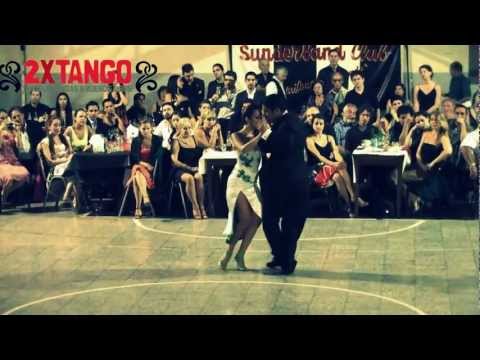
Yeah, we're going to listen to one song with Mauré, Amarras, as you were talking about, and one with Laborde, who comes in as a replacement. What are we going to hear from Laborde? Color cielo, of course, his first recording in December and the lyrics there is about the heavenly blue eyes of the woman he loves but who's now dead. So it's a really tragic song, isn't it? Also... Maybe, I mean, I put this in the D'Arienzo book but, you know, not everyone's read it and maybe it seems like a not important detail but it is an important detail. Color cielo, which is a fantastic song, really nice to dance to, it was meant for Mauré. Maybe he was even already singing it, I don't know. We know this from the sheet music because of the first original sheet music on the cover it says big hit for Juan D'Arienzo and his singer, recorded on RCA Victor, Héctor Mauré. And we know that didn't happen because Mauré's gone and so Laborde takes this song instead. Let's listen to these two magnificent songs by D'Arienzo, 1944. First Amarras with Mauré and then Color cielo with Laborde.

Mauré's last recording with D'Arienzo, and Michael's pick for the high-water mark of lyricism in D'Arienzo's orchestra.
Danced to it · 5 of 198



♪ Music · 4:48 · The lyrics, on the song's page

Written for Mauré but recorded by his replacement Laborde, who had three days to learn it before the band sailed for Uruguay.
Danced to it · 5 of 144

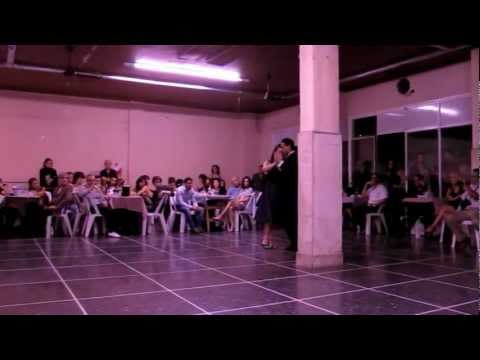


All right, Michael, what do you think about D'Arienzo's selection of songs for Laborde? Did he go in a new direction with him or was it, as you said earlier, maybe a continuation of Mauré's type of songs? Laborde is taking Mauré's job, absolutely clear, and at the beginning, no, he's not doing anything different in terms of the repertoire. He will do, but not yet. Probably not till 46, which would be a really interesting and complex year to do. Please, let's not do that next time. These later 40s years are really tricky to understand, I think.
So at the beginning, Laborde is taking the songs that Mauré would have sung. I've already explained how Color cielo was intended for Héctor Mauré. And if you look at the recording dates, it's December 1944, I think it's the 26th of December. Now don't forget in the southern hemisphere that's summer and it's just a few days before the band is going to go to Uruguay. So every summer the D'Arienzo band goes to Uruguay for as long as they can because it's nice because it's party time and they're better at parties in Uruguay than they are in Buenos Aires and there's a nice hotel and it's on the beach and everything's really lovely.
Chapter · 1:58:10
Three Days to Learn a Song
He had three days to learn a tango nobody had ever recorded — then got on a boat.
So Laborde passes the audition and he has three days to rehearse, learn and record two songs before the band gets on the boat. So that's something else to bear in mind when we listen to that amazing recording of Color cielo. He only rehearsed it for three days. He probably never heard the song before because no one else had recorded it. And for people who want to listen to that song, it starts very quietly and gets louder. It's demanding on the recording technology.
And 1945, 1944, we're getting towards the end of the Second World War. And this means that materials are in short supply. So a record, when we listen to a record from 1944, 1945, often it's noisier than one from 1941. It's often noisier than one from 1930. Now, why is that? It's because the physical materials are hard to come by because records are made from shellac. Shellac is used in war production.
Chapter · 1:59:09
The Shellac War
Why does a 1944 tango sound noisier than one from 1930?
“Boats coming from this part are being torpedoed by the German Navy, so there's no supply of new materials.”
So shellac is how we refer to the 78 RPM discs, these old records. Now shellac is a material and it's made from the lac beetle. It's an animal. It's a beetle and it only comes from one part of the world, which is Siam, modern day Thailand, the bit abutting India, and that material has to be brought from there. The beetle secretes this material and that's used to make the records and unfortunately boats coming from this part are being torpedoed by the German Navy, so there's no supply of new materials. Plus it's black and during the war windows were blacked out, we painted them with black paint, so it was needed for that and for other military uses.
So records are being recycled. You can see it on YouTube in England, Germany, all over Europe, people are going down the street with hand carts going, "Bring out your records." And people bring out their old records and throw them in the car and the records are taken back to the factory and they're smashed up and recycled, because that's the only way you can make new records. And this is limiting the production of new records and limiting the quality. So now we start to get this, uh, dynamic where there's very quiet moments in the music and that's a challenge because you need really good quality materials to make very quiet records.
So, um, about Tango Tunes. Tango Tunes records are not always the best, but in the case of Colossello, it's the best. Get the Tango Tunes transfer.
That's really interesting about the effect of the war, actually, of the sound quality of the tango. What about the effect on tango itself? Because we talked about in 1941, that's the year when the European war turned into world war with Germany attacking the Soviet Union and Japan, the United States. How important was the war in terms of this slowing down on the tail of the tango and much more sort of darker, darker sound from the tango?
I can't say, Dag. I mean, anything we can say about that is speculation but what we can say really clearly is that what the war did was it isolated Argentina from the rest of the world. So Argentina is a neutral country during the war officially and the rest of the world is busy having a world war. What does that mean? It means there are no musical influences arriving from outside Argentina. That's the first thing. And secondly, the big record companies in the United States and Europe cannot import foreign music into Argentina. So Argentina is musically isolated and that creates the condition for tango to develop because it's not being subject to influences from abroad. And of course that's going to change. I mean, very obviously with the introduction of rock and roll, which destroys the whole tango scene in the 60s, but even earlier than that after the war foreign music starts to come in, as jazz had hindered the development of tango in the 30s. So during the Second World War the rest of the world is busy musically, if you like, and tango is free to develop in its own way.
You really wish almost wish that the word had last longer. No, I'm sorry for saying that. From a ciego point, we do. Well, anyway, let's listen to some more music.
And we've been playing two songs maximum by each orchestra. This time I want to do an exception because I want to play also an instrumental by D'Arienzo. And I want to contrast it to a song by Biagi because as we talked about in the 41 edition, in 40, D'Arienzo got a new pianist, Fulvio Salamanca, young pianist, he stayed until 57 when he formed his own band. So it was interesting to see how the sound of Salamanca is compared to Biaggi, D'Arienzo's pianist who defined the D'Arienzo sound in 35-36 and stayed with him until 38. So we're going to hear D'Arienzo instrumental El Huracán, which was well known in Donato's version for more than 10 years earlier.
I really like this D'Arienzo version because it's slow, it's powerful, it's fantastic piano playing. It actually reminds me a bit of Di Sarli's growling left hand. It's a magnificent song. And then we're gonna listen to Biagi's Lisón with singer Alberto Amor. Much more romantic, but listen to the piano playing that Biagi has because it's really interesting to see this contrast.
An instrumental with pianist Fulvio Salamanca, contrasted against Biagi's piano style; the tune was already well known from Donato's version over a decade earlier.
♪ Music · 3:28 ·

Played right after D'Arienzo's El Huracán to compare Biagi's more romantic piano playing with Salamanca's.
Oh, my God. Oh, those are two magnificent songs, aren't they? Very different piano playing, but I love both of them. That last one is a killer. I love it.
Just about Salamanca. I've typed it into comments. It's not a typical song for him. Wonderful song, but not really typical of what Salamanca was doing on piano. And yeah, this song, I love that. And I can remember, I think for many people, they'll associate songs with events. Perhaps the event where they heard a song for the first time or the time that they really got it or where it was played a lot. And it's the same for me, I can remember when I first really connected with that song and it's mad. I think mad is a word that describes Biagi's music very well. I mean, what are you supposed to do with that as a dancer? I really don't know but it doesn't matter, you know. He's just looking at us and smiling all the way back from 1944, he's looking at us and smiling as we hear that and try and cope with it.
Yeah, it's amazing. It's really, and it reminds me of, let's go on to the next and the last orchestra tonight, this slowing down because, I mean, D'Arienzo, he has usually his stops in the music but it doesn't really slow down. You can kind of hear the rhythm going under and you can you just wait for it to continue, but this Biagi example he really slows down. And of course the last orchestra, who was also a pianist, quite good pianist actually, and like Salamanca, communist. Ladies and gentlemen, we come to, uh, Osvaldo Pugliese.
And in the Tango 1941 event I asked you, Michael, what was Pugliese doing back then. And you said that he had been having his band since 39, he was playing around small joints of Buenos Aires but he wasn't very popular, and you also said that you're not particularly sad that there are no recordings from this time because he didn't really find his sound before later. We know from some radio recordings from 1942. Does that mean that these earlier years, like studio recordings from 1943 and 1944, are less interesting than later Pugliese? Should we just forget about them?
No! Pugliese goes in a particular direction, but that doesn't mean that the stuff at the end is better than at the beginning. I mean, we'd never say that about Troilo, would we? We'd never say that just because, for example, if you go to a tango marathon, well, I can't say now because there aren't any marathons. If you went to a tango marathon three months ago, you would have heard Troilo with Ruiz. That's the trend. But that doesn't mean that Ruiz is a better singer than Fiorentino. And it doesn't mean that Fiorentino's 43 recordings are better than his 41 recordings. No, not at all. It's just a current fashion.
So in this case with Pugliese, everything he does is quality, but there's a different quality to the 43 and 44 recordings than what there is later. I mean, with Pugliese, La Jumba, Malendraca, Negracia. Those are going to define the Pugliese oeuvre. Now, for us listening today, we kind of think, oh, that happens later. La Jumba, 46, on record. La Gracha, the most complex of the three, 48, Malandaka, 49. But we're wrong. Pugliese is recording, not recording, he's recording them later, but he's composing and experimenting with those songs, the Malonga from 43 onwards.
And the songs we do hear in 43 and 44, I don't know, Fuimos, God, the romance and the tenderness of the violin in Fuimos, exquisite, even if he's not going to do that kind of stuff later. Now again, I don't know what you've chosen for us from 44. If I talk about the 44 repertoire of Pugliese, if I think about what's going to be most typical of what's going to come later then I'll choose Mala Pinta, the last recording of 44, but every recording he makes in 44 is outstanding and has good qualities. What are you going to play for us, Dag?
We're going to listen to two one two one with the singer Roberto Chanel, El silbido del boyero, Whistling of the Herder, and then the second one is going to be a magnificent instrumental called El Arranque, the start. And that's actually a De Caro composition and you write in your book on Pugliese that this is a wonderful example on Pugliese transforming Caro into, and I quote, treasures that warm the heart as well as the mind. You can be very poetic, Michael. You should have been a tango lyricist in the 40s. I'm sure you would have been working with Chorda, probably. So let's listen to these fantastic Pugliese songs, El silbido del boyero and El Arranque.
Translated by Dag as 'whistling of the herder'; Pugliese's own whistling effect also appears on his 1943 Malandraca.
♪ Music · 3:22 ·

An instrumental, originally a De Caro composition, which Michael's book calls Pugliese transforming Caro into something richer.


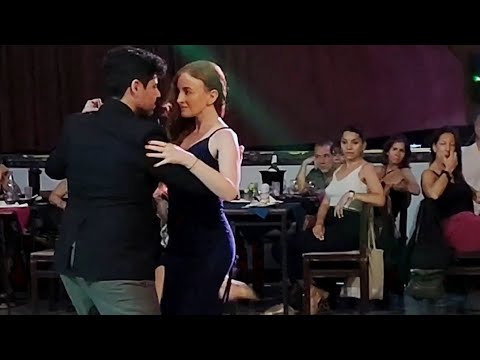
Wow, it's a good finishing off of the evening. I just wanted to ask you, Michael, about this whistling in El silbido del boyero. He uses this effectively several times in his earlier recordings, including Malajunta from the year before. Is this typical Pugliese or do you have this whistling also in this whistling instrument and other tangos?
Nothing to do with tango, it's to do with the times. People used to whistle. Today we live in noise. You go into the lift there's noise but this wasn't the case before and people whistled, it was part of everyday life, working people whistled, whistle while you work, there's a song in English called Whistle While You Work, so it was just a normal part of everyday life and how people express themselves. And when you listen to the whistling on jazz, meaning popular music records from the 30s and 40s, the whistling is outstanding and that was just normal in those days. It's something that's completely disappeared from modern life so it's nothing to do with tango, it's about how music is now consumed rather than produced by more people.
It's been a good year, hasn't it, 1944? It's an awesome year. Yeah, it is, but we said that about 41 also. So, uh, when we listen to those two years, if you, from a personal point of view, what kind of, uh, what are these two years, do you prefer for your mind, for your heart, and forever you're concerned with below your heart? Difficult to answer, isn't it?
Um, no, it's not. Well, it is difficult to answer but it's about discriminating between different aspects of our life, so if I want to be excited then I will choose 41, but if I want to go to something more refined, something profound, then I'll go to this year. They give us different things. It's ridiculous to say that one is better than the other, they're just different aspects of our souls and of our lives.
Beautiful. So I guess we have to round off for half an hour over our scheduled time. I'm going to play, like last time, and finish off with La Cumparsita. But before that, I just want to say thank you, Michael, for just sharing your immense knowledge of these orchestras with us. It's been so interesting to listen to you and to have your comment on these songs. And for those who are new to this, I hope you also heard that it's Michael's birthday, so it's a special occasion. You said you would like to make some kind of announcement or something before we finish off.
Or I want to make, um, I want to make a musical request. So, um, I'm really happy with the format that we have, which is that you choose the orchestras and the songs that we listen to. I don't want to change that, not for one moment, but of course if you say to me, Michael, it's 1944, what do you want to hear, I'm going to produce my own choices and there's going to be a big overlap with what you're doing but there's going to be different things as well, and I could easily think of half a dozen or more tracks that I'd love the listeners to go away and listen to. But let's bring it back to one, what I'd like to hear, and I, you've got it on your laptop because everyone's got it, is Palomita Blanca of Troilo from 1944. And the reason I picked that is because of what he does with the counter melody. So counter melody, a second melody that harmonizes with the main melody, it's something that's been around in music for hundreds and hundreds of years, but the counter melody in Palomita Blanca is one of the most beautiful melodies ever produced in tango music and it goes on and on. When Troilo forms his guitar quartet with Borella in the 50s and 60s they use the same arrangement. So as well as La Cumparsita, if I could pick just one tango of all the hundreds of magnificent tangos that there isn't time to play tonight, that's what I'd like people to listen to.
Chapter · 2:25:42
A Birthday Gift from the Expert
On his own birthday, the historian asked for one song.
“The counter melody in Palomita Blanca is one of the most beautiful melodies ever produced in tango music.”
Of course, Michael, we'll play Palomita Blanca for you. It's a beautiful waltz and it's with the singers Marino and Ruiz, two of these really musical singles, so if you don't mind I'm gonna play that before La Cumparsita. And what I said last year, was not last year but last week, about 1941 was I wanted to play a La Cumparsita from this year and in the case of 1941 there wasn't one because it was the only year in 40 years there was no recordings, but in 1944 there are two recordings of La Cumparsita. One is by a vocal orchestra called, I can't even remember, it's never played, and the second one you actually mentioned earlier is with Angelis, so it's the one with a long glossa in the beginning and it's a special one. So I suggest we listen to that after we hear the beautiful world's Palomita Blanca and with that we'll finish off tonight and just say again happy birthday to you and thank you for everyone for listening.
It's been such a pleasure and I look forward to the next one, with whatever year you choose to explore and whichever orchestras and songs you choose to explore. Music is life. It gives me a lot of life on this day to share my love and my feelings for music with all of you. So thank you so much, thank you Dag and thank you everyone who's joined us tonight, thank you so much. I think you'll hear from us again next Wednesday, right? I think about the year. Here's Palomita Blanca and then La Cumparsita.

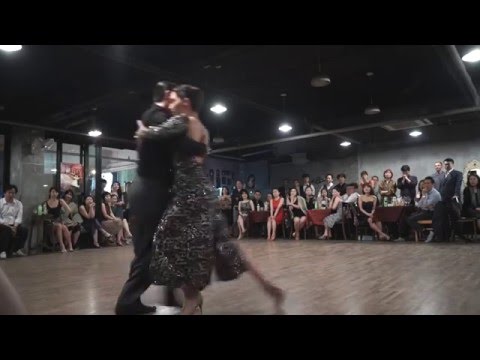
Michael's one personal birthday request from all of 1944, for its counter-melody, later reused in Troilo's 1950s-60s guitar quartet.
Danced to it · 5 of 49


♪ Music · 3:27 ·

One of only two La Cumparsita recordings made in all of 1944, with a long spoken glosa at the start; chosen to close the show.
Danced to it · 5 of 9



Tango By Year is Dag Stenvoll and Michael Lavocah's, published here with their permission. The audio plays from SoundCloud.