Dancer
Pepito Avellaneda
José Domingo Monteleone, known as Pepito Avellaneda, was an Argentine milonguero and teacher born on 30 November 1930 in Avellaneda who became one of the most influential masters of milonga and vals of the late twentieth century. Self-taught, he created his own figures, taught numerous later professionals including Gustavo Naveira, and died on 29 April 1996.[18][19]
2007: 1, 0; 2014: 1, 0; 2020: 1, 0; 2026: 1, 0
José Domingo Monteleone was born on 30 November 1930 in Avellaneda, Buenos Aires province, of Italian and Spanish ancestry.[18] He began dancing at the age of twelve during Carnival celebrations in his hometown and later frequented the Salón Duca in the mid-1940s.[18] In 1945, at fifteen, he gave his first public exhibition at the Teatro Roma in Avellaneda, partnering the daughter of a kinesiologist from Club Independiente.[18] His professional name originated when, while performing with a group called Los Porteñitos, colleagues questioned how someone from the province could represent the capital; his manager suggested “Pepito de Avellaneda,” which quickly became “Pepito Avellaneda” and stuck from the late 1950s onward.[18]
Monteleone supported himself for years by selling pizza with his father, yet he arranged his schedule so that Carnival deliveries left him free to dance until dawn.[18] He described dancing as the activity that “nourished” him: “Dancing is everything for me, I feed on it.”[18] He learned entirely by trial and error, first inventing steps alone and later practicing among men in clubs so that each could experience both leading and following before dancing with women on weekends.[18] He insisted that a true milonguero must know how to lead, distinguishing this skill from purely choreographed stage work that fails in a social setting.[18]
Pepito became especially identified with milonga and vals. He stated that he was the creator of all the milonga steps he used and of the tango figures he danced, inventing them spontaneously.[18] He preferred slow dancing because it required attention to cadences, pauses and balance; continuous non-stop movement, he argued, transmitted nothing.[18] Favorite orchestras included Juan D’Arienzo for orillero drive, and Carlos Di Sarli and Osvaldo Pugliese for smoother sliding tempos.[18] He also expressed deep admiration for Enrique Santos Discépolo as a poet and for Aníbal Troilo.[18]
In the 1980s and 1990s he taught extensively in Buenos Aires and traveled to Europe, where he received repeated invitations.[18][19] Among his students were many of the professional and social dancers who shaped the post-1980s revival, including Gustavo Naveira, Carlos Copello, Alicia Monti, Miguel Ángel Zotto, Milena Plebs, Guillermina Quiroga and Omar Vega.[19] He and his partner Suzuki de Souza lived in San Cristóbal and taught at Café Max; they produced instructional videos and performed in European festivals.[19] In June 1995 they taught at the International Argentine Tango Congress at Northwestern University in Evanston, Illinois.[19]
Pepito died on 29 April 1996.[18][19] His legacy rests on the distinctive cadence and figure vocabulary of his milonga and vals, preserved in film and in the teaching lineages of dancers who studied with him. He consistently presented himself as a milonguero rather than a stage performer, emphasizing spontaneous creation and the social transmission of the dance.[18]
Early life and name
Born José Domingo Monteleone on 30 November 1930 in Avellaneda, he started at Carnival dances at age twelve and gave his first exhibition in 1945.[18] The stage name Pepito Avellaneda was coined by a manager to resolve the incongruity of a provincial dancer representing “porteño” groups.[18]
Self-taught method and style
He invented steps by trial and practiced leading and following among men before social dancing.[18] He claimed authorship of his milonga and tango figures and prized slow dancing for its cadences and pauses.[18]
Teaching and influence
From the 1980s he taught widely in Buenos Aires and Europe; students included Gustavo Naveira and many other prominent dancers of the revival generation.[19] He and Suzuki de Souza produced instructional material and performed internationally until shortly before his death in 1996.[18][19]
References
- 18.Biography of Pepito Avellaneda by María Susana Azzi · todotango.com“My true name is Monteleone; Pepito Avellaneda is a nickname.”
- 19.Pepito Avellaneda · jantango.wordpress.com“His name was Jose Domingo Monteleone.”
How they dance
From TangoTube's videos · our data
What they dance
- Milonga 47%
- Tango 47%
- Vals 7%
Orchestras they dance to most
- Aníbal Troilo4 videos
- Carlos Di Sarli2 videos
- Alfredo De Angelis2 videos
- Ricardo Tanturi2 videos
- Rodolfo Biagi2 videos
- Pedro Laurenz1 videos
Cities filmed in
- Buenos Aires3 videos
- Basel2 videos
- Bern1 videos
- Berlin1 videos
- Venice1 videos
- Belgium1 videos
What we don't know yet4 of 5 known
Whether they lead or follow.
Teaching, a school or milongas they organise? Add them to this profile
Interviewed them? Send the recording as oral history
Data: recordings, facts and sources
Partnered with1
Partnered with Suzuki De
Single sourceNotes11
Starts dancing at about twelve during the Avellaneda carnival.1942
Single sourceFirst public performance, at the Teatro Roma in Avellaneda, aged fifteen.1945
Single sourceTakes the stage name Pepito Avellaneda (around 1957–58) at a manager's suggestion.1957
Single sourceFirst trip to Europe to teach, at about 56.1986
Single sourceFilmed dancing with Suzuki at Galería del Tango in Buenos Aires.1994
Single sourceTeaches with Suzuki at the International Argentine Tango Congress at Northwestern University.1995
Single sourceDies on 29 April.Apr 29, 1996
Single sourcePepito Avellaneda — described as Pepito Avellaneda (Bailarín)Aug 3, 1992
Single sourceGustavo Naveira — described as Pepito Avellaneda
Single sourceHis real name is Monteleone; Pepito Avellaneda is a stage name
Single sourceHe gave his first exhibition in 1945, at the Teatro Roma in Avellaneda, aged fifteen1945
Single sourceBorn2
Born on November 30, 1930
Supported · 2Pepito Avellaneda — born on Pepito Avellaneda (November 30, 1930)
Single sourceIn other catalogues1
Pepito Avellaneda — external id Pepito Avellaneda (todotango:creador/1057)
Single sourceDied2
Pepito Avellaneda — died on Pepito Avellaneda (April 29, 1996)
Single sourceDied on April 29, 1996
Single sourceBirthplace1
Pepito Avellaneda — born in Pepito Avellaneda (Avellaneda (Buenos Aires) Argentina)
Single sourceTaught at1
Pepito Avellaneda — taught at Pepito Avellaneda
Single sourceDance style1
Pepito Avellaneda — dance style Pepito Avellaneda (orillero)
Single sourceStudied with2
Miguel Angel Zotto — studied with Pepito Avellaneda1986–1989
Single sourceGustavo Naveira — studied with Pepito Avellaneda
Single sourceEra1
Era electronic-festival2007–2026
Single sourceTimeline
Nov 30, 1930Born José Domingo Monteleone in Avellaneda.
1942Starts dancing at about twelve during the Avellaneda carnival.
1945First public performance, at the Teatro Roma in Avellaneda, aged fifteen.
1957Takes the stage name Pepito Avellaneda (around 1957–58) at a manager's suggestion.
1986First trip to Europe to teach, at about 56.
1994Filmed dancing with Suzuki at Galería del Tango in Buenos Aires.
1995Teaches with Suzuki at the International Argentine Tango Congress at Northwestern University.
Apr 29, 1996Dies on 29 April.
Most watched videos
On TangoTube · our data
 um 1988 Pepito Avellanda2013
 Milonga Figuren von Pepito Avellaneda- mit Susanne & Rafael2021
 PEPITO AVELLANEDA - milonga2021
 Geraldina Rojas with Pepito Avellaneda2020
 MILONGUEROS DE BS AS, PEPITO AVELLANEDA 22013
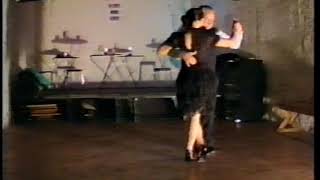 Pepito Avellaneda & Suzuki 1989 in Basel2020
Connected
From TangoTube's videos · our data
Danced to
- Bailarín compadrito · Alfredo De Angelis · 19532 videos
- Te aconsejo que me olvides · Aníbal Troilo · 19412 videos
- Picante · Rodolfo Biagi · 19412 videos
- El cuarteador · Aníbal Troilo · 19411 video
- Cachirulo · Aníbal Troilo · 19411 video
- Cuando un viejo se enamora · Carlos Di Sarli · 19421 video
- Zorzal · Carlos Di Sarli · 19411 video
- Milonga brava · Francisco Canaro · 19381 video
- Amor y celos · Juan D'Arienzo · 19361 video
- Milonga de mis amores · Pedro Laurenz · 19441 video
- Qué será de ti · Ricardo Tanturi · 19451 video
- Así es la milonga · Ricardo Tanturi · 19421 video
Listen
- Bailarín compadritoAlfredo De Angelis · Oscar Larroca1953
- Te aconsejo que me olvidesAníbal Troilo · Francisco Fiorentino1941
- PicanteRodolfo Biagi1941
- Así es la milongaRicardo Tanturi · Alberto Castillo1942
- Cuando un viejo se enamoraCarlos Di Sarli · Roberto Rufino1942
- ZorzalCarlos Di Sarli · Roberto Rufino1941
- Milonga bravaFrancisco Canaro · Roberto Maida1938
- Amor y celosJuan D'Arienzo1936
- Milonga de mis amoresPedro Laurenz1944
- Qué será de tiRicardo Tanturi · Enrique Campos1945
- El cuarteadorAníbal Troilo · Francisco Fiorentino1941
- CachiruloAníbal Troilo1941
Ask Tangopedia
Answers only from cited facts, each with its source.