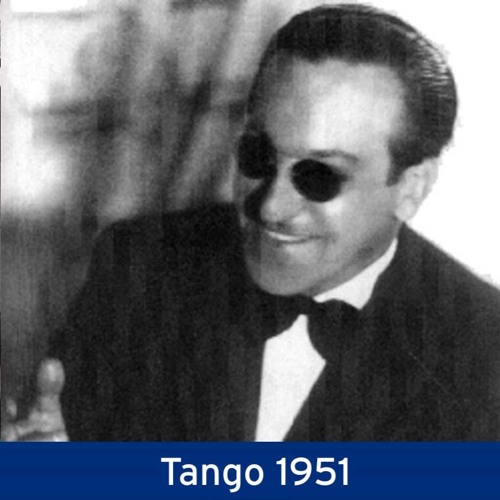
Tango 1951
Dag Stenvoll and Michael Lavocah · 29 Apr 2020 · 2:18:22
After the late-1940s crisis, when censorship and a contracting post-war economy drove many orchestras to fold, tango roars back in 1951 with a harder, less lyrical beat. D'Arienzo's comeback Cumparsita becomes a huge seller while his band sheds its star singer; Troilo turns modernist, bringing Astor Piazzolla back as arranger, which splits dancers and triggers a brawl at one of his gigs; Di Sarli returns after a two-year break and, by simply doing what he always did, suddenly sounds like part of the new style. New labels (Tecal, Music Hall) spring up to record it all but lose their masters within a few years, and new modernist bandleaders (Fresedo, Salgán, Gobbi) emerge alongside Pugliese's harder-edged vocal experiments. The year also marks endings: lyricist Homero Manzi's death prompts Troilo's instrumental elegy Responso, and Francisco Fiorentino makes his final recordings in Uruguay, four years before his own death.
0% heard
2:18:22 left
Up next, as released
Tango 1935Episode 5 · 6 May 2020 · 2:37:22What this episode gave Tangopedia
Facts said in the episode, each now cited to the minute it is said.
D'Arienzo's post-crisis sound is essentially his late-1930s style again, only louder; having rejected Di Sarli's influence in the 1930s, he now rejects the 1940s lyrical trend in the same way.
Troilo brought Astor Piazzolla back as his main arranger in 1950. Piazzolla had been Troilo's second bandoneón player roughly 1940-44 and arranged about ten numbers in that time, then did no work for Troilo through the rest of the 1940s.
Piazzolla's Brazilian-drum-influenced modernism split Troilo's fans; after a tour of Brazil the material was a hit there, but back home a fight broke out between fans at a Troilo gig over it, and Troilo dropped the material from the band's setlist.
Manzi, Troilo's close friend and the lyricist of Sur among others, died in 1951, likely of a long illness (Lavocah guesses cancer).
Troilo left RCA Victor in 1949 after an executive said his music was getting too modern; he walked out and signed with the new local label Tecal (TK), rumored to have been partly funded by Troilo himself.
Played unannounced to test whether the audience could recognize an obscure 1951 Troilo piece; discussion afterward confirms it is Troilo in his new, Piazzolla-influenced modernist style.
Only in the episode
♪ Music · 3:19 ·
Chapter · 12:57
The Fight That Got Piazzolla Pulled From the Setlist
A new tango sound started a punch-up on the dance floor.
Chapter · 13:52
The Night Troilo Wrote a Hymn for His Best Friend
He slipped away from a card game at midnight and came back with a funeral prayer.

An instrumental Troilo wrote the night his friend and lyricist Homero Manzi died; 'responso' is a funeral prayer, so this is Troilo's hymn for Manzi.
♪ Music · 4:49 ·

Played alongside Responso; praised for Berón's voice, said to be some of his best recordings despite the poor sound quality of Troilo's Tecal-era releases.
The lyrics, on the song's page
Watch it danced · 1
Chapter · 25:05
The Singer Who Learned Secret Words in Prison
To sing the real language of the barrio, he went where the words still lived.
Rivero backed only by guitars, not an orchestra; chosen to showcase his lunfardo/barrio repertoire, which was part of the deal when he later joined Troilo.
Only in the episode
♪ Music · 2:19 ·
A milonga with guitar backing about a whip ('rebenque') and a betrayal; the only earlier recording Dag knows is a 1942 version with a different singer (Laurenz?).
Only in the episode
♪ Music · 2:11 ·

Chosen for the lyric about tango itself being gone, which Dag felt resonated with the present (pandemic) moment.
♪ Music · 4:38 · The lyrics, on the song's page

A duet between Ruiz and Campos; called 'a real candy for the ear', though noted as a one-off that can't be built into a full Rotundo tanda.
The lyrics, on the song's page
Watch it danced · 176

Castillo had already recorded this song in 1942 with Tanturi; this version opens with a spoken glosa (recited poetry) before the song.
♪ Music · 4:24 ·

Marino, formerly Troilo's singer, had also recorded this song around 1943; his voice is clearer here, possibly because of a label/microphone change now he is a soloist.
Chapter · 49:40
Gardel's Two Versions of the Same Song
'Clean, or with gomina?'
Duval joined Biagi in 1950 and stayed until the band dissolved; this early-50s recording lacks the heavy reverb added to Biagi/Duval's later (post-1956) releases.
Only in the episode
♪ Music · 2:34 ·
A unique, original-sounding instrumental; the only recording of this song, co-written by Domingo Federico's brother Francisco Federico.
Only in the episode
♪ Music · 2:30 ·
Chosen to showcase the loud double-bass 'snapping' technique (plucking the string off the fingerboard so it rebounds percussively), audible as early as 1943 but very prominent here.
Only in the episode
♪ Music · 3:00 ·

Varela had led D'Arienzo's orchestra through the 1940s before leaving in 1950, taking Laborde with him; this recording is considered to belong to Laborde as much as to Varela.
Watch it danced · 8

A 'vals peruano' (with a cross-rhythm feel); one of Jorge Maciel's first recordings before he later moved to Pugliese's orchestra.
♪ Music · 3:53 ·

A strikingly modern instrumental with constantly shifting colour and flexible tempo, described as sounding like a gentler, rounder cousin of Pugliese's style.
Watch it danced · 45

An early-50s Pugliese instrumental from a dense, tense period of his style (before the brighter, spacious late-50s sound); considered underplayed at milongas.
♪ Music · 3:55 ·
Watch it danced · 38

The first of two recordings of Pasional (the second from 1952); part of Pugliese's push into vocal numbers that test the edge of danceability.
The lyrics, on the song's page
Watch it danced · 38
Chapter · 1:29:08
Same Song, One Year Apart — and the Volume Goes to Eleven
1952 was the year tape arrived, and everyone turned it up too far.
A rare vocal number from Salgán's 'musician's orchestra'; previously a well-known Pugliese recording with singer Jorge Vidal.
Only in the episode
♪ Music · 2:42 · The lyrics, on the song's page
Chapter · 1:34:15
The Orchestra Too Modern to Dance To
The room was packed — but it was all musicians.
An instrumental previously well known from a Di Sarli recording ten years earlier (1941); played to compare the two orchestras' treatment of the same piece.
Only in the episode
Chapter · 1:42:09
Two Years of Silence, Then Di Sarli Wins Anyway
His copycats finally had the stage to themselves — until he came back.

From Di Sarli's comeback batch of 20 re-recorded old numbers; picked to showcase his powerful 'growling' left-hand piano.
♪ Music · 2:30 ·
Watch it danced · 27
A short, four-part (ABAB) instrumental; praised for its counter-melody in the B sections.
Only in the episode
Chapter · 1:53:00
The Last Recordings of Francisco Fiorentino
He quit a sure thing for a tour that never happened — and it became his last chapter.
Composed by Juan Carlos Cobián; one of Fiorentino's final recordings, made in Uruguay with a little-known orchestra after he quit Mancione's band.
Only in the episode
♪ Music · 4:03 · The lyrics, on the song's page
Fiorentino's literal last recording; lyric opens 'Tango, pedazo de vida, no tiene pasado ni tiene final.'
Only in the episode

First of three closing versions of La Cumparsita, played back to back.
♪ Music · 2:30 · The lyrics, on the song's page
Watch it danced · 1

The year's best-selling record, discussed earlier: a million copies in Argentina, a quarter million in Japan.
The lyrics, on the song's page
Watch it danced · 2

A sung version by Charlo, a voice from the early 1930s; chosen as a fitting close before next episode jumps back to the 1930s.
Only in the episode
Follow through every episode
Tango By Year is Dag Stenvoll and Michael Lavocah's, published here with their permission. The audio plays from SoundCloud.