Tango 1943
Dag Stenvoll and Michael Lavocah · 2021-04-14 · 5:51:57
The last regular year of Tango By Year, chosen as 'the summit of tango': D'Arienzo reaches his peak melodic output with Héctor Mauré, Di Sarli's music is complex but sounds simple, and every orchestra from Troilo to Laurenz, Tanturi, Caló and Pugliese is near its best. Hundreds of new tangos appear, Alberto Castillo goes solo and becomes the first soloist to be huge, Goñi leaves Troilo and Basso replaces him, and tango milonguero (tango for dancing) reaches its maximum complexity. Lavocah argues the soloists' rise and the war context (Stalingrad, the changing fortunes of the Allies) explain why tango begins to go downhill after 1943. The show runs over five hours and ends with a long afterparty.
What this episode gave Tangopedia
Facts said in the episode, each now cited to the minute it is said.
1943 is the summit of tango: orchestras are at their maximum and hundreds of new songs appear; of the big four only Pugliese is not yet at his best, as his peak comes at the end of the decade.
D'Arienzo reaches the peak of his lyrical output in 1943, melodically rather than rhythmically, and it is his best year in that sense.
Castillo goes solo in 1943, the first singer to be hugely successful as a soloist; this shifts attention from the singer's integration with the orchestra and is one reason tango declines after 1943.
After Berón went to Maderna, Caló used Jorge Ortiz, Alberto Podestá and Raúl Iriarte; Ortiz stayed for only six tracks and the two men did not get on, so Ortiz returned to Biagi.
Argentina's Italian and Spanish communities followed the war closely, and the failure of the siege of Stalingrad in 1943 changed the world's sense of the war's outcome.
Records played · 27
Transcript
Transcribed by machine from the audio, then punctuated; names may be misheard. Tap any line to hear it. The episode is in English, and so is its transcript.

0:00 / 2:25
Opening zamba, played while the guests arrive.
♪ Music · 2:25 ·
That was Libertad Lamarque singing the beautiful Zamba, Rosario de Santa Fe. Welcome everyone to 1943 and let me just tell you that there's a big chance that Michael and I will get emotional and nostalgic tonight. Absolutely. This being the 37th and last episode of Tango by Year.
Hi Michael, how are you? I'm very excited about the evening. Very pleased to be here. And yeah, it could be a long night.
It's going to be a long night and an emotional night, I think. And we really are at the summit of tango here. This is why we saved this year for our last program. And it's just awesome.
So if I recall, Dag, because I'd forgotten about this, but way, way back at the beginning, you asked me really casually, what's your favorite year? What's the best year of tango? And I'd snap back 1943, but you'd made a note of that, hadn't you?
I did. And that was, I think, after our second program. So it was just an idea that if we keep going, I'll save this for the for the last program. And we kept going. And here we are. And here we are.
So what's special about this awesome tango year, 1943? Well, it's the best year, isn't it? Sure is. Why am I going to say that? My comment was triggered partly out of the love for Di Sarli's music, and 1943 is peak Di Sarli. But let's look at the other important bands. Not the important bands of the 20s and the 30s, the important bands of the 40s, who are our big four. They're nearly all at their best.
“We really are at the summit of tango here. This is why we saved this year for our last program.”
Troilo, he doesn't have a better year than 1943. He's got Fiorentino and Marino. D'Arienzo is reaching the peak of his lyrical output, not rhythmically speaking, that's something we'll touch on in the programme, but melodically speaking with Mauré, it's his best year, well he certainly doesn't have another one. The Di Sarli we've already spoken about, the music is so complex, although sounding simple on the outside. Only Pugliese of our big four can we say not at his best, only because that's coming, that's going to come towards the end of the decade. So, so many orchestras are absolutely at the maximum. It's a superb year for tango. And when you look at the compositions, you know, what are the really big songs of the year? There were hundreds. I started making a list, you know, sometimes it's like five songs one needs to focus on or 10 songs, but there's like a hundred. The production of good new songs is full, enormous.
Yeah, I agree. It's fantastic. You go through the orchestras and there is so much nice stuff, I mean, from many orchestras. So it's really hard to narrow down the playlists for tonight. And I didn't really. It's going to be a long night. So we'll see how long we'll keep going. But, yeah, it's a luxury problem, of course. It's a luxury problem. I'm prepared for a long night.
Yeah, and I remember, I think you wrote something in the Troilo book about, there was a coup in Argentina this year, wasn't it? And the period of censorship started. And it seems to maybe that's one of the reasons that this is the summit of tango, because even though there are many good years after this, the censorship maybe dried out the really free roots of the lyrics. And this was important at this period. So maybe that's also one of the reasons, one of the reasons, not the only reason but one of the reasons that tango goes a little bit downwards from 1943.
Yeah you're absolutely spot on with that and related to that is the rise of the soloists. So 1943 is the year that Castillo goes solo. Other people have gone solo before leaving their role as an orchestra typica such as Roberto Flores who left Rodríguez but Castillo is the first person to make it mega big as a soloist and what does that do? It shifts the emphasis away from the integration of the singer with the music onto another spot. So yet another reason why this is the peak. We'll listen to Castillo in a while and some some other soloists. But this is I think it's uh to a large extent this is this is a year of dance tango. So a lot of the things we'll hear tonight is things you know from the milongas. But let's start with uh not one of the big four but another orchestra that had his breakthrough in 1942 with Raúl Berón. This is Miguel Caló. And now Berón has gone to another orchestra, to the Mauré, but Caló has some good singers, um he has three singers, Podesta, Ortiz and Iriarte. But I'll I'll leave Podesta out of this because he comes back later tonight. But let's hear uh let's hear um Jazale el tren. And uh this is about uh it's a quite sad lyric which I find is kind of good as an introduction to this year. About a lot of sadness in 1943, about the man seeing his wife living with the train. She's sick, I think it's tuberculosis and he fears that he'll never see her alive again. Just imagine the situation that you're on the platform and you see the one you love leaving the train and you're not going to be able to chat with them on Zoom or your mobile phone while they're away.
Chapter · 6:25
Why tango was already past its peak in 1943
The golden age peaked in 1943, and the soloists were a reason.
Chapter · 7:22
Ortiz and Caló: oil and water
Six tracks and then he quit.
A sad lyric about a man watching his sick wife leave on a train; Ortiz, known from Biagi, sings with Caló for only six tracks and the two did not get on.
Exactly. Yeah. Yeah. So this is with the voice of Jorge Ortiz. That's right. Yeah. Yeah.
So Jorge Ortiz is a singer that we associate with Biagi's orchestra and quite a muscular style of delivery. And here he is with Miguel Caló, who all through 1942, made this soft come to me, baby romantic music with the crooning voice of Raúl Berón and it's not an obvious combination. I think it works spectacularly well, this mixture of opposites for me works perfectly. There's only six tracks and Ortiz quits and he refused to talk about it afterwards. But apparently the two men were like oil and water, they just didn't get on. But I okay, it's nice that Ortiz found his way back to Biagi, but I really like this combination. It's it's something special. It's very nice. But let's also hear a second tango with the new guy Raúl Iriarte singing and I like this one especially because of its exquisite intro on the piano. It's called Mañana iré temprano and this is a a Francini composition.
Caló's violinist at the time. So, yeah, in-house production, we should say. So let's hear him. Jazale el tren and Mañana iré temprano with Miguel Caló.

Chosen for its exquisite piano introduction; Iriarte is Caló's new singer after Berón left for Maderna.
Danced to it · 5 of 28


♪ Music · 6:40 · The lyrics, on the song's page
Amarga soledad, bitter loneliness. Let's hope we never end up there, Michael. Let's hope not.
You know, it took me a long time to really warm to Iriarte's voice. He's quite understated, but I think that's exactly the quality that suits the music. Yeah, it's special. It's very dramatic and kind of introvert and it suits this kind of sad lyrics. And the expression of the Caló Orchestra as well. I couldn't imagine him singing with D'Arienzo, for example. Yeah, true.
Let's hear one more Caló track. This is a different one, milonga. You don't hear Caló or milonga so often. I guess they're not so... They're a bit difficult for dancing, let's say. I don't think they are. You don't think so? No, it's just that there aren't very many, and at least a couple of the really good ones have got a candombe flavor to them, like Azabache, for example. And maybe people are frightened to put together a tanda that's not going to be quite as coherent as certain other tandas. But some people are mixing orchestras in milonga tandas, so why not? Yeah.
Well, this is a candombe, a milonga candombe. Pobra Negra. And as far as I know, this is the only recording of this composition. So it's not something we... And this is another one with the Candombé feeling. It is, yeah. Yeah, Pobre Negra. Poor Black Lady. And it's also composed by Francini. Let's hear it. Pobre Negra.
Sounds sad. The quality of the music is wonderful, isn't it? It's a good beat to this one. I think Francini was still not so well known. Esposito was very well known at this time as a lyricist, but Francini and Stampone, who co-wrote it with him, they were still young guns in the Caló Orchestra, maybe, but perhaps other bands were performing it at the milonga for dancing but not recording it. That's very likely actually, yeah, and like Teresa pointed out this was not uh well this was with Jorge Ortiz singing also this uh milonga. So um let's move on to uh I won't tell you who the next orchestra is so but it's one of the soloists let's say. So let's see what it is, it's related to Caló, in a way. Check this out. It's a very special track that I discovered this last week.
What do you think? I'm stunned! It's fantastic, isn't it? Very different from Caló of Podestas' version, of course. Not something you'll hear at a local milonga I think. No, I mean, I do love who good at Caló's voice but I personally just can't get away from Troilo's interpretation. So you're actually comparing, you're comparing this to another version. I shouldn't do that, should I? No, you shouldn't, shouldn't. We talked about this, Michael, but it's okay. Let's move on. Comparisons are Invidius, yeah. Yeah. Let's go to it. Yeah, sorry.
As Teresa pointed out in the chat window, it was not an orchestra typica that was accompanying him. It was really quite an unusual lineup. It was basically a jazz band. Brass instruments, piano. I guess there was a double bass in there, but that was it. Could have been the Glenn Miller Orchestra. Right.
Let's move on to an orchestra we haven't listened to much. It's Jose Garcia. And it's not one of my favorites, to be honest. But I came across this track that I really liked. And it's called Nocturno del Tango. And it's composed by himself. So it's interesting in that sense as well.
Yeah, Jose Garcia, it was an orchestra del barrio, maybe we could say. He had a small music school, a small conservatoire. So he kind of put the band together to give a practice and work opportunity for his best students and it turned out to be quite successful. For me the feeling is a little bit like this sadly but only a little bit. Something of that sensibility of making music that's a little bit sparse and restrained and the best tracks are very pleasurable. It's as you would expect for an orchestra that's not one of the top orchestras, it's not able really to develop its own repertoire except with the track that you have chosen for us tonight. So that's the perfect choice. And we don't have to compare this to other versions. We can't compare it to another version.
Let's listen to it. Nocturno de Tango with Jose Garcia. And who's the vocalist? I think it's Alfredo Rojas. Let's hear it.
As you said, maybe something reminds of this earlier, but I'm mostly thinking of Lucio De Mare when I hear this, the violins. Maybe the problem is it's not an orchestra that we hear very often. And so when the sound comes to our ears, we're trying to place it within the framework that we already know. So in the lyricism, yes, something of De Mare or possibly D'Agostino. And in the rhythmic treatment, something more like Di Sarli and again D'Agostino maybe a bit.
But it's an orchestra with its own personality at the end of the day. Yeah, a unique sound. I'm a bit sorry they didn't record more. There are some second-tier orchestras that didn't really establish a unique personality, and that's why they faded away. But that's certainly not the case here. Lovely. Yeah.
But let's move on to Lucio De Mare. And he's a second-tier orchestra that did record quite a bit, actually. But this is his second year. I think he started in 1942, didn't he? He had a couple of tracks way back in 1938 on Odeon. He was one of those people who got a little bit trapped in a recording contract where they weren't promoting him. But eventually he broke through.
Yeah, and this year he has Raúl Berón on board. Berón went from Caló in 1942 to De Mare in 1943. It was about the money. Was it? He offered lots of money. De Mare offered Berón a lot of money because they're both romantic orchestras. So Berón had a year off with De Mare, and it would be really interesting to hear what people think about the combination. And at the end of the year he decided that was enough, and he went back to Miguel Caló. It's a very interesting combination, and I guess we could say that Lucho De Mare is a deeper musician, and I certainly really appreciate his sense of melody.
Yeah, let's hear a tango called Pena de amor. Love, pain of love, is that the right translation? Yeah, yeah. And the lyrics is by Contursi, and I was surprised also why, for instance, Troilo didn't record this, because it's a typical kind of Troilo lyrics, I think. Troilo loved Contursi's lyrics, that's for sure. Yeah, but this is a unique recording as far as I know. Yeah, so, but I also want to play a waltz, No nos veremos más. We won't see each other again. Oh, that's beautiful. Yeah, it is, isn't it? It's so beautiful. So enjoy. De Mare with Berón. The voice of God singing. So soft and velvety.

A Contursi lyric from a second-tier orchestra; Stenvoll wonders why Troilo never recorded it.
Danced to it · 5 of 13


♪ Music · 0:30 ·

A beautiful waltz played next to Pena de amor.



What a voice. You've got to say, De Mare with Berón, it really works. Even if they didn't stick with it, it really works. There's enough in common, but enough difference. A bit like what we remarked upon earlier about Carlo having Ortiz's voice. So that's a good idea with his differences, you think? A little bit of difference, yeah. You don't want them the same. Creates a bit of interest and tension. More colour in the music between the vocal part and the accompaniment.
Let's hear a final De Mare track. And this is an interesting one because it's technically a milonga, but it's a kind of milonga candombe, but it has some clear ideas from folklore also, I think. It's called Carnavalito. So can I explain? Yes. You know what it is, right? It's not a milonga. It's a rhythm called carnavalito. There are hundreds of folk rhythms in Argentina, and carnavalito is its own rhythm. I know we have one or two folklore dancers with us. I have no idea how to dance carnavalito myself, but maybe you know.
So for us, we put it in the pigeonhole of milonga, but it's not a milonga. It's not even like sometimes we say milonga candombe, but it's not even that. So our brain goes milonga because that's the closest reference point we have. Apparently, it's quite a swinging dance, like the full folklore dancers, not danced in a close embrace but open, like the chacarera and the zamba. That's as much as I know. Yeah, because as you say, listen to it, your mind goes in different directions: milonga candombe, but also chacarera. There are parts, I think, well, this must be inspired by chacarera. So I didn't know it was fabulous, something completely different. Let's hear it, Carnavalito, this is De Mare and also with Berón singing.
Neither milonga nor candombe but inspired by the chacarera; a piece that does not fit any dance box.
♪ Music · 1:11 ·
Party time. I love to see people swinging to this music. It's really nice. It's fabulous. And my body wants to know how to dance it. Not my brain. My body's kind of going, what's the right movement for this? Yeah, very nice. And with Berón's voice also, this unknown music.
Yeah, let's move on to D'Agostino, the pianist with the great singer Vargas, Ángel Vargas, Los Dos Ángeles. Yeah, I want to play two songs, two tangos, one called Cantando olvidaré, and the second one is Tomo y obligo, which we listened to actually two weeks ago with Gardel singing it in 1931. Wasn't expecting that one. It's about the guy at the bar obliging another guy to drink with him in order to forget about the woman's voice. Come on, have a drink with me. Have a drink. Have a drink. Come on, I'll pour you. Yeah. We've all been in that situation. We have. Come on, have a drink.
Yeah, but D'Agostino, yeah, he slowed down from 41, his first recordings, but it's really, really nice with the gentle piano playing and Vargas' voice. It's so perfectly balanced, isn't it? It is perfectly balanced, and it is different to the 1941 recordings, but it's very difficult to say what's different. There's a kind of timeless quality to D'Agostino Vargas, like it exists in some kind of alternate reality, which is unchanging and endless. And it just drifts into our time zone. That's a good thought. All right, let's hear it. Let's think about that when we listen to these songs, Cantando olvidaré and Tomo y obligo, with Vargas singing of course.
Fantastic piano in this one. It's, I think it's special for D'Agostino even to have such interesting piano playing. I think his piano playing is always interesting, but we just have to pick it out of the noise. Maybe it's a little bit more exposed here. I think for us in Europe, and I guess it's the same in the United States, everywhere outside Argentina, D'Agostino is massively underrated. Because I remember when I first went to Argentina in the 90s, and if I said D'Agostino, you guys out there think second tier orchestra. Good, second tier, a bit boring. Come on, be honest. That's what you're thinking. I don't think so. I'm glad to hear it.
And when I went out there in the afternoon milongas, it was de rigueur. It was maybe the most popular orchestra in the afternoon milongas, it's so popular out there. And then I came home again each time and no one was playing it here. It's like we don't get it because it's not enough drama, you know, not enough excitement and drama and big stuff, but it's all there. It's, I think it's different taste, it's different here in Bergen from what you're explaining. Because I mean, I grew up tango-wise with D'Agostino, because Birger loves D'Agostino. He's the grand old DJ here in Bergen, and he's played it from the first time I saw dancing. So we have a good tradition for D'Agostino here. I'm really local variations. Yeah, yeah, everything you need for dancing is there, and the lack of drama means you don't get tired. You don't dance two songs and think, oh, that's enough, I need to rest now. You can keep dancing for a long time.
Right, let's move on to a less known orchestra. A pianist like D'Agostino, like De Mare, Manuel Buzón. I don't think we ever played him before, did we? No. He only records a very few tracks with his own orchestra in 42, 43. Okay, isn't there something in 42? Yeah, there is something in 42, but I don't think we played him in 42. Yeah, he escaped the 42 program because there's one track he has, there's one milonga that he composes. And I can't remember the title, someone's going to type it in the chat window now, or Dag, you're going to tell me that's in the repertoire of the Troilo milonga. Yeah, there we go. Yeah, the Troilo milonga, that's what he composed. Yeah, but he didn't record this in 43, but he listened to a tango called Medianoche, which is his own composition also. And what I find interesting about this song is the double bass and the piano are really strong in the sound. So I'm wondering, they must be very close to the microphone, because the bass notes are really deep in this tango, deeper than other songs in this period, I think.
That's certainly a factor. I cannot remember. Do you know whether he was recording on Odeon or Victor? I have no idea, no. Okay, yeah, me neither. You can check it out. But let's hear it. Manuel Buzón with the tango Mediodía, and the singer is Osvaldo Moreno.
I love his piano playing. It reminds me a little bit of the Salle. It's not the same, but this kind of really punchy left hand on the piano.
Yeah, or maybe the Pianist N' Tanturi's Orchestra. I love it. It's, again, an orchestra that's got its own personality. Yeah, very nice. Someone else in the chat window, it's a bit like Garcia also. I agree, it's a little bit the same sound. Yes, I get that. I get that. Yeah, right.
We have more, uh, good pianists recording in 43. Let's move on to Rodolfo Biagi and get back to his, the singer we talked about earlier, Jorge Ortiz.
And I really like Biagi with Ortiz, actually. I mean, even though he's good with Caló also, it's, he sings great with Biagi also, I think. So I'm glad he came back. Come on, it's the best. It's the best singer that Biagi has. Ortiz. Yeah. Guess it is. Yeah. So let's hear the tango Pueblo, Pueblito de provincia. This is one of my favourite Biagi tangos.
And then we need to hear a Biagi waltz because Biagi waltzes are wonderful. I mean, you can't resist dancing. This is a problem, of course, for Tango Bay U problem that you feel like you have to get enough ease and dance. But let's do it anyway.
So thinking about Biagi, I would say his most exciting years or his most popular years, let's put it that way, his most popular years are past as we reach 43. And if I were to pick a Biagi waltz just at random out of my head, I'd pick one from a year or two earlier, and the same with the tangos.
But actually, these are really special because the pace has decreased, the number of beats per minute, the tempo. The tempo has decreased, but because of the way he does his maricato, it still makes you move. So that's a very special thing, that you feel the impulse to move, but at a slow pace.
Yeah, it's lower and it has a really nice intro. It's Prisionero, it's called, but this is Alberto Amor singing. So two Biagi tracks, Pueblito de provincia, a tango with Ortiz, and then Prisionero, a... the waltz with Alberto Amaraj.

Ortiz is back with Biagi after leaving Caló.

A song about being a prisoner of the memories the heart holds.


Yeah, someone wrote, let's go to his live performance in 43. Can you imagine being at Preston at Milonga where Biagi is playing? Oh my God, he must be so exciting for dancing.
The coolest thing is that Biagi didn't care if anyone liked him or not. Right. He absolutely didn't. He was so beyond the whole fame thing. He didn't care if people came to the Milongas. He didn't care if he sold records. He just did what he did and that was it. He didn't do any promotion. So he was a really cool guy.
I love the thought of that, you know, just doing that and then we're listening to it almost 100 years later now. Yeah. There's plenty of tangos that we have listened to where the composition, not the recording, but the composition is 100 years old. Yeah. I can't get my head around it.
All right. Uh, let's move on and, uh, I'm, uh, because excited about the next part, because as I brought it in the event, the lyrics of 43, they span from someone waiting from an orange to ripe to and sweetened to someone slowly slicing his wrists, bleeding to death, and in both cases it's a question of love. And, uh, now I want to do an irresponsible and quite reckless experiment to play one after the other, because these two songs are going to tear you apart.
So okay, so I've got a question which you don't need to answer straight away, but the, um, slicing the wrists and bleeding to death part, this is Sombras, nada más. Of course it is. Yes, which is an extreme lyric. It really is extreme.
It's extreme. But we have to point out that whatever we think about it, it was accepted at the time. There's more than one recording. People identified with the emotion in this lyric. That's something all of us have to remember. Every time we listen to a tango and go, I don't like that, the very fact that it was recorded tells us that we have to engage with it in terms of understanding the mentality of the people who created tango.
“What we're listening to in the recordings is the top five or 10%, nothing more. The other 90%, the base of the pyramid, you just have to imagine it in your head.”
If people hadn't, because bands, they tried either they were sure or they weren't sure that a record was going to be a hit. If they were sure they just recorded it immediately anyway. If they weren't sure they tried it out at a dance and see how it went down, and if it went down well then they'd record it. So in other words, you know, what we're listening to in the recordings is the top five or 10%, nothing more. The other 90%, the base of the pyramid that's holding that up, you just have to imagine it in your head.
So a tango like Sombras, nada más, about a guy saying, right, you don't love me, I'm going to kill myself. Let's show you how much I love you. People identified with that. So whatever, however stupid you think that is, you have to take that on board.
So I'm kind of curious now whether you're going to play, which version are you going to play? Because there's more than one to choose from.
Yeah, this one, I mean, the version we know from milongas is the Troilo one, but that's from 44, so we can't play that tonight, which means, so means that we'll play the one that, uh, by the composer, not from on the lyrics, which is, um, contorsi, but the guy who wrote the music is Francisco Lomuto of all people, and it's the better version.
Sorry, you think so? Yes, well it's a great version, it's, uh, yeah, very strong version, very dark music and, uh, and a killer lyric about, as you said, the guy's slicing his wrist, the photo of his loved one, just to show her that he loves her so much that he wants to bleed it, bleed to death in front of her. That'll show her. Yeah. Now she'll regret.
An extreme lyric about a man slicing his wrists to show his love; music by Lomuto, lyric by Contursi. Lavocah argues Lomuto's is the better version.
And just to point out as well that this composition was very popular outside Argentina and the rest of South America, but not as a tango. It was performed as a bolero.
So Argentina is a nation that's extremely conscious of foreign influences coming in and changing its culture, whether they be North American influences from the United States, European ones, or from the rest of South America. There's a tango from 1947 from the Pulisi Orchestra with the voice of Chanel called Bolero, in which he complains that people are enjoying boleros, but here is a composition that went the other way.
To contrast this, uh, let's, the second, for the second song, let's lighten up. Uh, I hope a lot. I hope it's, uh, Feliciano Brunelli and his belong.
The orange was born green, and what's with the title? Um, before the orange ripes it's green and bitter, but then it ripes and becomes orange and sweet. I remember traveling to Cuba. I went just once. It was an extraordinary trip and not all good. And people showed you proudly the orange trees and there were all these green fruits. It was an absolute shock. You know, as an Englishman, I had no idea that the oranges were green.
Played right after the wrist-slicing tango as a lighter contrast; an accordion orchestra, accordion being a happier sound than the bandoneón.
But just coming back to Feliciano Brunelli, for most tango dancers, it's a name that's either unknown or very little known, like some kind of orchestra characteristic on the margins of tango. This orchestra sold millions of records, and that's not a metaphor. It literally sold millions of records. The only orchestra, dance orchestra, I'm not talking about tango, I'm talking about dance orchestras. The only dance orchestra that sold more records was D'Arienzo. The first artist to earn a gold disc in Argentina is this orchestra, Feliciano Brunelli. It was massively popular. Massively.
Chapter · 1:12:30
The audition that was recorded
Campos got into Tanturi's band with a recorded audition.
So this would be a super popular milonga at the time. Super popular. He's an accordion player and he leads his orchestra from the accordion. So what do we know about the accordion? It's a happier sound than the bandignon. It's great fun.
Yeah. So this is going to be the most contrast tanda you'll ever hear with the Lomuto and Sombras, nada más. And then this La Laranja Nacio Verde with the Brunelli. Enjoy, folks!
Let's move on to Ricardo Tanturi, who did he had Castillo on board this year? Yes, he did. From, uh, until August in the beginning. It's a story. Yeah, what happened? What happened is, well, actually it comes down to the tango Muchachos, comienza la ronda, and that comes down to censorship.
So the tango Muchachos, comienza la ronda, which is a tango that I really love and I really appreciate it for its social message. Muchachos, the lads, the guys and the girls, comienza la ronda. You know the word ronda. It's a word that's drilled into us. We're beginning the ronda.
But this lyric was an accident. It's not the original lyric. This is the censored lyric. The original lyric was different. And the title was, Muchachos, se armó la melonga.
Now, amar is a verb that your Spanish teacher won't teach you if she's from Spain. Or he's from Spain. But armar means to get something together, to organize, to start, to organize. Yeah, to get together. Amar.
I remember. I mean, all of us who went to Buenos Aires, maybe there are plenty of listeners here from the lucky people who just found everything easy, but I wasn't one of those. And I remember my very frustrated teachers saying to me when I went there as a leader, "Bien armado," trying to tell me how to do my embrace. Anyway, I digress, but armarse. Why is it that your Argentine teacher is fine with this but your Spanish teacher not? It's an Argentine word, it's a Luforda word, so of course it was banned.
So Tanturi is the orchestra that premiered this tango. Napoli is it, Tanturi. And it was a big hit. And you know, maybe there's no rush to record it, the only rush to record it really is around carnival time, and this is after Carnival. And just at the moment they were going to go into the studio and record it, it was banned. And that's why Castillo quit and went solo. I mean, he would have done it anyway some months later, a year later, two years later, who knows. But when Tanturi said to him, "Sorry, you can't record that," he said, "Right, I'm off."
And then the new lyric is Muchachos, comienza la ronda, which is the first recording of Campos with the orchestra and also a very appreciated social tango recorded by Pugliese with Chanel. Maybe we'll hear that at the after party, because I wasn't planning to play. So let's see first. Could be a long after party. I hope you've got snacks ready. Everyone's got pizza ready, right? I have. Me too.
Campos's first recording with Tanturi after Castillo left in August; also a social tango Pugliese recorded with Chanel.
So first let's see the tango. Mi piba, my girlfriend or my girl. This has a very sweet and unusual lyric, I think. This is absolutely essential. You tell the story. This is a guy thinking about, he found this special girl and he's thinking about how he doesn't care about his buddies complaining that they don't see him at the bar anymore, because as he says, "What does all that matter when she gives me a kiss?" This is a real tango for the Me Too generation.
Absolutely. Yeah, great. Lyrically, I think it's really important. I mean, it's fun. And I find it fun, just as you do, but it's also important. Yeah. And after that, let's hear that's with Castillo singing, but then in the middle of the year, Campos comes in, Enrique Campos. And it has a much heavier tone, I think, his tangos. And let's hear Oigo tu voz. I'm hearing your voice. I think this is one of the best recordings by Tanturi, Campos. Burn, baby, burn. Yeah, it's magnificent. Let's hear it. Mi piba first with Castillo singing, and then Oigo tu voz with Campos. Ricardo Tanturi.
So beautiful with this singing about the voice of his loved one. We can relate. I can relate a lot to that lyric. The first couplet. The first couplet. Let's read it. Miedo de morir, ansia de vivir. Which roughly translated, fear of dying but longing for living. Longing to live. This is a basic human tension. Maybe not for you, dear listener, but for me, I feel that. I identify with that emotion. It's something that touches me most profoundly.
And stupid thing to say, but to do it with Campos is better. To do it with Castillo is absolutely marvellous, but there's an evolution that occurs as we move into this period with Campos singing, and the violins are so creamy, really very special. It appeals more to the emotions, doesn't it? I mean, the Tanturi is great for dancing, it's a bit like that answer, it's super rhythmic, it's great fun, but the Campos, it's more, you're melting to these, to the sound of this, it's much more emotional, I think.
Well, let's say he takes us to places that Tanturi, Castillo doesn't take us. And with hindsight, Castillo left at the correct time, just as every separation seems to have been when we look back. All the separations in the Troilo orchestra, the separation of Goni from Troilo, which is something, I don't know exactly when you're saving that for tonight, my good friend, but something that we have to touch on, again that occurs in the right moments, which with the benefit of hindsight appears almost preordained.
Yeah, but despite the fact that Campos is more emotional, let's hear a track by Castillo from his solo career, just when he left Troilo, he starts recording. And I like this one because it's a very crazy kind of number, it's kind of a longer thing, Siga el baile.
From Castillo's first solo recordings after he left Tanturi; the lyric speaks of a tambourine and black communities.
I'm laughing for a very small and personal reason. So when I was dancing a lot in London in the late 90s and early 2000s, on Friday night the main milonga, you know, lots of people are going to laugh at this, but the main milonga closed at 11 p.m. because it's London. And then after that, those of us who wanted to keep dancing would go to Brixton, which at that time was a really rough place. And we would go to a nightclub above a pub, and at the door to the pub there were these huge black bouncers in puffer jackets, and there was a rave going on downstairs in the pub, and then these tango dancers would turn up, and especially the women, they looked totally wrong arriving at this venue. So it's a rave on a Friday night in Brixton, this really rough black area of London. And there were all these girls turning up in fishnet stockings and stuff. And then the milonga was on the top floor and we'd have to walk up the staircase, but the staircase was in the middle of the rave. It wasn't like separate. It was in the middle. So we'd be walking up this staircase, looking down at this rave going on, and then we go up to this milonga, which was this tiny, tiny room that could take about 50 people. And the last track was always Siga el baile.
Okay, good. Guys, if you're following, I don't think you're following, but if you are, thank you for that very special time. And so I have a very personal connection to this song. Let's hear it, and imagine ourselves in Brixton at some point during the late 90s. Julia has typed it. It was the Loughborough Hotel. It was awesome. Wow. You had to be there. Let's hear it.
I can't believe you danced to this in the late 90s, Mike. I never heard this song before. Last week. Different people are telling us in the chat window that it was a part of their early tango life, so that's really cool. Yeah, so just a bit of background to Castillo's going solo. It was by no means a done deal that he would be a success when he left. And when he quit, Tanturi cursed him, and he said, Tanturi was really pissed off, he cursed him, and he said, "You'll starve."
Wow. Really? That's harsh. He said, "You'll starve." He cursed him, but Castillo knew what he was doing, and so there were drums in that song. So, okay, drums. Sometimes there was drums added to Malonga songs to make them more interesting, but no, for Castillo, this was an integral part of his act. He hired a group of black Afro-Argentines who could drum and dance, made them the centre of his act, and it was a huge smash. A huge smash, to the extent that he stopped the traffic. There were so many people trying to get into his early gigs. There were huge crowds outside that the traffic couldn't pass in the street. Fantastic.
Okay, since we're in the party mood, let's listen to some waltzes. And first I want to play a Rodríguez waltz, Enrique Rodríguez waltz, as we talked about earlier, this is a pop orchestra really. And the waltz I want to play is called En el Volga te espero. And I think it's interesting because Volga is a Russian river, it's Europe's longest river, it starts somewhere northwest, west of Moscow, and goes all the way to the Caspian Sea. And what's interesting, I think, is this passes through a city called Volgograd. And this is known historically as Stalingrad. And 1943 is the year where the Second World War turned in the Battle of Stalingrad. So I'm just curious if Rodríguez was conscious of this when he recorded this tango in 1943.
Chapter · 1:38:07
Stalingrad and the Volga waltz
A 1943 waltz about a river in a war.
A waltz named for a Russian river, played while Stalingrad dominated the news and Argentina's Italian and Spanish communities followed the war.
He would have been. Don't forget that the single largest ethnic group, the Italians and then the Spanish, they followed the news. All these people followed the news in Europe. What was happening in the war was front page news every single day. They would have known what was happening. And it was a huge turning point because when the siege of Stalingrad failed, everyone thought, "Oh, wait a minute, the Germans could lose the war." Forgive me for saying the Germans, the Nazis. I'm sorry. I'm sorry. The Nazis could lose the war. And this changed the whole global consciousness of what the future of the world was going to be in 1943. For example, in Italy, it led directly to the fall of Mussolini. So the more traditional forces took over. And that would also have been followed very closely in Argentina, given that 40% of the population was Italian.
Did it influence the overall culture in Argentina in 1943? I don't know. It's an open question, but these are huge events that would have been very closely followed. And it's mind-blowing to think about, because I mean we're here now and listen to tango from 1943, but think back, I mean, what a dramatic period in history this was in the world, in the middle of the Second World War, and it was turning. And this has nothing to do, I mean, the lyrics is about a guy waiting for Olga after Olga. So it's a rhyme. It's extremely dramatic.
But just to add one little tidbit. So when the Sixth Army was encircled by the Russian army in Stalingrad, the Russian troops played tangos over the loudspeakers to sap their morale. I don't know what tracks. History doesn't say, but we know that happened. Probably wasn't this one. That's not Sam's story. That's a historically attested fact. Anyway, that was the historical context of this waltz by Rodríguez. En el Volga te espero. I'm waiting for you at the Volga. This is with Armando Moreno singing.
But I want to play a second waltz, and this might come as a surprise to you, because this is a Canaro track from the 40s, and well, it's with a Quinteto Pirincho actually. And I came across this pre-listening on the tango DJ.at, which I use for these programs, and I had to look hard for this track because I didn't have it myself. And in the end Teresa provided me with this one, so thank you for that, Teresa. And it is a beautiful tango called Violines y corazones, violins and hearts. I love this one, I never heard it before last week or two weeks ago, I don't know. It's wonderful, I'm curious what you think about it. But first let's hear Rodríguez with En el Volga te espero, waiting for Olga at the Volga.

A beautiful tango Stenvoll only learned of two weeks earlier; Teresa supplied the recording.
One of the few Quinteto Pirincho recordings that is not just an old Canaro hit; Canaro surprises with tenderness.
I was very happy when I heard this because I think it's so, I don't know, not very typical Canaro, because it's so sensitive and playful, I think. When one listens through the recordings of the Quinteto Pirincho, there are quite a lot where we go, oh, that's just Canaro doing one of his old hits. But then there are a small number which are not like that. And this is one, and there are others, and there are others even from 1943, which we may get to listen to in the after party, depending on what we play and how late we go. So every now and then Canaro surprises us with his tenderness. Yeah, yeah.
And speaking of tender, let's move on to, uh, an orchestra without, maybe you don't associate so much with tenderness, but I think this year Orquesta Típica Victor, or OTV, has a lot of tenderness to it.
Yes. I mean, it's, I don't know what the right word is, stupid that it's got the same name as the OTV from three years before. It's a different orchestra, very different, because it has a different director. As geeks will know, the OTV kind of stops for a while and then it comes back with a new director, which means new arrangements, a new style. So this OTV is only the OTV by merit of it, consisting of house musicians contracted to the Victor Company. In every other respect, it's a new orchestra with a new style and a style that's really appreciated by dancers.
Yes. And it fits the... I wish there were more tracks. It fits the atmosphere of the time, I think. It's very emotional and down to earth, I think. There's a darker quality to it than the OTV from the former times. Yeah.
I want to play two songs. One is both with the singer Ortega del Cerro, Cerro, or whatever it's called, pronounced. And the first one is a tango called Ya lo ves. It's not the Ya lo ves, you know, from other orchestras, but it's a beautiful version. And then the Milonga del Aguatero.
Who's the director at this time, you know?
It is Marano, sorry. I was momentarily distracted because I tried to keep up with the chat window, but it's not always possible, especially when there's a lot of messages. But yes, it's now Mario Morano. Very nice. Let's listen to this one. One of these are wonderful tangos with a really dark quality. Yeah. Let's hear it. The milonga del Aguatero.
A dark, tender tango from a new OTV style that dancers love.
Pretty dark stuff for being in Milonga, isn't it?
Very dark, but that's the style of the OTV at this time. Aguatero. There's lots of professions that have disappeared. Now, the Aguatero, the water man, is somebody who would go up the river and put fresh water, not seawater of course, but fresh water into barrels and then take this barrel on a cart into the city centre and sell it to people who wanted fresh water. Because you couldn't go to the supermarket and buy a litre of mineral water in Buenos Aires in 1940. Surprise!
And the profession of Aguatero is a profession associated with the slave population. Why? It's because if you were a street seller you needed to draw attention to your wares, and one way to do that was to beat on a drum, and the only people with drums in Buenos Aires were black slaves, and a lot of the slaves in Buenos Aires were domestic servants. There were no plantations in the, not in the city, but in the whole province of Buenos Aires.
What was there? There was the city of Buenos Aires and there was the Pampas, and that was it. So slave labour on plantations did exist but far away, far in the north in the province of Tucumán on the border with Brazil, which is the situation depicted in the film The Mission with Daniel Day-Lewis. Extremely famous and successful Oscar-winning film.
But in most of Argentina, and most especially in Buenos Aires, the African slaves were working as domestic servants. And therefore, they dominated certain professions, one of which was the professional Aguatero. So the Aguatero was a black man.
Absolutely, he was an African man beating his drum and with his chant, water, water. And that's why the lyric is talking about black people, and a lot of the condom lyrics of this time is talking about black people, aren't they? Yeah, there are other examples we'll hear later, some of them are contemporary and some of them are harking back to earlier times. Yeah.
All right, thanks for that. And, um, well, it's past 10 o'clock here in Norway, and we even haven't even got to the big guns yet. But no, we haven't. We soon are. But, uh, before we go on to the big guns, let's listen to, uh, Romeo Gavioli, who's split with Donato, I think in 42, wasn't it? And, uh, he recorded a very, very few songs after that, and, uh, one of them is Mi Montevideo. He was from Montevideo, wasn't he? Uruguayan, he's an Uruguayan guy.
Chapter · 1:59:00
The man who drove his car into the sea
Romeo Gavioli sang candombes with Donato, then a love triangle.
So why I say that in a slightly hesitant way, because you know, you all know guys, you all know. So Romeo Gavioli was inducted into the Donato Orchestra to sing candombes and milongas, just as Canaro in the early 40s brought in a specialist to sing folk rhythms. And he arrived there to find an established vocal partnership of Horacio Lagos and his girlfriend, later wife, Lita Morales, and then a love triangle develops. This is quite a well-known story, but why am I talking to you with a heavy heart? Because after the explosion of this love triangle, Gavioli went back to Uruguay and established his career, and Dag is showing us a little part of this career. But 10 years later he got into his car, went down to the docks and drove it into the sea and killed himself. So it's a really tragic tale.
But trying to leave that to one side for the moment, in the 40s, it's absolutely clear that carnival, partying in other words, was much better in Uruguay than it was in Argentina. People were already saying that in the late 20s. So the Uruguayan population were more connected to the African influences. The African population was much better integrated and this led to a much more lively, expressive and exciting carnival time. And this is what we're touching on with the track that you would like to play for us now, Dag.
Yeah, it's a tango but it's, uh, it's yeah, it's nice and joyful. Mi Montevideo, he sings about his, his hometown, I guess. Let's hear it. It's not something you'll hear at milongas because it's a solo performance. Romeo Gavioli, who sang with Donato for a couple of years. Mi Montevideo.

A solo song about his hometown by the Uruguayan singer who split from Donato; he later drove his car into the sea.
♪ Music · 2:25 ·
I like it, and it's nice for us to remember that tango was... OK, it is centred in Buenos Aires, but it's a Rio Platense phenomenon. It's on both banks of the Rue de la Plata. And there was a big scene also in Montevideo, although more focused on Milonga and Kendombe. Well, let's move on to some more known territory and one of the big guns, even though it's not one of the big four, but I think it should have been. Pedro Laurenz.
What a fantastic year for Laurenz.
Well, it is, but by virtue of marketing. Well, not marketing. Alberto Podesta joins Pedro Laurenz. By 1943, for many years, the lyric has been supreme. It's not been enough to be good rhythmically. You've needed to have really interesting lyrics.
Not for many years, just a couple of years, Michael. Two years.
Well, two years, but in terms of tango history, that's an enormous stretch of time. In terms of the quantity of recordings. So, Laurenz gets Podesta on board, and finally, that propels him to a greater level of commercial success. He sells more records, and it gives him a greater exposure.
But I mean, I love these recordings, I'm so happy that we're going to listen to them, I'm excited to hear how people react to them. Yes, and we have to say also that, uh, Laurenz has grown in terms of listening to after Tango Tribe Travel came with their new edition of, uh, of, uh, this, um, the total, the Pedro Laurenz is, it's fantastic, and I hope that, um, that you will appreciate the sound of these transfers because it's just amazing.
When I bought this a couple of, well, it's just a month ago, isn't it? I was astonished, but yeah. Yeah, even less. It's just amazing.
Benedicta and Janzingo, if you're listening, thank you again so much. It's just an incredible treasure for the tango community to listen to Laurenz through your transfers. It's just incredible.
Yeah, these are extraordinary transfers. Extraordinary, yeah.
So let's hear first a tango and a waltz, both with the protestant singing. Tango, Que nunca me falta, may I never lack. And then the waltz, Paisaje, both great tracks.
Can I briefly comment on Que nunca me falta?
Yes, please.
So Que nunca me falta, may I never lack. So when I didn't speak much Spanish, I just assumed Que nunca me falte, may I never lack, it was a guy saying may I never lack your love, my darling, my beloved. And then I learnt some Spanish and I looked at the lyric and I found out that I was only half right, because that is what he meant, but the beloved he was talking about was his mother.
And then for the best part of a decade I thought, oh, I hate this tango. What a ridiculous idea. This guy is saying, oh my, I never lacked my mother's love, you know, for fuck's sake. Yeah, grow up, you know, man up, get some balls, you know, are you a manner of mouth. And then I discovered that this tango is a victim of censorship. So what, why does he say this, may I never lack your love? Yeah, why, you know, he's just some loser.
This tango is a victim of censorship in the pre-censorship lyric we found out why, and the only chance we have to discover this comes, um, actually I'm not sure if that's absolutely true, but the easiest place to discover what the lyric is actually talking about is after censorship is lifted. And that's when Albuto Moran sings it in the 1950s. So, this is your homework, you know? We're very happy to provide this show for you and to keep you all going through the pandemic, but you've got homework, you know? Your homework is to go and study the lyric that Moran sings because instead of saying, oh mother, you're so lovely, what Moran sings is how many times have I thought about killing myself because life is so fucking awful, but my hand was stayed by my mother's love.
That changes it. Absolutely, it's not some loser, it's a man at the end of his tether. It's nothing to do with the relationship. He's just having a shitty life. He's hopeless. He's in a state of total existential despair. He's suicidal thoughts. And his mother saves him from that. That's what this is about. And the lyric that you're about to hear is neutered. It's still a great tango. It's a great performance, but the reason that the desperation is centred on the mother is other than what's presented in the 1943 lyric, because we're now living in the times of censorship.
Because it's one of the great contradictions. Dag and I, we didn't talk about this at the beginning, but for both of us, our idea of this show is not a political show. Nevertheless, politics comes in. And 1943 and the censorship introduced by the regime of which Perón is a part. It's integral. We can't ignore it.
What's it about? It's so contradictory. There's no good guy, bad guy story to tell about censorship. On the one hand, the Perón party is supporting the poor, and the descamacidos, camisa means shirt, the descamacidos are the people who have no shirt because they're too poor. So on the one hand, it's supporting the poor, but on the other hand, the first thing that he does is cave into the Catholic Church and introduce this ban on lunfardo with this policy of Hispanidad. Hmm, Spanish in the language. Because the Argentine Spanish is bad and evil.
“The meaning of any tango is something that's individual to you.”
And as this is the last programme, I'll just say a few more things about that. So today we say lunfardo to mean the language of Buenos Aires. But this is very inaccurate. If you go back, say, well, let's go back just to the end of the 19th century, then there were two words to describe two different expressions of Spanish that were not the Spanish of Spain. One was lunfardo and the other was Caló. Now, Caló is nothing to do with the band leader. The closest word we have in the English language is Argo, meaning dialect. Now, calor meant the local expression of the language and lunfardo, I'm talking about the 19th century, meant the language spoken by criminals. And these were quite different.
So there's Hispanidad, Spanish Spanish as spoken in Spain, there is Caló, Argentine Spanish, spoken in Argentina, and there is lunfardo, the criminal class Argentine dialect. That's the 19th century. Now, as time goes on, the Caló and the lunfardo become one thing, and the name given is lunfardo. And this is why the upper classes are so against lunfardo, because they conflate and identify these two things and associate it with the criminality part, the lunfardo part. And this is a huge mistake because what it does is to criminalise the Argentine expression of the Spanish language. It's like a bad seed at the root of Argentine expression.
Wow, so I went on a bit there. No, that's fine. It's a really important thing that's not very well understood, and I wanted to communicate it to our listeners.
Good. Let's listen to the censored part of this lyrics and, as Michael said, your homework is to go to listen to the Moran, full uncensored version from the 50s. But now we have the dance version of Laurenz from the 40s, from 43 to be more precise.
Beautiful, wonderful track, I think. And also after that, as I said, The Wolves' Paisacher.
Ah, fantastic waltz, isn't it? It's awesome. It's the best. Wonderful. Oh, we need to listen to some more Laurenz, Michael.
I'm thinking about the milonga because Laurenz, he has some great milongas. They're advanced and these are milongas we usually hear at quite late at marathons because DJs put them on when people have been dancing for quite a while. Why? Why? But come on. I mean, Laurenz milongas are complex. They're not like blah, blah, blah, blah. They're more like, yeah, you need to go into the melody and the rhythm and complex, I think wonderful for dancing. But uh, and uh, he has two great milongas from this year. One is um, uh, Rossoy de Santelmo, which I'm gonna save for later from another orchestra, wink wink, uh, but we're gonna hear Maldonado, which is the second one, which is also a great milonga. So most people won't realize what Maldonado means.

One of Laurenz's two great milongas of the year; the other, Rosa de San Telmo, was saved for later.


If you live in London, you'll have an idea. Because where are the rivers in London? Like the Tyburn. Tyburn is very famous in London. That's the place where they hanged people. But there's nothing there when you go there. It was a river. The Maldonado was a river that emptied into the Riachuelo. So somewhere on the outskirts, a poor place.
All these rivers in all our cities, whatever country you're in, England, Germany, Argentina, it was the same. These, the small old rivers, were enclosed, they dug canals and put them in. But the Maldonado was a river that emptied into the Riachuelo. So that's what the word Maldonado means.
Right. Yeah. There's two great performances. There's the Di Sarli one and then the Laurenz's one, which you know, maybe has the edge if you, if you're forced to choose. Yeah. And we can't play both tonight. So let's force ourselves to listen to the latter's version, which is not a bad choice, I think.
And I posted the Spanish lyrics. I didn't translate it. So only the Spanish lyrics. Let's hear that. Maldonado. And this is also with Podestal singing.
Break the long guy, eh? Who wants to dance? It burns, it just ends too quickly. Yeah, it does. It's a very short one, just two minutes and a little bit. So we're going to move on. But before we move on, there's a final Laurenz track I want to play. And the background for this was that I got an email from someone a couple of days ago. And the person asked to play this tango. And he or she had a really good argument why. And I found it really deeply moving.
So I want to, I want to read the reason for playing this. So um, about this song, Laurenz treats the theme so delicately with a sense of beauty and tenderness. Beautiful, and the lyrics has a story of personal pain and solitude and life, a life that's passed with unfulfilled love, and I feel the whole orchestra really cares for and understand this character. And the ability of Laurenz to swing in emotion using the changes in volume comes wonderfully into using this piece. I feel the excitement of love in the band of non-trills, the romantic enchantment in the violin melody and the crystalline piano and the pain and disappointment in the dark love tones of the piano and Podestal's tone travels this ride of emotions perfectly. It's such a beautiful description of the song. Let's hear it.
Beautiful song. And hot. I just got so emotional because I guess it's the night. It's the last Tango by Ear program. And someone sending me this really beautiful description of a song they wanted to hear. So, yeah.
Yes, and very personal. And for me, it illustrates the engagement of our listeners, our participants, Michael, that people are so into this and really engaging with the music. So it's just really wonderful.
This was a topic I was thinking about as we approached this final evening, and something I want to say to our listeners is that the meaning of any tango is something that's individual to you. So it's not something that I say or that Dag says or that some authority says. A tango will speak to you and that's it. The lyric touches something in your soul, but there's no authority that says what that is. It could be a different thing even in, if we just take one particular tango, what touches one person could be quite different to what touches another person, because it's to do with your experience, your emotions, your feeling, your sentiment, your way of being with the world. So someone like myself, anyone who purports to be an educator cannot ever tell you the meaning of a lyric. They can only point towards their own personal meanings of the lyric or the historically accepted meanings of that lyric, but you might have another one.
I'm encouraged to speak on this topic because this particular lyric is one that in the past spoke a great deal to me and at the time I didn't know what it was. I've had the experience. So I'm an English speaker and I'm born in England. Spanish is my second language. I only started learning Spanish because of tango. So I started learning Spanish when I was 29, something like that. So I'm not native level in Spanish. I don't ever expect to be so. But yet I've had the experience of being at a dance, hearing a song, a tango, it was a waltz actually, that I never knew before, not understanding the lyric and being absolutely transfixed by it, going back home, looking at the lyric and discovering that it had a message for me personally that I did not understand, uh, intellectually.
So this is very personal, our relationship, the lyrics is very personal. Don't let anyone tell you that uh, song a has meaning a, they can just share an important meaning of that song or a personal meaning to them, but you might have another one. And that's certainly the case for me with this particular tango, which it's, it's a heartbreaking, oh God, Jesus, Mary and Joseph, one of the most heartbreaking lyrics in all of tango actually. I'm done, please take over.
Let's listen to some tango. Let's move on to, um, to Pugliese, who has his first recordings from, he hasn't really found his style yet as we said earlier, but there's some good stuff. So let's listen to Farol with Chanel singing. Good tango, isn't it? Farol, no, the word Farol, if you don't know what it means, if you've read my books you know, but if you don't, Farol is a street lamp, but it's a gas lamp.

Lavocah uses its electric-light lyric to talk about how the new technology changed Buenos Aires.
Danced to it · 5 of 130


So in my city there's a couple of street lamps that pretend to be old gas lamps, you know, they're made of glass and they're this kind of shape. Yeah. They're square but they're narrow at the bottom, the top, but there's just a light bulb in them now. But in the old days they were gas lamps. So the word for Farol, if you want to translate it, it should be a gas lamp.
Now, what's significant about that? What's different about that? A gas lamp makes a sound. Yeah. So, you know that if you've got gas on your cooker in your kitchen. When you light the gas, it goes, shh, it makes a noise. And that noise modulates. In a street lamp, it's not constant. That's the first thing. And secondly, the light is not constant.
So if I turn on an electric light, like I've got electric lights in my house now, and I bet all my money that every single person listening to this program has got electric lights in their house. And electric lights are constant. But 100 years ago, you didn't. A lot of you had gas lamps, and the light of a gas lamp flickers. The light is constantly modulating in intensity, lighter and darker. And also where the centre of the light is, is moving inside the burning sphere, which means the shadows move constantly on the walls. Like how we hear this in this song, in this tango. Exactly! Wow.
So the light is alive. The street lamp, the gas lamp, is perceived as a living presence in a way an electric lamp never shall be. And that's why this tango is interesting and important. So let's hear it. And then after this, let's also hear an instrumental, Pugliese. Mala junta, which we know from earlier and later recordings. Classic. So let's hear that one as well. It's an instrumental. We can talk about that after, Michael. Let's hear first Farol, Chanel singing, and then Mala junta. Pugliese from 1943.

Played right after Farol.




Fantastic. Hot damn! Hot damn, yeah, that's too hard in British.
Is the perfect track to see the transformation of the caro into pulisi. So we're gonna go on to more of the big guns, but before we do that, let's have a little interlude with a wonderful track by Libertad Lamarque, I think. She sings this year, in addition to the song we heard before we started, she sings a tango called Mit tassa de café. And this is a song we know from Malerba, same year and the year after, beautiful interpretations, but this is very special. She sings the whole lyric, and again not something you'll hear at Milongas, but I think this is very, very nice and atmospheric.
Is that an English word, Michael? Atmospheric. It is. Let's hear it. Mi Tasa de Café. My Cup of Coffee. By Libertad Lamarque.
D'Arienzo's lyrical peak with Mauré.
Isn't that beautiful? It is beautiful. She really brings great depth and emotion to the lyric. So emotional. Is there even one recording where Libertad Lamarque sings with a dance orchestra? I can't think of one. No, I can't either. I mean, for dancing. For dancing. I don't think there is one. Never mind. Solid. All right.
But it was meant as an interlude in between Laurenz. An intermezzo. An intermezzo between Laurenz, Pugliese and the next orchestra we're going to listen to, which is D'Arienzo, which, the big four arrived. Yeah, and D'Arienzo slowed down at this time, he really has. Michael, you write in your D'Arienzo book, I was looking in the D'Arienzo book, and you write, the music loses its frantic edge. That's a very good description, I think, of D'Arienzo compared to, say, 40 or 41.
I'm going to say something now to our guests, because you're our friends, you've been with us a long time. Maybe this will surprise you, but one of the things that I do for these programs is I read my own books, because I can't keep all the information in my head. A lot of it is there, but bits fall off. So I read my own books. But actually, that's not what the really significant part of what I want to say is. It's been such an interesting proposition. I mean, Dag, for you, but especially for me, slicing the cake year by year and trying to feel what's happening with a particular year.
So when we look at D'Arienzo in 1943, let me open it out at a much bigger level. So if we look at who's buying records, now we know that Argentina did very well economically during the Second World War because of the foreign exchange it received from its exports of beef and other agricultural products. So what we see during the period 1939 to 1945 is a massive expansion of incomes, which means an expansion of disposable income. People have more money, they can buy records. Now when you go back to the late 1920s, we've had some very beautiful evenings together, and I was very touched and surprised, and I think you too, Dag, you know, you're a bit surprised just how beautifully people responded to the music from 1927, 28, 29, 30, 31, those years. But in those years no working class people were buying records because they couldn't afford it. Simple as that. So a record that cost three pesos in 1929 and was reduced to two pesos 50 in 1931 because of the economic depression, it still cost two pesos 50 in 1943, but that was a lot less money. So the people who are buying records in 1943 are not the same people who were buying records in 1929. The working class are buying records. There's a huge change.
Now, and D'Arienzo comes in here because he's a working class guy, isn't he? And D'Arienzo is a working class guy. Now, if D'Arienzo had made the music that he'd made in 1929, no one would have bought it, because the people who would have been interested couldn't have afforded to buy it anyway. So D'Arienzo explodes onto the scene, really in 1937. The first recordings are at the end of 1935, but 1937 is really the year that he gets traction. He's a success. He's got big hits, big hits, and he starts selling records. And that's a new phenomenon. And he's appealing to working class people. You know, it's not rich people who decide, oh, I'm going to buy D'Arienzo records. No, it's poor people who couldn't afford to buy them before. It's the working class. La massa popular. They come up.
Now, what's happened in 1943? Sorry, there's all a digression. Now we get to the point. What's happened in 1943 to D'Arienzo fans? The offering is a completely different offering to the offering of 1937, it's a much more sophisticated lyrical offering, and these are the thoughts that have been in my mind in the past two weeks. I've been preparing for this show about the significance of 1943, that the kind of person, a working class person who bought a working class record in 1935, and he's a D'Arienzo fan in 1943, he has been brought up to a kind of music he would never have thought he would have liked. And I will prove that to you before you go home tonight if it's not obvious to you. That's not just some kind of fantasy thought. We can concretely demonstrate this supposition. So there is an evolution in what music means, even for working class people in the early part of the 1940s.
Having said that, we know that that slips away, because D'Arienzo decides to turn his back on that. So what we're listening to in 1943... For a short while. For a short while, and this is not the whole tango scene, it's a part of the tango scene, is that the... La Masa Popular, the working class, their taste in music are being sucked up to a higher level, but then we see that that's not sustained and it falls away again. I don't draw any conclusions about that. There are conclusions to be drawn. I just observe that. It's really fascinating to observe that just as a social, political music phenomenon.
Well, it's a little bit more advanced, D'Arienzo from 43, and the tango Enamorado, in Bar Racing. It's a fantastic song, isn't it? This is an absolutely fantastic song. So sparse texture, and Salamanca, the pianist, gets all his space for playing the piano. Yes, the spacelessness of the arrangement, the held back restrained pace could lose energy. But no, there's an intensity that's totally unexpected, and particularly, as you've commented, Dag, from Salamanca just in the moment before Héctor Mauré enters as the vocalist, the way they modulate to another key with this tremendous tension achieved with really few resources, musically speaking. It's quite easy to argue this is the best year of D'Arienzo. I'm not saying that's what I think. I'm saying you can really argue that.
So let's hear this. And let's hear two tangos since we're in the mood for D'Arienzo. Also with his other singer, Juan Carlos Lamas. We don't hear much at Milongas. No, he plays second singer to Mauré. Second fiddle. Yeah. But he sings a tango called Es inútil que llores. Oh, yes! Yes! This is great. So let's hear those two tangos. And then we're out of first with Mauré and then as in with the Juan Carlos Lamas. Hit it! Yes!
Juan Carlos Lamas. It's not a singer we associate with D'Arienzo. It's not often we hear him, is it? But why not? He's awesome. The thing is, he lives in the shadow of Héctor Mauré. Yeah. So for that reason, we don't hear very much from him. And yes, that's very well put, Dag. It's a big shadow. But he's spectacular. Who else could have done the job of being second singer to Mauré in this period? Wonderful.
Let's see some more D'Arienzo, and he has some good instrumentals from this year, and I want to play Via Via, which is instrumental. Oh, this is excellent, what a great choice. Yeah, yeah, yeah. What can you tell us about this tango? You can start to hear how important the double bass is. Yeah, he has two double bass spaces. Yeah, right, so he, well, not by 1943, now he's got rid of the guy, he's no good. Okay, the guy with the knife, the guy with the knife, yeah, he's gone, but he hits the, there's a, yeah, he gets the percussion feeling from the, there's a really snapping of the bass, right? Snap that bass. The mod song is slap that bass. You can hear how the double bass is a percussive instrument in the typical, which is a groupation that has no drums. Good. It's a nice instrumental.
And then final D'Arienzo song with Night, we have to hear a waltz. And Se fue is a great waltz, also with the Mauré singing, by the way. His stage name, Héctor Mauré, you write about this in your D'Arienzo book, Michael, and I can't remember his real name, but D'Arienzo said, we have to find a stage name for you, and let's call you the first name of Hector Varela, the ballon player, and the second name is my wife's maiden name, Mauré, but with an accent in the end. So we call you Héctor Mauré. It's just a great story. Stage names are really important. There's so many anecdotes about stage names, like about Chanel, about La Borre. I think that's the hugest anecdote about stage names. Podesta.
A great waltz with Mauré.
Alberto Podesta was not his normal name. So, yeah, it's funny how we know these people by their stage names, but the real names were something completely different. Anyway, let's listen to Vea Vea with the instrumental. So there's no stage name here. But and then Se fue, waltz with Héctor Mauré.
You're having pizza, Michael? I just put it in the oven. In 15 minutes time. It's pizza time. Yeah.
So we have to finish fast to get to the after parties. You don't have to finish fast. No, I'm just kidding. It's a long night. It is, isn't it?
Those who feel they need to go to bed will be sorry when they don't have another program next week. Well, they can listen to the recording on SoundCloud. They can. A hundred hours of it.
Let's listen to, before we get on to another one of the big four this year, and about Troilo, let's listen to Alfredo de Angelis. Angelis. And he has a very nice tango from this year, I think, called Como su muerda amor. And the reason I like it is because it's Floral Ruiz singing, the singer who goes on to sing with Troilo the year after. Fantastic.
Yeah, Alfredo de Angelis is an orchestra that it's not fashionable to like. I like him very much. I don't like everything that he did, but I like a lot of the things that he did, and in 1943, which is his first year recording, he's one of the orchestras that arrives on disc this year. 1943, which we're celebrating tonight, he makes fantastic music.
Yeah, and I think you said, said or wrote, I can't remember, but this is Diangelis with still not so much cream on the cake. It doesn't feel too much. It's nice, I think, for dancing and for listening to. And Ruiz, one of the best singers ever, I think.
Yeah, it's telling that when Troilo poaches him, the first song that Troilo records with the voice of Ruiz, Marionetta, I believe it is, the same tango that he recorded with De Angelis. So let's hear it. And another nice thing about this recording is that it has a glosa by the announcer Nestor Rohde. Yes, how unusual, so often they just weren't recorded.
“In a very strange way the loss of Orlando Goñi from the Troilo orchestra is a step on the path of evolution of that orchestra.”
Exactly. But this is common at the live performances, right? These glosses that the announcer was... Well, I mean, well, first of all, whether or not he performed a glosser, there was an announcer, there's a screaming front man presenting everything in a very extrovert and Latin way. And from time to time, that included a glosser. The topic of the glosser is still not very well researched. The only published book is entitled 555 glosses from the golden age. So how many do we have on disc? Like 10? Yeah, this is one of them from the Angelists, Néstor Rodi pronouncing the poetic goza. Listen to this.
Clorad Ruiz has a fantastic voice. He does have a fantastic voice, but does D'Angelo get so much poorer when he leaves? I'm not saying that all of De Angelis is good, but there's a lot of good De Angelis. I think we're still waiting to discover the good part.
Let's move on to Troilo, who has a great year, as you said in the introduction, Michael. Many of these orchestras that we listen to from 43, maybe it's not the best years, but it's one of the best years, and you can't really say that they have a better year. And I think this goes for Troilo as well. So fantastic stuff with Fiorentino and Marino.
Yes, it is absolutely fantastic. The Fiorentino that we have from Troilo in 1943, this is not the same Fiorentino who started with Troilo back in 1937. I don't want to say it's a more mature voice. Don't forget, listeners, that Fiorentina was 10 years older than everyone else in the band. The Trullo band is a boy band, but their vocalist is an experienced man. That's something that's easy to miss.
So, yes, we do hear a great maturing in the Trullo Fiorentina recordings from the first part of 1943, but it's a maturing of the orchestra, not of the singer. There's some absolutely spectacular songs, and yes, then we're going to get the second singer as well, Marino, but we'll come on to him in a moment.
And also 43 is the year where it's an important change in the toilet orchestra, with the piano player Connie thrown out of the orchestra in the middle of the year. But the replacement, Basso, plays a bit the same style, so they don't really hear so well the difference. But as you write about in your book, Michael, and talk about in lectures, Gonier is so important for the Troilo sound.
1943, so it's six years since the beginning of the orchestra. That's quite a long time, really. Now, one way to evaluate how long is a long time? Yeah, that's a good question, isn't it? How long is a long time? Is to look at how long did a singer stay with an orchestra. And typically it's no more than five years. More than five years, the singer gets bored and he wants to do something else.
So 1943 is the year that Goni se despedia. Goni is sacked, and well, it is a crisis, but Thoreau manages it. You can hear the difference on the records, particularly the first few sessions from September. So Goni is sacked around the middle of August. The last recording session on which Gordy plays is from the 4th of August. And then the sessions in September, José Basso is playing.
And the first sessions, if you line these up for you, you know, like a wine tasting, you can really hear the difference. He does not have the improvising capability. He does not have the sense of friseo, phrasing, the free expression of the melody over the rhythmic bass. But it doesn't matter, because tango is changing. If you want to make more complex music, it has to be more arranged. If it has to be more arranged, improvising is not so important. So in a very strange way, the loss of Orlando Goni from the Troilo orchestra is a step on the path of evolution of that orchestra.
So, yeah, but nevertheless, you say that it doesn't make a big difference, but all the tracks I chose from this year actually are from before August, so it's with Goni playing. I don't know if it's a coincidence or I just like them more, but the first time we're here is Cada vez que me recuerdes. Oh man, it's with Fiorentino singing. Yeah, it's a killer, killer tango. Every time I remember you.
Yeah, how does it go? Every time I remember you, the friendly stars will reach out to me, something like this. It's beautiful. Yeah, and the second tango is one of the big tangos of the year, is Uno. I think it's the tango that's most recorded, recorded by most orchestras from this year actually, like seven, six or seven recordings. Yeah, okay, so that's with Marino singing, so this is a change.

Probably the most recorded tango of the year, by eight or more top orchestras.


So can I just ask you, I mean, listen, as you know, Dag doesn't tell me what he's going to play in advance. It's just the only version of Uno you're going to play tonight? Of course, I never play more than one Uno. Well, there we are.
So, at the beginning of the program, we talked about how there were so many great new tangos in 1943. But historically speaking, Uno is number one. It's way above. And in terms of the number of recordings, in terms of the impact it has on the emotional, cultural, social life of the city, it stands out. And that's a particularly difficult thing to do in a year in the early 40s when new tangos are being produced like confetti.
So I'm not going to talk about the Lyrica Vuna now. We'll talk about that maybe later, but just remember as you listen to it that in a year which stands out for the fecundity, generosity, creativity of its production, one tango manages to stand out above all the rest as an extraordinary tango. Maybe not the one we would choose today, but back then it's quite clear this is the one that there are more than eight recordings from top orchestras just from this year.
So let's hear that one, you know, but first, with Marino singing the first, Cada vez que me recuerdes with Pirantino while he's still in the band. Every time remember me, most. These two are fantastic tangos, I think. Let's just enjoy.

Played as a pair with Uno; both are fantastic.
Danced to it · 5 of 38


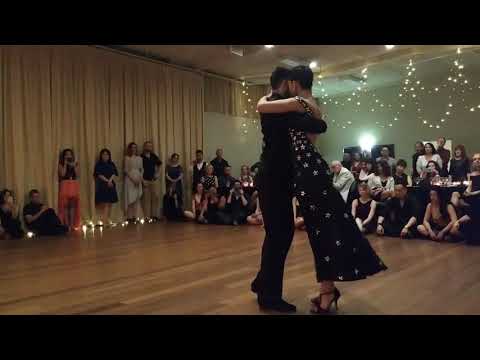

♪ Music · 6:05 ·
I'm reconsidering this song, Michael. It makes more emotional impression on me now than did before. Beautiful, fantastic, it's a huge song. Oh, so good. My plan is to talk about the huge emotional load it carries in the after party. Okay, good. Let's just move on. It's a biggie.
Yeah, the next chapter of the Troilo universe, let's see, the milonga Ropa blanca with Alberto Marino singing, and then let's finish the Troilo chapter with the instrumental masterpiece Inspiración. And this is a Piazzolla arrangement. He didn't care about the dancers, as you talked about, Michael, before, but it has a very, very nice, um, yeah, it's worth reiterating that it's worth written.

A milonga from the Troilo universe, played before the lyric discussion in the afterparty.

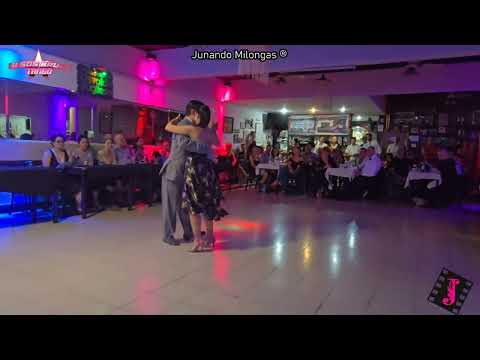
And again, folks, you've got homework. Your homework is to listen again to the Pedro Laurenz recording of Inspiración and to compare and contrast that with the Troilo interpretation. Because on the one hand, the Troilo version, which is arranged by Piazzolla, is modern, innovative, groundbreaking.
Just to reiterate, Piazzolla is not the main arranger of Troilo. This is some crap that's put out by the Piazzolla people. He's a minor arranger in the 1940s, where I don't know how many songs does Troilo record in the 1940s, meaning 1940 to 1949, a very strict technical definition, a couple of hundred. There are 10 numbers arranged by Piazzolla. 10. But this is one of the first ones, if not the first one. So it's different to what the public are used to. And it had a big impact on the dancers.
We have first-hand testimony from a dancer at Boca Juniors. Boca Juniors, one of the big five football clubs, so a huge milonga. There would have been maybe 5,000 people there, and people just stopped dancing. Some people just left and went home. But when you listen to the Pedro Laurenz recording, which is from 1929 or 1930, so a long time ago, it's not so different, particularly in the cello.
When we get to the point where they place this recording, listen to the cello line and how it interacts to the violin. That's a challenge, isn't it, to listen to two things at once? And of course, that's what confused the dancers, who had to listen to two things at once. And that's something that dancers don't like doing. Yeah, let's hear it. First the milonga, Ropa blanca, and then this magnificent tango, Inspiración.
This is a kind of tango where I want to scream with pleasure. What can we say? Let's give our thanks to Troilo. He died in 1975. It's a long time ago. But he's a super nostalgic guy. I'm sure he feels what we're feeling now.
Aníbal, you're with us. Okay, we're getting close to four hours, Michael, for the main programme. We're just warming up. This is the beginning. I want to finish with the last of the big four ones this early, and I think he's fantastic.
What do you mean, the last? Did I miss the Pugliese section?
Yeah, you did, yeah, but before we go on to this other, let's have a an intermediate, uh, which is related to an intermezzo, intermezzo related to Troilo, and this is uh this is a solo recording by another woman singer, Tanya, called Garúa, which is their orchestra, and this is the one we know from Troilo, Marino also. Troilo, Fiorentino, sorry. But I really like this recording with Tanya from 4043, where we can hear the whole lyric, and it's a nice, I think, transition to the Sarli.
So we're not Tanya from before, don't we, Michael? She sings with various... Well, Tanya's the shepherdess girlfriend. That's the real significance of as a tango performer. Let's hear it. It's an emotional piece. So I hope you enjoy it.
Garúa. How do you translate this in... Drizzle. Drizzle, yeah. If you live in the United Kingdom, you know that you need many different words for different kinds of rain. And drizzle is a kind of rain that we have a lot over here.
Well, it's the thing we have experienced in Bergen as well, I must say, this drizzle. Yeah, every language has its own words for rain. So drizzle is a kind of rain which is not too heavy. It's quite a fine rain, but it keeps going, and eventually it gets you wet. Yeah, let's get wet with Tanya Garúa.
Great voice. I'm very excited to see all the different cultural interpretations of Garúa in the chat window. Everybody has their own word for it. Although it won't be exactly the same. It will be for their own local rain. Yeah.
Final chapter in this four-hour program, Carlos Di Sarli. Fantastic year for Di Sarli. I mean, Di Sarli has so much good stuff from around 1930, from the late 30s, from the 50s even, but I think 43 is one of his best years. It's not one of his best years, Dag. It's his best year. And anyone who disagrees with me is wrong.
All right. Yeah, why, why, why, okay, yeah, that's a good question. Yeah, justify your wild statement there.
Because what are we experiencing, not just with this alley but with 1943 in general? We are experiencing the elevation of el tango milonguero, tango milonga, tango for dancing, as opposed to tango canción. Tango milonguero reaches its maximum expression in 1943, becomes the most complex, most interesting it is without turning into something else. That's particularly obvious to me with Di Sarli's recordings. Di Sarli is one of those orchestras like D'Agostino where you can listen to it on two levels. As a listener, you can just follow the melody. Oh yeah, that's nice. And then you know, the Milonguero Viejo of 1940 is the same as the one from 1954. It's just, you know, the sound is a bit different. Or you can listen with a little more perception and depth, listening to the rhythmic layer and the melodic layer. And what Di Sarli always does is he makes complex music sounds simple. That's one of his great gifts.
And where's the complexity? It's in the rhythmic layer, in the left hand of his piano, in the double bass, making some quite complex figures. So let's cut to the chase, as we say in English. What happens in 1943 with Di Sarli is he takes ideas that will be considered advanced ten years later and makes them seem normal.
Polyrhythm. Polyrhythm specifically, polyrhythm meaning two rhythms at once, poly, multiple rhythm. And the polyrhythms in question are the four beat of tango with three time. And it's everywhere. Boedo, En San Juan, Cornetín, Zorzal Plateado, Anselmo Cuno, El Resero. But it's just so subtly done, you almost don't notice it. Years before polyrhythm becomes a thing and we start talking about it. It's complex music. It's the most complex music Di Sarli ever makes, but Di Sarli always makes his music sound simple. And that's why 1943 is picked, Di Sarli. It's my favourite Di Sarli year. And there are multiple pieces that truly make me want to weep.
I hope you'll weep after my choices, Michael. And it's not the vocal that makes me want to weep. No. Yeah.
Well, let's hear two tangos first, like Anselmo Cuña, El Resero, Rufino singing, but I also think the great thing about this song is the left hand of the Sarli. Fantastic stick playing with the left hand of the piano. And the second song, it's an instrumental called En sueños. Does that mean dreams? It does. Now, En sueños is like, it's like watching an episode of Star Trek. It's like another galaxy visits us from a parallel dimension. It is so different to anything else you've ever heard in your entire life. I don't want to say anything more about it, the listeners will judge. Let's hear it.
So first it's the Rufino tango, Anselmo Cuña, and then instrumental, both completely masterpieces. Listen to the left hand on the piano, especially on the first one, I think. Fantastic.
Man oh man, whatever categories you've got to talk about tango music, En sueños of Carlos Di Sarli does not fit into any of them. It's a completely unique expression and at the same time still tango, such an unusual melody and the friseo of that cascading, descending piano phrase. Bum, bum, bum, bum, bum, bum, bum, bum, bum, bum. You can't write that down on a stave. Such a beautiful expression. Yeah. Totally agree.
I had maybe six or seven more decided tracks on my list, but let's narrow it down to one because there's, well, there's probably an after party, I think, and it's almost already past midnight here in Norway. But there's one tango I just have to play, which is one of my favorite tangos, not just from 43, but from the whole tango universe. It's Di Sarli's Todo with Rufino singing. And Michael, the reason why I really fell in love with this song was when I was reading your Di Sarli book and you were explaining the concept of counter melody in Di Sarli, and this is one of the best examples I think of counter melodies in tango ever. It's a fantastic counter melody if you listen to the violins behind Rufino's voice in this song. I think it's arguably the single best example of counter melody in our tango verse.
And come on, Dag, it's our last night, Tango by Year. So let me share a personal memory that touches on you, which is on one of my teaching trips to Bergen and playing Todo during the Di Sarli workshop, the Di Sarli seminar, and explaining about the counter melody. And I will never forget how moved you were by that presentation. So, yeah, it's a very special moment in tango music.
So now addressing the listeners more broadly, what do we mean by counter melody? We mean a second melody that harmonises with the main melody. And for Di Sarli the violins are his main means of melodic expression, so of course the violins are going to take that. Now the point at which it will become super obvious is after Rufino stops singing, so Rufino will enter after a minute, he'll sing a verse and a chorus, and then the violins will slay you. They will stab you through the heart with their bows. If you're not murdered at that point, tango is not the right music for you. Find something else to do.
Lavocah calls it arguably the single best example of a counter-melody in tango.
But Dag and I and, you know, a dozen of our friends who I'm looking at right now on their window, we will all die quietly. Like that Don McLean song. I heard he sang a good song, killing me softly with his song. Oh Jesus, Mary and Joseph.
Now this is not a seminar, it's a music sharing night, but if it were a seminar we would then listen to the song again for a second time, and then we'd take the melody of the violins that we had heard previously and we'd try to hear it earlier in the piece. So what can I say to you now? It's not that hard. It's hard. It's hard. Listen to the violins. Listen to the violins. When Rufino...
So, how to listen to Di Sarli? Michael's three-point plan. Okay. Yeah? Okay, you listen to the melody.
Point two, listen to what the singer's doing. But the third point is listen to the violins even when the singer is singing. So, the key, and it's a very simple idea, as Dag is reminding me as I try to make it complicated, is when Rufino starts singing, that's fantastic. He's fucking awesome, but keep listening to the violins at the same time. That's it. I'll shut up now. The violins are everything. Toto, listen to this.
I want to scream! I did scream! Play it again! Man, so... I'm joking. Yeah, tell us about it. It's never better than that, isn't it? There is as much interest in the cantor melody developed by the violins as there is in the main tune. Extraordinary. Beautiful.
Okay, that's it for me, Michael, after four hours and 15 minutes. You can take over the music if you want. Um, yeah, that's it. Should we reflect a little bit about Tango By Year and that it's over? Yeah. So I wasn't expecting you to end then, but I think we really need to do that reflection before I construct any kind of after party. Yeah, it's been a good year. I mean, not in all senses of course, because of the pandemic and everything, but in this universe it's been a really, really fantastic year. And I feel I've learned so much from engaging with Michael in this musical endeavor, and despite not having danced almost for a year, which is a pain, deep pain, I've kept, sort of, I've felt alive through this listening to the music project. And I think it's going to take us beyond this pandemic, which is a parenthesis if you think about it in the long run. So to engage with the music is something that really carries us for a long time, I think. So thank you so much for joining me in this project and spending all this, what do you say, 100 hours together or something?
More. It's incredible. More. And thanks to everyone else for being with us. I mean, for me it's also been an extraordinary time, a very unexpected time. I mean, you said at the beginning to me, well, let's try slicing the cake another way. So that's what we've done, and I've learned a lot through doing that, actually. I'm a storyteller. I'm not a historian or a music theorist. I'm a storyteller. I can't be anything else, and the public has responded to that over the years that I've been offering my work. But I've had to be a little more rigorous, maybe, to look at things on a year-by-year basis, and that's been really interesting for me. I've learnt a lot through doing that. I really have learnt a lot, but with the background of still it's about stories, it's not about history.
And what have I learnt? I mean, what I've learned, in fact, has been kind of obvious in the way that these programs have changed from the first one to this one. So there were two big changes for me. One was quite early on. It came from me, which was starting to place the year really in a historical context, because tango music is so fucking awesome that it's really easy just go, oh, 1941, look at all these great songs, 1942, look at all these great songs, 1953, great songs. You know, any year you like, pick some great songs, you know, we can do that. But then you start to see a context, and secondly to place that in a historical context within Argentina and also in a world context. So that's something that the year really brought out, and when I say the year, I mean this year that we, meaning Dag, myself and all of you here with us tonight, have spent together. That was the first aspect, but then there was a second aspect which came more than six months into the program, when, and this came from you, Dag, and not from me, which was to start to pay more attention to the lyric and to post the lyric in the chat window. And that really changed our appreciation of what we're doing, including for me. I mean, for everyone and myself included as the so-called expert.
What do I know? I don't know anything. You know, I sit here, program, next program, and I ask myself, you know, how come I'm the presenter and you are the listeners? What's the difference? And the main difference, folks, is that I am prepared to show my feelings. I'm English. I watched a documentary the other day of a Japanese woman who went to live in Argentina. It's a modern documentary, not from 20 years ago, it's the past couple of years. And she said, well, I'm from Japan, and in Japan no one shows their feelings. And so that's, I realised that's why I've come to Argentina. And she's a tango singer, she sings in Spanish without sheet music, tango songs. And she said, yeah, I've come here to Argentina and here I can express my feelings.
But for me, that's really a huge part of what we're about here. And, you know, the music comes on and I'm not ashamed or embarrassed to sway in the window. You all sway in your little windows when the waltz comes on. But to pick out a particular line and show it with my hands or just to go, ah, when I feel that. And I would really love it if you all did more of that. Because what can I share when I'm dancing? When I dance with you and you and you and you and you and you and you. All I can share is my feelings. Of course you are experiencing my body and how technically good a dancer I am, but I can't change that from moment to moment, that's just a given. But what I can change is to what extent I experience the music and feel it, and I'm prepared to share that with you. So that's really my great wish for this year.
I mean, we're all going to take away what we take away from it. And that's not for me to say. Or for you to say, Dag. It's been a good year. It has been a great year. Everyone will have their own individual, unique experience of that. But from my perspective, what I would really wish that you take away from that is I can express my emotions. How about that as an affirmation? I can express my emotions. Let's extend that. I can express my emotions dancing, and then extend it further. I can express my emotions with my partner. That's really my great wish, because that's what tango does for me. Sometimes I listen to a tango and I weep, and that still happens. I'm dancing 25 years. I hope I'm a much more mature human being than when I started, much more self-aware, but I still weep.
And sometimes it happens that I don't even understand the lyric. I weep and I don't know what the lyric is. It's a completely new song. And then I go home and I look up the lyric on the Internet and I read the lyric and I find that there's a message there for me which I hadn't understood at the moment that I wept. I cannot explain that to you. Well, I will explain it to everyone. Just get into the music and weep. It's really simple.
Yeah, and one just more thing. I want to say one more thing on this topic, which is that the meaning that the lyric has is not absolute. It's not objective, it's subjective, it's relative. So I can take a lyric like confession, for example, and what touches me about it is not the same thing that touches you about it, and there is no historical argument about what the lyric was meant to say. I mean, that's interesting, but actually in the moment that you dance, that's bollocks, it's rubbish, it's of no interest whatsoever. The only thing that's of interest is what's happening in this moment that enables me to bring my feelings. That's it.
Oh God, I agree, I agree. I know that, Michael. I want to finish because I wasn't planning to play, like, because I was thinking after this disorder total track there was nothing that could be played after. But I want to play, we had the traditional playing La Cumparsita in the end, and we do from this year there are three versions. There is a D'Arienzo version which is really, really nice, awesome, awesome. There's a Fresedo version which is really nice, but the sound quality is terrible, so I was going to play that until like 10 minutes ago, but now I don't want to. And the third one is Troilo, which is a fantastic version, but we did play it in the Troilo special last summer, and we have a tradition for never repeating our songs. But I'm going to deviate from that now, because I think we need to listen to Troilo now.
Yeah, I can't add anything to that. Let's just hear it. Let's just hear it.
Blimey. Goodness, folks. Well, there's going to be an after party, so I'll just say that before anyone switches off. But I think you all know none of this would have happened without Dag. This was Dag's idea and also his generosity of heart to make an offering and just open it to everybody free of charge, all are welcome, open to everybody. He was very clear about that right from the beginning. That's a generosity of spirit that I wish I had and I hope to have, but it came from him, so I'm grateful to him for that. And of course I really enjoy presenting music in this dialoguing form with another person. That's where I do my greatest work. So I've already had my pizza. We're going on. We're going on until you all go home. This is going to be a long night. I really hope those of you who have a normal job have booked tomorrow morning off.
I know Dag's just gone offline for a moment, but I just need to make it obvious to those of you for whom it's not obvious why we're stopping. We know every project has a life. We've been here for a year, it's been an extraordinary year, and we're done. Yes, we've seen all the posts that you've offered on Facebook saying, oh well, we could do this, we could do that, we could do that, and yes we could, but in terms of the project that we set out to do, we're done. And I've got other projects to get on with. The orchestra books, the Canaro book was half done when the pandemic struck, and I'd like to return to that now. There are other book projects to do. I have a third project which is to do with making slots for Architain radio station. But it's not so much that I've got other things that I want to do, but just internally we've completed this vast and huge project. And I think for both of us, it's going to be many, many weeks before we really appreciate what this has been for everybody. So anyway, I've had my pizza, but now is your chance to go and get pizza.
So I need to play something. You know, this is what I do. We get to the point where Dag hands over to me and I play something. And those of you who are fine, just stay here, and those of you who need to go, run to your kitchen. So what am I going to play now? It's 1943. You know, I'm a real stickler. There's so much good music that we can afford to take this restriction of play only the year. Now, the greatest thing I could play for you from 1943 would be, this is going to surprise a few people, would be a live broadcast from Berlin conducted by Furtwängler of Beethoven's Seventh Symphony from October 1943. So this is from Berlin in the middle of the Second World War, after Stalingrad, which is something that we touched on this evening, so a point where the Germans knew they would probably lose the war, and Beethoven is from the Germanic peoples. It is the single most extraordinary performance of Beethoven ever, and I'm not going to play it because it's 37 minutes long, and much as you love me, I think that's a bit too long. But that's optional homework. That's not compulsory homework, that's optional homework, easy to find on YouTube.
I have to say, for me it completely transformed my understanding, first of all of Beethoven and secondly of Germany. It's the most extraordinary thing. Um, yeah, I can't explain it. I mean, I don't even have the words to explain it to myself. If you like Beethoven, please do listen to it. It's very easy to find in YouTube. There's a lot of coughing on the recording. Don't be superior about the coughing. The reason people are coughing is because it's October, it's getting cold, and there is no heating in Berlin because all the fuel oil has been diverted to the army. So the people are cold, they're sick, that's why they cough when they go to the concerts.
That was a bit heavy, wasn't it? So now let's have a little bit of lightness. Some of you will have been here since half past six British time, half an hour before the official start, and listen to all the different rhythms that Dag played, and I listened to them all and thought, shit, I can't play that now. But he didn't play a few things. And what he didn't play was Oscar Alleman, Oscar Alleman, a superb jazz guitarist from the north of Argentina, from the border with Brazil. And he returned from Europe. He had been playing in Paris. He had a very dark skin, and because of that he was thrown out by the Germans, and he went on the overland route over the Pyrenees on foot in 1940, where his metal guitars were confiscated by the Wehrmacht so that they could be melted down to make bullets for the war.
Oh God. I guess I have to be grateful that I was not born in that time and I've never experienced anything like that. But he returned to Argentina with one guitar, so he lost his two national steels, but he had one guitar left, which was the Selmer. If you type the word Selmer into YouTube, I'll just type that. The Selmer was the ultimate jazz guitar in the world in the 1940s, and it's distinguished by the oval sound hole. And Oscar Alleman was able to restart his career to a certain extent. There's so many good songs. Let's listen to one of the greatest songs of all time. How about that for an offering? Besame Mucho, Kiss Me A Lot. I don't know how many virgins there are. There must be hundreds. A bolero written by, what's her name? Vasquez? Consuelo Vasquez? Consuelo Vasquez, a female composer. This is Oscar Alleman, Argentine's swinging gypsy jazz guitarist, and I'll play another one straight after. So you've got six minutes. You've got time to go and get a pizza or whatever it is you need to go and get. Enjoy.
One of the two songs Campos sang at his Tanturi audition, which was recorded; Caló and Troilo had also recorded it.
♪ Music · 5:00 · The lyrics, on the song's page
Right then, your six minutes are over. Ready or not, here we come with the after party. There's so many ways to navigate this after party. But let's start with Tanturi, because he talks about champagne, which is something I've been drinking a little bit of this evening. Ecce mozo mas champagne. Waiter, pour me more champagne. Here we go with la ultima copa. The final cup.
So as we explained and talked about earlier on, in 1943, Alberto Castillo quit Tanturi's orchestra, possibly because he was so upset about the effects of censorship and the fact that he couldn't record Muchachos, comienza la ronda with the original lyric. And Tanturi had been working with only one singer up to that point. So it was really urgent and vital for him to find another person. And as you know, Enrique Campos is the singer that he chose. Why did he choose Campos in these auditions? Because Campos was the only person who did not try to copy Castillo's style when he came for the auditions. Now, you'll have heard that, but did you know that Enrique Campos' audition for the Tanturi Orchestra was recorded? Did you know that? It was recorded. I've got it! I'm going to play it for you now.
So the normal way these auditions weren't done is that you didn't play with the whole orchestra, because, you know, why did you need to assemble the whole orchestra, for example, when, oh gosh, when Héctor Mauré did his audition for the D'Arienzo Orchestra, it was just the pianist. Fulvio Salamanca was there, just on the piano, and then the singer came and you just played for him. And that's how it was with the Tanturi Orchestra. Although in this case, the pianist wasn't the regular pianist. It was Manuel Sujer. And Campos performed two tracks which were recorded for posterity. Extraordinary.
One of them was Percal. Percal was a tango that had been recorded both by Caló and by Troilo and was doing really well, and then censorship came and it was banned from the radio. Classic story: the composers Domingo Federico, who wrote the music, and Homero Expósito, who wrote the lyric, actually went to the office of the censor and said, "What's wrong with this lyric? Why is it banned?" And the censor said, "Well, you know, the girl in the lyric is 15 years old and that's immoral." So Esposito, the lyricist, sat down at a typewriter and improvised a new lyric which didn't refer to the age of the girl. Typed it up, showed it to the censor and said, "How about that?" And the censor said, "That's fine." And Esposito said, "That's rubbish." Took the piece of paper that he just typed, screwed it up, threw it away and walked out of the building. Percal remained banned, but in the meantime it was a tango that brought Campos into the orchestra. Have a listen.
I think you really like that Campos audition. Stunning, isn't it? I've no idea why we have that, but we do. So, the obvious link now is to Pugliese, which amazingly, well, not amazingly, it's a sign of the incredible richness of 1943 that Dag presented 1943 and didn't play any Pugliese. And nobody went, "Oh, what did we miss?" Because it's such a shockingly rich year.
That's not true, Michael. I did play Pugliese. You forgot.
Yeah, it's just my brain.
I played Farol and Mala junta.
Very true. I guess I'm just missing Muchachos, comienza la ronda, which is the point I want to get to. But it's forgettable and understandable because we're in an emotional mood and there's a lot of music tonight.
And yeah. Well, I think yes, you're quite right, we're both in an emotional mood this evening. Well done for picking me up on that, sorry about that, intervening. But no, you do it, man, you do it.
But before we go anywhere else, I'd like to play one more Tanturi. I mean, everything Tanturi recorded in 1943 is awesome, but I want to play one more Tanturi Campos. Maybe it's not quite so popular? I don't know. You will tell me. This is Sir Josos de Bandognon.
So just one more Pugliese. Actually, there are only six Pugliese tracks in 1943. And as you have reminded me, we've heard two already, only four are left, but I really would like to play just one, Muchachos, comienza la ronda, a track that was deeply affected by censorship. And before I play it, just one comment. The composer, the person who wrote the music, Luis Porcel, was one of the band-a-gnon players in the Di Sarli Orchestra, which raises the intriguing possibility that Muchachos, comienza la ronda was being performed by Carlos Di Sarli in 1943. So I will try to imagine that in my head with the voice of Roberto Rufino. It's quite tricky but you can have a go.
What a wonderful lyric. A social lyric about us all dancing together in the Rwanda. Now, I know both Dag and myself have had a little bit to drink on our champagne evening. But I really do think we haven't heard any Lomuto yet. So I hope I'm safe in saying that.
Lomuto's kind of interesting because when you go back to the late 20s and the early 30s, he's clearly an apprentice to Canaro. But by the time we get into the 1940s, they sound quite different. What's happened? Maybe Lomuto hasn't tried as hard to be super successful. Canaro's done all this wild stuff. He has followed the money. Follow the money! You know, it's a good philosophy in life. Not to get rich, but to understand what's going on. Canaro's followed the money. Lomuto hasn't followed the money quite so much. Maybe he didn't need to because he's really made friends with the upper class and the aristocracy. He's really cemented. When there's a ball at the government house, the Lomuto Orchestra is the one that's most likely to be invited. So he's not rich, but he's safe.
But let's listen to a couple of Lomuto tracks. I'd like to begin with the instrumental Catamarca, a fantastic composition of Eduardo Arrolas, of which there are very few interpretations. The one that we know is from Di Sarli of 1940. So that's what maybe will occur to you in your mind. I really like this one. It's very, very danceable, and that will be followed by a vocal number, Un silbido en la noche, a whistle in the night.
Where are we headed? We're headed towards Di Sarli. Di Sarli in 1943 is totally awesome, so I'm not going to play Di Sarli now. And before Di Sarli I'd like to play a bit more Troilo, and then before Troilo I'd like to play just a little bit more of D'Arienzo. D'Arienzo is a curious orchestra really in 1943, because we're beginning to get a split between the rhythmic tracks and the melodic tracks.
Now, the melodic stuff is what we so appreciate, especially with Mauré in the early part of the 1940s. But if I look at it another way, the orchestra is moving away from the rhythmic stuff, which is where it comes from. So what I and many of us appreciate as an evolution in the orchestra is achieved only at a cost. And let's remember that the people who are buying D'Arienzo records are largely poorer people who couldn't afford to buy a record 10 years previously. So as the music evolves, which is something that now today we all appreciate, maybe that wasn't something so appreciated by all of his fan base. It's kind of complicated, isn't it?
Let's play something from D'Arienzo's recent release, because not all of these songs have been available in good quality. And I'd like to play this milonga, Tabu. This is really strange and dark, milonga candombe. And maybe some of the Spanish speakers can contribute a more detailed understanding in the chat window, but it seems to be somebody offering themselves as a sacrifice in order to save the life of a child. I'm not offering that as a definitive explanation. Have a listen to yourself. I'll post the Spanish lyric. See what you make of it.
It's interesting for me listening to these D'Arienzo's or waltzes from 1943. Yes, they're wonderful waltzes, but the pace is really held back. It's a very different waltz experience to the 1930s D'Arienzo waltz experience. Draw your own conclusions, if it's possible.
Now let's move on to Troilo. Lots of interesting Troilo, 1943. Let's start off with a waltz, as we've just been listening to a waltz. What surprises me, the very fact that Troilo recorded it at all. Soñar y nada más. I first came across this from Alfredo de Angelis, and I have to say I like the De Angelis recording very much indeed. And then I realised, oh, it's written by Francisco Canaro, and there's a Canaro recording. I don't like that one as much, but that was the next one I came to. Then finally, there's this Troilo version, and it's recorded six months later than the other two. So Troilo has had time to understand it, to make of it what he wishes. And what he makes of it, of course, is something way more sophisticated than Canaro and De Angelis ever had in mind. Have a listen.
A rare duo interpretation from the Troilo Orchestra. So we've focused on the voice of Alberto Marino quite naturally this evening. What was all the fuss about Marino? He was an operatically trained singer, a singer with a bel canto training, who could modulate his voice from a fortissimo to a pianissimo, from very loud to very quiet, just like that. He did it so well that it almost sounded like he wasn't trying. It was so easy for him, which led to some people to criticise him. But, of course, it's an expression of great skill, and it's exactly what Troilo needed in order to increase the colour of his music. Something that's key not just with Marino but with later vocalists in the Troilo Orchestra.
I'd really like to play one tango at least that exhibits this quality, and the one to play is Farolito de Papel, Little Paper Lantern. What's it about? It's a very simple, naive would be the right word, tango sentimental tango about a guy who has a bullying. A bullying is a little room that you rent in order to meet with your friends or with your lover, because if you're living with your family, as people in Latin countries and in poor countries often did, there wasn't any possibility. And in this little room, she's gone, and all there is is the lantern on the bedside table that saw her before. Farolito de Papel, with the voice of Marino. And the special thing to notice is how, at a certain point, he brings his voice back to the barest whisper, but he still sings. He's not talking, he's still singing. That's the special quality.
Oh, it's amazing, isn't it? The song, the vocal control that he has, it adds something. It's not just a technical thing. It brings real emotion to the lyric. Now, before we leave the Troilo Orchestra, one more just with Fiorentino singing. So don't forget Fiorentino has been with Troilo since the beginning, since 1937. We're now in 1943, so that's six years later, and that's why he leaves. After six years, he decides, I need a new artistic challenge. But it also means, after six years, this is the most complex expression that Fiorentino has made with Troilo.
So I'd like to play something that demonstrates that, and the one to choose, and Troilo fans I'm sure will agree with me, is Sosiego en la noche. Sosiego en la noche means in the still of the night. There's a Western pop song from the same era called In the Still of the Night, if I'm not mistaken. And it's a countryside tango. It depicts a cow herd in the pampas, in the vast emptiness of the Argentine countryside outside the city, the plains, looking after a herd of cattle in this empty expanse under starlight. It's a tango, it's about the experience of being there in the dark, and the only sounds you hear are the sounds of the cattle and the sounds of the other cowherds and their horses and the men whistling in the dark.
Wow! How about that? Even if you don't speak a word of Spanish, it really transmits the feeling of the vastness of the pampas and the stillness of the night.
So before we hit the Di Sarli festival, one tango of D'Arienzo, and I want to play Uno. I know we've already heard Uno tonight, but really in historical terms it's the tango of the year. There are more than 10 versions recorded in the same year. Now that's extremely unusual, because there are only two record companies. They don't like to record multiple versions of the song because they're competing against themselves in terms of sales. So once you get past two, whenever you get past more than two versions of a song, you know that it's a big song, and to have ten versions of a song in one year, that's huge.
Uno means one. There are multiple stories about the meaning of the lyric. Discépolo is tango's existential prophet of despair. Uno, busco lleno de esperanza. One search is full of hope. The path... It's a tango about disillusionment and how you keep going all the same. There's lots of strange and incorrect stories.
So Uno means one, as in, in German, man, the impersonal pronoun, but it could also mean an individual. People at, I'm slightly confused, you have to excuse me, I'm not sure quite the right way to explain this to you. So before the song's official premiere it leaked out and Firpo was performing it, and there is a Firpo recording of Uno. But before the song was officially performed, for some reason the Firpo Orchestra got hold of it and they were performing it, and at this point it didn't have a title. So for that reason the audience would request the song by holding up a finger like this. Please play that one, the tango that has no name. And this led to all kinds of strange and untrue stories about the real meaning. Like, you know, that the tango was banned and people were not allowed to ask for it, and therefore they raised their finger like this to request the tango Uno.
Now, like all good false stories, there's a kernel of truth, because after the success of Uno, it was incorporated in a film which was about the role of the French resistance during the Second World War, starring Libertad Lamarque. And this film was banned. And so the story arose that the reason it was banned is because the song was in the film and da-da-da-da-da. You get it. Anyway, that's enough about that. On with the music.
You've already heard this once tonight from Troilo. I really want to play the D'Arienzo version for many reasons. You can't really leave 1943 without the Uno of D'Arienzo, because maybe it's better than the Troilo version. Don't quote me on that. We'll cut that out of the recording. The D'Arienzo version is better than the Troilo version of Uno. That's what I think. You have a listen. Tell me what you think.
Wow! Well the most amazing thing about that was I said the D'Arienzo version was better than the Troilo version and a hundred people didn't complain. I was expecting a deluge. But no, not a word. I know. It's bizarre, isn't it?
So now we're going to listen to Di Sarli. And that will be the end. Di Sarli in 1943. So wonderful. Because there's a... 1943 in general, a wonderful balance between the lyrical impulse and the rhythmic impulse, which is going to shift definitively towards the lyrical in 44 and onwards. And then the Di Sarli Orchestra in particular, he has a great gift for concealing complexity so that you don't even notice. So for example, what about the first Di Sarli recording of 1943. Cournet in. Yeah?
Dag posted the Libet at La Marque version in the Facebook group yesterday. So that's a tango you all really know. Simple dance music, right? No, it's not simple dance music. It's extremely complex.
So I'm going to play it now. And my invitation to you is to listen to the piano of Di Sarli all the way through, no matter what else is happening, especially when Rufino is singing. Forget Rufino. It's difficult, I know. And listen to the piano because the piano plays in three. Tango is music in four. The piano plays in three. It's easy to miss, but once you listen to it, you'll never miss it again. So, Di Sarli, wild on the piano, absolutely on fire. His first recording in 1943 with the funeral and vocals. He's spectacular, of course.
Next one. Yeah, you could hear, I'm sure you could. One, two, three, one, two, three, one, two, three, one, two, three, one, two, three. Yeah, it's much more complex than we first appreciate and that's the theme running through the Di Sarli tangos of this period. Have a listen next to another Rufino number.
Como se hace un tango? How does one make a tango? You can imagine what's in the recipe. Quite a lot of suffering, but let's focus on the musical interpretation rather than the lyric.
From 1943, Boedo y San Juan. The same musical treatment, a really complex musical treatment. There are other great 1943 Di Sarli songs that I could play you that will present another side of his music, but we can't do everything in one night. We don't need to. I could play for you, for example, La Verruta, the 1943 La Verruta. It's kind of surprising, it's the first time Di Sarli does it. We associate it more with D'Arienzo at this time. And there are these crazy slides in the piano, for example.
But I want to stick with this theme of hidden complexity that we've heard in several songs. Also, there's Verde Mar. God, we haven't played Verde Mar. This is only 943. Can't play everything. Have a listen to Buedo in San Juan.
The lyric is a simple, nostalgic lyric. Boedo in San Juan refers to a street junction in the barrio of Boedo and the guy who's been away for 10 years in Paris and he comes back to his barrio and says oh it's much better here, why did I waste these 10 years in Paris. Think of that what you will but for now just enjoy.
Thank you all so much, Anne from Norwich and Bergen and all over the world. It's goodnight.
Tango By Year is Dag Stenvoll and Michael Lavocah's, published here with their permission. The audio plays from SoundCloud.