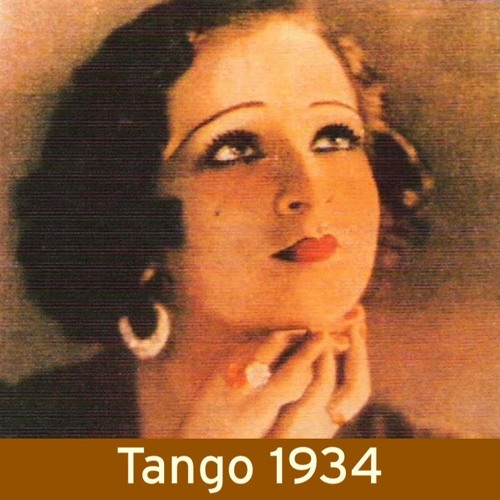
Tango 1934
Dag Stenvoll y Michael Lavocah · 11 de nov de 2020 · 3:30:06
1934 is a trough year: the Great Depression has gutted record labels and driven out the innovative chamber-style sextets of the early 1930s, while tango itself is losing ground in Argentina's popular culture to foxtrot and North American jazz. Francisco Canaro dominates completely, recording around 111 of the year's surviving sides versus 14 for Roberto Firpo and 19 for Osvaldo Fresedo, while Pedro Laurenz and Elvino Vardaro quietly form the bands that will not bear fruit until the 1937 dance-orchestra revolution. Fresedo's increasingly European, less milonguero sound and a wave of new Canaro lyrics about good times coming reflect a music industry trying to sing its way out of the Depression. The episode also ranges outside the core dance orchestras into a German tango, a Mexican/Tex-Mex 'tango', Al Bowlly's crooning, and a near-forgotten Roberto Sirigio recording whose singer, Fiorentino, anticipates by four years the vocal structure that will define tango canción after 1938.
0% escuchado
faltan 3:30:06
Lo que sigue, como se publicó
Tango 1948Episodio 23 · 25 de nov de 2020 · 3:24:52Lo que este episodio dio a Tangopedia
Datos dichos en el episodio, cada uno citado al minuto en que se dice.
Unlike 1936, which Lavocah elsewhere called the year connecting 1935 and 1937, he does not see 1934 as a similar bridge between 1933 and 1935.
As 1934 opens, none of the future 'Big Four' orchestras (Troilo, Pugliese, Di Sarli as a full band) exist yet; Di Sarli himself is in the wilderness.
Pedro Laurenz finally separates from Julio De Caro at the start of 1934 to form his own band, which will not make any recordings for three years.
Vardaro had already formed his own sextet in 1933; like Laurenz's new band, it did not record at the time, and both are 'seeds' for the dance-orchestra revolution that only bears fruit in 1937.
Los Provincianos was Ciriaco Ortiz's separate studio recording orchestra for the Victor label, named for Ortiz's origins in the provinces (Córdoba), and allowed to sound different from the house Típica Victor band.
Capítulo · 3:00
The Seeds of 1937
In 1934, two giants of tango's future quietly split from their old bands - and then didn't record a single note.
Introduced as a Victor-label waltz from Ciriaco Ortiz's separate studio recording orchestra, named for Ortiz's origins in the provinces (Córdoba) and allowed to sound a little different from the house Típica Victor band.
Solo en el episodio
♪ Música · 2:21 ·
Played as an instrumental trio version called 'exquisite', distinct from the better-known Canaro/Maida version from the late 1930s.
Solo en el episodio
An energetic instrumental that's more complex than it sounds; the hosts suggest comparing it afterward to D'Arienzo's own early recording of the same piece.
Solo en el episodio
♪ Música · 2:00 ·
An unusually punchy Fresedo lyric for the 1930s, ending with the singer begging sorrow to take him in its arms so he can die.
Solo en el episodio
♪ Música · 4:57 ·

Played as Famá's rarer solo version rather than the estribillo version familiar at milongas; Lavocah calls this Famá's best year with Canaro.
♪ Música · 3:45 · La letra, en la página del tango

A second Famá/Canaro side played back to back with the first, from what both hosts call Famá's strongest year singing for Canaro.

Charlo's own composition, backed by Canaro, flagged as not to be confused with the similarly titled 'Tormenta'.
Solo en el episodio
♪ Música · 2:22 · La letra, en la página del tango
An unusually syncopated instrumental, later also known in a version with Maida singing; praised for making Canaro's normally square, hard beat really work.
Solo en el episodio

One of the Canaro waltzes later chosen for the first 1960s LP reissues, which is why it survives in good quality today.
♪ Música · 2:34 · La letra, en la página del tango
Verlo bailado · 5
One of only two Canaro milongas this year, played for its irresistible rhythm.
Solo en el episodio
Capítulo · 1:05:03
Good Times Are Just Around the Corner
Three years after the stock market crash wrecked Argentina's economy, tango's biggest bandleader started selling optimism.

Framed as capturing the spirit of 1934 - its sheet music subtitled 'Tango Optimista' - as a follow-up to 1933's 'Si yo fuera millonario'.
♪ Música · 3:10 ·
Verlo bailado · 1

A rare Falcón duet, the only time she and Corsini are known to have recorded together, in an unusually long, slow take.
♪ Música · 4:16 ·
A guitar-backed solo Corsini side offered as pure listening music rather than something to dance to.
Solo en el episodio
♪ Música · 2:53 ·
Capítulo · 1:29:12
The Tango That Hid Just a Gigolo
A Lomuto tango from 1934 hides the B-section of a song you already know.

Its B-section melody turns out to be the same tune later famous as 'Just a Gigolo'.
♪ Música · 3:21 ·
Sourced from a Japanese reissue via DJ Teresa Faust after Dag couldn't find an acceptable-fidelity copy; praised for the balance between clarinets and bandoneons in the final variation.
Solo en el episodio
Capítulo · 1:37:52
Lomuto Paid Himself Twice
When Francisco Lomuto needed a lyricist, he hired the cheapest one he knew: himself, under a fake name.
Composed, and under the pseudonym 'Pancho Laguna' also lyricized, by Francisco Lomuto.
Solo en el episodio
♪ Música · 1:54 ·
Backed by Alberto Soifer's respected second-rank orchestra; a reminder that Simone is the one who made 'Milonga Sentimental' famous before Canaro ever recorded it.
Solo en el episodio
A detour into German tango, from a bandleader who would have a much bigger hit, 'Bianca'/'Fiesta', in 1939.
Solo en el episodio
♪ Música · 2:30 ·
An obscure, Demare-composed instrumental spotlighting his own piano playing, billed as 'Trío Argentino' and new to both hosts.
Solo en el episodio
♪ Música · 2:30 ·

A violin- and cello-driven, high-energy Donato side; the cello, played by one of Donato's brothers, is still clearly audible here before it gets buried in his later, more famous sound.
♪ Música · 1:51 ·
A feel-good Donato milonga still well known from milongas today.
Solo en el episodio
Capítulo · 2:04:18
Four Years Ahead of Tango Canción
A 1934 dance record accidentally invented the vocal style tango wouldn't adopt for another four years.
Sirigio's only 1934 recording, in poor sound quality but with a standout closing violin solo; Fiorentino sings a full opening verse and chorus, a structure Lavocah says anticipates the vocal pattern tango canción wouldn't standardise until 1938.
Solo en el episodio
♪ Música · 2:47 ·
Capítulo · 2:11:43
Azucena Maizani's Harshest Lyric
A dying man begs his lover not to leave - and she laughs in his face.

A rare track Dag sourced from collector Bernhard Gebauer's tangodj.at database; the harshest lyric of the night, a dying man begging forgiveness while his lover mocks him.
♪ Música · 2:07 ·
One of Gardel's last recordings, made around the time he was filming in New York and nearing global stardom.
Solo en el episodio
♪ Música · 2:37 ·
A tango version, explicitly distinguished by the hosts from a differently titled milonga also called 'Pura cepa'.
Solo en el episodio
♪ Música · 1:55 ·

An instrumental waltz composed by Enrique Rodríguez, its title short for the name Mercedes; praised for its unusually strange harmony.
Solo en el episodio
One of only a handful of Maffio recordings this year, after a couple of years without a recording contract.
Solo en el episodio
♪ Música · 3:28 ·
A milonga composed by Sebastián Piana with lyrics by Homero Manzi, its unusual separate introduction and its title referring back to the 19th-century Federalist leader Juan Manuel de Rosas.
Solo en el episodio
Chosen as the one 1934 'La Cumparsita' worth playing out of three surviving recordings (two European), backed only by guitars behind Ortiz's bandoneon.
Solo en el episodio
♪ Música · 3:00 · La letra, en la página del tango
A non-tango interlude played in Al Bowlly's honour; Lavocah calls it the most sincere voice of the 1930s, tango voices included.
Solo en el episodio
♪ Música · 2:57 ·
Capítulo · 2:56:30
The Tango Mexico Recorded and Argentina Didn't
In 1934, a singer from the Texas-Mexico borderlands recorded one of the bleakest revenge songs in the whole tango catalogue.
A Mexican/Tex-Mex border recording, sung solo with a 12-string guitar; Lavocah doubts it's really a Mexican tango at all, just a tango that Mexican performers chose to record.
Solo en el episodio
♪ Música · 2:42 ·
An instrumental afterparty pick whose title translates as 'urgent telegram'.
Solo en el episodio
♪ Música · 1:45 ·

A 'five-star' but less familiar Canaro waltz, chosen specifically because it wasn't one of the tracks reissued on 1960s LPs.
♪ Música · 2:57 ·

Billed as 'ten times better' than the previous waltz - an epic, heart-tearing Canaro side.
♪ Música · 2:22 ·

One of a sentimental pair of Canaro/Famá sides played back to back in the afterparty's closing stretch.
♪ Música · 5:55 ·
Verlo bailado · 15

The second half of the closing Canaro/Famá pair.

Named one of Lavocah's favourite pieces of Argentine music; explicitly a foxtrot rather than a tango, and he warns listeners off Enrique Rodríguez's later 1940s version in favour of this intimate original.
Solo en el episodio
♪ Música · 7:10 ·
Seguir por todos los episodios
Tango By Year es de Dag Stenvoll y Michael Lavocah, publicado aquí con su permiso. El audio se reproduce desde SoundCloud.