Tango 1948
Dag Stenvoll and Michael Lavocah · 2020-11-25 · 3:24:52
Lavocah calls 1948 a curious year: tango is at a low point, with very few recordings (Canaro makes the most at 13, D'Arienzo 12, Biagi four, Laurenz none) as the censorship enforced from 1943 and the Perón government's pressure dry up new material and wear down the bands. Eva Perón's calls asking orchestras to play free concerts for her foundation helped drive some to disband, and Pugliese was banned in the whole country and nearly lost singer Roberto Chanel, yet his music became sharper and more complex (Negracha, Patético). Troilo (Sur, Cafetín de Buenos Aires, Ojos negros) and Pugliese are the year's stars, with Gobbi an honourable mention; D'Arienzo is already moving toward his 1950 style, Francini-Pontier, De Angelis and Tanturi offer a quieter, prettier sound, and Di Sarli records only two tracks. Stenvoll also plays Finnish tango, Cuban music by Arsenio Rodríguez and a Polish song in the after-party.
What this episode gave Tangopedia
Facts said in the episode, each now cited to the minute it is said.
1948 has hardly any recordings: Canaro records 13, D'Arienzo 12, Biagi four, Laurenz zero. Tango is at a low point, partly because the censorship enforced since 1943 has dried up new material.
The orchestra showing the most development in 1948 is Pugliese; Troilo's work is very sophisticated; and the year offers many recordings by Alfredo Gobbi, an orchestra the community is still discovering. At the end Lavocah says the year belongs to Troilo and Pugliese, with an honourable mention for Gobbi.
Gobbi and Pugliese are both followers of De Caro, wanting complex but danceable music.
Maciel's first recording was Remembranza with Gobbi in 1948; he later brought the repertoire to Pugliese after Morán left in 1954. With Pugliese he is a dramatic singer with two gears, hold back then wham; with Gobbi he is more modulated and softer.
The calmer Rufino of the Francini-Pontier years was getting ready for marriage in 1949.
Records played · 39
Transcript
Transcribed by machine from the audio, then punctuated; names may be misheard. Tap any line to hear it. The episode is in English, and so is its transcript.
Now playing
Big Mama's back in townLouis Armstrong · Velma Middleton0:00 / 0:58
Warm-up number before the programme starts; Stenvoll greets 'Big Mama, Velma Middleton and Tango Bayera back in town'.
♪ Music · 0:58 ·
Big Mama, Velma Middleton and Tango Bayera back in town. Hi Michael.
Dag, great to be here. Can you hear me okay? Am I good?
I hear fine. I think you shared this event on Facebook in the Tango Norfolk group and you wrote Back to the Future as Modernity and Nostalgia Compete for the Affections of the Public. Is that the essence of 1948?
Well, 1948's a curious kind of year, really, because on the inside it's very different to the outside. On the outside we have a look round and we can find great tracks from our favourite bands, but maybe not so many as normal. From Pugliese we've got tracks like Negracha, Troilo's got Sur and there's Velo. Variants are maybe not so many big hits, but then when you crunch the numbers, the numbers really tell the story because there's hardly any recordings in 1948. The person who records the most is Canaro. He records 13. D'Arienzo records 12. Biagi records four. Lahrenz records zero.
Chapter · 1:52
Tango's quietest year
In 1948 Laurenz recorded zero tracks.
So this is actually a year for which any one of us here could quite easily listen to all the recordings in a couple of days. It's not one of those years with thousands of recordings or even in the high hundreds. Tango is really at in a low point, and why is it in a low point? It's complicated, but one of the big reasons is that the censorship that was enforced from 1943 is really biting now on the country and the production of new material is drying up. So we have to look a bit harder maybe to find the pearls, but the pearls are as wonderful as ever. And there's two strands to those pearls. The orchestra that's really showing the most development is Pugliese, and that's what I was hinting at in the introduction.
Yeah, you said also, I remember in 1947, Tango 1947, which was our first program, I think it was back in April. That was a long time ago. And you said that this was a year for complexity, and also you said new material is drying out, but so complexity is also a thing maybe for 48. You hear that particularly in the work of Troilo, it's really sophisticated, and it's a year as well where we can enjoy many recordings from Alfredo Gobbi, who's an orchestra that we're still getting to learn really as a community.
Speaking of Gobbi, I was planning to start with him and you had no idea, of course. No, I didn't know that.
And I want to start with Maciel, Jorge Maciel's first recording ever, because we know him, this singer, better from when he sang with Pugliese from the mid-50s and on. But this year he recorded a song called Remembranza. And it's, uh, yeah, it could be a familiar title to those of us tuning in. Remembranza with Jorge Maciel, but we associate it with another orchestra, don't we, because when Pugliese poaches him a couple of years after this one, more than a couple of years, 54 I think. Yes, as Morán leaves in 54, thank you. He brings this repertoire with him. So we're not going to play both songs this evening, but people can compare, particularly the style of Maciel's singing and ask yourself, does he sound the same with Gobbi or does he sound different? I feel you're hinting at some kind of difference here.
Well, I'm really curious to, you know, of course, the orchestra is going to sound quite a bit different, although they are two branches of the same tree, aren't they? Gobbi and Pugliese, both followers of Dicaro, wanting to make a complex but still danceable music. So still, the bands are going to sound different. But if we can, I'm curious to find out what people think about Maciel's voice here. Yeah, me too. Let's hear also an instrumental after Remembranza. Independiente Club, which is also a great tango, which is a bit different because you don't have the vocals, so yeah, super danceable and very rhythmic. So Gobbi, enjoy.

Jorge Maciel's first recording ever, years before he brought this repertoire to Pugliese; played so listeners can compare his voice with the later Pugliese rendition.
Danced to it



♪ Music · 3:30 · The lyrics, on the song's page

A super danceable, rhythmic instrumental where the rhythmic pattern changes every eight bars, so dancers have to stay awake.


Isn't that a great start? I'm grinning from ear to ear. Yeah, yeah. Let's talk about Remembranza first and Maciel. What do you think about the singing?
Well, it's really interesting to listen to it there with everyone. Of course the voice is sounding a little bit different anyhow because he's eight years younger in age, so that's kind of hard to factor out. But what I found myself thinking was here with Gobbi his voice is a bit more colour. Does that make sense? What do I mean? I mean if you think about the role of the dramatic singer with Pugliese, which was Morán first and then Maciel, it's like hold back, hold back, hold back, and then hit it with everything you've got. So you kind of got like two gears in terms of volume. Hold it back and wham. And here I felt there's like more modulation and not so much time is spent at the top.
Yeah, it's true. I agree. So in a way it's more like normal tango singing, you know, it's less of a different style than the style required of the dramatic tenor with the pulleysian orchestra. Someone compared it to Berón's voice and that's, I guess, what you're saying is a bit more softer also. It's not so, uh, extreme as when he says he sounds softer here than he does with Pugliese, he doesn't, he, and more shaded. And what about the instrumental?
Yeah, some of several people commented on the piano, some said it reminded them of Gogny and that Gobbi was a friend of his. And someone said even to Sarli, the Arastra, I suppose. Well, the piano was one feature, wasn't it? But what about overall? How danceable was it?
So, of course, the people who thought it was danceable were chiming in in the chat window. I'm one of them. Maybe there are some people who are still thinking, oh, that would be a bit hard for me. I mean, I wouldn't want it as my first tanda of the night. I'd like to be nicely warmed up before I got to that. And again it did change the rhythmic pattern fairly regularly, like you got a rhythmic pattern but only for eight bars and then it would change and then it would change, so you'd have to stay awake. A slight feeling of restraint about the whole thing. Yeah, I love it, really nice, really colorful. And someone wrote to remind them of Federico, and I agree. I even wrote a comment on the song which I have someone to you can mix this with Federico because there's something with this beat I think reminds me of Federico. I'll have to think about that. You'd never mix anyway, so probably not, no. Not with tangos.
Let's get another orchestra that was also new after I think after 45, 46. Francini-Pontier, two musicians from Collot, they're doing well this year. They are doing well and they're also innovating, they're producing new sounds with their orchestra. It is a dance orchestra, but it's also a cafe orchestra. It's an orchestra people go to the cafe to listen to quite a lot. So not always dragging me out of my chair, but the singers are very interesting in this year, aren't they, Dag? Do you want to tell people who the singers are?
Yeah. I'm going to say something about the first track I'm going to play because it's a ranchera, and I've only played a ranchera once before in our previous 22 Tango by Year programs, and you remember when that was, Michael? No, you wouldn't. It's a difficult question. No, I can't remember. It was in 1937. It was Laurence, because Laurence just recorded a few songs in 1937, and the first song, one of the first tracks he ever recorded was a ranchera, strangely, because it's kind of simple countryside music. But yeah, Francini-Pontier, they have a ranchera called Mate amargo. And the singer here is Raúl Berón, which is one of the two excellent singers they have on board this year.
Yeah, I mean, the majority of the people in the orchestra have got connections to Collot, haven't they? Francini and Pontier both played formerly with Collot. Raúl Berón sang formerly with Collot. But the other guy, the other singer, doesn't have a connection to the Collot orchestra. We'll get back to him after this, Francini. Okay, it's a secret. We're not going to tell you. Yeah, okay.
And I also checked my lyrics as far as I've been able to find out. This is the only ranchera that Berón ever recorded. So listen to this. It's a kind of, yeah, we talked about ranchera before. It's a kind of, sounds a little bit like waltz, but not quite. It's difficult to dance because it's got a bit different rhythm. Yes, the ranchera goes, roughly speaking, one, a two, a three, you're one, a two, a three, you're one, a two, a three, you're one, two. And that's the thing that gives it away. If you're not really sure, I mean, the way the three beats are all hit very heavily is already telling you, but if you're not really sure, wait for the end of the phrase and it goes one, two, and then it stops and there's no beat three, and then you know. Yeah, all right. And this one is called Mate amargo, so bitter mate. The bitter mate. Yeah.

A ranchera, a rare genre for the programme, and the only ranchera Berón ever recorded.
♪ Music · 2:04 ·
Yeah, it's just a taverna feeling. To me too. Just to say that the ranchera, the Argentine ranchera is an invented genre. It's not a traditional folk music. Nope. There is a genre in Brazil called the ranchera, which appeared on the stage as part of one of the many, many musical shows around 1930, and then I think it's around 1932, something like that, that the Argentine ranchera, which is connected to the mazurkas, some people are wondering in the chat window, it's invented. The two influences are mazurka, which is already in Argentina, and the Brazilian ranchera, and it's invented on the stage in Buenos Aires. Nice. And it's kind of fun to hear this version by Francini-Pontier, and Berón are really serious tango people. I know. Well, obviously, it's still selling records. Yeah, I guess so.
So the second top singer with this orchestra this year, Roberto Rufino. Yes. Yeah. And we're going to listen to two waltzes. First, one called Primer beso, First Kiss. And this is one of only two duets with Rufino and Berón singing together, so it's especially in that sense. And then the second waltz is called A mi madre, to my mother, where Rufino sings to his mother, so this is to all your mothers out there.

One of only two duets of Rufino and Berón together, a surprisingly good vocal match.
♪ Music · 2:23 ·

A waltz in which Rufino sings to his mother, more swingy and less typical of the orchestra.
♪ Music · 2:14 · The lyrics, on the song's page
Yeah, this last one is definitely more swingy than the first, I think, for dancing. Yes, but also less typical of the Francini-Pontier Orchestra. I guess so, yeah. I'd have to say. It's pretty music. That's what they like to do. And we don't like it as much now as people did then. It's much less popular today.
But I was very surprised to hear how well the two voices went together with Berón and Rufino, because they're not really obvious companions, aren't they? Rufino kind of calms himself down in order to sing with the Francini-Pontier orchestra. So I think he must have been quite happy there. I mean, this is 48, but, you know, 49, he gets married. So that calms him down even more. This is the calmer Roberto Rufino, when we don't know before or after. He's gearing up for his marriage next year. Yeah. All right.
Let's go on to a band we haven't heard before, but we know from some later recordings, Florindo Sassone, because he starts recording around this time. But I hear him mostly at Milongas, or actually more at marathons. You usually hear this Pescadores de Perlas, it's from the 70s I think, so it's a really late one. So the really later, more, should we say, creamy stuff like Sassone is more known, but this earlier stuff is different.
Sassone had an orchestra right at the beginning of the 40s. But then before he got really famous in 43, he gave up. He went back to business or something. Then he comes back a second time. And he's got interesting singers. When Chanel leaves Pugliese, he comes to Sassone. And who else? Jorge Casal, who winds up with Troilo in 1950. But in this period, I prefer him most, I think, the instrumentals, but they're very, very few of them. I do too.
I'm going to play an instrumental called Don Esteban. And I read on Todo Tango that his sound is described as somewhere between Fresedo and Di Sarli. And I think he played violin for this, decided, for Fresedo, sorry, in the 30s. And I understand what they mean when I write that, because there's something kind of fresh and Di Sarli-ish to this. Yes, a romantic sound where the violins play an important part, more so in the 50s Sassone recordings where the violins get bigger and more like this ali's violins. And it's got a good raster in the piano as well, which is kind of this early thing. So should we hear it? Don Esteban, let's hear it, Florindo Sassone.

An early Sassone instrumental, between Fresedo and Di Sarli in sound, heavier and more playful than the later creamy Sassone.
♪ Music · 2:12 ·
Yeah, I guess you can hear a bit where it's going later. Well, a bit, but imagine you hadn't told people which orchestra that was. How many of us would have guessed? I think a lot of us just wouldn't have known. It's got a lot more weight than Sassone is going to have later on. It's less focused about being pretty. It's much more playful. There was a passage in the left hand of the piano quite early on in the piece that was really quite crazy. So, yeah, I quite like this version of this incarnation of Sassone, especially compared to the later one.
It's true, but it's difficult to make tandas because, as you said, there are not so many instrumentals and not so many good instrumentals. So you don't hear it much at Milongas. But the next orchestra we hear a lot at Milongas, Carlos Di Sarli. This year he's in, shall we say, regress? He's having a crisis, doesn't he? Well he and a lot of other bands. So, Di Sarli actually dissolves his orchestra, but not until the following year. He dissolves his orchestra in 49. But still, there's only, how many recordings? Is it four? Just two. Just two tracks. Two tracks. So, leading a lot of us to think that it was Carnival 48 where he gave up. But no, he kept on going for another year.
One of the things that was causing a lot of difficulties for the bands was Eva Perón. Now, how is that? Eva Perón did a lot of wonderful work for poor people. And one of the things she would do was she'd put on free tango concerts. So what she would do is she'd get on the telephone to some orchestra and say, hello, I'm Eva Perón, how would you like to come and play free for my foundation for the poor. I hope you couldn't refuse it, it was very difficult to say no. De Angelis talks about this in his memoirs, but he says he did it for a long, long time and then eventually he said, hello, I'm really sorry, but it's just too much for me and the boys. When Piazzolla got the call, his typical wasn't doing so well anyhow, so when he got the call he said, oh, that's it, I give up, and he just dissolved his orchestra.
Chapter · 34:44
Eva Perón is calling
When Evita phoned your orchestra, you did not say no.
And Di Sarli, it happened to him as well? I think so, yes. Yes, and he probably hated that because, you know, Di Sarli didn't like being told what to do, as we famously know. Well, he has a new vocalist on board this year, Oscar Serpa, which is Poch from Fresedo, you're writing your Di Sarli book. I think they sound fantastic, but okay, you know, we've got plenty of Serpa to come in the following years, but I'd love to have heard more of Di Sarli from this time. Yeah, it kind of stands alone, this La novia del mar with Oscar Serpa. Very beautiful interpretation. Not as punchy as the 51, but perhaps even more beautiful.
Do you want to say a few words about the lyrics? I'll post them while we hear it. La novia del mar, well, don't forget that especially at this time, you know, 1948, not 1998, novia also meant bride, the bride of the sea. So it's about a girl who serves at this dockside canteen. And of course, all the sailors are in love with her, but she goes off with this captain and breaks all their hearts. Let's hear it. La novia del mar, Carlos Di Sarli.

One of only two Di Sarli tracks of the year, with new singer Serpa; a beautiful, if less punchy, interpretation of a sailor's lament for a girl who left with a captain.
♪ Music · 3:11 ·
He's a true optimist, isn't he? Well, I prefer that to the now I have to go and kill myself or kill her kind of ending. That's the usual. There's a statement that's, I don't know where it comes from. It's very often applied to tango lyrics. And I don't know who said this. Maybe someone can put it in the chat window. But it goes like this. For a man of honour, there are only two options, forgiveness or revenge. Here we have the third option, delusion, but that's not a man of honor.
Let's move on to another, also romantic orchestra, Alfredo De Angelis, and you've said before he was one of the big ones at the time. He's one of the top five orchestras of the period, and I think he's got some cracking tracks in 1948, and I know it's fashionable to be down on De Angelis. Okay, there's a lot of De Angelis we don't like, but there's a lot of good De Angelis as well, and I'm delighted that we're going to hear some, especially the waltzes, I'd say. Yeah, there, and they're a lot played also at Milongas, so they are less, less frowned upon, let's say, them and then the tangles. It's funny, isn't it, we have kind of like these rules in our community. So this is another waltz with a mother in the name, Para ti, madre, for your mother, with Carlos Dante singing. So this is nice and not heard so often. Yeah, I don't know why. Well, I do know why, it's because, I mean, now we're not playing from CDs, but most people's collections came from CDs originally, and this was only on one quite rare CD, so we played all the other ones, especially the duets, and Para ti, madre not so much, but it's a lovely waltz. Yeah, it is, and as many voices, it's about mothers, it seems to be a common theme in waltzes especially, brings out the sentimental side in those Italian Argentines. I guess so. Let's hear it.
A waltz about a mother that was only on one rare CD, so is seldom played; it moves with a punchy beat.
Nice to see so many people swinging on the cameras to this wall. Yeah, it moves and it's got quite a bit of a punchy beat to it, that one, hasn't it? It doesn't just float along on the top. The bass layer is driving us along. Walsh would be nice now, wouldn't it? Yes, it would. Let's go from Walsh to Milonga. Moving swiftly onwards. Yeah, moving swiftly onwards. Let's go to Milonga to lift our spirits even more.
Biagi, you mentioned we made very few recordings this year, and one of them is Milonga por la huella, for the road. Is that the correct translation or for the path? Yes, por la juega, for the path. There are two recordings of this milonga. The other one from the same year is from Francisco Canaro. And sometimes instead of hueja, which is the correct Spanish word, you will see gueja with G, which is how a really uneducated country person might speak. The Biagi version is absolutely irresistible. Just kind of comes out of the floor. And yeah, someone joked that I think that they prefer the Canaro version. I think that was a joke. I listened to that also and it doesn't really stand, it just doesn't catch fire, does it? It doesn't. And this is with Carlos Saavedra singing. I like the guy's voice and it's a pity we don't have more recordings of him with Biagi. Yeah, let's hear it.
A milonga with the beat accent put on the off-beat before the one, creating an up feeling that dancers can swap between rhythm and melody; Canaro recorded another version the same year.
♪ Music · 2:38 ·
Oh, that's just wonderful. It's so cool, isn't it? So, Biagi is Mr. Unexpected, isn't it? You know, he wants to surprise us. And he does that in the Milongas as well, because the Biagi milongas, and it's most of them, have a slightly different emphasis. So the milonga to compare against is always Milonga Sentimental, because that's the one that displays all the milonga beats. Boom, boom, boom, boom, boom, boom, boom, boom, boom. So now let's map what we just heard onto that and you would get boom, boom, boom, boom, boom, boom, boom. He puts the emphasis in the wrong place, except it's the right place. He puts it on the beat before the one, which is a beat that some people just ignore altogether. But no, that's the one we're going to have. And it creates this up feeling in your body.
And the one to go away and listen to after the show, folks, is the Campo Afuera, where he does that all the way through. And it's just mad. It's really mad, the Viaja Campo Afuera. For a long time, I didn't understand it. I never played it as a DJ because I just thought, what is he doing? I don't understand. But now I get it, yeah. Yeah, it's lovely with this rhythm and the combination with the voice. When you dance, you can switch between these really interesting rhythm patterns and the melody and the voice. Yes, that's true. You can do that with the Biagi milonga, switch between the rhythm and the melody. Floro Monserrat as well, that technique for dancing works super well.
Right, let's move on to an old-timer, Osvaldo Fresedo. He gets an old singer back on board this year, Roberto Ray, who sang with him through the 30s, but he's been on the solo career, I think, from late 30s. And now he's back to record a few tracks. Times must be hard for him to come back.
Yeah. You think he was desperate for money to sing for Fresedo again? Probably. You know, the economy isn't going too well. You know, they've spent all the money that they had in the war and the money's running out, basically. And tango is going downhill because of the policies of the government. And yeah, it's difficult year for the community.
Yeah. And I want to play tango that's, it's a bit risky to play it because it's, it's difficult not to compare it with a version from the year before. It's called Yla Perdi and I lost her. And there is a fantastic version of this with Floreal Ruiz from 47. So it's a bit tricky to hear this, but, but try to listen to it in its own right and listen to Ray's voice and it's interesting, it must be some of the darkest thing that Smooth and Feelgood Fresedo ever recorded.
Ray returned to sing with Fresedo after his solo years; it is risky to play because of the famous 1947 version with Troilo and Floreal Ruiz.
Yeah, I mean there are some dark lyrics with Fresedo, but we don't notice them like Ojos muertos, for example. But not just the lyrics but also the music, I think it's much darker than, well, maybe he turns, he goes this way in the late 40s. I think that's very good advice that you give us, try to listen to it on its own right rather than lamenting the fact that it's not Troilo. Yeah, and it's Roberto Reybeck so try to appreciate that. Let's hear it.
I think Ray sings just wonderfully there. There's more to that voice, isn't there, than what we're used to thinking. It's got more weight and heft, a bit more expression and color. The orchestra, I love this, the slight restraint to the orchestra, a little bit darker. This would be a lovely period to have more recordings of from Fresedo. I think it's a Fresedo we'd all really love, but it's quite short, isn't it, because in 1950 he's going to change his style as so many bands do, so that's a really brief interlude. I love that, I really love that.
Thank you for playing that. So, uh, let's change gear a bit and go to, uh, more energy. And, uh, because in the tango 1946 we had the fortune of listening to some really new editions of from Tango Town, Tango Time Travel, the D'Arienzo 1940s from, uh, from Jens Ingo and Benedikte in Brussels. They issued this wonderful new compilation or new edition of the D'Arienzo tracks. And so we're going to listen to a few of those from 48 as well. Yeah, just listen to these new transfers just made a difference for me because, yeah, we've heard these songs before, but they're excellent, I think. The sound really does something with the experience of these songs. It does.
In the instrumentals, to my way of feeling, what we're hearing is the 1950 style already, except slower. So everything we think about this regeneration that's going to happen to D'Arienzo in 5051, the elements you can already hear in the 1948 versions of Derecho Viejo, Hotel Victoria, Felicia, also Puff puff, which he didn't record so often, but it's 5 beats per minute slower. Yeah, so they're less hectic, but they still have the punch. So as a DJ that gives you an option to play D'Arienzo at a different moment, which is interesting to achieve a slightly different result.
Yeah, and let's start with two of the instrumentals, Hotel Victoria, as you mentioned, and El choclo, which are both, they are songs that we know from many versions, but I find is quite astonishing, actually, I must say. The Hotel Victoria, the 48 one, it reminds me really a lot of the 1935 Hotel Victoria, which is pretty much an ignored track, of D'Arienzo, I mean, folks, but with a lot more punch and a heavy weight to it. And you can hear the piano much better than I can remember. And Salamanca still playing. He's like in his late 20s now, I guess. But yeah, really, really nice sound from this, especially the piano, I think. Let's hear them, Hotel Victoria and El choclo by Juan D'Arienzo.
From the new Tango Time Travel transfers; a reworked 1930s arrangement with more punch, already hinting at the 1950 style, about 5 bpm slower than usual.

The second of two D'Arienzo instrumentals with the old 1930s arrangement, with Fulvio Salamanca's left hand clearly audible.
Simply astonishing. Thank you again, Enzingo and Benedict, for doing this because it's so different from what we heard before. But there's another reason that occurred to me why it's so different. It occurred to me once we were listening to it, it's because it's not a new arrangement. That's mostly what we hear from D'Arienzo in the 40s, is arrangements by Hector Varela, in which Varela being first bandoneon and principal arranger, and in those arrangements Salamanca has quite a role, and there's often a lot of decoration from the piano of Fulvio Salamanca. Now these two are clearly not new arrangements by Hector Varela or Salamanca. They're the old arrangements from the 30s that have just been retouched a little bit.
So they are less decorative than a lot of D'Arienzo's 40s material. Now, of course, that's a choice. They could have written new arrangements just like that, but they chose to go back to these earlier ones and kind of reinforce the base section. So it's more held back and then you kind of notice the arrangements more when they come. So Salamanca does this stuff. It's more noticeable, I think, maybe in the 50s stuff. Yes. Well, even earlier in the 40s, we could hear a lot more of his decorations, but there weren't really so many decorations here. Bass fills, I think. Well, I noticed the left hand of Fulvio Salamanca much more than I normally do. So that was something quite unusual. And the left hand of the piano is so important, isn't it? It's the energy for that. That's what gives us the power. Yeah. Yeah, that's it.
Let's hear also a waltz and a milonga with D'Arienzo. The waltz Olga, which is an instrumental. And the only milonga he recorded this year is called El rajá, with Echagüe singing. Very, very powerful milonga. And you really get to hear Echagüe's street voice in this one, I think. A galloping milonga. Some of the D'Arienzo milongas from this time onwards. It sounds like a racehorse. Let's race along with Olga and

Instrumental waltz, played with the year's only D'Arienzo milonga.
A galloping milonga, 'like a racehorse', that is unusually long at 3:07, where Echagüe's street voice and Salamanca's improvised piano stand out.
“It's a mystery, but they find more in it than was in it.”
It's a really long one. It feels like it goes on forever. It's like three minutes and seven seconds. So it's half a minute longer than you show Milongas. Well, that's long, especially for D'Arienzo Milonga. I think the puñalada is two minutes 20 or something like that. Isn't Salamanca great in that Milonga? He's on fire. On fire. I guess actually he got to improvise quite a bit rather than playing strictly from an arrangement. And that gives the freshness that we hear. Yeah. Wonderful.
So now something completely different that you sometimes say, Michael. And now for something completely different. Because we visited a few places outside Argentina in these programs. And this time the turn has come to a neighbor country of Norway, Finland. And Finland has a long and proud tango tradition. And yeah, I think there's something nostalgic and melancholic in Finnish culture that really goes well with tango. Anyone who's seen films by the Karismäki brothers will know what I'm talking about. You know anything about Finnish tango, Michael?
Well, not really much beyond the obvious in that tango arrived in Finland very early, perhaps as early as 1914, maybe even 1913. But the really special thing is that after the Second World War, when most people stopped dancing tango and started dancing rock and roll, the Finns carried on. So it's like a population that was cut off from everywhere else and it continued to develop in its own very Finnish way based on the European tango that we had from way back.
Yeah, and I got a couple of songs and I'm going to play one of them. I got them from Heike, who is one of our listeners, and he was kind enough to send me two tangos from 48. And one of them is called Eron hetki on kaunis. It means the moment of parting is beautiful. And this tango was composed by a guy called Toivo Kärki, who according to Heike is the greatest Finnish tango composer of all time. So you're up for something special.
Yeah, I'm glad, well first of all, that you pronounced that, but also that you gave us a translation: the moment of parting is beautiful. And that's an unusual sentiment. Yeah, it's a nice title and the singer is called Henry Theel and the orchestra, I think, is with Toivo Kärki playing accordion, I think, but I'm not sure about that. But let's hear it, Finnish tango, folks.
A Finnish tango, 'The moment of parting is beautiful', sent by a listener; Finnish tango developed on its own after the war.
♪ Music · 2:57 ·
Beautiful to hear tango in Finnish. Such a difficult language for most of us, I'd say. That was a beautiful, beautiful tango. More interesting musically than I was expecting, even if, okay, it's clearly not Argentine, in that the model of marcación just stays the same the whole way through with a slightly habanera feel. But a beautiful and honest lyric, open, a different voice, a different voice in terms of the kinds of things that it's got to say. So yeah, that was a very, very pleasant surprise.
Yeah, thank you, Heike, for sending me that song. So, uh, let's get back to, uh, Buenos Aires and listen to a soloist that we love and cherish, Alberto Castillo. And those of you following the Tango by Year Facebook group might have seen the movie clips from a 1948 movie, El Tango Vuelve a Paris, where Troilo performs and Alberto Castillo sings. And this is something that never happens in studio, does it, Michael? It's just on this film. It never happens in the studio.
And I noticed quite a lot of comments about that particular combination and people's thoughts about it. So let me tell you what we know about this particular combination because you can be sure that people asked Troilo about it. Troilo was a singer who could get almost any, a band leader who could get any singer that he wanted, pretty much. Certainly for special occasions. What about Troilo, Castillo? Good idea or not?
Chapter · 1:18:36
Troilo: 'Not in my orchestra'
Troilo said he never heard Castillo sing a wrong note. And still said no.
Well, on the one hand we know that Troilo really respected the singing of Alberto Castillo, or more specifically his afinación, his pitch. He said, I never heard him make a mistake, he's one of the most perfect singers in that sense in tango. But also when someone said to him, Troilo, how about it, Castillo in the orchestra, and he said no, not in my orchestra, and refused to explain what he meant. But something about Castillo's streetwise way of interpretation, I think Troilofeld wouldn't fit what he himself wanted to do.
Still, it kind of works. And that's what we can see in the film. Yeah. But for studio recordings, we have to listen to something else. And I'm going to play a waltz that you've all heard and danced to many times.
Quite a fast waltz, could it be? Yeah, that does. Yeah, of course. It's a beautiful waltz. It's one of the best cassisio horses, I think. It's very often played at marathons and malangas.
If I recall, there's a much, much older version. Yes, Canaro performed it with Charlo in 1931. And of course, Charlo, one of my gods. But I've never heard a good transfer of that one, unfortunately. If you've got one, anyone there listening, if you have a good transfer of the Canaro-Charlo Violetas, call me collect, day or night. I want it. Money waiting.
A fast waltz often played at marathons; Castillo speeds up to the end almost like rapping. The older version is Canaro with Charlo, 1931.
But Castillo is so much fun here. And the speed with which he sings at the end, it speeds up, right? It's rapping. Some of these waltzes, the singers are almost rapping. And Castillo is, here by the end. And it's fun because it's hard to keep up as a dancer. I can't even speak that fast. Let's try after. Let's hear this. Violetas, Alberto Castillo.
You can't be, you can't be sad after that. No, I can't. And even with the Google Translator, lyrics is nice. I drink the deadly wine from the fountain of your ingratitude. It's pretty harsh for waltz, isn't it? I hadn't paid attention to the lyric before, you know, maybe because it's so fast. Yeah, goodness. You got to really, you can't really follow it. Yeah.
Let's pass on to another great vocalist, singer, Ángel Vargas. He went solo a couple of years after because he didn't. But he only recorded, I think, a few in 48, like most orchestras actually. And he was backed by Eduardo del Piano. Yes, a guy who can very well imitate the D'Agostino style. That's what it does, isn't it? And the tango I'm going to play is called Perdón, viejita.
Sorry, old woman or sorry, old lady. It's probably also dedicated to his mother, actually. Yeah, because I was thinking, I was reading the lyric and trying to understand if he was, if he left his wife for a younger woman or if he left his mother for a woman. I couldn't make it out. So we'll listen and decide, but yeah. I'll post the lyrics. So Ángel Vargas with Perdón, viejita.
Vargas, backed by a conductor who can imitate D'Agostino's style, sounds like 1941-42 except for some daring piano harmonies.
Yeah, he definitely thinks about his mother. I guess what confused me was that it sounded a bit strange that he was apologizing for leaving his mother for a woman. I'm not saying anything. Yeah, you said it's pretty Freudian, isn't it? Okay, I already said that, yeah.
So, okay, folks, if you didn't know that tango was from 1948, from which year would you have guessed that it was from? Does that sound like 48 to you? If you think about how the D'Agostino style has changed from the early ones like Trezaskinas and El Jacare, where would it fit in? To me, it's really hard to tell. The only thing that really gave it away as a late 40s track was in the break when Vargas steps away from the microphone. There were at one point some quite daring harmonies in the piano. But apart from that, it sounded, I don't know, 41, 42 or something.
Maybe that's something about the D'Agostino style, and it just doesn't change very much until the 50s makes it a bit more grand and concert-like. Yeah. Next track.
Well, there are almost no women singers this year, which is a pity because that's one of the things we really enjoyed, Tango by Ear, to listen to the women singers. There's no Nelly Omar, who sang for Canaro the two previous years. There's no Mercedes Simona. No, like you, I had to look through. Yeah. Because Nelly Omar had been, she'd made those few recordings with Francisco Canaro's orchestra, but they've now come to an end. Yeah.
When I was preparing for the show and I listened to the Canaro recordings and I listened to that Canaro milonga. Well, we heard the Biagi version for La Gueja. Yeah. And there's a Canaro version with the voice of Alberto Arenas. And you just think, oh. But then I suddenly imagined how it would have sounded with Nelly Omar singing. It would have been awesome. Yeah. Why didn't he carry on with her?
Anyway, I found two recordings with Libertad Lamarca. She's in exile in Mexico. Is she? Yes, because she's fallen out with Eva Perón, who was, in her opinion, quite a lazy and undisciplined actress. So it was easier for her to leave the country because she's made enemies of the most powerful woman in the country. Well, now does it mean she didn't want to play for free for our charities? She'd gone already before then. All right. 46. Okay.
A heartbreaking song from a film, sung by Lamarca, who left Argentina after falling out with Eva Perón.
So there's a tango called Algo que fue, Something That Was. It's a really heartbreaking lyric about loneliness, about the pain of lost love. At one point, Libertad sings, Malita minoche, fantoche del dolor que grita, which means something like, Damn this my night, a screaming puppet of pain. Yeah. Enjoy, if you can.
The lyrics. Yeah, tough one. From a film, I think. Yeah, it sounds like a film music. Yeah. And the accompanying band here is Héctor Stamponi. You know anything about this band? Is it a band in itself or just playing for soloists?
Héctor Stamponi is a great Argentine musician, but he didn't get his band together until a bit later, and they never really got famous, which is a pity. I don't know what he's doing in Mexico. Enjoying the beaches, maybe. No relation to Otilio Stampone, just responding to something in the chat window. Héctor Stamponi is the composer of the Waltz Un Momento, for example.
So let's get serious again and move on to the modernist, par excellence, Osvaldo Pugliese. And he has some, as you said in the introduction, Michael, he has some fantastic songs from this year. He does have some fantastic songs, but as we listen to them, we should bear in mind that this is the year in which the government made its most intense efforts to erase the orchestra, to wipe it off the map. Because of its political use.
Chapter · 1:35:05
Banned in the whole country
In 1948 a policeman showed Pugliese a telegram: banned everywhere.
Yes, I mean, there's no logic to it in that the Perón regime supported the workers and as a communist, they should have been all right about Pugliese, but it's Argentina, there's no logic involved and every single government pretty much was anti-Pugliese and they tried to wipe the orchestra off the map. There's that story when they arrived in, um, a small village in the province of Córdoba to do a gig, the police were outside. Pugliese goes down to the police station and says, I've come to work. He never says like, we've come for our artistic expression. He says, we've come to work, and the policeman says, you're banned in the whole country. Pugliese says, show me the telegram. And he does. He's actually got a telegram. The policeman opens the drawer and gets out a telegram. And it says in black and white, Osvaldo Pugliese is banned in the whole country. He tries to work anyway, but he can't. And he goes on the run. He literally goes into hiding for some time.
“He never says 'we've come for our artistic expression'. He says 'we've come to work'... and the policeman says, you're banned in the whole country.”
They have a crisis meeting in Chanel's flat. And Chanel decides to leave the orchestra, because he has to put bread on the table, and that's what he's worried about. And preventing the orchestra playing for a gig in a not-very-important town in the province of Córdoba is one thing, but one night they go to the Piccadilly Club, which is this basement club where they're playing on Corrientes, and the police are at the door. So then they think, wow, that's really it. Maybe there's no hope for us, and Chanel gives up at that point. So it's very, very difficult. They're banned from playing in Carnival and they only get the permission on the morning of the Carnival. It's the most difficult year.
So why do I give all that background? Yes, it's interesting. And yes, there's fewer recordings. But these are the forces that is generating this music. There's a relationship between this intense pressure on the outside and the diamond nature of the music that is being generated and is going to shine forth with astonishing clarity in a couple of years time. That's what we're hearing. We're hearing carbon being transformed into diamond.
“Pugliese not only maintained his energy and intensity, he's increased it.”
“We're hearing carbon being transformed into diamond.”
Let's hear the diamonds first in the form of an instrumental called Patético, which is one of the best tangos ever. Now, Patético, this is composed by Jorge Caldara, who's the second bandoneon player in the orchestra. There's also a version from Troilo which is very interesting, although of course not as powerful, but more colourful, but that's from 1949 so we're not going to hear that tonight. But when you hear it being performed by the Pugliese Orchestra, you cannot help but think, this is pure Pugliese. You cannot imagine it played any other way.

'One of the best tangos ever', composed by the second bandoneonist Jorge Caldara, with a rising opening motif and a dead stop in the band.


And it's absolute genius, as I recall. Patético, it's got this rising opening motif. And then the second time it gets to that, the band just stops dead. Terribly exciting. Let's get excited.
Masterpiece. That's woken everybody up, hasn't it? Yeah.
But seriously, the contrast between that and a lot of the music that we've heard before, it's really showing us something. It's showing that overall, the year is a low energy year. But then Pugliese comes along and not only has he maintained his energy and intensity, he's increased it. So that's an astonishing achievement, given the circumstances of the whole scene.
And what a fantastic arrangement as well. There's this very clever moment, but it's just a trick, really, where halfway through the variacion, the piano takes over and plays what could easily have been played on the bandignon. It's very sweet. And then classic Pugliese, the variacion continues and the violins stretch out this superstructure over the top. And you can feel the variacion coming.
I typed it in the window, but it wasn't because I'd memorised the track. It's just how Pugliese structures the track. You feel the variation is coming. It's coming. It's building up this tension. Yes, like it's over the horizon. You can't see it yet, but you know, you can see the clouds. The weather's going to change.
Alright, let's hear a vocal tango with Morán singing. Leave me in peace. Morán doesn't have any bad numbers. It's another scorcher.
Introduced as 'Leave me in peace' (a tango with a surprising full stop in the break); Whisper lyrics 'déjame en paz, quiero vivir'.
♪ Music · 1:44 ·
So much contrast. Wow. It was quite a subtle one, isn't it, compared to some of the recordings of Alberto Morán. I loved particularly the moment, so Morán enters quite early, he sings a verse in a chorus, and then there's a break, and in that break there was a point where the band suddenly just stopped. Yeah, I love that too. And it's quite unexpected there.
Now there's a later instrumental which we all know really well. I can hear it in my head and the name hasn't come yet. I'll tell you later. It's a trick we're familiar with from a later recording, but this is probably the first time that he's done it on disc. Great for dancing, great effect. You can stop like that.
So before we leave Pugliese, we have to listen to a final recording, don't we, Michael? There's one recording that stands out from this year. There's two songs you have to play tonight: Sur by Troilo and Negracha by Pugliese. Those two I'm not working with you anymore. I know, so I'm going to play this one. Negracha. Do you want to say something about it, maybe? Yeah.
First of all, in the 1940s Pugliese defines the Pugliese style, the oeuvre, with three works. La Jumba, Negracha, Malandraca. And normally they're given in that order because that's the order that they are recorded in. La Jumba, 46. Negracha, 48. Malandraca, 49. But that doesn't mean that's the order in which they were written.
That Pugliese would spend years on a tango until he felt it was ready to record. He wouldn't record it until he was ready. Recuerdo took him three years to write, as an example. So we believe that he started work on all three of these tangos in seed form as far back as 43. Now, in terms of complexity, to my manner of thinking, the simplest one is Malandraca. La Jumba is a bit more complex and the most complex of the three is Negracha, because Negracha is an exercise in polyrhythm.
Chapter · 1:47:10
Too modern for 1948
Pugliese recorded a tango so advanced he dropped it after a year.
Pugliese wrote Negracha because the black girls, there was a group of black women who followed the band, a group of fans as a particular group. So Negra means black woman, but Negracha means big beautiful black woman. So, Negracha is dedicated to them, and they asked him for music with more rhythm. So he wrote Negracha in response to that. And it's a polyrhythmic work.
So all the way through, you can count it 1, 2, 3, 4, 1, 2, 3, 4. Or, at the same time, you can count it... Now, at the beginning, that's really obvious. There's a, like, a 10 second violin intro and then that 3-3-2 comes in very, very strongly, but as that changes you can hear this second rhythm passing into other parts of the band, so it's not as easy to listen to. So that first, that big first section, that's like training you to listen to this polyrhythmic idea. And then you've really got to pay attention to that for sort of the middle section. And at the end, it goes absolutely bananas. This is super modern.
And there's a special Glossa for una gracia. So a couple of shows ago, we had the great privilege of being joined by Jesus Mela, whose father was the glossador, the announcer and presenter of the Pugliese Orchestra, but only from the early 50s onwards. At this time, Mario Soto was the glossador and presenter of the band, and he wrote a special glosser for Pugliese. Is he joining us? From beyond the grave. Unfortunately not. Nothing's impossible on Tango by Ear. You'll have to listen to me.
“Seventy years later, we're ready for it.”
So first of all, I'll read it in English and then I'll read it in Spanish and then you just hit play. So the English translation: with a sincere impulse I make this tango for you. You must get right inside it and its angry beats. I do it because I want to reveal the true nature of this passion which hits me in the middle of my heart, and so you'll understand why I'm so crazy about you. Negracha. Clever double meaning on the word Negracha. Now in Spanish. I have for you, Negracha.

An exercise in polyrhythm, introduced by a special gloss; Pugliese dropped it after about a year because it was too modern for his audience.


Isn't that the wildest, most modern thing you've ever heard? It's mad. No, I was very disappointed. I mean, disappointed isn't strong enough a word. It was almost a blow when I was researching the Pugliese book and I discovered that after about a year, Pugliese dropped this from the repertoire because it was too modern for his audience.
And already a few comments from the DJs. When we first started trying to play this, like 10, 15 years ago, the public kind of went, but you can play it now, you know, before the pandemic kicked off, you could start to hear this tango being played and enjoyed by dancers at a few events. So what's that wonderful quote of Ludwig Wittgenstein? If a man is merely ahead of his time, it will catch him up someday. I think that's what's happened with Negracha. You know, finally, you know, it was in 1948. So 70 years later, we're ready for it. Seriously. Yes, Briles is probably smiling in his grave. Yes, yes. Wonderful.
After this, we need to calm down a little bit and preparing for this program, I came across a lovely tango called No te perdono más, I don't forgive you anymore. And the version I came across was by Miguel Caló and it's also the De Angelis version. But when I continued listening through the tracks from this year, I came across another one by Alberto Gómez, who sang mostly for the Victor company, House Orchestras in the 30s. And he has a wonderful version, in my opinion, of this song from 48. And he's back by...
You've really surprised me here because I don't know this version. You know this one? Oh, yeah, for a treat. He's backed by guitars. And yeah, just his voice and his lyrics, it gets to my heart. So let's hear this about Gómez singing No te perdono más. I don't forgive you anymore. Backed by guitars.
Gómez with guitars, a version Stenvoll prefers to Caló's and De Angelis's.
♪ Music · 2:41 ·
Wow! That doesn't give you goosebumps. You don't have feelings. I'm at the Bohemia moment almost, like with Padre Starr. Intimate, but powerful. Very. I love it. Yeah, and I don't always like Alberto Gómez, like his early 30s recordings with the Typica Victor. I know they're very much loved, but often his voice doesn't really grab me, but here it does, he really grabs hold of me right from the beginning and doesn't let go. And it's a killer lyric. It's useless for you to call, useless for you to cry, I don't forgive you anymore. It's very harsh.
Um, yeah, we're getting close to the end, but before we hear the last band, which of course is going to be Troilo, let's listen to a song by Astor Piazzolla, because he had his own band this time and after 48 I think he joins Troilo again, doesn't he? Or is he just an arranger, or does he play for Troilo as well? Just as an arranger. In 1950 he comes back to Troilo as an arranger and Troilo is recording his compositions and arrangements. And he's still, people say he's given up tango entirely until he has his epiphany moment in Paris in 1955 when Nadia Boulanger. That's not true. There are odd recordings of Pugliese doing experimental tango stuff, but he pretty much gives up. Piazzolla, yeah.
Yeah, and this is definitely at the modernist end of the spectrum, as you were talking about in the beginning. And I want to play one of his own compositions, Villeguita, which is very Piazzolla sound, especially in the beginning, I think. I think this is the track I think it is. Ignacio Warschavsky describes it as marcato en ocho. So you can have four beats to the bar: one, two, three, four. And then when you get the cross rhythm that Di Sarli sometimes does of three against four, then you call that marcato in tres. But Warschavsky calls this marcato in ocho because he hits the beats and all the off beats, half beats with equal complexity. So you can count eight to the bar. Let's try to listen to that. Villeguita with the Piazzolla instrumental song.

Piazzolla's own composition from his own band: a modernist track with 'marcato en ocho' (counted in eight), with so many ideas that Lavocah says it is 'less complete' than Negracha.
♪ Music · 3:00 ·
It grows on us, doesn't it, this song? I mean, the variation in the end, that's him himself, isn't it? Piazzolla playing the variation. Yeah, with, what's the guy's name? Roberto de Filippo playing the second band in the olden time. It's like he had enough ideas for like an hour's worth of music and put it in three minutes. In that sense, it's a bit similar to Negracha. It's way ahead of its time, isn't it? Yeah, it is ahead of its time, but it's less complete a work than Negracha. Negracha is suffering from an excess of complexity.
Just to mention that there is a connection between Piazzolla and Negracha, because it's the piece of traditional tango music, although it's not traditional, is it, that most inspired Piazzolla. He praised it openly, he said I come from Pugliese and his Negracha. So, yeah, Piazzolla played for Troilo early in the 40s, so let's go on to Troilo. He's one of the two, maybe. Yeah, the two, let's say the two best bands of this, for this year. I think we have to say that Pugliese and Troilo are out in front.
There's just eight recordings from this year by Troilo, but I think three of them are just fantastic. It's the tango de Svelo with the floor and floor with Floreal Ruiz, and of course the tango Sur with Rivero. We have to listen to these two. We do, and you call this Sur a monster of a tango in your, in your Troilo book. What do you mean?
Oh god. Do you remember? Well, I can remember. Sur is, the word Sur first of all is a code word. If you're an Argentine, if you're a porteño, I just say Sur, one simple three letter word which means south, and all these meanings appear in your mind. Now if you're not Argentine, that's not true.
Chapter · 2:06:01
What 'Sur' really means
One three-letter word, and every porteño hears the whole barrio.
So very briefly, Sur, the south of the city, that means the poor part along the banks of the Riachuelo where the immigrants disembarked in the early days. And if you were poor, that's where you lived. So Sur means the original, the pure, the authentic. It's a code word for all those values, for the things that haven't gone uptown and become posh and sophisticated and lost touch with their roots. That's why when Gojeneche sings with Piazzolla in the 1980s, he can sing Vuelvo al Sur, como uno se vuelve al amor. I return to the south as one returns to love. And it's full of meaning because of what south means.
It's one of Omero Manzi's greatest lyrics. He's received the diagnosis that he's got cancer, he's got probably inoperable cancer, and he writes all his longing about his failed relationship with Nelly Omar when she used to wait for him, and he would go and visit her and he would knock on the window pane. And there's this line in the lyric, you'll never see me again as you see me now, leaning on the window and waiting for you. So that encodes his real life longing for a love affair that didn't work out successfully for him. And of course, when he says, you will never see me again as you see me now, it's not just because the lovers will separate, it's because he writes in the knowledge of his own impending death. Plus, if that wasn't enough, you get a performance by Edmundo Rivero, where he sings in the most absolute whisper. It's this transformative moment and you feel it's something very special. And Rivero writes in his autobiography, when we performed Sur at the Malonga, there was such a hush there that you could hear the girls breathing.
Is that enough? Yeah, that's enough. If that wasn't enough, before the Sur play The Zvelo, which I must say is one of my favorite tangos. It's so, it's giving me some of the strongest emotions in tango ever. I think it's just, it's just a beautiful song. There is a Pugliese version also, I think from the fifties. There's also a very beautiful Pugliese version. Yeah, it's great. And this one is top draw. It's a killer. So with these two, yeah, let's, let's get into the Chorlam with these two fantastic songs, The Zvelo and Sur.
One of Troilo's three best tracks of the year, a jealousy song ('aunque me muera de celos'); Stenvoll calls it 'Desvelo'.

Lavocah's 'monster of a tango' in his Troilo book: Manzi's lyric encodes his lost love and impending death, and 'south' means the authentic poor side of the city.
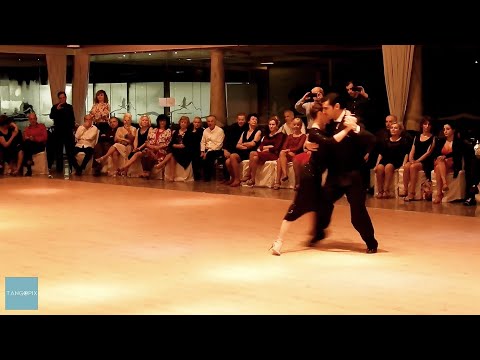

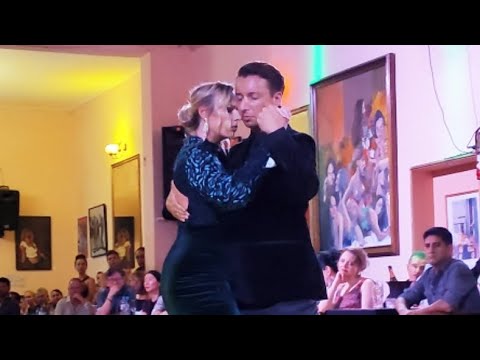


Two killer tangos. Yes. Killer tangos. I need a little rest now. A glass of wine. I don't have any wine. I need a glass of wine. What happened? Oh goodness. So intense. Yeah.
To lift our spirits a little bit, but keep the same mood, let's listen to a final Troilo recording. And this is one of the most beautiful waltzes ever. How bitter they are, he sings, the little tears of my heart. And can you imagine anything more beautiful than Floreal Ruiz and Edmundo Rivero singing a duo? No.
Yeah, I can't think of any duet with a better play between the singers than this one. It's just incredible, astonishing. We all agree. There's two things to say about it. One is, first of all, all the singers in the Troilo Orchestra are very happy. The band really supports their work as singers. And maybe for that reason they're a bit less competitive, you know, so we know in the Di Sarli orchestra there was real competition between Di Sarli and um from finor towards podistar to be number one, and that was quite common in a lot of tango bands. But what you hear there, they go so well together, they must have been getting on very well professionally and not being concerned about who was the number one singer because there wasn't a number one singer, there were two number ones, so they're able to cooperate very beautifully.
And Troilo waltzes always, it's a feature of his music, there's a lot of colour and shading in the music. Very often when you get to waltz it's going to be simpler than the tangos, many orchestras. That's true, but not really true with Troilo, is it? He maintains the same amount of shading and colour that he gives in the tangos. Not quite as much but a lot of it that makes them so special, you know. When you look through the Troilo discography there's very few malongas and reasonably few waltzes and we love them all, and of course we wish that we had more on record. Yeah, I was thinking when you said that about Rivero, because you talked before, uh, how he didn't really care so much about doing a career and singing for Troilo, he was more concerned about his singing and what he was doing artistically.
The repertoire, yeah. So maybe he wasn't very competitive in that sense because he had his own thing. And secure in that. Very. Troilo, 1948. Is it the best year? It's a very good year for Troilo. The year belongs to Troilo and Pugliese with an honorable mention for Gobbi, I should say. Yeah, Gobbi too.
So we come to the end and it's time to say thank you to all the, especially to all the listeners. I think we're up to 180 today. So that's very nice for, for Wednesday night. And, uh, thanks to you again, Michael, for sharing. Thank you. Thank you, Dag, for creating this program, this opportunity. Um, and thank you as well, always to our sponsors, our communities in Bergen and Norwich and to the Marabou in Buenos Aires. Yes. And someone else typing in the chat window, after party.
Well, you know, what you'll have heard is it's going to be a Troilo after party, isn't it? So I'll try and play as much as interesting as possible before we play a few more Troilo numbers. So, yeah, let's play a little bit more music. Stick around there, Dag. We always want to hear what you have to say. But before you change, because we haven't finished yet, because you have the tradition of the compasita. Ah, what have you got for us?
Well actually, I had trouble finding any conversito, there's just one recording in my database, it's by a guy called Luis Caruso as a quarteto and uh I pre-listened to it, it wasn't so interesting so I didn't put a lot of effort into getting it. So there's not going to be any composita tonight, but I'm going to play, I'm going to play a different song just to get us in a bit different move. You can think about it as a cortina before you do the after show. Well, I'm I'm going to say something, but leave it very mysterious. I'm not about to play the missing... Well, no, you first. Tell us. I'll just play this and you can hear it and see what you think. It's something that appeals to your funny mood more than your, say, deep feelings. Listen to this.
Many years ago at the Bergen Tango Marathon, like 10 years ago or something, the DJ who came on at midnight started their set with that track. I can't remember that. I do, because it had absolutely no relationship to what had gone on just before it. But as you heard, really gives a boost, doesn't it? Yeah, it's amazing. Fantastic. So we are 167 people still here. Let's listen to a bit more music, shall we?
It's a shame we've come all this way. It's dark. I'm looking out the window. It's dark and there's nowhere to go. So let's listen to some more music. I always like to play something that's not too serious and not too tango-like. So you can all go and get a cup of tea or a glass of wine or whatever it is you need to get to keep going. So I'm going to play you a Polish number by Mstislaw Fogg. My apologies if I pronounce his first name correctly. I'm not even going to attempt to pronounce the Polish title, but the Polish title translates as There is Sun After the Rain. But that's not the title that's printed on the record. The English title printed on the record for the American audience is the Tuli Uli Duli Polka. So here it is, a little bit of fun.
After-party: a Polish song, 'There is sun after the rain', released in the US as the Tuli Uli Duli Polka.
♪ Music · 2:45 ·
Ha! How about that? Lovely voice. A real gentleman voice, but without being too refined. Lots and lots of recordings. Just type that guy's name into Google, onto YouTube, you'll find lots of interesting stuff. Now, Dag bottled out of playing Luis Caruso at the end of the show, so I'm gonna play him, but I'm not going to play the Composita. So maybe Dag, you just didn't come across this particular track. But Luis Caruso is a guy from Uruguay, Uruguayian band, and they got a new singer in 1948 whose name was Julio Sosa, who went on to become one of the most important singers of the 1950s, a real working class voice, and therefore looked down on by the same kinds of people who look down on D'Arienzo. But let's listen to one number from the two of them, and it's a Melonca Candombe, a Melonca with a really strong Candombe feeling. It's called San Domingo.
After-party: a candombe-feel milonga by a Uruguayan band with new singer Julio Sosa, who became one of the most important 1950s singers.
♪ Music · 2:18 ·
Did you like that? That's a nice bit of fun, isn't it? Full of energy and joy.
Now, unless I had a blackout during the first part of the programme, I don't think we heard any Canaro. Right? No Canaro. So, let's have a little bit of Canaro. I mean, he's the artist who recorded the most in 1948. Now, I know that doesn't mean anything, but still, you know, sift through Canaro and you can always find some good bits amongst the bits that maybe you don't like so much. And the good bits in this case are waltzes.
First of all, Nube gris, Grey Cloud, which is a duet. Both these are duets with Alberto Reinas and Enrique Lucero. Nube gris, I don't know which one you're going to know. Maybe you'll know both of them. Nube gris, you'll hear the octave piano introduction. Nice characteristic sound. And then the second one, a memonos. Now, that's a really important waltz, and there are three important recordings. Two from 1948, this one from Canaro, and also a more complex one from Gobbi.
Now, when you're going for waltz, normally you choose the slightly simpler one, much as I love Gobbi. I'm playing you the Canaro version, but there is an even more important, more famous and better selling version from 1949. The thing is, it's not by a tango band. A guy called Antonio Torme, who was a folk singer, recorded it in 1949 and sold a million copies. The writing was on the wall for tango music, if you could sell a few thousand of a tango version, but a million of a folk version. Anyway, here they are, some cracking waltzes from Canaro. First, Nube gris, and then a memonos.

A waltz duet, starting with an octave piano introduction.
♪ Music · 2:10 ·
The second Canaro duet waltz; lyrics speak of looking for love and a woman's heart. Lavocah mentions a more complex version by Gobbi and one by a folk singer from 1949.
Nice. Now, while we're on the subject of waltz, Dag has already played the most important waltz of 1948, which was La Grimitis de mi Corazon, yeah? It's only 20 minutes ago, you've kind of forgotten already, that amazing trot of waltz. But what was the second really important waltz, not just interesting, important waltz of 1948? Any offers? I'll just leave a few seconds in the chat window, anyone wants to type? Versions from two top tango orchestras? No? Okay, well, let's just play one of those versions, shall we? I think this is a waltz that you'll know, but as a DJ it's very difficult to make a tanda. Yes, Teresa!
Versions from Pugliese and Tanturi, not so easy to make a tanda, depending on how much you like the rules or how much you need the tanda to really be coherent and stick together very well. But that's not a problem here. So let's just hear the Pugliese version. There's also a very nice version from Tanturi. Both nice, but I guess I can't get enough Pugliese with Morán, and yeah, I just narrowly prefer this one.
'The second most important waltz of 1948', with a Tanturi version too; Stenvoll prefers Pugliese-Morán.
♪ Music · 2:42 ·
Well, having played that, I can't play the Tanturi version now. Well, I could, but I'm not going to. But we should listen to a little bit of Tanturi. Now, the late 40s, we've been talking about this tonight, how it's a difficult period for tango. So what that means is record sales are down. And if record sales are down, then there are fewer examples of each record surviving to the present day. And that makes it much less likely that we still have a record that's in good condition to make a transfer.
Because as Yenzingo contributed when we were listening to his transfers last time, sometimes he went through four or six records before he found one that he was satisfied with to make his release. So if it's a big selling record and there's 20 versions available, then okay. But what if it's a year where there are not many records? So the records that have survived, there's just one or two copies left. That's the situation we're in for 1948, and a lot of the records are very noisy, and it's been much more difficult to hear this period in good fidelity.
Now with the Tanturi from the second half of the 40s, there are a couple of options. There is the CD released on Euro records in the 2000s, of course that's not a complete, and then the tango tunes release. So let's listen to a couple of those now. Tanturi's got two singers, Osvaldo Ribó and Videla. What's Videla's first name? Roberto Videla. Generally, I find that the dancers today prefer Videla. Videla is a bit more conventional, a bit more like a tenor voice, whereas Osvaldo Ribó, it's a higher voice, makes us think a bit more of Roberto Ray, or maybe Jorge Maciel, but not as powerful. So a lot of people today go, oh no, Osvaldo Ribó, I don't like it. You know, feel free to feel that, you know, whatever you feel is what you feel, but give him a chance, that's what I'm saying. Give Osvaldo Ribó a chance. He's really good. A less conventional voice maybe.
So first of all, I'll post these in the chat window. We're going to play Papel picado. Papel picado, it means cut paper. Now when I was a kid at Christmas time you take a piece of paper and you fold it up, like in four, and then you cut the shape of a person, and then you'd open it out and you'd get all the people, yeah, all joined holding hands together, or whatever it was you wanted to cut, or bells you could do it with. And that's what papel picado refers to. So that's the first one you're going to hear, and I'll introduce the second one when it comes.

A less conventional high voice (Ribó) that Lavocah asks listeners to give a chance; title means cut paper.
♪ Music · 2:15 ·
So that's the voice of Osvaldo Ribó. For some, too much vibrato. It's a different voice, but an interesting voice, and I think the music merits our attention. But now something that I think may be a little bit more accessible, with the voice of the second, well, the other singer in the orchestra, Roberto Videla. This is Bolero, which is also recorded by the Pugliese Orchestra in 1947. And it's a complaint about how much attention is being given to foreign music, because of course the bolero is a slow love song, particularly from Cuba and Mexico.

A complaint about how much attention foreign music (the bolero) gets, also recorded by Pugliese in 1947.
OK, here's my question. Do you like dancing to Tanturi in 1948? I mean, there's been chat in the chat window, but it's not been about dancing. Oh, here comes some yeses. Okay. Woo. Woo. Yes, yes, yes, yes, yes, yes. A bit no. No. Oh, gosh. So, actually, it's the after party. I'm not even going to talk about it. No, we're done with that. We're just enjoying music together. But I'll tell you what I feel. For listening, I preferred the second one with Videla, but for dancing I would have preferred the first one. I'm just going to put that out there and not bother explaining, because it's after party.
A little bit more Juan D'Arienzo now. D'Arienzo didn't record so much in 1948, like everybody. There's only 12 tracks, and Dag played some of the really good ones. But there's one Laborde track. And I have to say, with D'Arienzo with Echagüe, that first period that they have in the late 30s is untouchable. There will never again be music like that. But once we're in the second half of the 40s and there's Echagüe and Laborde, I prefer Laborde's voice for the greatest sophistication of those times.
And there's one really nice D'Arienzo Laborde track in 48, which is Una y mil noches, A Thousand and One Nights, so I want to play that for you. And immediately after, one of the instrumentals that was part of the regular repertoire of the band from the 30s to the 70s, but that they didn't record so much. Certain tangos like Felicia and Hotel Victoria and Pampa, but they recorded, and Don Juan, they recorded time after time. But this one, Puff puff, didn't get recorded so often. So first, Una y mil noches, A Thousand and One Nights with Laborde, and secondly, Puff puff.

A nice D'Arienzo-Laborde track; Lavocah prefers Laborde in the second half of the 1940s.
♪ Music · 1:30 ·
An instrumental not recorded as often as other D'Arienzo repertoire like Felicia or Hotel Victoria.
A real classic of the D'Arienzo repertoire just makes us realise that that particular tango was considered not good enough to record every five years, compared to, say, Don Juan, which was recorded all the time. That's what you would have heard if you'd gone out dancing. So it's Troilo time.
Oh my goodness, you know, it's lovely that you love to spend time with us. But it's 10pm. So if you've been here from the beginning, you've been here for three hours. If you listen to the warm-up, you've been here three and a half hours. So let's not play too many more. I want to play some Troilo, and then you know that I like to play something a bit particular before the end, and I've got something special for you tonight as well. So first Troilo. Now I certainly have to play Ojos negros, but before then some others. Dag already played Desvelo, which is a most extraordinary recording. There's more good ones than what I've got in the list that I'm looking at. Yes, how about we listen to Cafetín de Buenos Aires with the voice of Edmundo Rivero, and then De todas maneras, also known as Cabeza de novia, with the voice of Floreal Ruiz. I'll post those in the chat window. Cafetín de Buenos Aires is also a very significant tango from 1948.

After-party: a very significant tango from 1948.
♪ Music · 3:30 · The lyrics, on the song's page
After-party: also known as Cabeza de novia, a listener explained as being so absorbed in love you forget the world.
So just in case you're not looking at the chat window anymore, Sylvia has just explained to us all what Cabeza de novia means, and I never realised. Cabeza means head, and novia means girlfriend, but Cabeza de novia means you're so caught up with being in love that you're not thinking straight. So thank you so much for explaining that. Let's really cast some light on that for me. So it's time for our last tango, but not our last song. And I really want to play for you the Troilo 1948 recording of Ojos negros. Now Ojos negros, Dark Eyes, it's a really old tango. We think it was written as early as 1910. It comes from the pen of Vicente Greco. The Greco family was a very important family in that decade for tango music. Canaro played in the Greco orchestra as a junior person in 1909-1910.
And this interpretation by Troilo shows something that you get in the Pugliese orchestra as well as in the Troilo orchestra, where an interpretation transcends the original composition. What do I mean? I don't mean that it's arranged beyond recognition. I mean they find more in it than was in it. That's a bit mysterious, but that's how it is. Let's just listen to it. Vicente Greco's Ojos negros, performed by Troilo in 1948. Last tango for tonight, but not our last song.

The last tango of the night: Vicente Greco's composition (perhaps from 1910) in which Troilo finds more in it than was written.
Danced to it · 5 of 19


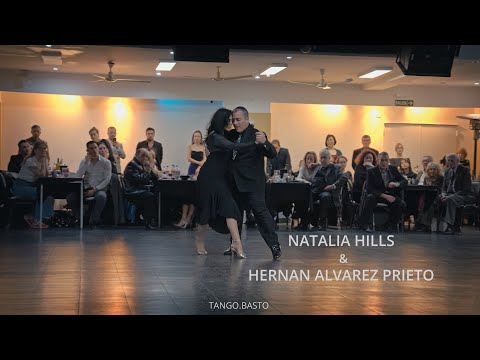


♪ Music · 3:05 · The lyrics, on the song's page
Wow! Isn't that simply astonishing? The amount of feeling in there, and there isn't even a lyric, or not even a lyric that we're thinking about in an instrumental interpretation. Extraordinary. What a performance.
Now, you might think I've DJed myself into a corner now and there isn't anything I can possibly play after that. And I've promised you one more thing. I have got one more thing for you, but it's not a tango. And it's not by a tango band. So I'm going to play really one of my favourite songs, a song that gets marked with a heart on my iTunes. There's 150 of those. That may sound like a lot, but there's tens of thousands of songs on there. So it's not. And it's a Cuban song, a song from the band of Arsenio Rodríguez.
Now, Arsenio Rodríguez is an artist who's 99% forgotten today, even amongst Cuban musicians. But, in my opinion, my feeling, the best Cuban band ever. Until the present day. There's no better band than the band of Arsenio Rodríguez. Arsenio Rodríguez was a trezero, a player of the tres.
Now, what's the tres? It's a small guitar. You know what a 12 string guitar is? If you know what a 12 string guitar is, that will help. So a 12 string guitar, it's never with nylon strings like a classical, always with metal strings, but each string is doubled. So when you play a note, you get two notes, which makes for a richer sound. But of course, there's two notes to play, so it's much, and they're metal strings, so much harder to finger with your left hand. You need a lot more pressure, more difficult technically to play. Now, the tres is like a baby version of that, where you've got three doubled strings. So six strings, but three notes doubled. Doubled, and it's an essential instrument in the old Cuban music. Very few people playing this instrument today.
Arsenio Rodríguez, his parents were from the south of Nigeria, from the Lukumi region, and he was blind. He was kicked in the face by a donkey when he was seven or eight years old, so he was a blind musician, an absolutely extraordinary musician. I'm going on about him because I love him to bits and none of you have ever heard of him. Now after he'd had a small amount of success, he had only a small success in Cuba because he was black and the most successful bands are white because they played for white people in the casinos, which maybe helps us to understand why the revolution took place. Yeah. Cuba was a playground for rich white tourists before the revolution. That's why they had one. Not saying it's good or bad. This is not a political show. Just giving some background.
So after he'd had a little bit of success in Cuba, he earned enough money to go to New York. So he went there with his cousin and he consulted an eye doctor, the top eye specialist that he could find. He'd been blind since the age of seven. He's now in his middle age and the guy said to him, "I'm sorry, but your injury is uncurable. You'll never see again." Dashing his hopes, he went back to his hotel room, lay down on his bed for half an hour, and then he got up and he wrote a song immediately like that called La vida es un sueño, Life is a dream. Let's listen.
Chapter · 3:20:00
A blind man's song
He was told he would never see again. He wrote a song within the hour.
After-party: a Cuban song Rodríguez wrote the moment he was told in New York that his blindness could not be cured.
♪ Music · 2:36 ·
Tango By Year is Dag Stenvoll and Michael Lavocah's, published here with their permission. The audio plays from SoundCloud.