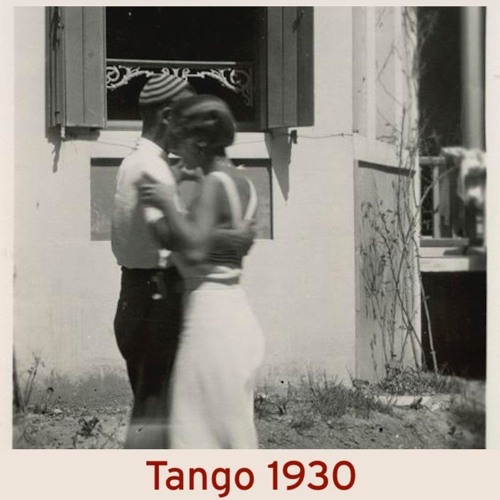
Tango 1930
Dag Stenvoll y Michael Lavocah · 5 de ago de 2020 · 3:47:59
1930 looks at first glance much like 1929 — another year of new, Julio De Caro-influenced sextets chasing a more sophisticated sound — but cracks are showing: Argentina's economy is starting to feel the Great Depression, the first band loses its recording contract, and a military coup on 6 September is cheered in the streets, the first of six that would follow over the decades. Canaro records an astonishing 330 sides this year, Pedro Maffia and Juan Maglio both have standout years, and several later-famous bandleaders (Carlos Di Sarli, Luis Petrucelli, the bandoneonist Minotto) are just getting started on their own after splitting from bigger orchestras. Two of the night's best stories have nothing to do with the hits: a would-be supergroup, the Vardaro-Pugliese sextet, flops completely and leaves violinist Elvino Vardaro pawning his bow to afford the train fare home, while Julio De Caro makes his only-ever recording of La Cumparsita, a sprawling four-and-a-half-minute arrangement that needed a bigger disc pressed just to fit it.
0% escuchado
faltan 3:47:59
Lo que sigue, como se publicó
Tango 1942Episodio 16 · 19 de ago de 2020 · 3:51:00Lo que este episodio dio a Tangopedia
Datos dichos en el episodio, cada uno citado al minuto en que se dice.
1930 looks at first glance very similar to 1929 — an era of many new bands, especially Julio De Caro-influenced sextets trying to make more sophisticated music — though the Depression's effects are only just starting to show.
The first clear sign of the coming crisis is that bandleader Cayetano Puglisi — later first violin in D'Arienzo's 1940s orchestra — loses his recording contract in 1930.
On 6 September 1930 the Argentine government is overthrown in a military coup; people cheer the soldiers into town, not realising it is the first of six coups and the start of decades of political instability.
Donato came from a family of musicians: his brother Ascanio played cello and another brother, Osvaldo, played piano in the band.
Most bands at this time don't have their own vocalist; instead each record label supplies a house singer who sings the estribillo for every band on that label. On Brunswick in 1930 that singer is Luis Díaz.
An instrumental tango chosen for its cello line, from the partnership before the two leaders split.
Solo en el episodio
A joint composition by Donato and his partner, recorded again by Donato alone some years later in a similar arrangement.
Solo en el episodio

From Donato's second recording session ever as a solo leader, after the split; chosen to show the bouncy house piano style of the year.
Verlo bailado · 1

An instrumental Donato solo recording showcasing the same bouncy piano feel, played by his brother Osvaldo.

Known to dancers from D'Arienzo's 1947-ish Echagüe version; chosen to show the label's own house sound.
Solo en el episodio
♪ Música · 0:01 ·
Another Luis Díaz vocal turn, played for laughs: Díaz sings for every band on the label.
Solo en el episodio

A rare milonga campera, backed only by guitars; chosen to show a genuinely angry, street-attitude side of Gardel.
Solo en el episodio
♪ Música · 2:31 ·

Marcucci's own composition, played by his own típica after he left Julio De Caro's band; chosen because it's rarely heard in this original version.
Solo en el episodio
♪ Música · 2:45 · La letra, en la página del tango
Verlo bailado · 3
A Filiberto song with a funeral feel, backed by guitars; one of sixteen Corsini recordings this year.
Solo en el episodio

An early version of a song known from many later bands (including D'Arienzo); part of Canaro's Serie Sinfónica, the first arranged music in tango, with unusually free piano from Luis Riccardi.

Played straight after the Serie Sinfónica track to show the contrast: the waltz puts every musician firmly back in a conventional dance-band role.
♪ Música · 5:53 ·
Verlo bailado · 6
At first assumed to be Ada Falcón; it's actually her similar-sounding sister Adelma, backed here by guitars Gardel lent for the session.
Solo en el episodio
Capítulo · 56:16
The sister nobody expected
Everyone assumed it was the famous singer. It was actually her sister — using guitars borrowed from Carlos Gardel.

An instrumental with an irresistible walking beat the hosts call a direct precursor of the D'Arienzo sound.

Played partly as a listening game, to hear whether the singer actually says what the 'seven words' of the title are.
La letra, en la página del tango
Verlo bailado · 8
Played as a quiz — the singer's identity withheld at first; the song is one of the first this year whose lyric names the Depression directly rather than hiding it.
Solo en el episodio
An instrumental with an English-tinged title, reflecting the era's film-song influence; preferred over Lomuto's vocal sides this year.
Solo en el episodio
♪ Música · 0:01 ·

Another Lomuto instrumental, chosen for its beat and strong violin lines over the vocal tracks this year.
A rare Cuban-singer tango recording, from Fresedo's time working in New York; played partly as a guess-the-orchestra game.
Solo en el episodio
♪ Música · 2:41 ·
One of around twenty solo sides this year by Tania, already Enrique Santos Discépolo's partner at this point, backed by a respected but non-freelance radio-orchestra leader.
Solo en el episodio
♪ Música · 2:51 ·

About the old central-plaza meat market, demolished in 1884 — already pure nostalgia by 1930; later transformed almost beyond recognition by Pugliese.

A melancholy Firpo waltz, still danceable despite its sadness — the hosts' favourite kind of Firpo waltz.

A rare Di Sarli sextet side not included on the well-known Tango Tunes sextet reissue.

A favourite of Lavocah's: about scars carried in the soul rather than on the body, later recorded by D'Arienzo with Mauré in 1943.
La letra, en la página del tango
Verlo bailado · 3
Capítulo · 1:50:08
The 50-peso tip on the street
A broke singer agreed to record for free. The record sold. His boss paid him anyway — in cash, in the street.
Capítulo · 1:52:51
The lift crash that ended a trio
An elevator plunged three floors with a famous tango act inside. One broken leg changed everything.
Demare's own composition, in a much earlier solo-with-piano arrangement than the full-orchestra version known from the 1940s.
Solo en el episodio
An unusually early chacarera on a tango-adjacent recording — extremely rare for the period.
Solo en el episodio
An introverted, intimate sextet side from a short-lived band whose contract ended when Brunswick went bust in the Depression.
Solo en el episodio
A Pedro Maffia composition with lyrics by Brignolo himself, in the same intimate sextet style.
Solo en el episodio
Minotto's own band, formed after he left Canaro at the end of 1929; hearing it shows how much of the classic Canaro sound was really built around this one bandoneón player.
Solo en el episodio
Capítulo · 2:11:16
The bandoneón player one orchestra was secretly built around
When he left, everyone realised the whole sound depended on one musician.
Capítulo · 2:13:03
The tango so famous its own composer didn't know
He wrote the most famous tango in the world, then spent years abroad having no idea.
Capítulo · 2:30:24
The sextet that never got a record deal
Tango's best violinist and best pianist formed a band together in 1930 — and it flopped so badly one of them had to pawn his bow.

De Caro's only-ever recording of this tango, a sprawling, nearly-minute-long-introduction arrangement that needed an oversized disc pressed to fit its four and a half minutes.
♪ Música · 4:00 · La letra, en la página del tango
Verlo bailado · 7
Played as a quiz about an extra instrument (a bassoon, doubling the hard-to-record double bass) heard in many 1930 Típica Víctor sides.
Solo en el episodio
♪ Música · 3:11 ·

One of the less common Canaro titles from this year, chosen for its unusual flavour out of roughly ninety candidates considered.
♪ Música · 3:00 ·
One of only a handful of recordings where Ada Falcón sings the shorter estribillo part for dancing, rather than as featured soloist.
Solo en el episodio

One of Stenvoll's all-time favourite Canaro waltzes.
♪ Música · 5:25 · La letra, en la página del tango

Played briefly (just the opening) to compare against Minotto's own version of the same tango, named for the famous gaucho character.
Minotto's own version of the tango he used to play with Canaro, showing what his bandoneón playing added to the sound.
Solo en el episodio
♪ Música · 2:10 ·
A rare Maglio track, played in the afterparty because this was one of his strongest years.
Solo en el episodio
♪ Música · 2:37 ·
A simple, enjoyable title made famous later by D'Arienzo.
Solo en el episodio
A more complex, less-known Maglio side played right after the simpler Orgullo del Plata.
Solo en el episodio
An unusual use of the cello in a waltz, with a tempo that speeds up then slows again near the end.
Solo en el episodio
A vocal follow-up from the same orchestra, chosen to show more of its distinctive cello use.
Solo en el episodio
A very famous tango in an unusual arrangement, from an all-European, Paris-based orchestra with a double-barrelled bandleader name and two Italian bandoneón players.
Solo en el episodio
♪ Música · 2:00 ·

The opener of a short closing run of Firpo tracks, since there was so much good Firpo from this year left to play.
♪ Música · 7:40 ·
Verlo bailado · 1
A famous tango, though not a famous recording of it, chosen to close the night on something more traditional.
Solo en el episodio
♪ Música · 3:30 ·
Chosen deliberately as the last track, to link forward to the Troilo version played in an earlier episode and to the next show's 1942 theme.
Solo en el episodio
♪ Música · 5:23 ·
Seguir por todos los episodios
Tango By Year es de Dag Stenvoll y Michael Lavocah, publicado aquí con su permiso. El audio se reproduce desde SoundCloud.