Venue
Radio El Mundo
Radio El Mundo: LR1, 1070 kHz AM. Housed from 1935 in a building at Maipú 555 designed for broadcasting, with studios and audience halls; in the 1940s-50s its studios hosted the major figures of tango. Wikipedia lists a Cerrito 1070 address in its infobox., Glostora Tango Club aired from the Radio El Mundo auditorium, a 15-minute slot at 8 p.m. from 1 April 1946, sponsored by Glostora hair gel, until the late 1960s., and State broadcaster LRA from 6 July 1937 (first director Roberto Dupuy de Lôme Moreno); named Radio Nacional in 1957. Its main studio is Maipú 555, the building made in 1935 for Radio El Mundo, which also housed Mitre, Excelsior, Splendid and Antártida; its music is mainly folklore, tango and rock.††† 1937: State broadcaster LRA from 6 July 1937 (first director Roberto Dupuy de Lôme Moreno); named Radio Nacional in 1957. Its main studio is Maipú 555, the building made in 1935 for Radio El Mundo, which also housed Mitre, Excelsior, Splendid and Antártida; its music is mainly folklore, tango and rock.† 1946: Glostora Tango Club aired from the Radio El Mundo auditorium, a 15-minute slot at 8 p.m. from 1 April 1946, sponsored by Glostora hair gel, until the late 1960s.†
Opening and closing
Our venue records; each note says what the year counts
- Opened
- 1935studios inaugurated 29 November 1935
Played and performed here
- Juan D'ArienzoJan 4, 1938 – Dec 22, 1939source
- Héctor Mauré1940source
- Ángel D'Agostino1940source
- Carlos Di SarliJan 1939source
- Osvaldo FresedoNov 29, 1935source
- Walter Cabral1935 – 1937source
- Juan D'Arienzo1934 – 1939source
- Rodolfo Biagi1935 – 1938source
- Aníbal TroiloAug 1941source
- Carlos Di SarliMar 16, 1951source
- Elsa Rivas1954 – 1957source
- Osvaldo Ramos1965source
By decade
Dated moments, each with its source, and what we filmed
1930s
1934Juan D'Arienzo
source1935Maria de la Fuente: Joins Eduardo Ferri's female vocal quartet on the new Radio El Mundo.
source1935Juan Canaro: Plays the SODRE auditorium in Montevideo with Aldo Campoamor, then signs with Radio El Mundo.
source1935Walter Cabral
source1935Rodolfo Biagi
sourceNov 29, 1935Osvaldo Fresedo: Plays at the inauguration of LR1 Radio El Mundo, adding vibraphone, harp and drums.
sourceNov 29, 1935Osvaldo Fresedo
sourceDec 31, 1935Rodolfo Biagi: First recording with D'Arienzo, Orillas de plata; with him he also plays on LR1 Radio El Mundo.
source1936Hugo del Carril: Meets Tito Ribero at Radio El Mundo; records for Victor with his orchestra.
source1936Ernesto Famá: Does radio drama on Radio El Mundo, followed by a long tour of the Americas.
source1936Juan D'Arienzo: Broadcasts on Radio El Mundo spread the new fast style across the country and make him a national name.
source1936Carlos Marcucci: Joins Los Virtuosos, the all-star group chosen by readers of Sintonía, debuting on Radio El Mundo; records in 1937.
source1937Alberto Amor: Brief spell with Ciriaco Ortiz, then back with Sassone on Radio El Mundo.
source1937Ernesto de la Cruz: Joins the Radio El Mundo house orchestra.
source1937Luis Díaz: Rejoins Julio De Caro on Radio El Mundo.
source1938Roberto Rufino: Hired by Carlos Di Sarli, who presents him at the Moulin Rouge cabaret and on Radio El Mundo.
source1938Francisco Gorrindo: Juan D'Arienzo premieres Paciencia and La bruja on Radio El Mundo; Rodolfo Biagi records Gólgota.
source1938Cayetano Puglisi: Joins Julio De Caro's large orchestra on Radio El Mundo.
sourceJan 4, 1938Juan D'Arienzo
source1939Carlos Di Sarli: Debuts his rebuilt orchestra on Radio El Mundo.
source1939Aldo Campoamor: Joins Radio El Mundo for several years, with Edmundo Zaldívar's guitars.
source1939Carlos Di Sarli
source
1940s
1940Ángel Vargas: Becomes the singer of Ángel D'Agostino's orchestra; RCA Victor signs them and they perform on Radio El Mundo. Their first sides are Muchacho and No aflojés.
source1940Lucio Demare: Starts playing on LR1 Radio El Mundo, with Juan Carlos Miranda as singer.
source1940Héctor Mauré
source1940Ángel D'Agostino
sourceNov 13, 1940Ángel D'Agostino: First Victor recordings with Ángel Vargas, 'Muchacho' and 'No aflojés', after signing with Victor and Radio El Mundo.
source1941Aníbal Troilo
source1942Juan Carlos Lamas: Auditions for Juan D'Arienzo at Radio El Mundo and joins as Héctor Mauré's fellow singer.
source1942José Basso: Plays in Alberto Soifer's orchestra, the house band of Ronda de ases on LR1 Radio El Mundo.
source1942Miguel Montero: Performs on Radio El Mundo.
source1942Oscar Herrero: In Emilio Orlando's orchestra on the Ronda de Ases programme of Radio El Mundo.
source1942Elvino Vardaro: Joins Osvaldo Fresedo's orchestra, alternating with the Radio El Mundo orchestra and Joaquín Do Reyes.
source1943Julio Martel: Wins an audition at Radio El Mundo for Alfredo De Angelis's orchestra and debuts with it at the Café Marzzotto.
source1943Enrique Campos: Joins Ricardo Tanturi's Los Indios in place of Alberto Castillo and debuts with them on Radio El Mundo; Tanturi renames him Enrique Campos.
source1943Juan Carlos Cobian: Back in Argentina, leads his orchestra on Radio El Mundo before retiring.
source1944Jorge Caldara: During military service plays in Emilio Orlando's orchestra on Radio El Mundo; around then joins Osvaldo Pugliese.
source1945Carlos García: Mid-1940s pianist in Alberto Castellanos's orchestra on Radio El Mundo.
sourceJan 1, 1945Jorge Durán: Joins Carlos Di Sarli, debuting with him on Radio El Mundo; Di Sarli renames him Jorge.
sourceOct 17, 1945Roberto Videla: Debuts with Ricardo Tanturi at Radio El Mundo.
source1946Tania: Sings with Mariano Mores's orchestra and on Radio El Mundo.
source1946Osmar Maderna: Plays on Radio El Mundo.
source1946Julio Martel: The orchestra signs for Radio El Mundo's 'Glostora Tango Club', which makes him famous.
sourceApr 1, 1946Alfredo De Angelis: His orchestra opens the Glostora Tango Club on Radio El Mundo, a daily programme that runs for 22 years.
sourceApr 1, 1946Carlos Dante: Opens the Glostora Tango Club programme on Radio El Mundo with De Angelis.
source1948Luciano Leocata: Presents Y volvemos a querernos on Radio El Mundo with Jorge Casal.
source
1950s
1950Armando Garrido: Debuts with Osvaldo Fresedo's orchestra on LR1 Radio El Mundo.
source1950Rodolfo Biagi: In the early 1950s is a lead act on Radio El Mundo's Glostora Tango Club and the first orchestra on Argentine television.
source1951Alberto Arenas: With Canaro on Radio El Mundo's Glostora Tango Club; tours of Brazil and the interior through 1954.
sourceMar 16, 1951Mario Pomar: Di Sarli's new orchestra, with Pomar and Oscar Serpa, opens at Radio El Mundo.
sourceMar 16, 1951Carlos Di Sarli
sourceApr 1, 1951Oscar Larroca: Debuts with Alfredo De Angelis on Radio El Mundo's Glostora Tango Club.
source1952Aldo Campoamor: Solo debut on Radio El Mundo's Patio de tango.
source1954Elsa Rivas
source1956Argentino Ledesma: Returns to Varela and records hits including 'Fueron tres años' and 'Qué tarde has venido'; sings on Radio El Mundo's 'Glostora Tango Club'.
source1956Francisco Amor: Guest of Canaro on Radio El Mundo's Glostora Tango Club.
source1957Héctor Pacheco: Leaves Fresedo; soloist on Radio El Mundo with Carlos García's orchestra.
source1959Juan Sanchez Gorio: Works the whole year for LR1 Radio El Mundo and the cabaret El Avión in La Boca.
sourceSep 1, 1959Ubaldo De Lío: Quinteto Real debuts on Radio El Mundo, then plays the Confitería Richmond.
source
1960s
1960Alberto Echague: Joins Juan Sánchez Gorio's orchestra on Radio El Mundo.
source1960Horacio Salgan: Founds the Quinteto Real, which debuts on Radio El Mundo.
source1961Miguel Caló: Reunites Pontier, Federico, Francini, Berón and Podestá as the Orchestra of the Stars on Radio El Mundo.
source1962Tino García: Sings with Joaquín Do Reyes on Radio El Mundo; records with D'Agostino's quartet.
source1963Domingo Federico: Plays in Miguel Caló's Orquesta de las Estrellas on Radio El Mundo.
source1964Jorge Arduch: Receives a plaque from Radio El Mundo's Glostora Tango Club.
source1965Osvaldo Ramos: Wins the Radio El Mundo audition for Juan D'Arienzo's orchestra and is renamed Osvaldo Ramos; records Sentimiento gaucho in August.
source1965Osvaldo Ramos
source
Filmed here
On TangoTube, with the videos whose titles name it · our data
 Juan D'Arienzo en vivo, Homenaje a los 100 años de Radio (El Tango Club 1970, Radio El Mundo)2020 · 39,561 views
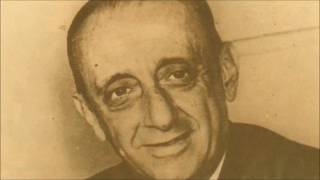 Juan D'Arienzo en LR1 Radio El Mundo, año 1966, Instrumental y Osvaldo Ramos para el recuerdo2020 · 4,657 views
 LUCIO DEMARE - DANDY - TANGO - GRABACION EN VIVO - RADIO EL MUNDO2017 · 2,398 views
 Joan Manuel Serrat en radio el mundo Poema de amor 19722015 · 235 views
What we don't know yet3 of 4 known
Events held here.
Data: recordings, facts and sources
Premiered at1
Carlos Di Sarli — premiered at Radio El MundoJan 1939
Single sourcePerformed at10
Juan D'Arienzo — performed at Radio El Mundo1934–1939, Jan 4, 1938–Dec 22, 1939
Single sourceHéctor Mauré — performed at Radio El Mundo1940
Single sourceÁngel D'Agostino — performed at Radio El Mundo1940
Single sourceCarlos Di Sarli — performed at Radio El MundoJan 1939, Mar 16, 1951
Single sourceOsvaldo Fresedo — performed at Radio El MundoNov 29, 1935
Single sourceWalter Cabral — performed at Radio El Mundo1935–1937
Single sourceRodolfo Biagi — performed at Radio El Mundo1935–1938
Single sourceAníbal Troilo — performed at Radio El MundoAug 1941
Single sourceElsa Rivas — performed at Radio El Mundo1954–1957
Single sourceOsvaldo Ramos — performed at Radio El Mundo1965
Single sourceDates1
Golden Age — took place at Radio El Mundo1940, 1940–1959
Supported · 2Joined1
Aníbal Troilo — joined Radio El Mundo1939
Single sourceOpen from2
Open from 1935
Sources disagreeOpen from July 6, 1937
Sources disagreeOpen until1
Open until 2019
Single sourceNotes3
LR1, 1070 kHz AM. Housed from 1935 in a building at Maipú 555 designed for broadcasting, with studios and audience halls; in the 1940s-50s its studios hosted the major figures of tango. Wikipedia lists a Cerrito 1070 address in its infobox.
Single sourceGlostora Tango Club aired from the Radio El Mundo auditorium, a 15-minute slot at 8 p.m. from 1 April 1946, sponsored by Glostora hair gel, until the late 1960s.1946–1969
Single sourceState broadcaster LRA from 6 July 1937 (first director Roberto Dupuy de Lôme Moreno); named Radio Nacional in 1957. Its main studio is Maipú 555, the building made in 1935 for Radio El Mundo, which also housed Mitre, Excelsior, Splendid and Antártida; its music is mainly folklore, tango and rock.1937
Single sourcePlayed in11
Alfredo De Angelis — played in Radio El Mundo1946–1969
Single sourceCarlos Dante — played in Radio El Mundo1946–1951
Single sourceJulio Martel — played in Radio El Mundo1946–1951
Single sourceRicardo Tanturi — played in Radio El Mundo1946
Single sourceAlberto Marino — played in Radio El Mundo1946
Single sourceFloreal Ruiz — played in Radio El Mundo1946
Single sourceEnrique Campos — played in Radio El Mundo1946
Single sourceAníbal Troilo — played in Radio El Mundo1939–1949
Single sourceCarlos Di Sarli — played in Radio El Mundo1938
Single sourceJuan D'Arienzo — played in Radio El Mundo1934–1939
Single sourceAlberto Mancione — played in Radio El Mundo1950–1951
Single sourcePurpose-built radio palace where Ronda de Ases began and Glostora Tango Club broadcast three live tangos every weeknight for two decades.
- Where
- Maipú 555
Connected
From TangoTube's videos · our data
Within
Listen
No recordings to play yet.
Ask Tangopedia
Answers only from cited facts, each with its source.