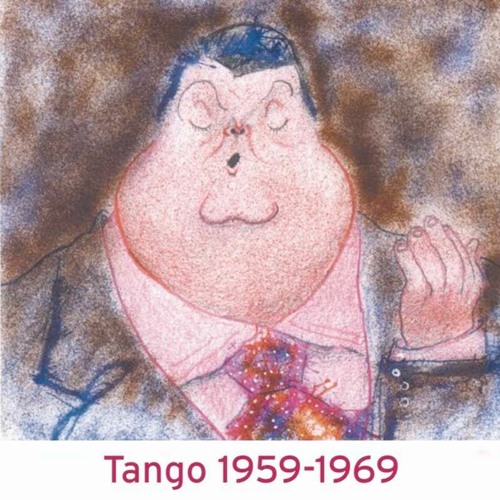
Tango 1959-1969
Dag Stenvoll y Michael Lavocah · 4 de oct de 2023 · 3:28:15
A reunion programme covering the 1960s, the decade after tango stopped being a mass social-dance phenomenon (around 1955). Stenvoll and Lavocah show a fragmented scene: Piazzolla's quintet and the 'generation of 55' playing for listeners, small groups such as the Salgán-De Lío duo and Quinteto Real, Pugliese's late masterpieces, and dance bands that carry on (D'Arienzo with Bustos and Valdez, De Angelis, Caló, Varela). Argentina is under two military coups, the pop 'nueva ola' takes over, and RCA Victor's Ricardo Mejía destroys the master recordings. It is also a decade of few new tangos, but Lavocah calls Bronca (1962) the one that expresses the coup and D'Arienzo's El último café one of the great tangos of the 60s.
0% escuchado
faltan 3:28:15
Lo que este episodio dio a Tangopedia
Datos dichos en el episodio, cada uno citado al minuto en que se dice.
Tango ends as a mass social-dance phenomenon around 1955: audiences are tired of the war years and want new music; the Perón government, which supported popular music, falls the same year.
Tango 1955
There are two military coups in the 1960s; Frondizi's elected government is under military pressure and falls in a coup in 1962. Bronca is the only tango that really articulates this.
Argentina in the 60s
Local pop music, 'la nueva ola', dominates; 1962 is seen as key because it gets its own TV show, and El Club del Clan follows.
Nueva ola
In 1959 Victor appointed Ricardo Mejía, who promoted pop music and had the building with the master recordings cleared out to save money; none of the original tango masters survived, which is why reissues come from old shellacs.
Tango bands shrink partly for money: orchestras of 10 are expensive, so a duo or quintet is cheaper. The electric guitar enters tango.
Capítulo · 5:22
The day the masters were thrown away
RCA Victor scrapped its tango masters to save a building.
A Piazzolla quintet recording of a tango first heard in the Troilo arrangement of 1951; now he can be true to himself, with Antonio Agri on violin.
Solo en el episodio
Capítulo · 14:48
Why an electric guitar entered tango
Tango got cheaper in the 60s.
A duo of Salgán on piano and Ubaldo De Lío on electric guitar: the electric guitar is new to tango, and fewer musicians are cheaper.
Solo en el episodio
♪ Música · 1:45 ·
Danceable Pugliese from the 60s with a beautiful piano opening motif by Pugliese himself; the tempo is completely plastic.
Solo en el episodio
Capítulo · 32:32
40,000 people in a football stadium for tango
Pugliese played a stadium in Georgia.

The tango that expresses the rage of the 1962 coup, with a lyric that openly refers to it; the data says 1961, but the events it describes make 1962 likely.
Verlo bailado · 1
Capítulo · 33:40
The tango about the 1962 coup
Bronca: a tango written about a coup.

An instrumental with nice pizzicati, danceable in a mixed tanda.

A waltz that started as a folkloric tune; much loved and played by De Angelis.
Verlo bailado · 39
A late Canaro, played for fun, who died in 1964; the lyric is about a poor girl who climbs socially and is condemned for it.
Solo en el episodio
A guitar conjunto, halfway between waltz and estilo, played in the style of the gauchos; Barón was the elder brother of Raúl Berón.
Solo en el episodio
Capítulo · 56:49
Troilo's last LP wasn't Troilo
Pontier did all the work.

A fairly modest, danceable instrumental from the most-recorded orchestra of the 60s.
Verlo bailado · 2
A radio recording of a waltz Caló had recorded in the 40s with Raúl Berón; with poor sound.
Solo en el episodio


A tango known from Biagi with an unpleasant lyric about killing a woman; Mauré's voice is deeper and helped by closer microphone.
Solo en el episodio
Trademark Varela sound, like the introduction of D'Arienzo's Tirá negra; Lilian is associated with Mauré.
Solo en el episodio
♪ Música · 0:25 ·
A power tango with Bustos, the darker, sneering voice that delivers nasty lyrics with punch.
Solo en el episodio

One of the great tangos of the 60s: two people breaking up over a cup of coffee, with Valdez as the high-drama voice. Lavocah asks why there is no Troilo version.
La letra, en la página del tango
Verlo bailado · 115
Capítulo · 1:40:08
The tango with a stop you have to count
D'Arienzo made dancers count.

From the 1966 'for export' album, in Lavocah's view by far the best; the stops get so long that dancers must count to know when to restart.
Verlo bailado · 13

Salamanca, D'Arienzo's pianist, formed his own orchestra in 1957; listen for his piano.
Solo en el episodio
A tango known from Troilo and Fiorentino: a prisoner asks his mother if his woman has put their son in an orphanage. Stenvoll asked the owner of tangodj.at for the recording.
Solo en el episodio
A tough lyric known from upbeat 40s versions by Tanturi and Rodríguez; Goyeneche is called the greatest singer of the 60s and 70s for his phrasing.
Solo en el episodio
Rufino rejoins Troilo some 20 years after; Lavocah compares Troilo to Jürgen Klopp for improving every singer.
Solo en el episodio
A shocking suicide tango from 1944, recorded by Troilo with Marino and by Lomuto; people said it should be a bolero. Lavocah says it was no reason to learn Spanish.
Solo en el episodio
Tango declaring itself and its qualities; Rivero's voice drops in volume, which makes him hard to play at milongas.
Solo en el episodio
Lavocah's unexpected Caló opening: a 1960s arrangement of a tango he assumed no one would expect.
Solo en el episodio
Vidal, who had only 18 months with Pugliese in 1949-51; the song started as a Mexican bolero.
Solo en el episodio
♪ Música · 1:47 ·
Salgán, De Lío, Laurenz on bandoneón and Enrique Francini on violin in a quintet; almost like jazz.
Solo en el episodio
♪ Música · 2:30 ·

Lavocah's 'wild joy': the tempo goes mad through discords, played by Pugliese himself.
♪ Música · 2:58 ·
Verlo bailado · 319

The elements of a tango appear in the wrong order: stretchy violin first, then an ostinato bass, no melody; still very danceable.
Verlo bailado · 28
From a rare LP showing Rivero at home with his family, accompanied by guitars.
Solo en el episodio
A closing Ukrainian song linked to the film Ukrainian Rhapsody, for the Ukraine charity.
Solo en el episodio
Seguir por todos los episodios
Tango By Year es de Dag Stenvoll y Michael Lavocah, publicado aquí con su permiso. El audio se reproduce desde SoundCloud.