Tango 1951
Dag Stenvoll y Michael Lavocah · 2020-04-29 · 2:18:22
After the late-1940s crisis, when censorship and a contracting post-war economy drove many orchestras to fold, tango roars back in 1951 with a harder, less lyrical beat. D'Arienzo's comeback Cumparsita becomes a huge seller while his band sheds its star singer; Troilo turns modernist, bringing Astor Piazzolla back as arranger, which splits dancers and triggers a brawl at one of his gigs; Di Sarli returns after a two-year break and, by simply doing what he always did, suddenly sounds like part of the new style. New labels (Tecal, Music Hall) spring up to record it all but lose their masters within a few years, and new modernist bandleaders (Fresedo, Salgán, Gobbi) emerge alongside Pugliese's harder-edged vocal experiments. The year also marks endings: lyricist Homero Manzi's death prompts Troilo's instrumental elegy Responso, and Francisco Fiorentino makes his final recordings in Uruguay, four years before his own death.
Lo que este episodio dio a Tangopedia
Datos dichos en el episodio, cada uno citado al minuto en que se dice.
D'Arienzo's post-crisis sound is essentially his late-1930s style again, only louder; having rejected Di Sarli's influence in the 1930s, he now rejects the 1940s lyrical trend in the same way.
Troilo brought Astor Piazzolla back as his main arranger in 1950. Piazzolla had been Troilo's second bandoneón player roughly 1940-44 and arranged about ten numbers in that time, then did no work for Troilo through the rest of the 1940s.
Piazzolla's Brazilian-drum-influenced modernism split Troilo's fans; after a tour of Brazil the material was a hit there, but back home a fight broke out between fans at a Troilo gig over it, and Troilo dropped the material from the band's setlist.
Manzi, Troilo's close friend and the lyricist of Sur among others, died in 1951, likely of a long illness (Lavocah guesses cancer).
Troilo left RCA Victor in 1949 after an executive said his music was getting too modern; he walked out and signed with the new local label Tecal (TK), rumored to have been partly funded by Troilo himself.
Discos que suenan · 26
Transcripción
Transcripción automática del audio, luego puntuada; puede haber nombres mal oídos. Toque una línea para escucharla. El episodio es en inglés, y su transcripción también.
Hello everyone, welcome to 1951. I hope you've all been doing great since 1947, was it? My name is Dag Stenvoll, I'm talking to you from Vatican and just across the digital cafe tables, it's Michael Lavocah from Norwich. Hoia Michael. Very well, very curious and excited about this evening and a voyage to 1951.
For new listeners and viewers, this concept of the tango by year is that I'm going to play some tango music from this year, 51, and then have an informal conversation with Michael about it. And the surprise element here is that Michael doesn't know what I'll be playing, neither which orchestras nor which songs. And if you think that's easy anyway, because we know the year, you're really wrong, because there are more than 400 tango recordings from 1951, and most of these are never played because they're less good for dancing than earlier music. So but since this is a listen to and talk about music event, not a milonga, I can play any of those 400 tracks. So what do you think Michael, it'll be easy to talk about it? We'll find out, we'll find out.
“There are more than 400 tango recordings from 1951, and most of these are never played because they're less good for dancing than earlier music.”
And we don't expect you to comment on everything, and we want to keep this informal and interactive. So please use the chat window for questions and comments and Michael will pick up on some of it. Not all, but some of it. Yes, Michael, we made a four-year leap into a new decade from 1947 to 51. What has happened to Tango in those four years?
Well, quite a lot has happened. Tango has been through a crisis, basically, in the end of the 40s, where lots of orchestras give all together. And then Tango has invigorated itself and you'd been going on a three-year pattern. So we could have gone to 1950, but I guess you picked 51 because that's the year that the star he makes his comeback. And it's his picture smiling at us on the event photograph. So what's happened? What's he made a comeback from?
Well, finally, Argentina is beginning to have some economic problems. The post-war, well, the wartime boom, where they made lots of money from their exports, their agricultural exports. They've spent all that money and the economy is contracting. Plus the whole thing with censorship is really biting. So Tango really goes down 48 and 49. Then in 50 it kind of shakes itself after censorship has lifted and by 1951 it's really roaring again and we get some very strong music. It's a new style, 50 style of music, um, how to say it, with a much stronger beat than what we've had in the 40s and less lyrical.
If somebody had to pick one track from 1951 you could pick the D'Arienzo Cumparsita of 1951, which is a really powerful recording. Sold a million copies when it was released in Argentina on release, that is straight away, and another 250,000 in Japan. This is the one where that caused him, they had to play it at the end of every concert, and this is a tradition from playing the Cumparsita at the end of a milonga's come from, isn't it? It started in the mid 40s, D'Arienzo's Cumparsita became so popular that people wouldn't go home till he played it. So that sounds like a lot of sales, but maybe it's not. You know, in 1950, a folk musician, Antonio Tormo, has sold five million copies of a single record. That's a huge number. So one million, very impressive. I think the population of Argentina is something like 12 million at this time. It is a great sales figure when you release a record, but not as great as some of the things that are going on.
And when you listen to that record, what's happened to the 40s? What's happened to the 40s? The 1940s was this development of lyricism that even D'Arienzo had been forced to participate in. We heard Amaras in the 1944 show. And even in the second half of the 40s, okay, he's not doing that, but he's somehow part of this current. Now he's not anymore. The D'Arienzo that has emerged from the crisis is pretty much like the D'Arienzo of the late 30s, only louder. So that's something really new that's happened.
“The Darienzo that has emerged from the crisis is pretty much like the Darienzo of the late 30s, only louder.”
In a way, D'Arienzo's done what he did for, which was just reject stuff he doesn't like. So, you know, D'Arienzo rejected all the Di Caro stuff in the 30s. I don't like that. I'm just going to go back to the old guard. And he does it a second time. And maybe you need to stop me if I'm going on too much. But just to give an idea for everyone who's tuned in, best-selling record of 1951, D'Arienzo, Cumparsita, which is a return to a very, very traditional interpretation, although with a modern, strong beat. Next most important recording of 1951, probably, well, there's two you could pick, but the one I'll pick would be Troilo's Responso, which is the last word in modernism. Extremely daring. So the tango scene has kind of split into two.
Okay, Michael, we'll play some music and I promise you we'll get back to both Troilo and D'Arienzo. But I want to start with playing you a song without telling you what it is, because there is a lot of unknown music from 1951. It'll be interesting to see if people can recognize this. I don't think you've danced to it, but maybe you've heard it. And they will talk about it after. So listen to this.
Played unannounced to test whether the audience could recognize an obscure 1951 Troilo piece; discussion afterward confirms it is Troilo in his new, Piazzolla-influenced modernist style.
♪ Música · 3:19 ·
Michael, this is a very different Troilo from the one we heard at the end of 1947, isn't it?
Troilo has transformed himself, although that's a process that's been going on all time, it hasn't happened suddenly, but in 1950 Troilo decides, right, I need to get more modern, this lyrical thing is running out of steam, and he recruits Piazzolla as his main arranger. Now there's a lot of rubbish spoken about Piazzolla's role in the Troilo Orchestra. Piazzolla was second bandoneon more or less between 1940 and 1944 and in that time he arranged 10 numbers for Troilo. 10, you know, not all of them, not 50, not 100, 10, and then in the second part of the 40s he doesn't work with Troilo at all, he's doing other stuff. So Troilo brings him back as the main arranger and starts recording a lot of Piazzolla compositions. So Troilo is really modern.
Um, yeah, and what's happening to the vocal tango, like suddenly the pendulum is shifting back? Well, at least as far as Troilo is concerned, it's shifting back towards an instrumental tango, after the 40s was this decade of lyricism, lyrics in other words, and something else is happening with the vocal tango, which I guess you're gonna want to talk about later in the show, which is what Pugliese's doing with it. He's doing something else. That's another part of the story tonight.
But I've got a question for everyone now. Which orchestra was missing from the pole? Let's see some offers in the chat window. There was an orchestra on the pole that Dan could have put on, which would have been a really clever one, but he didn't. I was thinking this sounds like a mix of Pugliese's Gratia and maybe Libertango from 75. Yeah, I think that's right. So okay, maybe we're slightly surprised, maybe the public are a bit surprised that Troilo's recorded that, but who would be even more of a surprise? Big name, come on. Domingo Federico. We've been offered Federico and Salgán, no. Who else recorded it? In 51? Yes, Inesh. Thank you. Hello, Inesh.
Friseido. People, Friseido in 51. He takes the same decisions as Troilo. Now, he's not playing for dancers, except for one special night. He's just playing in posh hotels. But he also decides, yes, I want to be modern. He recruits a new arranger. And he's also making music that you don't really think is going to be Frasero, and he records Tanguango, which is that track. It's Brazilian influenced, the drums there, we get that with all the Afro-American music, so people have commented that it reminds them of Cuban, Cuban drumming, and we had those drums in Argentina, hard to say exactly how much, in the 40s, but especially in Uruguay. And Piazzolla wrote that early in the year and then later in the year the band went on tour in Brazil, like November of the year, and it was a big, big hit in Brazil. You can imagine the Brazilians, they really like this funky drum thing.
But back home it caused a lot of problems, the fans were really split about whether this was a good thing or not, and eventually there's a punch up at a Troilo gig between the people who like this new stuff that Piazzolla was doing and the people who didn't. And after that Troilo said, right, that's it, and he dropped it from the band's playlist. Well, let's listen to another Troilo instrumental, the one you mentioned in your introduction, the one that got a separate chapter in your Troilo book, Responso. What's so special about this instrumental?
Capítulo · 12:57
The Fight That Got Piazzolla Pulled From the Setlist
A new tango sound started a punch-up on the dance floor.
Well, if you know anything about Troilo, you know that friends were very, very important to him and he worked extensively with a few lyricists and one of those was Homero Manzi, who wrote Sur with Troilo. And in 1951 Manzi died. I don't know what of, but it was a long-term illness, so I would guess it was a cancer, and Troilo was absolutely devastated. It was like a brother to him. And the Troilo tells the story of how he wrote this. He said there was a few of us back at my house and we were playing baccarat and it was late in the morning, like well after midnight, I just didn't feel good, so I slipped away by myself, went to my room, picked up the bandoneon, and this came out. So Responso, it, well, it does mean a response, but Responso in particular is the special kind of prayer you offer at a funeral. So this is, if you like, Troilo's hymn for Manzi's funeral. Let's, I'll shut up now and let's listen to it and maybe I'll say something more after.
Capítulo · 13:52
The Night Troilo Wrote a Hymn for His Best Friend
He slipped away from a card game at midnight and came back with a funeral prayer.
Yeah, let's listen to it, but I want to play a second Troilo song at the same time with the singer Raúl Berón. It's called De Vuelta al Bulín.

An instrumental Troilo wrote the night his friend and lyricist Homero Manzi died; 'responso' is a funeral prayer, so this is Troilo's hymn for Manzi.
♪ Música · 4:49 ·

Played alongside Responso; praised for Berón's voice, said to be some of his best recordings despite the poor sound quality of Troilo's Tecal-era releases.
Lo bailan
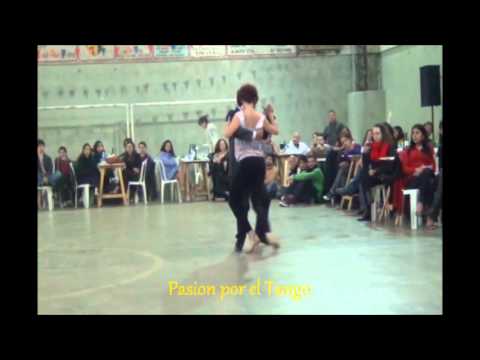
A friend of mine, a DJ here in Bergen, Michael, told me that in Argentina, and say that if God would sing, he would sing like Raúl Berón. That's a great voice, doesn't he?
I love how that is with Troilo. The first thing I want to say is that the sound quality of this period with Troilo is not great. So if we're used to listening to stuff that's got better sound than that, but sound fidelity, I should say, sound fidelity. So when we're used to a better sound, it's easy not to appreciate the music simply because we don't hear it as well as we'd wish to, and I think that's especially true of Berón's voice there, because these are probably his best recordings, this few years that he has with Troilo at the beginning of the 50s. Yeah, it's a shame and that's probably one of the reasons these tracks are much less played than the earlier Troilo.
And they were very hard to get hold of as well. So the record company that Troilo is recording with now, he's left Victor, he left RCA Victor in 49, he had a fit of pique because Troilo's music was becoming more modern and he heard the executive talking going, it's getting a bit modern, so he just said, what, I'm Troilo, I do what I want, and he just walked out, that's it, I'm gone. And then 50, 51 new record labels spring up, many of them local Argentine record labels, so Troilo signs for one of those, Tecal, TK in English, but you would say Tecal. And then it makes a clever play on words because discos, discoteca is discoteca, like a discoteca. And there's a rumor that Troilo actually put up most of the money for this, but nobody really knows.
And if you're a new company, you're playing catch up with the technology, because there was a lot of technology involved in making those records sound as good as they did. And in the early 50s, they don't sound that great. And then later, Tecal went bust. And we just didn't have any access to the masters and there was a legal limbo. So nobody reprinted that stuff on CD, except for one pirate kind of company in Mexico, so we just didn't hear it, basically. I thought that was sensational, sensational, wow. But it must have been a local, local Argentinian technical problem, because I mean the sound, the tracks we were listening to before we started, the American jazzy things and Edith Piaf from France, the sound is excellent, it's recorded the same year. So it's a shame.
Let's move on to another one of Troilo's previous vocalists, because we finished our 47 program with Troilo and the singer Edmundo Rivero, and he did some recordings in 51 also, but not with Troilo obviously, but he was backed with guitars. What was it with Rivero and his, he has a lot of recordings with just guitar playing and him singing.
Capítulo · 25:05
The Singer Who Learned Secret Words in Prison
To sing the real language of the barrio, he went where the words still lived.
Well, that's how he started. In a way, Rivero was not a cantor de orquesta, but more a cantor nacional, someone with a much broader repertoire. And he loved doing that sort of stuff. And it was even part of the deal when he joined Troilo. Troilo said, I'd really like you to play some of this other kind of stuff that you're doing, and that's one of the things that convinced Rivero to sign. And he was absolutely fascinated by Lunfardo, Rivero, to the point where he would go to prison visiting to chat to prisoners because he could get to understand the words and the really secret ones that weren't being used in everyday language. And he became one of the leading experts in Buenos Aires on Lunfardo. So he loved singing those kinds of songs and composing those kinds of songs, songs that go much better with the guitar repertoire.
So everyone, here's a recommendation. If you like Rivero and you like Lunfardo, then there's an album, I think it's a late album, called Lunfardo. And it's just 12 tracks of Edmundo Rivero and guitar. Sensational. So we'll listen to two of his recordings. This is not something I've ever played as a DJ, so it's nice to be able to play something different. The first one is A mí, déjame en mi barrio. The only other recording I've seen of this is with Laurenz from 42 and the second one is El Rebenque Fatal, it's a milonga.
Rivero backed only by guitars, not an orchestra; chosen to showcase his lunfardo/barrio repertoire, which was part of the deal when he later joined Troilo.
♪ Música · 2:19 ·

A milonga with guitar backing about a whip ('rebenque') and a betrayal; the only earlier recording Dag knows is a 1942 version with a different singer (Laurenz?).
Lo bailan

♪ Música · 2:11 ·
Imagine being in a club in Buenos Aires with a glass of Malbec and this guy walks on the stage. I don't quite understand the text. It's something about the dog dying or something after having been whipped. Rebenque is a kind of whip. It's the same word in Portuguese.
So, but I haven't paid attention to the lyric. Can I just pick up on a couple of the questions? Of course. So someone asked, well, it sounded like more than one guitar. There's probably three guitars and he's probably not playing. So if you're being backed by a guitar group, then Rivero did play the guitar very well, but he'd have put the guitar down just so he could concentrate on the, on the singing.
Someone else has asked about Lunfardo and the secret words and stuff. Well, of course they were secret, weren't they? But some of it has come out. Like for example, words that you would use to talk in the presence of policemen, for example, words for a policeman, José María Otero, who writes only in Spanish on his blog and on his Facebook, was just publishing something on this very question. And one of the secret words was the word for an informer. So in front of a prison guard, for example, you could say to another prisoner, watch out, that man over there is an informer, stuff like that.
“In front of a prison guard, for example, you could say to another prisoner, watch out, that man over there is an informer.”
In our 47 program, we also heard Floreal Ruiz singing for Troilo's Confession and Barrio de Tango, two great songs. And now in 51 he's recording with another orchestra, Francisco Rotundo. I was a bit curious, Michael, would you call this like a backing orchestra for him or is that an interesting orchestra in itself, I mean Rotundo? Rotundo is one of these orchestras riding a bit on Troilo's coattails. It's like, well, I'll just try and make it sound a bit like Troilo and then I'll get one of Troilo's singers in as well. So no, it's not his backing orchestra. He is contracted by Rotundo to play in Rotundo's band.
It's not something you hear often in milongas, but there's one song, of course, everyone's heard. It's the waltz. El Viejo Vals. El Viejo Vals. Yeah. And it's with Floreal Ruiz and Enrique Campos also. They sing in a duet. That is a very special recording. Yeah. And it's always mixed because you can't really make a tanda, like a Rotundo tanda out of it.
I'm gonna play that one since it's a real candy for the ear. But before that, let's listen to a tango also, Sobre el Pucho, with Floreal Ruiz singing about the tango that is gone, and I found this bit of lyrics that I could kind of relate to in these days. Let's listen to these two. Sobre el Pucho and El Viejo Vals by Rotundo.

Chosen for the lyric about tango itself being gone, which Dag felt resonated with the present (pandemic) moment.
♪ Música · 4:38 · La letra, en la página del tango

A duet between Ruiz and Campos; called 'a real candy for the ear', though noted as a one-off that can't be built into a full Rotundo tanda.
Lo bailan · 5 de 165


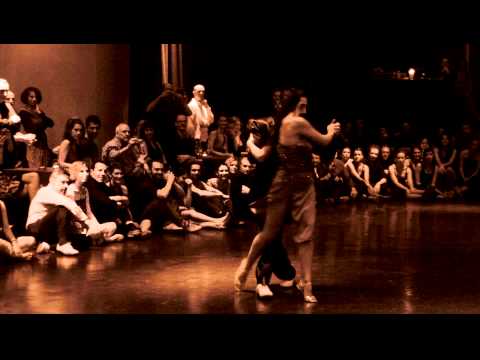
Yeah, you say, Michael, listen to those blue notes. It's what makes it a bit sad, isn't it? No, just a touch, just a touch makes a little bit sad. Yeah, and actually Helen's just commented about the way the two voices went together. It's not just a simple get into a harmony and keep it going like you get in De Angelis. Much more sophisticated with the two voices playing off each other. Wonderful.
And if you're a tango geek and you don't mind listening to scratchy recordings, there's a 1931 recording of Canaro with Charlo. Now, Charlo's another of these voices that as soon as he opens his mouth, the quality of the whole band gets better, just like Ruiz. Because what Rotundo is doing is not that interesting really, it's okay, but as soon as the Ruiz is in the room, wow, you think, wow, this is a great band, I want to dance to it. So I'm not aware of anyone in the world who's got a good quality shack of the Canaro Charlo version of El Viejo Vals, but it survives in quite poor quality and someone's posted that on YouTube. So if you type Canaro, Charlo, El Viejo Vals on YouTube, you can have a listen and just compare for yourself.
Yeah, I think Ruiz should have stayed with Troilo, shouldn't he? I wish he had!
Yeah, let's listen to two other singers who also sang with Tanturi and Troilo in the 1940s, but who went solo. Alberto Castillo, who sang with Tanturi, and Alberto Marino, who sang with Troilo. And they're both recording in 1951. Castillo is backed by a band called Angel Condituri and I want to play a song called Muñeca Brava, and it's interesting for two reasons because Castillo also recorded this in 1942 with Tanturi, so you can see the contrast difference, and secondly it has a glosa, this piece of declared poetry in the beginning. Muñeca Brava, and the second song I want to play is by Alberto Marino. He sings Farolito de Papel, which he also recorded earlier, back in 43 I think it was. Muñeca Brava with Castillo and then Farolito de Papel with Marino.

Castillo had already recorded this song in 1942 with Tanturi; this version opens with a spoken glosa (recited poetry) before the song.
♪ Música · 4:24 ·

Marino, formerly Troilo's singer, had also recorded this song around 1943; his voice is clearer here, possibly because of a label/microphone change now he is a soloist.
Oh, such a beautiful voice. And I remember you said in 47, Michael, that listening to Marino in his solo recordings, really get his voice. Yeah, I had a conversation after the show with someone on Facebook, and the suggestion was that that could partly be to do with the change of record company. Because with Troilo, who was recording with Victor and afterwards on Odeon, and they used different microphones. Might be a good part of the reason why we can hear him better there. Of course, now he's a soloist, so he's the star, and they're going to be thinking much more about him in the recording.
So the general difference there compared to early recordings we have of those songs is all the lyric is sung. Normally, we'd have a one-minute instrumental introduction by the band until 45 or so. But after that time, especially for the guys working as soloists who are employing their own bands to back them, they give us the whole lyric. Later in the 50s, we might find that too much. But here it's, I think it's still quite nice. And when there's the story told in the lyric, then you get more of the story. So it can be really nice.
Yeah, there was a question from, was it from Gerard or something? Gerardo, who says that this is not a sanitized version. Yes. 42, now this is really interesting. So in 42, censorship hasn't completely kicked in, but the censorship really comes in in the middle of 43. But there's already a bit of censorship going on because some laws have been passed but they're not really enforced and nobody really knows what the situation is, and sometimes bands think that's a bit risky and they just changed stuff.
There's a great story about Carlos Gardel. Once he's at a gig somewhere and someone from the public says, sing Mano a Mano, hand in hand, it's a really nice tango that we all know, and he said, do you want the clean one or the well, actually the word he used was brill, you know, brill cream, the cream you put in your hair. That's called gomina in Argentine Spanish, and he said, do you want it with gomina or without? And the public said without. So then he's saying, it's not actually, it's not a lyric with a few words change, it was a completely different lyric that you could never have recorded, but we do have that, we do have that written down. So yeah, already in 42 generally, Lunfardo words would sometimes be removed if they thought they were too dangerous or things like that.
Capítulo · 49:40
Gardel's Two Versions of the Same Song
'Clean, or with gomina?'
Okay, let's move on to something more rhythmical because 1951 is a mix, isn't it? I mean, we were listening to these really lyrical pieces and in your introduction you said that there's also this return to the really, really rhythmical, powerful tango, specific strong beats. Yeah, strong beats, yeah. So, yeah, let's warm up with a song by Biagi, who he records still, he records four numbers this year, I think they're all good ones too, with Hugo Duval. I will listen to one of those because he's a new singer for Biagi. He comes in in 1950 and he still stays with Biagi until the band dissolves. Can you say something about Duval as a singer? He only records with Biagi, doesn't he?
Yes, I don't know so much about him. I think the voice fits the band really, really well. The tracks that are normally played are the much later ones, from like 56 onwards. And there's a lot of reverberation on the... It's actually being put onto the master deliberately, which I find a bit tiring to listen to. So these early 50s ones, where we don't have the reverberation, I enjoy more than the later ones.
Let's listen to Por ser un corazón with Duval. I also want to play a second song by Domingo Federico, and we listened to him in 44, and the song is most known for today is Cualquier Cosa, which was actually recorded in 1951, but I'm not going to play that one because we heard it so many times. So I want to instead play a song called El Maharajá. Yes! You like that one? Yes, it's so interesting, El Maharajá, I think. Yeah, so interesting, really unusual. It's a unique recording, it's the only one that recorded this song, and it says it's composed, in my database it's composed by Francisco Federico. I'm curious if it's his relative or something. You know, it's his brother, it's his brother.
And Saludos, like we all know Saludos, don't we? They co-wrote that. So it's like, you know, we've got a snapshot now of how this team has evolved in the, what is it, eight years since 51. And it's a song with a, not a song, a tango, because it's instrumental, right? Yeah. With a really strong personality, all of its own. I love this Domingo Federico period. And we're only able to hear it now because the tango tunes releases. It's another orchestra. It's been really hard to get the records. Yeah. It's very original. Okay, let's play El Maharajá. But first, Por ser un corazón with Biagi singing Hugo Duval.
Duval joined Biagi in 1950 and stayed until the band dissolved; this early-50s recording lacks the heavy reverb added to Biagi/Duval's later (post-1956) releases.
♪ Música · 2:34 ·
A unique, original-sounding instrumental; the only recording of this song, co-written by Domingo Federico's brother Francisco Federico.
♪ Música · 2:30 ·
That's that walking bass you were talking about with Federico in 1944, I think you're talking about this walking bass, this rock and roll kind of. He's messing around with it now, very original. Great reaction from the public on this song, and I see Bogdan and Solvay are telling us that we can read more about it on Paul Bottom is YouTube channel. So it's something you can do after.
And a lot of comments as well about the Biagi track. I really like that a lot. And the way it opens with this lovely crescendo, quite a quick crescendo in the melody. And that's really stimulated people.
Now, Biagi wasn't always that smooth and melodic. I suddenly had a thought listening to that right back at the beginning, because at the beginning of Biagi's career, it took him a while to find the right vocalist, didn't it? He had the Piofalo Ibanez and then he had Andres Falgas and then he got Ortiz and with Ortiz it kind of clicked and we had all that success. But can you guys remember how it sounded with Falgas singing the tangos like the La Chacarrera, where he had this voice that just kind of floated across the top and wasn't really part of the orchestra?
So it didn't fit back then, but it fits a bit, that kind of, it's a different relationship now between the voice, isn't it? It's not just Biagi that's now become smooth, it's just something general, apart about the signs of the times, that the relationship between the vocalist and the band is changing, even in the bands where it's still the band plus vocalist, not talking about the soloists of course. It's changed for them, but even just for the average bands the vocalist has a bigger role than before.
Yeah, it's interesting that Biagi is so smooth in the early 50s, because we're gonna move on to D'Arienzo, and as you said in the introduction he goes really goes back to the 30s and this. Yes, I mean, our first program was from 41, then Troilo and D'Arienzo, so weren't really that different. Of course Troilo was more complex, where but you had the same kind of energy and beat or in a way, and now they are so different. I mean, what we listen to in the beginning, what we're gonna hear now from D'Arienzo, it's very different. But what are we gonna hear? I was thinking maybe this instrumental.
Yes. Yeah, it's a, this is rip-roaring and so powerful and strong, and something that you can hear really clearly on this track, and you'll see me doing it because I won't be able to stop myself, is the bass slapping on the double bass. You can hit the thing and generally that's called slapping, but there's a particular variant called snapping where you put your thumb behind the string. And the D'Arienzo, at this time the D'Arienzo bass player doesn't have a bow, he just he's just plucking it. You put your thumb behind the string, pull it away from the fingerboard, that's the black ebony fingerboard behind, and let go, and as it rebounds it actually percussively knocks onto the fingerboard and you hear this sound. And I listened to a lot of D'Arienzo when I was writing the D'Arienzo book, and you can hear that happening as early as 43, but here it's really loud, it's fantastic.
Well, in your book also you write about the 1940s orchestra as the Varela orchestra, and now Varela is gone, isn't he? Leaves. Varela has gone 1950, and taking Laborde, the best singer, my opinion, of D'Arienzo's at this time. He takes Laborde with him, although he comes back, he only stays away a year, but that means for tonight, for 51, we've only got a Chagwe on vocals, and that really splits opinion between those who love it and those who don't. I'm more in the latter camp, I have to say.
Well, after J'apagero, let's listen to a song by Varela and Laborde, Yuyo Brujo.
That's a really nice recording. And he recorded, of course, with D'Arienzo in 49, Laborde. So that's the version we know.
Yeah. It's Laborde's voice. It's Laborde's song and he really makes the recording with Varela.
Yeah. Japeje with a D'Arienzo instrumental and then Yuyo Brujo with Varela and Laborde singing.
Chosen to showcase the loud double-bass 'snapping' technique (plucking the string off the fingerboard so it rebounds percussively), audible as early as 1943 but very prominent here.
♪ Música · 3:00 ·

Varela had led D'Arienzo's orchestra through the 1940s before leaving in 1950, taking Laborde with him; this recording is considered to belong to Laborde as much as to Varela.


Only got better. Yeah, now you tell us what we're gonna hear. Yeah, I recorded six tracks in 1951, and I want to play an instrumental which is better known from the end source recordings like Catrera, and no, no, no, I'm gonna play, sorry, I changed my mind, I'm gonna play El Andariego, an instrumental, much better choice. Yeah, yeah, but before that we're gonna listen to a waltz or something that's called in tango tunes edition, Vals Peruano Estrellita del Sur, and it's with Jorge Maciel and Héctor Corral singing.
I thought it was interesting both because it's a Vals Peruano, maybe you can say what it is, and also because Jorge Maciel is singing. He's the vocalist of Pugliese later in the 50s.
Yeah, so the Peruvian warts is the one where you get this cross rhythm in too. That's the classic one whose title I've forgotten that we have also from Edith Piaf.
All right.
Yeah, and Jorge Maciel was singing for many years with Gobbi before he kind of gets upgraded and moves on to Pugliese who makes very good use of him. But he fits very well with Gobbi's orchestra. With Gobbi, he's a little bit less dramatic because Gobbi's a little bit more round and Pugliese's got more corners and edges to him and Maciel changes his style to suit that when he joins the Pugliese orchestra, so he's probably even more dramatic with Pugliese than he is here. So the first time we hear Maciel singing with Gobbi it's very easy to go, oh, it's not as dramatic as it is with Pugliese, I don't like it so much, but just keep in mind it's a different thing and style is suiting the orchestra very well.
Right, let's listen to Estrellita del Sur, the waltz with Jorge Maciel, Héctor Corral singing, and El Andariego. And this one was actually also recorded later by Juli Eze.

A 'vals peruano' (with a cross-rhythm feel); one of Jorge Maciel's first recordings before he later moved to Pugliese's orchestra.
♪ Música · 3:53 ·

A strikingly modern instrumental with constantly shifting colour and flexible tempo, described as sounding like a gentler, rounder cousin of Pugliese's style.


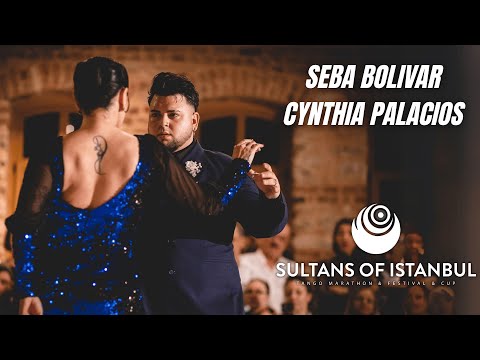


Wow. Oh, yeah. When I first heard that, I don't know, 20 years ago, I didn't understand it, and I thought, you know, what's that? I don't know. I don't understand. I don't like it. But now I just go crazy for that. It's so modern. That's what I typed.
“If you've got friends who are classical musicians and they don't know anything about tango, for God's sake, don't play them Piazzolla. Play them that.”
If you've got friends who are classical musicians and they don't know anything about tango, for God's sake, don't play them Piazzolla. Play them that and see what their reaction is. They'll go crazy for that because it's so interesting. It's constantly changing colour. Even the tempo, I don't know if you noticed, the tempo is a little bit flexible. It's not going, even, okay, I'm not talking about the model of marcato, whether it's going bum, bum, bum, or bum, bum. Not that, but actually the tempo itself, it's slowing down and accelerating again, but in a less extreme way than Pugliese. But not so much that you couldn't follow it as a dancer, but you'd really have to pay attention.
I think it's sensational, absolutely sensational. It still sounds modern right now. It's very engaging, and as you say, it's kind of Pugliese-ish, but not quite as powerful maybe, I think.
Yeah, and somebody else has commented on that in the comments. If we think of it as like Pugliese but a bit different, then I think we're not really going to appreciate it fully, because that's an easy thing to do, because there's this new musical language that's developing and a lot of new bands. I don't know if you're going to talk about that this evening though, but there's a lot of new bands coming in around this time and you can hear that most of them are very influenced by the Pugliese style. Not Varela, no, not Varela, but a lot of the new people are. But Gobbi is not really trying to be like Pugliese, he's like another branch that's come out of the caro, but it's not such a powerful branch as Pugliese's, but rounder, changing musical color a lot. Yeah, yeah, and okay, that's one of his very, very best tracks, they're not all that good.
Yeah, you said if I'm gonna play other new orchestras for new listeners, if you don't know this program, the plot twist here is that Michael doesn't know what I'm playing, so all his comments are sort of take it from his chest here and now. Let's listen to some Pugliese tracks. When we listened to Pugliese in 47 he was finding his style. What can you say about Pugliese in early 50s, 51?
Well, first of all we have to say completely different things about the instrumentals and the vocal numbers.
So are we going to get one of each? Shall I comment on both?
Yes.
So it's almost easier to talk about the vocal numbers, in fact, because Pugliese decides he's going to do something different with vocals. And we've seen, haven't we, like even Troilo, who's performing all these Piazzolla numbers, he's kind of admitting that that phase of tango, in a way, is over. It's not entirely, there's still going to be great songs, but this super lyrical phase is over. So Pugliese, he still wants to have vocal numbers. So he starts to do different things with the vocal, he starts to push the box, beginning with Barro, and then we get Pasional in two recordings, and then finally in 53 we'll get San José de Flores by Pugliese.
How far can we stretch this before you can't dance to it anymore? It's kind of the question that would be interesting to listen to, whatever it is, and which version that you choose to play.
Well, I'm going to listen to the Pasional, the first recording, because the second one is from 52, so we need to listen to the first one. That's with Alberto Morán.
Yes.
And then the instrumentals, the instrumentals are, I love this period, this period before you get this very bright, luminous Pugliese. So in a Milonga, if you only got one tanda of Pugliese, 50-50 chance, it's going to be late 50s instrumentals like Emancipacion, Noce Rossoe, Pata Ancha, and all of those. Nothing wrong with them, they're wonderful, but they're played a bit too much, and as I said, luminous, that there's a joy and space about them. Now here in the early 50s Pugliese has found his style, but it hasn't opened up into this spacious. So Emancipation, it gives us moments like this, but the early 50s Pugliese gives more moments like this, moments of real compression and density and tension. It's more tense than the music will be in the late 50s, and there's a lot of tracks that we don't know, if you can pick anyone at random and it's sensational, and we don't play them at the Milonga, like Oliveiro. I think that's the first one, you don't hear that at the Milonga. Donatilio, no, I've never heard that at the Milonga.
Bien Milonga is probably the easiest one to enjoy, and I think there's also a refrain, isn't there, which is a tango with a story attached. I'm going to play Bien Milonga, as you mentioned, and then Pasional, and Bien Milonga is an instrumental. I agree with you that this is a great period and I think it's underplayed at Milonga. It's such great dance music.
Yeah, yeah, and let's trust the dancers. You know, what's the worst that can happen? They can throw stuff at us. Okay, let's listen to Bien Milonga and then Pasional by Pugliese.

An early-50s Pugliese instrumental from a dense, tense period of his style (before the brighter, spacious late-50s sound); considered underplayed at milongas.
Lo bailan · 5 de 34


♪ Música · 3:55 ·

The first of two recordings of Pasional (the second from 1952); part of Pugliese's push into vocal numbers that test the edge of danceability.
Lo bailan · 5 de 20


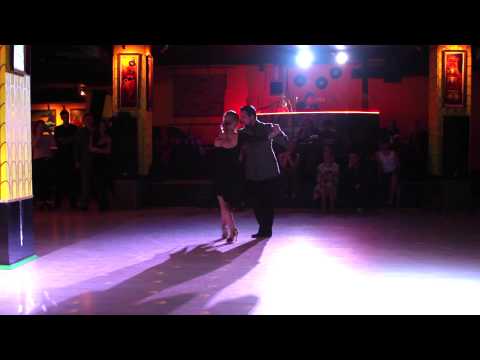
Oh, Alberto Morán. You said there are two versions of this, two recordings.
Capítulo · 1:29:08
Same Song, One Year Apart — and the Volume Goes to Eleven
1952 was the year tape arrived, and everyone turned it up too far.
Yeah, and I'm absolutely delighted that you played the first one because I think quite a lot of people with us this evening won't be aware that there are two versions of Pasional. And I think quite a lot of people will prefer the second one because this first one's quite rare. You don't get to hear it very often. And there's two differences. Well, there's several differences, actually. It's really interesting to unpick the differences. Stop me if I'm going on too much of it.
The first difference is the second one from 52 has got this extra bit at the beginning, this da-da-da-da-da-da-da-da-da-da-da-da-da-da-da. The band comes in absolutely at the max and there's this explosion. And then the violin comes in softly. Whereas here, the violin just comes in softly. So that really changes the beginning of the song. This one starts in a more gentle way. So it's kind of easier to get into it. Whereas the other one, there's this nuclear bomb that goes off.
And the other difference is the recording. The reason that there's two versions is because 1952 is the year that EMI Odeon introduced tape recording on Tape Masters. And it's all new and exciting. So, you know, everyone rushes into the studio to re-record stuff. So there's eight songs. Seven or eight. We're not really sure. We're still not sure today, despite our best efforts. Maybe it's eight songs get re-recorded and you can hear that the sound engineer is still learning how to do it and it's really saturated. What do I mean by saturated with the sound? I mean it's like a commercial radio station, so in a commercial radio station nearly all the time it's at maximum volume and there's very few bits where the volume is quieter and they do that to call your attention more compression, and that's what happens here, that the sound is turned up a bit too much in the later version, so there aren't really any quiet moments whereas this one you do get quiet moments. This 51 version, and there's also one point where Morán sings nunca más, never again, and here he sings it nunca más, whereas in the 52 he sings nunca más like he even gives it a little bit more, so everyone's giving it more and more and more in the 52, so it really, you know, knocks on our attention. But this one, I like subtlety. I like it also because this soft start, it fits with also the way Morán starts singing very soft, so it's a more gentle introduction to the song, I think.
Yeah, someone's commented it's on an LP. Yeah, yeah, not that easy to get. Yeah, but yeah, there is one version out there and that's, you know, that's how we've got it that you have to look.
Let's move on to another orchestra. You said there are some new orchestras recording at this time. And one of them is also one we never, or very rarely, I don't think I've heard it at the Milonga, Horacio Salgán. And he was a pianist and he died in 2016. So just four years ago. What can you say about Horacio Salgán? Why isn't he played at Milongas?
People didn't even dance to it then. It was a musician's orchestra. When he opened, the place was packed, but it was all musicians. Everyone had said, oh, wow, Salgán's got a new band together. So Pugliese went to listen to Salgán playing.
The music is modern, but he's not concerned with dancing. In that sense, yes, he's not concerned with dancing. He's got completely his own style. There's a lot of musical colour. I think it's always happy as well. I don't think I've ever heard a sad moment in a Salgán tango, but extremely rich and interesting, but doesn't really make me want to dance. I like to listen to it, though.
Yeah, let's listen to two songs. And the first one is recorded also by Pugliese a year before, Vycha Rekova. It's a very known, beautiful song by Pugliese with, what's his name, singing? Porgy Vidal. Vidal, of course. And the second song I'm going to play is an instrumental, Shushetta or Aristocrata, which is also very well known from Di Sarli, from 10 years earlier. So listen to these two and feel the difference between the Pugliese and Di Sarli recordings, or just listen to it in itself, maybe it's better.
A rare vocal number from Salgán's 'musician's orchestra'; previously a well-known Pugliese recording with singer Jorge Vidal.
♪ Música · 2:42 · La letra, en la página del tango
Capítulo · 1:34:15
The Orchestra Too Modern to Dance To
The room was packed — but it was all musicians.
An instrumental previously well known from a Di Sarli recording ten years earlier (1941); played to compare the two orchestras' treatment of the same piece.
I'm really amazed by the comments. Yeah, so many. I'm so delighted. BJs, read the comments. People are liking this.
The thing with Salgán is that the colour in the music is changing so fast from one moment to the next. So if you really wanted to follow the music, not so easy. Maybe that's why some people are talking about the vocal number is easy to dance to. Because once the singer goes, you can stick to him and the singer is doing what a singer does. So he just gives you a line to follow.
So what I found with the vocal one, you know, this is just me, maybe, but if I listen to the vocal, but I also listen to what the band's doing underneath, then I got confused because underneath it's still changing color a lot. And I didn't feel a harmony of emotion between the two layers. But if one sticks with the singer, then he gives you a line as singers do. So God, I don't think I've ever heard a Salgán vocal tanda at a milonga in my life. Please someone put on the comments if you've heard one or whether you've played one yourself as a DJ and how did it go.
And I've played, I think like two or three times in my whole life, Salgán instrumentals as a DJ and, you know, like five people thought it was amazing and the rest of them gave me the look, you know, the DJ look, like, what are you doing, you're embarrassing me in front of my friends. Look, happy music, really joyful and playful. And of course, in the end, it's going to give birth to the Quintetto Real. Well, I say, of course, it's going to give birth to the Quintetto Real. If you like the instrumentals there, go and listen to the Quintetto Real, not the Nuevo Quintetto. That's really important. The original one.
There's one comment that they danced to one, but it was difficult. So that's, I guess, the conclusion.
Let's move on to Di Sarli. And he's back after a three-year break. What has he been up to since 1948 or 49 when he stopped recording? Yeah, it's actually a two-year break but it's often misreported, so after carnival dance in 49, not 48, he quit. Let's leave the story of that for another time.
Capítulo · 1:42:09
Two Years of Silence, Then Di Sarli Wins Anyway
His copycats finally had the stage to themselves — until he came back.
We don't know what he's been. He's been at home, he's gone, he has a really nice house in the suburbs, so a bit outside the city in a very green and leafy area still today called Olivos. So he just went back to the house, put his feet up in the garden and enjoyed his happy family life. And then he's tempted back out, which is bad news for his rivals, because in the meantime the disappearance of Di Sarli created a space for Di Sarli style orchestras, and two or three of these had sprung up, of which the best known is the one of Ricardo Pedivisa, who's kind of like Di Sarli but not quite, because there's a problem that he hasn't got the pianist and you can't copy the Di Sarli style if you don't have the pianist and you don't have the same sense of subtlety that Di Sarli has.
So Di Sarli's return is bad news for his imitators, but it's a hugely successful return and he adapts himself. You can hear in these recordings that he's playing in this 50s style, this stronger, more vigorous style. And there's something I wanted to say about that, that one of the ways to classify orchestras is just by listening to the Marcato and dividing between the orchestras that use the Arrastre in their Marcato and the ones that don't. Now, the ones that don't include D'Arienzo and all his followers. So D'Arienzo, Varela, Canaro, I mean, you know, a big part of the scene. And the ones that do in the late 30s, early 40s, it's Di Sarli and Pugliese in two very different ways.
They have the zhung, which gives Di Sarli the walking beat. And Di Sarli is not a follower of fashion, a little bit maybe 39 and 40 when he's just winding his way. But from 41 onwards, he's, let's say 42 onwards, he does his own thing. Now, suddenly he's modern because a lot of the new bands that are springing up are influenced by Pugliese and Gobbi and all those people. So they've got a Rastri style kind of beats. And that's just what Di Sarli's done his whole life. So he just does the same thing that he's always done. And suddenly it sounds modern.
There's 20 tracks recorded by Di Sarli on his comeback. Every single one is an old track from his previous repertoire. There's not a single new song, that tells you something, but it's fantastic. 19 of those 20 are instrumentals. Yes, and there are two singers in the orchestra. Two, that's amazing.
Well, I read, when I was reading a book on this early, I really got this, I got this rediscovery of this early, because it's the kind of orchestra that you hear a lot in the beginning, in his later 50s. I often played at beginners courses in tango and then I got bored of him and I thought it wasn't interesting, but your book really opened my eyes. And I think it was three things that I have from that book, and you should all get it if you haven't read it or others. The first thing was the counter melodies, the way you use the counter melody and so beautiful when you start listening to that. The other is the growling left hand on the piano, the way he uses his left hand is so powerful. And we're going to hear that for the first song, El Pollo Ricardo, where you really hear this crazy left hand.
The third thing is that I really discovered his early 50s instrumentals, like his musical recordings from 1951. I think it's absolutely sensational. It's fantastic. It's better for dancing than the later ones on RCA Victor. And there's more songs, because there's only, what, 19 songs on the late 50s on Marcio Victor, and then another four, is it, on Polygram, 23. But there's like 50 here.
And finally, we had the same problem that we had with Tecal. This is on Music Hall. Vinyl, people, vinyl has arrived. The only problem was nobody had record players that could play these records. And Music Hall is a foreign company, problems with the rights. So again, we didn't have these records tuning in tonight, started dancing. You didn't have the option of listening to the early 50s ones. They just weren't available.
They have a stronger walking beat. It's the increased bass presence, this growling left hand, and the double bass, which you can often hear. Bass notes are what we walk on. And these two are going to play El Pollo Ricardo and also El Siruja, also an instrumental. And it's quite short. The second one, it's also only has four parts, this A B A B, and I really like the B parts, and especially the second B part where you can really hear this counter melody within the Islands. Prepare for goose bumps, people. Thank you for your choice.
“Vinyl, people, vinyl has arrived. The only problem was nobody had record players that could play these records.”

From Di Sarli's comeback batch of 20 re-recorded old numbers; picked to showcase his powerful 'growling' left-hand piano.
Lo bailan · 5 de 27


♪ Música · 2:30 ·
A short, four-part (ABAB) instrumental; praised for its counter-melody in the B sections.
I love that counter melody. I see that we used two hours already, Michael. What? I mean, it was so fast when you're listening to 1951. We could keep going for many hours more. I have music for at least another hour. But I guess we have to round off if people are going to work tomorrow.
So let's, since 1951 is also a year of great singers, let's finish it with a great singer. The photo I post also just before the event. Not just any singer but Francisco Fiorentino. Because he sang with Troilo for seven years until March 44 and then he's been doing solo numbers and doing different things, and around this time he records with unknown orchestras, Alberto Mancione, and his last recordings are with orchestra Pulía Pedrosa. These are from 1951, and his last recordings are actually from 1951 because, as you write in your book, he dies tragically in a car accident in 1955 when he was just, it's just been asked by Troilo to make a comeback.
Capítulo · 1:53:00
The Last Recordings of Francisco Fiorentino
He quit a sure thing for a tour that never happened — and it became his last chapter.
Oh, that's what, I'm so full of emotion now. Before I talk about Fiorentino, you know, we're still got 200 people here. After Fiorentino, I do got your plan, because of course, you know, 1951 is a year with two great Cumparsitas, not just the D'Arienzo 51 Cumparsita, which is the most stunning arrangement, where he takes the new bandoneón variation and sticks it in the middle of the piece, not at the end, but this is 51 Cumparsita as well, sensational. So, you know, some of us are going to stick around here and, you know, have a glass of wine together at the end of the program. Feel free to stay with us for, you know, 10 minutes and there won't be any talking, but we'll still be playing music, and I hope that, you know, amongst what you'll play, those two tracks will feature.
Now Fiorentino, oh God, oh God, oh God. So Fiorentino left Troilo after six or seven really good years and went solo, and other people had gone solo very successfully, like Butto Castillo, for example, and seven years is a long time to spend with one band, and if you're an artist you want to be creative. And after he left he never tasted success, at least not at the level that he wanted, because if you leave Troilo and you're a singer, you know, Troilo is the ultimate band for any singer. So if you leave there, you want to go up. But it turns out, people, there isn't anywhere up to go after Troilo. And that's what Fiorentino found out the hard way.
So he would go and sing with someone for a while. For example, in the late 40s, we find him singing with José Basso. And Basso is absolutely delighted with how it sounds. But Fiorentino isn't, so he quits. And it's the same, you know, he with Mancione there. Mancione is a second-tier orchestra if we're honest. There are some very nice recordings with Fiorentino. He's contracted for two years but he quits after a year.
The story is that he'd been offered a really lucrative tour of South America and he thought, I could earn enough money to buy a house and then my kids will have something after I'm gone. So that's what he does. He quits and then the tour doesn't come off. So he quits for nothing.
And these last, there's three recordings, aren't there, with the Pulía Pedrosa Orchestra that he makes in Uruguay in November 1951. I think they're really good. Possibly because it's a second-tier orchestra. I don't know. I don't know what the answer is. What are you going to play from Fiorentino? Can you tell us?
Yeah, I'm going to play El Motivo, Pobre Paica. This is the first one, so this, yeah, yeah, and then let's go the tango, which is one of the last ones. Okay, so El Motivo, Pobre Paica, absolutely wonderful tango from Juan Carlos Cobian, and it was in the repertoire of Troilo with Fiorentino in 1940 when they didn't have a record contract, and you can hear that on the releases that have been made of radio acetate discs, that's live recordings from radio programs. They did a fantastic performance, and then there's a performance with Goyeneche, people, you can go home and listen to that, from this is it from the 60s, to all the Goyeneche, the El Motivo, where it's the same arrangement but played at half the speed, and of course it's Goyeneche's voice instead of Fiorentino's, so you can hear what it would have sounded like.
Now with the Manzione version we hear it's to do, I invite you all to listen to the relationship between Fiorentino and the music. So Troilo said about Fiorentino his great quality was that he could mold himself to the orchestra. Now with Manzione what happens is that Manzione plays a bit more regular, so he's less flexible than Troilo, and Fiorentino is more flexible than he was with Troilo. Fiorentino expresses himself more, he uses more fraseo, the variation of how you use your words, and the orchestra expresses itself less. So they're not matched as well. So everything is good but it's not such a good match. And then with the second track you're going to play, with a seemingly unknown orchestra to us from Uruguay, my opinion the match is better.
And let's say thank you to the over 200 guests who've joined us tonight. I'm so grateful that you come together with us and share our love for tango music and your feelings. Yeah, thank you, and thank you to you, Michael, for sharing your immense knowledge of tango music and your feelings with us. We appreciate it so much in these times. And for anyone who hasn't read Michael's five books, please order them and read them, and you really have time for that now when there is no tango to dance. Dag, thank you for holding this space open for us. So let's listen to Fiorentino and then afterwards we're gonna listen to some Cumparsitas. El Motivo first and then El letra del tango.
Composed by Juan Carlos Cobián; one of Fiorentino's final recordings, made in Uruguay with a little-known orchestra after he quit Mancione's band.
♪ Música · 4:03 · La letra, en la página del tango
Fiorentino's literal last recording; lyric opens 'Tango, pedazo de vida, no tiene pasado ni tiene final.'
Michael, it's... Laurentino's last recording. It gives me a chill to think about that. This guy who's given us so much pleasure on the dance floor from his recordings in the trolling in the 40s. All right, yeah, we already started rounding off.
Let's round off with La Cumparsita. I was planning to play one or two, maybe, but let's play three, because I want to play the Di Sarli one first that you mentioned, and then the... Has to be, yeah, it has to be, sold a million records. But I also was, I want to finish off with the third one, and you mentioned earlier there's a guy singer called Charlo who's really known from his recordings in the early 30s, but he has a recording of La Cumparsita from 1951. And I think it's very beautiful and it's also appropriate, I think, because next week I think we're going to make a jump back in our time machine, go back to the 30s.
Yes, I want a simpler, a simpler year for next time. 1951 is, it's so diverse and, you know, the tango seems fragmenting, really, isn't it? You know, the traditionalists and the evolutionists have kind of split. What's happening in relation to tango song is kind of splitting, so it's really complex and hard to feel it as a coherent whole. So going back to the 30s will be fantastic. You know, let's have a, you know, a simpler, simpler time.
Yeah, I agree. It's been, it's been a fun week, but it's been a lot of work to prepare for this. I can imagine. Let's go to 35 or something next time. I think it's a good, 35 would be a classic year. Yeah, okay. Let's listen to some few compasitas versions, and goodbye, everyone. Thank you for listening, and I hope to see you next week.
And there's this tango, this is a Facebook group called Tango By Year. There also you'll find the links to the earlier recordings, if you want to listen to the earlier programs. Please do join the group, because that's the easiest way to know about the next event and to get the Zoom link. Yeah, that La Cumparsita first with Di Sarli, and then D'Arienzo, and then with Charlo singing.

First of three closing versions of La Cumparsita, played back to back.
Lo bailan

♪ Música · 2:30 · La letra, en la página del tango

The year's best-selling record, discussed earlier: a million copies in Argentina, a quarter million in Japan.
Lo bailan


A sung version by Charlo, a voice from the early 1930s; chosen as a fitting close before next episode jumps back to the 1930s.
Tango By Year es de Dag Stenvoll y Michael Lavocah, publicado aquí con su permiso. El audio se reproduce desde SoundCloud.