TBY Lost Afterparty IV - 1951
Dag Stenvoll y Michael Lavocah · 2021-02-17 · 3:16:35
This 'lost afterparty' revisits 1951, a year the hosts found far more diverse than expected once they moved past the 'big four' orchestras. D'Arienzo turned backward to a leaner, faster 1930s-style sound after splitting from arranger Hector Varela, while Troilo went the other way, fully absorbing Piazzolla's modern ideas both as arranger and composer. The vocal 'tango song' era that had dominated since 1938 was fading: 1951's repertoire was mostly instrumental, solo singers like Mercedes Simone and Ignacio Corsini were losing label support, and Pugliese's Barro shows Alberto Moran beginning to break free of the decade's tightly integrated singer-orchestra formula. The show also surfaces several obscure or short-lived orchestras (Lorenzo Barbero, Victor D'Amario, Florindo Sassone, Raul Kaplun, Joaquin Do Regis, Mario Demarco, Jose Basso) and closes, after the main broadcast, with a bonus set and a preview of the series' next, much earlier target: 1926-27.
Lo que este episodio dio a Tangopedia
Datos dichos en el episodio, cada uno citado al minuto en que se dice.
By 1951 D'Arienzo had split from arranger Hector Varela and dropped the lyrical, 1940s-style arrangements, returning to the simpler, harder-driving 1930s formula but played by a much tighter band.
The era of the vocal 'tango song,' begun mid-1938 under Troilo's influence, was effectively over by 1951; that year's repertoire was mostly instrumental.
The waltz De Vuelta, best known from Carlos Di Sarli, was actually composed by bandoneonist Carlos Lazzari, who joined D'Arienzo's orchestra around 1951 and brought the piece with him.
By 1951 Di Sarli had two vocalists, Oscar Serpa and Mario Pomar; of the first 20 tracks recorded for the new Musica label, only one had a vocal, and releasing them as four-track EPs (waiting until the first 20 were ready) confused the recording dates.
Biagi never played with his own band on Sundays; the band performed without him while he went to the horse races, being a committed gambler.
Discos que suenan · 36
Transcripción
Transcripción automática del audio, luego puntuada; puede haber nombres mal oídos. Toque una línea para escucharla. El episodio es en inglés, y su transcripción también.
“Good evening, everyone, and welcome to the 1951 after party, only nine and a half months after the first show.”
Good evening, everyone, and welcome to the 1951 after party, only nine and a half months after the first show.
Good evening, Dag. Come in, Bergen. Good evening, Michael. How are you there in Orange?
Yes, the snow has melted. We had snow only for one week, you know. What can we do? You know, we made a big fuss about it. That's us. One week snow, it's the end of the world.
And how do you feel to be back in 1951?
Not bad. I was looking through the playlist and what I didn't play. And so I think it's going to be a good night. There's a lot of stuff left to listen to. Good stuff.
So the first four programs, you took us on like a three-year gap each time. We went 41, 44, 47, and then 51. So, I mean, I had my ideas about it, but why did you choose 51 instead of keeping on with 1950?
Well, the main reason was this early that he came back in 51 and I love his early 50s recordings on Music Hall. I really got to love those when Tango Tunes came out with their edition and also when I was reading your book to pieces and listened through all these 84 tracks. And I only got to play two of them in 51, so I hope we'll hear some more of them tonight.
Well, you played the Compositor as well, so that's three. Oh, that's true, yeah, that's true. That's true.
So looking back over your playlist, one thing I notice about 1951 is that when you really dig around, it's actually quite a diverse year. What was your impression when you compiled your
Yeah, it's diverse and I remember we talked about it after that. This was the first program we really felt we had to work because 44, 41, 44, 47, that's stuff we really know of as DJs and you especially from your book writing, but this was a much more challenge because we could, I mean, we know the big four and more or less, but all the new bands that came up. So I was surprised by the amount of work you had to put into getting through the material and finding new stuff, a lot of new stuff actually. So that was a nice surprise for this year.
And I felt the same over the past two weeks, in fact, because of course I've been looking over all the material that I don't know, which is the new bands, and there are a lot of them, and it's material that we're not familiar with. It would be easy to think about 1951 as a not very diverse year, that it's just the big four and a couple of others that we don't like very much, but when you dig around there's a lot to go.
Now on the original night you decided to start with some very modern music from Anibal Troilo.
Yeah, I started with a song called Tangoango and I didn't introduce it. I was curious to see if people knew it because this is not something you hear at milongas, so unless you're really into Troilo or into tango music you wouldn't know this one. And I think you said this was inspired by his tour to Brazil, where they love this kind of tambour or the drums, so there are drums in that song. It's very special.
Yeah, Astor Piazzolla wrote it with that in mind and it was extremely popular when they played it in Brazil, but it did cause fights literally when they played it in Argentina.
Yeah, and Troilo, maybe one of the big four that has changed mostly since, say, 47. Because, I mean, there are changes in Di Sarli, D'Arienzo and Pugliese as well, but those are much more recognizable, I think, and Troilo has taken a turn for the more not-so-dansible stuff, more interesting music, and yeah.
Yeah, I think it's a real watershed for Troilo between the recordings that he makes on RCA Victor at the end of the 40s, and then this very new and separate phase that he embarks on in the 50s. And it's a step in a forward direction.
Now, the way I'd like to orient the evening is by not starting there, but starting in a more traditional kind of place, with Juan D'Arienzo, who also makes a change as he steps from the 40s to the 50s. But in certain ways, it's not a step forward. It's a step backwards because he separates from Hector Varela, his arranger, and turns his back on all the lyricism that we've enjoyed from that orchestra, especially in the early part of the 1940s. That's gone. It's gone.
And he goes back to the simpler style that he had in the 1930s and the late 30s, but with more vigour and energy, fresher arrangements, and he's got a very tight band and yon section. If you can remember the 1937 programme in particular, we listened to quite a lot of D'Arienzo that night. And when you listen to the fast variaciones of the 37 orchestra, you can hear that the band and yons are struggling to keep it together. You can hear the wheels beginning to come off, which is very exciting. But in the 51 band, you don't hear that because they're different musicians and the band is really tight. You know, they can just do that and they're hardly trying.
So maybe, you know, maybe you don't know that the single disc that was the biggest seller for D'Arienzo had La Cumparsita on the A side and La Pugnalada on the B side. Initially, they weren't on, in 37, they weren't on the same disc, but then from 43 onwards they were, but those were new recordings. And then in 51 he makes new recordings of both those tracks, same combination, and that sells a million records.
Capítulo · 7:46
The record that sold a million - twice
Same two songs, same orchestra, years apart - and the second time it sold a million copies.
So, um, you were a bit mean actually to me. Well, you weren't thinking there'd be an after party, but you were a bit mean because you played three Cumparsitas at the end of the 1951 program. Well, I was planning just to play two, but you, I was going to play the Di Sarli one and the vocal song version by Charlo. And then you made a big point about the D'Arienzo Cumparsita in the introduction, so I thought I had to play that as well. So that was, I think, the only time I heard three Cumparsitas in one program. And there's also a Troilo Cumparsita. I mean, there's a lot of good Cumparsitas from this year.
Yes. And listeners, I found even another one for the end of this show, so fear not. But we're going to start off tonight by listening to what was on the other side of that big selling record of Juan D'Arienzo, a new version of the milonga La Pugnalada. Some of you will know this very well, some of you won't know it at all. The thing about it is it's fast. I think that's the most important thing. It just rocks. Have a listen to this, see what you think.
New 1951 recording of the B-side of D'Arienzo's biggest-selling single (A-side La Cumparsita); fast and tight, called 'rock and roll' by the hosts.
♪ Música · 1:30 ·
Rock and roll, isn't it? That's wild. Yeah, it's rock and roll. You can hear the 1950s, it's a new era, very different. You could also hear that in the pop music that we were listening to during the warm-up.
Let's go straight on and listen to just two more D'Arienzo tracks, one tango. We've had a milonga, so we'll listen to one tango and one vals. The tango, I think, is not quite so well known. This is El Simpatico, with some really wild slides in the violins, one quite near the beginning and then another one near the end. Have a listen to this.

A less well-known 1951 D'Arienzo tango chosen for its wild violin slides near the beginning and near the end.
Lo bailan · 5 de 73


♪ Música · 2:27 ·
Rock and roll, people. I really want to dance. Does it make sense that it's more like the 30s stuff? Where's the lyricism of the 1940s? It's gone. It's just the simple D'Arienzo formula. Bang out the beats, simple violin solo on the fourth string, little piano intervention, but very beautifully done.
Now, I do need to play you one more. The 1950s is not really, well, 1951 especially, it's not really about vocal music. I mean, of course, there are vocal numbers, but very crudely speaking, the 40s was the era of the tango song.
Yes, from the middle of 1938, Troilo propelled the song upwards in importance and the lyric became an essential part. And there was nothing without the singers in the orchestra. You had to have the singer to be successful. But when you review the repertoire of 1951, it's mostly an instrumental repertoire.
Isn't that interesting? So we've had this period of a bit over a decade in which the tango song, the vocal tango, has been supreme and that's kind of come to an end. Now of course there are going to be more vocal tangos, including great ones, but that's kind of come to an end. Now with reference to D'Arienzo, the singer is Ichagüe and there are many songs from the early 1950s that are considered by die-hard D'Arienzo fans as great D'Arienzo numbers, but I don't like them. I mean, for example, there's El Ippo, which is about having the hiccups, and there's... oh no, I have to exercise myself here. So not senorita, but sepeñipiripitapa. Humorous tangos. So I do want to play you one like a chagwe, but I'm not going to play you that.
Anything like that, but I am going to play you, and I think this is going to be a real surprise to a lot of people, there's a waltz which mostly we know from the orchestra of Carlos Di Sarli, who performs it so beautifully, called De Vuelta. Remember that? Amor, amor. Yeah, that waltz. Well, it turns out that the composer of that waltz was Carlos Lazzari. He wrote the music, the bandignon player, and he joins the D'Arienzo Orchestra around this time, and he brings it with them, and they perform it. It's very joyful. The Di Sarli interpretation, of course, is tender and tugs on the heartstrings. For D'Arienzo, it's just simple joy. Listen to this.

This waltz, best known from Carlos Di Sarli, was actually composed by bandoneonist Carlos Lazzari, who had just joined D'Arienzo and brought the piece with him; here it's played as simple joy rather than Di Sarli's tenderness.
Lo bailan


♪ Música · 2:27 ·
Joyful, really joyful. Now let's move on to the other pole, which is Carlos Di Sarli, can't get much further away, and he's also modified his style in a way also for him a return to a former style. He's had a break, hasn't he? He's taken over a year out. Not that surprising, it's a time where many bands actually gave up around 1949, 1950.
Now my problem is that having severely reduced the size of my playlist, I've still got nine Di Sarli songs that are absolutely essential, having removed the non-essential ones and the ones that Dag's already played. So I can't play all nine, so I really don't know what to do. I guess I'll just play them until I feel we've heard all the important things that there is to hear in the music rather than heard all the good music. I guess they'll be mostly instrumentals.
Well, there again the Di Sarli repertoire proves this point. Di Sarli was going into the studio and he's got two singers now, he's got Oscar Serpa and Mario Pomar, a stable vocal partnership that he's going to keep right through the next few years, and we both know many fine vocal performances with them both. With the first records that he's now recording on the musical label, they're recorded over a period of time, but they're not printed until 20 already. I don't know exactly what happened, but that was the story. It was the beginning also of the LP. They're released on EPs, so with two songs on each side, four at a time, but they waited until they had the first 20 ready, which has really confused the recording dates. And of those 20, guess how many vocals there are. It's only one, that's right, because one of the vocalists doesn't even get a song in those first 20s. That's right.
Now, what's it with this earlier? Chickens. He has two songs with the chicken in the name this year. El Pocho Ricardo that I played and another one called El Pollito, the little chicken. I had a fascination for it. He's just going back to the old repertoire that he had from the past. Let's not listen to either of those, to start off with at least. Here is a tango, a very old tango, Guardia Vieja tango, from Francisco Canaro, as a composer that is. Canaro wrote this in 1916, Di Sarli records it in 1951. El Opio. Opium.

An old Guardia Vieja tango, composed by Francisco Canaro in 1916 and recorded by Di Sarli in 1951.
♪ Música · 2:00 ·
Do you like that one? What I particularly like about that is the little bandoneon flourishes in the gaps. And then you start to hear the left hand of the piano rambling around the bottom of the keyboard.
So, let's go straight on and listen to one more, one which puts a little bit more focus on to Carlos Di Sarli's left hand. This is El Recuerdo, so very short introduction and then you start to hear the left hand of Di Sarli's piano rambling around the bottom of the keyboard.
A short introduction leads straight into Di Sarli's left hand rambling around the bottom of the keyboard.
♪ Música · 2:00 ·
I love that piano. I love that piano. What I love also very much in these recordings is the violins. And the sound fidelity is actually pretty good on these vinyls, if you get hold of good vinyls and do good transfers. These are the Tango Tunes transfers, because you can really hear the bows biting into the strings, and that gives a stronger impression of just how sharp that staccato playing is, despite the fact that Di Sarli is the most melodic orchestra of all time. He is the king of staccato playing in the violins. Nobody does staccato violins better than that orchestra.
“Despite the fact that Di Sarli is the most melodic orchestra of all time, he is the king of staccato playing in the violins. Nobody does staccato violins better than that orchestra.”
Let's listen to one more and then I'll try and tear myself away into another orchestra. And I think we should listen to one of the chicken tangos. We've already heard El Pocho Ricardo, but we're going to listen to El Pollito. Now I don't know if you've noticed, both the tangos we've heard have already demonstrated the 3-3-2 rhythm in the piano. This one does as well, but at a certain point you get a true polyrhythm as well towards the end. That's when the piano plays 3-3-3-3-3, going across the four beats of the rest of the orchestra, and it builds very, very powerfully and satisfyingly to a tremendous climax. So last one of Di Sarli, then we'd be forced to move on. El Pollito.

Demonstrates Di Sarli's 3-3-2 piano rhythm, building late on into a true polyrhythm (piano in groups of 3 against the orchestra's 4 beats) to a powerful climax.
♪ Música · 3:00 ·
Great polyrhythms. Yeah. So I think we've heard, I mean, I'd love to just sit here and listen to all these Di Sarli tracks with you, but I think we've heard at least the beginning of all the things that we want to get out of it. The incredible sharpness of the staccato and the violins, powerful left hand playing sometimes 3-3-2 and sometimes even polyrhythmically, and the odd little bandoneon intervention as well. Good stuff.
All there. Now, trying to stay with the more traditional, more conventional, less adventurous end, I want to play one Biagi. I think you played just one Biagi on the... Yeah, with the ball singing. Yes, and I've chosen also to play one tango. There's also the waltz Adoracion, which is very nice, but we can't play everything. I want to play the tango Caricias because of this very strange, well not strange, unusual opening with a lot of vibrato in the left hand of a bandoneon, like a low moaning. Very expressive for Biagi. This one with the voice of Carlos Heredia. This is an old tango, Caricias.

Chosen for its unusual opening: heavy vibrato in the bandoneon's left hand like a low moan, very expressive for Biagi.
Lo bailan · 5 de 18


♪ Música · 2:18 ·
Don't you just love the bandoneon there? The slow moaning, terribly, terribly sad, full of emotion. And not that many recordings of Piaget right through the 50s. It's as though he can't really be bothered. He's not rich, but he's comfortably off and that's good enough for him. Not a super commercial guy.
“A really sweet detail we know about Biagi is that he never played on Sundays. The band performed on Sundays, but he didn't play himself because he went to the horse races.”
A really sweet detail we know about Biagi is that he never played on Sundays. The band performed on Sundays, but he didn't play himself because he went to the horse races. It was a gambler.
They were all gamblers, weren't they? There's stories about Canaro and Gardel meeting at the racehorse. Anyway, that's a... I wrote in the chat window, it's a really nice contrast between the melody, the low balance, and the really choppy rhythm. It's good for dancing.
Yeah, I think that's spot on. That contrast is one of the elements behind Viaggi, isn't it? And the choppiness is pushing you, and then the stretchiness of the melody is pulling you. So these two different impulses come into the body with Viaggi. It's an orchestra of contrasts, a little bit the same as Pugliese in a strange way, an orchestra of extremes. Well, you didn't record very much, so I feel okay about only playing one.
Now, um, an orchestra that I think I played, I don't know if I'm inventing stuff now, but in an after party from 1950 maybe. This is an orchestra that was new around this time, an orchestra led by a guy called Lorenzo Barbero, and this was an orchestra that was quite hard to place because it wasn't really a traditional tango orchestra, but it wasn't a folklore orchestra and it wasn't a candombo orchestra. It was a little mix of everything. I think he called it his Orquesta de la Argentinidad. His orchestra of Argentineness.
He recorded in Buenos Aires or in Europe? It sounded like a typical European tango band name. No, it's all in Buenos Aires. Yeah. All in Buenos Aires.
And the song we're going to play you is a slow milonga. This is called Toma Mate, which means have a mate, you know, the Argentine tea served in the gourd with the bombilla. Toma Mate. There's a version by Canaro, but I think this one is really rather more fun.
And I'll tell you one more thing about this. The melody was written by a bandone player who's known as one of the first players of the instrument and someone who taught quite a lot of the traditional players, a guy called Santiago Ramos. And it's thought that this melody was written in 1856. That's 1856. Kind of before tango was born. So this is a melody that's almost 100 years old, as it's being played, performed, right here, back in 51. Have a listen to this.
Capítulo · 40:01
The bandoneon solo that's a century old
This 1951 recording plays a melody written in 1856 - before tango existed.
A slow milonga from Barbero's genre-blending 'Orquesta de la Argentinidad'; the melody, by early bandoneon player Santiago Ramos, is said to date from around 1856, decades before tango existed. Has an uncredited vocal refrain.
♪ Música · 1:54 ·
That's a really fun one. Fun, isn't it? A bit more regular than the Canaro one. You can hear something of the old flavour survives somehow in the slow pace. Yeah. A lot of fun.
Let's go straight on. Only one from Lorenzo Barbero. We've got a lot of orchestras to get through in this really very diverse night. Looking at all the different orchestras, I almost found myself in a hole. So hard, in a way, to orient. But the road I'm going to try and take us is from the more traditional one. So that's a new orchestra, but it's still quite a traditional sound. D'Arienzo and Di Sarli, Biagi, a more traditional sound. Here a new one, but again, a traditional sound.
But now it's time for a little vocal break. Dag, you played two tracks I think from Edmundo Rivero. I did, yes, with guitars, which is how I like him the most and I guess how all of us like him the most, except when he sings for Troilo, except when he sings for Troilo, of course, as a soloist in these years in the 50s. But there's another guy that we tend to forget about, a guy who leaves Osvaldo Pugliese in this year and go solo, a guy called Jorge Vidal, with the express wish that he can return to performing with guitars. So I really want to play you one, and this is something that I wouldn't dare to play for dancing. So tell me I'm wrong and type in the chat window that you'd like to dance to this. This is the waltz La Vieja Serenata performed by Jorge Vidal.

Vidal left Pugliese's orchestra this year specifically so he could go back to performing with guitars; a romantic serenading waltz.
What a voice. The voice of Jorge Vidal. I could just listen to that forever. Yeah. Wow. It's about this guy singing under a woman's balcony. She would have been happy to hear and sing that.
A serenata is a serenade. La vieja serenata. Sometimes you see on the covers of sheet music, particularly waltzes, instead of saying waltz, they'll categorize it as a waltz serenata, a waltz for serenading. They were a romantic. Bring back serenading, folks. Let's do that. We've all got time to learn to play the guitar during lockdown. Let's serenade someone when this is all over. It's too cold for that in Northern Europe, Michael.
It's too cold now, but summer is coming. Now, just one from Jorge Vidal, beautiful, beautiful music. Another new orchestra, except it's not really a new orchestra, but it's new to us. This is the orchestra of Victor D'Amario. Now, he's been running an orchestra in La Plata for a long, long time. La Plata, seaside resort, seaside town further down the coast, so it's not Tango central, but he eventually starts getting his broadcast relayed on Radio El Mundo, the big radio station in the capital. And finally, June the 16th, 51, he makes some recordings.
Traditional, not groundbreaking, but nevertheless, he's got his own flavour. That's why I want to play one of those for you tonight. And this is from that first session, and it's a tango that you know very, very well, because there are zillions of recordings, so it's going to be easy for us to compare it to what we already know and love. This is Jueves.

D'Amario's La Plata orchestra finally got Radio El Mundo relays; this is from his first studio session, a well-known tango chosen so listeners could compare it to countless other versions.
♪ Música · 2:18 ·
That's received quite a lot of positive feedback, hasn't it? So really interesting comments and questions, especially in the chat window. Do we feel it's Icarian stream, which means Vanguard music, like Gobbi? I would say it's kind of halfway. What they called in the 50s elaboration intermedia, because it doesn't really have the sense of rubato that you would find with the more advanced orchestras like Gobbi and Pugliese, and nor the same sense of dynamic.
But there's a little bit of complexity, isn't there, more complexity than we've heard so far, but presented in a way that was really easy to enjoy and digest and didn't challenge areas at all, um, I mean in a negative way as listeners. So that's a band that's somewhere in the middle, not pushing the edges but using some of the ideas of the new wave, and there were lots of bands like that. What you just listened to was a second tier orchestra. Actually, maybe even a third tier orchestra by the standards of the day. It's kind of shocking, isn't it? I'd have been very happy if they'd turn up to my next dance and play for us.
So now I think this could be a first, Dag, for Tango by Year. It's time, ladies and gentlemen, to listen to the orchestra of Florindo Sassone. Not one of my top favorites and I very much suspect not one of your top favorites either. An orchestra that's almost as unfashionable as Alfredo de Angelis, if that's possible. Now we have listened to it once before actually in 48, I checked. Was it Don Esteban? Yeah, listened to it once, but I agree, I agree, it's the reason we didn't listen to it a lot. Okay, so I erased that from my memory.
So Sassone, he had some other business outside music and I can't remember what it was. He had an orchestra at the beginning of the 40s that had a moderate amount of success and then he retired for a bit and then he comes back towards the end of the 40s. Now before but if I say Sassone, what do you think? You think of all those awful songs that are bad copies of Di Sarli hits. That's what you're thinking, isn't it? I know. It's like, like Di Sarli, but take away all the subtlety and romance and just make it cheesy. And that's what like Di Sarli sounds like for about a decade.
And then finally, he kind of like, he goes all the way around full circle with things like the Pearl Fishers. And it actually requires some unique properties. But before then, there's another kind of Sassone. Who is Florindo Sassone's singer at this time? We're not going to hear a vocal number. It's Roberto Chanel. Now, Sassone was known to be not a very nice person and not very nice to work for, but poor old Chanel, who's quit Pugliese in 48 under the oppression that the orchestra was receiving, is forced to go to work for Sassone. What a change that must be from working with Pugliese.
Anyway, enough about all that. I want to play you a song. What I should have just done is just played it and then said, well, which orchestra was that? And apart from those of you who knew the track, I guess no one would have guessed. This is something I can't believe it's Sassone even now, looking at the thing. This is called The Lightning Bolt, El Relampago.

Sassone's own composition, surprisingly dramatic and atypical of his usual Di Sarli-imitating style; the only other orchestra known to have recorded it is Pugliese, in the 1960s.
♪ Música · 2:00 ·
I can see that's kind of, well, I don't even know if it's dividing opinion. To be honest, it confuses me. I don't really know what to think about it. I find it rather different from most of the rest of the repertoire. And I don't think that I could tell from the first chords that that's a Sassone. Later on, there are some clues, but that big opening crescendo has got more drama and substance than I associate. I agree. It's quite heavy. I mean, and I just checked and the only other orchestra that recorded this, I think, is Pugliese in the 60s. So maybe that's a sign also. It's not typical Sassone that produces, of course, because it's Sassone's own composition. Yeah. An unusual piece, but not typical of the Sassone orchestra, but still, it's the 51 After Party, we get to listen to it. So now it's Troilo time.
Yeah, because I said in the beginning that I played the tanguango, but the other Troilos I played was this epic, Responso. This is one of the very few checks, Michael, that are separate chapter in one of your books. And then I was considering others like the chaplain, tribute to Troilo's friend who like months he died this year, and Preparense, this modern sounding Piazzolla composition, but I ended up playing also a Baron track called the world, Carl Bolin. Yes. Now I was very tempted to play the chaplain tonight, but the quality, the fidelity, let's use that word rather than quality, the fidelity of the TK recordings, that's the label that Perola is now on, it's pretty poor and the human voice is always the instrument that suffers the most.
So the De Schepelin from 51 with Raoul Baron singing, it's quite hard to appreciate I should say, so I'm not going to play that tonight. There'll be other opportunities to listen to that very, very interesting and touching lyric. Let's park that, but I'm going to play one of the other ones, because what's the single takeaway about 1951 Troilo is that Troilo has incorporated Piazzolla's ideas. Instead of the struggle that he had with the man when he was a band member in the 40s, he says, okay, it's the 50s now, let's get modern, and he takes all these ideas on board.
And there's a couple of instrumentals from this period and the one I want to play is Preparense, which means getting ready. So this is not just composed by Piazzolla, it's arranged by him for the Troilo Orchestra and I think it's more than getting ready, I think this is ready to eat, it's not just being prepared, it's ripe. This is finally Piazzolla and Troilo in union.

Composed and arranged by Piazzolla for Troilo's orchestra; described as finally 'Piazzolla and Troilo in union,' with a pizzicato violin passage recalling Tanguera (1956).
Lo bailan · 5 de 16


♪ Música · 3:00 ·
Wow! Isn't that amazing? On the one hand, obviously Troilo. On the other hand, bleeding-edge modern, all the piazzolian ideas incorporated. There was a moment just before the two minute mark where you get this piano solo and then the violins start coming in with this pizzicato on top that reminds me of nothing more than Tanguera, which is from what, 1956, like five years later than this. And then when the cello solo came, so cello's not so groundbreaking, but then of what I think it was a viola, um, Florian, and I can explore this after the program because we've been listening to Troilo arrangements over the past weeks and listening to how they score the strings, very, very interesting if you've got a classical education or even like me if you don't.
But what I think I heard there was, um, a counterpoint between cello and viola, and this is a real hallmark of Piazzolla's arranging, but it's not too much like a lot of times in the 40s there were just too many ideas in Piazzolla's arrangements. Here it all works. It's like we had to wait almost 10 years for everything to settle down and the time has caught Piazzolla up. Let's put it that way. Absolutely marvellous. Right, let's crack on and listen to one that's got nothing to do with Piazzolla but still Troilo. I think we've heard a version of La Trampera, but not this one in another show, Dag, but I'm not 100% sure, and it doesn't matter. This is a rip-roaring milonga composed by Troilo this time, so yeah, that's good, isn't it? We've heard one composed by Piazzolla, now one composed by Troilo, La Trampera.

A joyful milonga composed by Troilo himself, built almost entirely on the offbeat.
♪ Música · 2:10 ·
Isn't that joyful? Do you notice how the whole thing is pretty much constructed on the offbeat? One and one and one and and every one of those strong notes is on the offbeat. And in a way, that's very Troyan, if we think about it, because it's just the same note played again and again, and somehow Troilo is able to do that and make it interesting, normally with an exquisite frusseur.
Now we have to listen to one more Troilo before we move on. What does Troilo really do to us, as he did earlier in 1951, nine and a half months ago in a track like Responso, he goes to your heart and rips it out and makes you weep, and he hasn't done that yet, has he? We listened to Preparense, which was Troilion, but modern at the same time, very well integrated with Piazzolla. And now we listen to this super joyful milonga, which gave us all a champagne bubbles feeling. Now it's time to have your heart ripped out with the 1951 Troilo version of Inspiracion. Carlos Figari is on piano. He's not Orlando Goni, but he does a pretty good job, if you ask me. And of course, the cello playing is really to the forefront more than it was earlier in the 40s and exquisitely done, also in arrangement with the other strings. Here we go.

An emotionally overwhelming version with Carlos Figari (not Orlando Goni) on piano and the cello pushed further forward than in Troilo's 1940s recordings.
♪ Música · 2:59 · La letra, en la página del tango
I'm speechless. Yeah, super. Isn't it? Goosebumps. Goosebumps. And the sound on the record is terrible, but it does not interfere with the emotional effect. But even through the terrible sound on those Take Our Records, you get all the emotion. Oh.
I think we need to lift ourselves up a bit. It's time for Horacio Salgan. Now, you played a couple of Salgan tracks in the main 51 show, and I remember the vocal number that you played was the surprise hit of the night. Oh, was that La Vieja Serenata? Yeah. Yeah, that's a number we know from Priyessa, and it was special.
Capítulo · 1:14:42
The pianist who refused to record without his singer
In 1944, a record label rejected tango's most inventive pianist - over his singer's voice.
Yeah, so Salgan, he's a pianist. He's been around for quite some years since about 1944, but he didn't get recorded either because the record company showed no interest or when they did, they didn't like his vocalist. He had Edmundo Rivero before Troilo had him, did you know that in 44, and then the record company said, well, it's interesting, your new orchestra, but this bass voice you've got is really weird, we don't want him. So Salgan, like a true artist, said, well, in that case I'm not recording, and he doesn't get to record until now. And it's full of invention, it's not jazz, but it's got something of that feeling in the sense of so many ideas packed into place, like he can't contain all his creativity. Variacion is breaking out all over the place. I would like to play, how many? Oh, I've got four on my playlist. I can't play four.
I played Shichetta also, Aristocrata, so you don't have to play that one. Okay, I'll try and keep it to two or maybe three.
We've just listened to Troilo. Do you remember the La Tablada of Troilo? Not the Donato one, of Troilo. That's the one where the riff bounces between Troilo and Bandagnon, and Gogni on piano. That's the melody. So Troilo made the introduction a very, very subtle, emotional dialogue. Salgan takes it and makes it an occasion for like jazz improvisation and just joy and pleasure. Here's Salgan's letterbladder.

Compared directly to Troilo's version (a dialogue between bandoneon and piano); Salgan turns the same riff into jazz-like improvisation.
♪ Música · 2:59 ·
It's like a whole symphony in itself. Isn't it? It's extraordinary. Every time you think he's done, he has another idea.
So La Tablada refers to an enclosure for cattle. It's a very, very old tango. So it's unlikely to refer to one of the areas within the city. I think Parque Patricios was one of the areas where cattle was slaughtered for export within Buenos Aires, but this is probably predating that time and just refers to a chorale. That's the impression that we get from the sheet music cover, the original sheet music cover from the very old time. So if you like that, I suggest you also go and listen to Tierra Carida, which is a number we associate with Julio De Caro and Osvaldo Pugliese. There's a very inventive version also from Horacio Salgan, but just being struck from the playlist because we can't listen to everything.
Let's listen to a couple of vocal numbers. One with Horacio Deval. Not really the second singer, but to our mind today, he's the second singer. And the second one, Las Mirlas, with Angel Diaz. Angel Diaz, his nickname was El Paya, which literally was short for clown, which is a payaso in Argentine Spanish. Today he's the voice that we really rate as Salgan's best voice in this time. The first tango, Pobre Colombina. Colombina is Columbine, one of the carnival characters from the Comedia del Arte. So this is a carnival tango, from 1927, sung by Gardel, but I think we'll have a lot to say rather about the second number, Las Mirlas, which is a waltz, except it isn't. I don't think I'm going to spoil the surprise, I'm just going to just run them and I'll be very curious to hear what you think about it. So first of all, Pobre Colombina, and then immediately after, Las Mirlas.

A 1927 carnival tango (originally sung by Gardel) about Columbine, the Commedia dell'Arte character.
♪ Música · 6:21 ·
Of the many, many comments that inspired in the chat window, the one I want to pick up is the one that said, just nuts. Now, it's complicated, isn't it? Now, within the tango universe, I really do understand why some people said, oh, that's a Peruvian waltz. Because the Peruvian waltz is, for example, que nadie sepa mi sufrir, where you get this two against three cross rhythm. And that's well known in Argentina. There's kind of a subgenre within the Argentine Creole waltz in this time of Peruvian waltzes, like Canadi Se Pormis o Freer, which is recorded by Alberto Castillo, amongst others. But when you really listened, it wasn't that. Yeah.
Now, this puzzled me. So I dug around a bit, and it turns out this is not a waltz at all. It started life as a bambuco, which is a rhythm from the coast of Colombia. And it's been converted into a waltz. So within the Argentine framework, the closest thing you can reach for is a Peruvian waltz. It's some kind of waltz, but it's got a special box all of its own. Called nuts. Waltz nuts, I think. It's crazy, but a very beautiful and touching voice.
Capítulo · 1:29:20
The waltz that isn't a waltz
Listeners called it 'just nuts.' Turns out it isn't even a waltz.

Billed as a waltz but revealed by the hosts to actually be a Colombian bambuco converted into waltz form; sparked chat debate, with one listener calling it 'just nuts.'
Those of you who thought this would be really weird to dance to, I totally agree. But we're not dancing, are we? We're just sitting here, having a drink and listening to music together. So you wouldn't put this in a mixed tander, Michael? Yeah, I'd definitely mix that with two different orchestras when I wanted everyone to go home. A floor clearer. Yeah. A mixed standard by itself. A mixed standard by itself. Bravo, Richard. Just played three times. Can we try and move on? Yeah, sure. I don't think I can say anything more intelligent about that. It was fun. It was fun. Thanks for playing that. Absolutely nuts.
So we do have another group of new orchestras to listen to, but these are the more advanced ones. So before we listen to those, I really would like to listen to some Julio De Caro, because this last period of Julio De Caro's recordings, 49 to 51, it's the one that touches me the most emotionally. Which for me is, I suppose, what I'm looking for, if I'm super honest. When I listen to De Caro's 24 to 28 recordings, I do like them and I do love them, and I love them more all the time, but I find more emotion in this late period. It's kind of like a summation of his life's work, and in the repertoire there are one or two new compositions, but there are also quite a lot of older compositions, but done with a new flavour, a flavour which to me has been influenced by Troilo and Pugliese. So it's kind of like the closing of a circle. And looking at the repertoire from this particular year, we've got a chance to listen to some really exceptionally beautiful pieces of music that are not really milonguero.
Now, in the Julio De Caro Orchestra, remember Julio De Caro is the organizer. He's the violin player and he's the organizer, not musically, the business side, which is a very important side to be managed. But musically speaking, he's not the most important musician in the orchestra. That's the pianist, Francisco De Caro. He organises the band musically. He has more ideas than Julio De Caro. And I can't say, I'll say something which is incorrect, just to work out the polite way to say it. He writes better music. Very simply, when you look at the compositions of Francisco De Caro, they are all of an absolutely exquisite beauty. Now, there are lots of, you're going to go, oh, but what about X, Y and Z or Julio De Caro, mostly they're written by Laurenz and they've got Julio De Caro's name on it. That's the truth. All the really good ones Laurenz wrote. He did write some nice things like Copacabana and so on, but the really big ones, Tierra Querida, it was Laurenz.
Capítulo · 1:32:23
Tango's forgotten architect
The name on the label wasn't the one writing the music.
So let's listen to a few things which we don't normally get the chance to listen to. Okay, what we'll do is we'll first of all listen to two songs straight off, both Francisco De Caro compositions. The first is Sueño Azul, so not the Tango Foxtrot, another Sueño Azul. Sueño Azul, the blue dream, and the connotation in Spanish, so Prince Charming, what we would call Prince Charming in the English language, is Principe Azul, the blue prince in Spanish. That's the connotation of azul here when we say a blue dream. Very, very advanced music. It really reminds me of Flores Negras, I have to say. And then after that, Locoboemia, which is one of the most wildly beautiful things ever written. Here we go. So, let's go.
“The wild beauty of Francisco de Caro. It's not Milonguero though. You can hear why Pugliese chose not to record these songs.”
The wild beauty of Francisco De Caro. It's not Milonguero though. You can hear why Pugliese chose not to record these songs, why Pugliese chose not to perform Flores Negras, which is so beautiful, because the Pugliese orchestra is more organised around dancing. But we're not dancing now. We're listening. Stunningly beautiful. And with the right person, I'm sure I could enjoy being on the floor with those. Yeah. So I hope you enjoyed them. And maybe they were new. I did.
I think maybe this period of Decada is new for some of the listeners, and you just need a bit more time to have a feel before you really know what you feel. But before we leave, we should play one vocal number. Now, once again, I've got more tracks than I could play. Somebody mentioned already in the chat window, there's a very beautiful version of Esta Noche de Luna, which we know from Pugliese and others. And there's also a slightly comic tango called yeah yeah yeah, with really with Orlando very on vocals, which is very entertaining. But I think I'm going to go with the waltz, which is called Esmeralda.
Lovely, isn't it? Sweet waltz, yeah. Carlos Puentes pointed out it's the only waltz, the only duo recording rather, of Di Caro in this period. Now that shouldn't surprise us, should it? Because the serious orchestras generally didn't have many duos. Think about Pugliese, extremely rare. The Di Sarli, extremely rare. Troilo did a few, but not very many when you look at the whole discography, it's just that we know them again. So the more serious the orchestra, the more rare the duo format and more associated with the waltz. Also with our affections, the duets of the Angelus.
Right, I promised you some new orchestras, so let's listen to them. First of all, the orchestra of Joaquin Do Regis, who we have heard before on this show, Doug, but I don't think it was in 51. Maybe it was in 1950. Maybe, yeah. Also recording on the Teca label, so also the sound quality is not that great. What is his instrument? Do you know what? I can't remember. I think he's a band-a-nyon player, because the violin player that he gets on board is Elvino Vadaro.
And what were we going to say? Yes, some people have pointed out that there's quite an interesting version of Gran Hotel Victoria by Joaquin Do Regis from this year with a really exquisite violin solo from Vadaro. But I'm not going to play that one. I'm going to play something that's more surprising. It's El Aortado, which I guess quite a few of you will never have heard. Even if I tell you the subtitle, which is Acerin Aceran. Acerin Aceran is see-saw, but not the children's toy when two people are sawing and one's pulling the saw on the others. How does it go? The origin, the original lyrics were about woodworkers, Los Maderos de San Juan, and they're on strike. Pidan queso, les dan hueso, they ask for cheese, they give them bones. Really old tango from Firpo, I think in the late 20s, and there's also a version of the Bianco Pachiccio Orchestra from Paris, which is where I heard it first. So the point being, this is not a number you expect to be exhumed, rearranged and performed by a modern, upbeat, contemporary vanguard orchestra. That's why I wanted to play it. It's more unusual than playing another Hotel Victoria. Let's have a listen.
Subtitled 'Acerin Aseran' (see-saw); an old Firpo tango from the late 1920s about striking woodworkers, featuring violinist Elvino Vardaro and pianist Jose Pascual.
♪ Música · 2:30 ·
I think it's lovely. Complex, but not too complex. All-star line-up. The team has come together in the chat window and confirmed the identity of the bandignon, which made a lovely solo, didn't it? Just transferring from the right hand to the left hand, something we associate maybe more with Ruggiero, or so with the Bandrillion players, Agostino. And the pianist, Jose Pascual, you maybe don't remember that name, but he's the guy who wrote Arabal, which, you know, one of the most important tangos ever. The first recording of the Valerian's orchestra in 1937, almost the manifesto of modern tango at that time. So, really enjoyable orchestra. I'm sorry the fidelity is not better on the records, but what can you do? So there are other good ones you can listen to, so seek them out. We don't have time to play them all.
Gobbi's next. Let's have one instrumental and one vocal. Gobbi we've heard before. Gobbi, it's a modern orchestra, and it's one where you get some agreement between dancers and musicians. Sometimes you find dancers and musicians pulling in different directions, particularly nowadays when musicians get together to play tango music, they tend to be a bit frustrated by the requirements of dances. Yeah, we're not really a homogenous community any longer. But with Gobbi, both groups find satisfaction because all the different elements of tango music are available. Roboto, dynamic, solos, quite fast changes of colour. But he does it in a small way. It's like Pugliese in a way, but small. Gobbi himself is a violinist, but when he makes a solo, it's not a big in-your-face solo like the solo of Enrique Camarano, it's more modest and sweet. And it's still exciting musicians today, which I'm very happy about.
So we'll start with an instrumental and while that's playing the instrumental will be La Catrera, an old tango which you know from D'Arienzo, among others. While that's playing I will pick a number with the voice of Jorge Maciel. So, Alfredo Gobbi. First, La Catrera.

An old tango also known from D'Arienzo; Gobbi's own violin solos are described as modest compared to Enrique Camerano's showier style.


♪ Música · 2:45 ·
An unusually tender lyric, described by the hosts as being about 'empty nest syndrome' in a long marriage.
Wow, that's a whole life story there in this last one. I don't mind betting that none of us and myself included have ever seen a tango lyric like that, at least not performed, uh, you know, we always have to remember what we know is the stuff that was recorded. Maybe there were a few others like this being performed. It's a tango about what we call in English empty nest syndrome, that moment in a marriage when the children grow up and leave home and you think, now what have we got, anything? And then the conclusion, which maybe is not entirely satisfactory but still a very nice conclusion, is don't worry, there'll be grandkids, you know, that'll give us something to do, and we still love each other. I think it's beautiful, really lovely, and rather more positive than some of the other things we get. Oh, the answer is you go dancing tango, yes. Why didn't they think of that?
So, uh, I think about another half an hour before we reach the climax of the night. We're getting near the end. We've got three more orchestras, three, one song from each. Two of them are new orchestras and one of them is the mystery orchestra, and when we get to the mystery orchestra I'm really not going to tell you what it is. Okay? Oh, the mystery orchestra. And we're now getting to the orchestras with a bit of Pugliesian tint. We've had Gobbi, of course, he's got a bit of Pugliesian tint, hasn't he, with his sense of rubato and dynamic, almost a flexible tempo. Now an orchestra led by one of the greatest violin players that tango ever offered, the orchestra of Raul Kaplun. He was first violin with the Calo Orchestra in its early years. Francini played second violin to Raul Kaplun. Think about that. He only became first violin when Kaplun left. He went to Di Mare. When you listen to Di Mare, although he's got this lush melody, there's a very, very strong staccato beat. That's Kaplun. So he eventually forms his own, manages to record. Again, it's on the Teca label, so the fidelity is not fantastic, but the music's really interesting. And again, the tango that we've chosen for you is one that's very familiar with lots of versions, so you'll know the melody and you can just focus on the interpretation. It's the tango Chirita. Enjoy. I've done my best to clean this up because the transfer of the only transfer that we have is quite noisy.
Recorded on the noisy Teca label; Kaplun had been Miguel Calo's first violin before forming his own, commercially unsuccessful orchestra.
♪ Música · 2:30 ·
I like it. Wasn't very successful. Didn't make many records. I think there are eight songs, eight tracks, four discs, something like that. Which is rather a pity. Did he record with any other labels? No, he didn't. This is it. That's all there is, at least as far as I'm aware. So now it's time for the mystery tango. Now the mystery tango is a tango that you know from the orchestra of Osvaldo Pugliese, because he's the big guy we haven't heard yet. Yeah, that's where we're headed. And both the next two songs are songs that you know from Pugliese. Now, if you know the answer because you already know it, you're not allowed to type it in the chat window. You're only allowed to guess it. Okay, those are the rules, because I know there will be some people that we have some very knowledgeable, well-educated guests from all over the world. So if you already know, you're not allowed to tell. OK.
So this is a tango composed by a guy called Roberto Pepe, who joins the Pugliese Orchestra in 1952 and writes the arrangement of La Topongatina. But just before then, I think I'm safe in revealing that he was with another orchestra, which is the orchestra that you're going to hear now, and I'm not going to tell you what it is. And in that orchestra, he composed this tango, which Pugliese made famous, El Refran.

Played as a 'mystery tango' guessing game; composed by Roberto Pepe (who joined Pugliese's orchestra in 1952) for Demare's band before Pugliese made it famous.
♪ Música · 2:30 ·
That was Lucho Demare. Shazam guest, but congratulations to Anna, who I think worked it out without the help of Shazam. So she's actually a winner today. Wish I could give you a prize. Isn't that interesting? Never would have guessed. So this is telling us about the signs of the times, isn't it? If Demare's changed his sound to that, following the zeitgeist, it's really giving us a lot of information. Another orchestra that we haven't played tonight is Edgardo Donato, who is unrecognisable from what he was doing before. The band has changed. He's lost people, but he could have created the old sound. But he also has to update his sound in a way that's less successful and less appealing. That, I don't really know how I feel about it. It's just so surprising to me. But I associate it with all the other more advanced orchestras that we've just been listening to. So it's an attempt not just to follow the times, but to be modern.
So one more before we hit Pugliese. This time I'll tell you who it is. Again, a tango written by a bandoneon player who joins Pugliese in the early 1950s, bringing the theme with him. It's Mario Demarco and the theme is Entrador, but this time with his own orchestra. Mario Demarco's own Typica, which didn't achieve commercial success, so he winds it up and joins the Pugliese Orchestra. I think this is really rather special. It's a little bit more modest than the Pugliese version. You recognise the tango from the Pugliese arrangement immediately, so it's very hard not to just make a direct comparison in your head, also for me. Let's try to listen to it not thinking, oh, Pugliese's better, because it's quite easy to think that on all kinds of occasions, isn't it? Let's try and just listen to this on its own merits and remembering that this is the band of its composer. So Mario Demarco, Entrador.
Composed and recorded by Demarco's own, commercially unsuccessful orchestra before he joined Pugliese in the early 1950s and brought the theme with him; Pugliese's version is far better known.
♪ Música · 2:30 ·
How about that? Isn't that grand? I think it's super. I mean, obviously in the same vein as Pugliese, but still has its own character, slightly more modest in the crescendos. Not because they can't, but because they don't want to. I think that's tremendous. If we had more of that, we'd be listening to it, we'd be playing to it, we'd be dancing to it. Oh, sorry. I feel a lot excited after that. That's really cheered me up. Are you ready for Pugliese? No, I'm ready for Pugliese. Wow. Ah, a busy moment. The climax of the evening.
I'm going to allow myself three, I think, if that's all right with you guys. The first one is one that I never had the courage to play at the Milonga. It's called Don Atilio, and it starts very, very softly and gently, and then it goes crazy a bit later on. So it's very contrasting, not from moment to moment, but a very, very soft opening passage, which is almost non-Pugliese. It's clearly Pugliese, but the gentleness of the beginning always takes me by surprise. We'll introduce the next track in a moment.

Opens unusually softly and gently for Pugliese before turning dramatic later on.
♪ Música · 2:30 ·
Did you like that one? I really like it. It's a little bit different to Pugliese's other output though. I notice it. Maybe I just need to spend half an hour with it. That's the solution. It does touch me. One more instrumental. The instrumental I've selected is Olivero. Now, the strange thing about this is that we don't know it. And the fact that we don't know it doesn't mean that it's a rare piece, it means that it's an old piece and there were so many good ones. We can assume that Olivero was extremely well known by everybody and in the repertoire of many bands because the composer José Martínez is the same guy who wrote El Sencero, La Torzacita, Pablo de Huerta al Bulín and half a dozen others way way back in the 1910s and early 20s. So a big name whose compositions are very much appreciated, but you can't record them all, and you know, you're recording modern stuff, so why would you record something from the past when there's so much new material? So there's a bit less new material, so we're very fortunate. I think this is the only version of Olivero there is on disc, and if there is another one, you know, maybe someone knows. It's not important. It was rare to us, anyhow. It's rare to have this on record. Olivero.

An old tango (1910s-20s) by Jose Martinez, a major Guardia Vieja composer; possibly the only recording of it that exists.
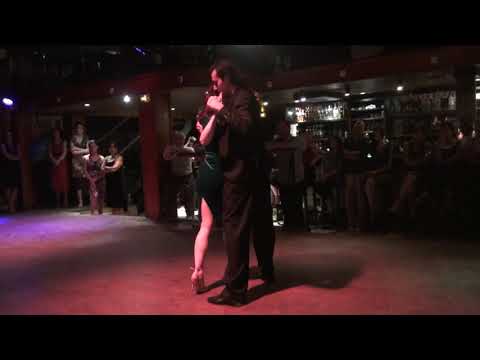
♪ Música · 2:55 ·
Power and emotion.
I guess a tango that many of us don't really know because there are so many good ones. As a DJ it's really tempting just to play the same half dozen 50s Pugliese instrumentals, so let's not do that in the future, let's play more of a variety because there's so many good ones. So time for my last number before La Cumparsita. And it's another Pugliese tango, a tango with Moran singing. And in a way, this is a controversial number. This is Barro. Why do I say controversial? No more controversial than many others. But this is the first time that we hear Pugliese trying to do something a bit different with the tango song. What's the tango song? It's the total integration in the decade of the 40s of the cantor, the orchestra with the orchestra típica, compenetrado. The two totally joined in a harmonious union. And OK, we've got soloists, but the person who does more than any other orchestra to change this really is pretty easy in this time, 51, 52, culminating with Passional and San Jose de Flores, and Moran does it. No one else but Moran could have done this job. The singer destroys this glass box that he's been in and breaks out. And the first time that you begin to hear this happening is in this tango, Barro. You hear the singer, Alberto Moran, with his great power, being given more freedom and he's starting to push against the boundaries that the 40s have created of this formula. Still a tremendous song, one I don't hear at the Milongas but I would really like to hear at the Milongas. So, last tango before La Cumparsita. Barro.
Capítulo · 2:23:33
The singer who broke the glass box
For a decade, tango's singers were locked inside a formula. In 1951, one of them broke out.
“The singer destroys this glass box that he's been in and breaks out.”

Marks the first time Pugliese lets the singer push against the tightly integrated 1940s 'tango song' formula; lyric uses both 'barro' and 'fango' (mud) to describe a ruined life.
Lo bailan · 5 de 109


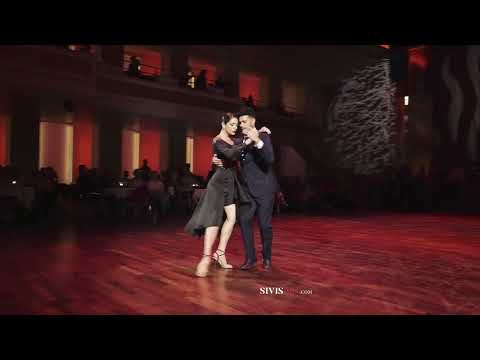
♪ Música · 2:13 · La letra, en la página del tango
Oh, what a voice, Moran. What a voice. There's two words in the tango vocabulary that mean mud. One is barro and the other, even more tango word, and it's in this lyric, is fango, like the tango. Look at the last verse: I drowned my youth in alcohol, why remember if it's better to forget. If my whole life was mud, like a tango from the outskirts.
Now, Mr. Stenvoll, you played three compositas, leaving me with nothing, but I found a really interesting one. People say in the biographies that Astor Piazzolla has dissolved his orchestra. Yeah, he had this orchestra typica from 46 to end of 48, something like that, and then he dissolved this orchestra and he just works as an arranger, right, arranging for Troilo, composing and arranging for very successfully until he goes to Paris in 1954. But it's not true, he still gets an orchestra together for a few recordings. So the 1951 Astor Piazzolla solo La compasita. And, um, Dag, are you feeling like, uh, spinning a few more tunes? I don't know, we'll see after the compasita, people hanging around.
“People say in the biographies that Piazzolla has dissolved his orchestra... but it's not true. He still gets an orchestra together for a few recordings.”
Just before you started, I just wanted to say, because I wrote some comments on orchestras that I didn't play in the original program. And for Piazzolla, I wrote only two tracks, La Compasita and The Fucked Up Walls. Pardon my French there.
Those are the two tracks this year. But I'm looking forward to the Compasita. The warts, as I recall, begins with an oboe solo. It's very strange. Maybe we'll hear it after, which would delight orchestral players, but you're not going to hear it here tonight.
Any other comments on any of the other orchestras from your sensitive list? That was the rudest one, so I want the others are less interesting. Oh, okay. Oh, well, never mind.
Okay, so thank you for joining us. Thank you to our sponsors as ever, but especially to all of you for joining us. And we've been putting on these extra lost after parties in order to offer you a show every week in the cold winter months, but now we're going to be going back to fortnightly once again, um, every two weeks. Every two weeks, we hope you can forgive us, but it really is a lot of work putting the show on every week, and we're running out of years. That's, and we're running out of years.
So through January and February we've offered you a show every week, but now it's going to be fortnightly again, and the year, I believe, is decided, is it not? It is, it is. Are you willing to share that information with us now? Yes, we're going back to the roots, like before, earlier than we've ever been before, and the, the first tango recordings that we can listen to, I mean, get some pressure from the sound, is at least at milongas, is from 26, so there are a few, a few recordings from that year, but too few to make a program, I think. So we decided to make a program from 26 and 27. So that'll be from the, from the very beginning of Tango as we know it as dancers. Quite a contrast to this week.
And we were unsure about it at the beginning of the whole program of Tango by Year. But you responded so positively to the 28 that we feel encouraged to give it a go. And I thought it would be a short program, but then I started preparing this weekend. So there's about 1500 recordings from this year to select from. 300 just from Canaro. And that's a lot of good stuff. It's done like another hundred. Yeah, Canaro's cracking.
So that'll be in two weeks. Wednesday in two weeks. Yeah, we need two weeks to prepare that. So thanks for joining us. It's been so lovely to be with you. Thank you. And listen to music together. Astor Piazzolla, La Composita.

Recorded by a short-lived orchestra Piazzolla pulled together in 1951, between dissolving his own orquesta tipica (1946-48) and working mainly as an arranger until his move to Paris in 1954.
♪ Música · 3:02 · La letra, en la página del tango
How about that for a Compasita? That was a Compasita that had both Piezzolian features and Troilian features. Come in Bergen. All right, yeah. Thank you.
So, yeah, we'll play a little more music for those who want to hang around. And so first, so that you can get a glass of something or go to the bathroom or whatever you need to do, let's play a little Cortina. This is La Valse de l'Amour, The Walls of Love, Edith Piaf.
A non-tango French song used as a cortina (break) between the main broadcast and the extra post-show music.
♪ Música · 2:10 ·
So, yeah, Michael, you played a lot of nice stuff. And between us, we played something like 60, 65 songs, I think, from 1951. And a lot of different orchestras as well. It's quite an diverse year when you really dig around.
It is. And I didn't really prepare for this, but while you were playing, I was looking through the songs I have from this year, and there were a couple of songs I thought would be nice to hear also. And the first one I would play is from an orchestra we didn't hear tonight, Miguel Calo. And he has a really nice instrumental recording from this year, I think. It's called Una Ficha, Glorias de Agere.
Predates the better-known 1958 Di Sarli recording; 'ficha' is horse-racing slang for a sure winner. An old tango first recorded by Juan Maglio in 1912.
♪ Música · 2:29 ·
Sweet. Yeah, sweet, isn't it? Sweet. Not everyone will know that because the one we know is the 1958 Di Sarli recording, which has got a little bit more drama and whoosh to it. So this one predates it a bit.
Una ficha. Ficha means fixed. It means a sure winner. When you give someone a tip for the horse races, you say, oh, try this horse for the three o'clock race. Es una ficha. It's a sure fire winner. So it's a tango about gambling again.
Yes, it's another tango about gambling, about horse racing, and it's in fact an extremely old tango. Juan Maglio recorded in 1912. Wow. Yeah, we'll listen to that in Tango 1912. Yeah, I look forward to that program. Yeah, all right, you can leave that one. Yeah, yeah.
Um, let's hear one more Di Sarli song because, I mean, I think Di Sarli is maybe the, for me it's the best orchestra of this year, so there's so much good stuff and we listen to five or six all together. But this one I want to play, it's, uh, Germaine, which is a beautiful tango that we also know from the 40s from the Sally, right, and also from the late 50s. But I have to agree this 51 recording is really strong, certainly the one I'd pick. And there's something with the arrangement, isn't there, that it's a bit unusual, that it's not, uh, four lines but it's five or something. I think you write about this in the Di Sarli book. I think it's another tango that we're talking about, oh, maybe I'm mixing it up. It's another one which has an unusual structure. All right, so let's listen to this with a very usual structure, Germaine, Carlos Di Sarli.

Unusual phrase structure: phrases end on the second beat rather than the fourth or first, producing a simultaneous very low and very high note; attributed to Biagi's influence.
♪ Música · 2:30 ·
That was even better than I remember. Even better than I remember as well. So first of all there's that, there's this delicate passage, and then the piano comes like a cascade of water that's suddenly being released. But there is something unusual about the structure of the piece, and it's about the phrases. They all end on the second beat. Now, phrases end in two places normally: the fourth beat or the first beat of the next bar.
So One One Two Three Four One But they don't do that. It goes One Two Like that. You get this extra note on the two.
He hits a really, really low note and at the same time a really, really high note, which you could hear on those transfers. So it's a really bizarre place to end the phrase. If you just chopped off that last note every time, it would sound more logical, but of course it's genius. So this is how he's been listening to Biagi and he's playing, he's been listening to Biagi, yeah.
All right, another song that this early recorded this year is La Morocha, but I'm not going to play that one. I'm still going to play another version of La Morocha, a version by Mercedes Simone. And this is a bit funny because it's a longer version of this tango. And we didn't listen to any women singers tonight, did we? We didn't. I nearly played something by Nelly Omar, but it didn't make my playlist.
Yeah. Well, let's hear this a bit unusual version of La Morocha. Do you want to say something? Yes, I do. So don't forget, La Morocha was written in 1905 and four beats to the bar tango begins in 1912, 1913, and then it's standard by 1917. So in 1905, when this was written, the sort of milonga, slow milonga, stroke habanera kind of rhythm was the standard rhythm. So it's more back to the roots, actually. Exactly. Let's hear it. La Morocha, Mercedes Simone. She's backed by a band called Emilio Brameri.
Written in 1905, before four-beat tango became standard (1912-1917); still carries the older slow milonga/habanera rhythm of its era.
♪ Música · 1:53 · La letra, en la página del tango
Michael, do you agree that Mercedes Simone is probably the best woman singer of tango ever? When I'm listening to her, yes, but when I'm listening to Nelly Omar, to Nelly Omar, when I'm listening to adfalcon, it's adfalcon. Okay, and speaking, speaking of Nelly Omar, you said you wanted, you were considering playing once, I'm curious if it's this one, El Mismo Dolor. It's a waltz where she's backed by, uh, Roberto grella on guitar. Yeah, she's working with grella, who's top guitarist as a solo performer and also leading a backing group.
And she's been solo singing since she was with a few numbers with Canaro in the late 40s. Yeah, and it's not easy to get recorded as a soloist by this time because there's a few soloists who are doing very, very well, like Castillo. They're firmly established as artists, but the labels are no longer signing them. When you look at the output of people like Mercedes Simone, even people like Ignacio Corsini and Charlo, their time is gone really if we compare what they're doing to the very modern music that what characterizes 1951 as a year. There's this modern wave that we've heard a lot of and then there's like a return to the 30s, a return to the D'Arienzo, a return to Tango's glory days. And the soloists don't fit into either of those categories.
“When you look at the output of people like Mercedes Simone, even people like Ignacio Corsini and Charlo, their time is gone really compared to the very modern music that characterizes 1951.”
So the era of the soloists has kind of drawn to a close and the solo recordings are exceptions. Yeah. Well, let's hear this exception, El Mismo Dolor, with Nelly Omar singing and with the fantastic guitar player, Roberta Gurella, backing her.

Backed on guitar by Roberto Grela; an exception, since by 1951 labels had largely stopped signing new solo singers.
♪ Música · 2:20 · La letra, en la página del tango
Yeah, someone said there's probably a second guitar here, or Grella has a lot of fingers. Yes, thank you for your comment, Paul. How many fingers has that man got? Still very impressive accompaniment. She has a good voice too. Her voice deserves such an accompaniment. She's not lost anything.
So let's hear another orchestra that we didn't listen to tonight. Jose Basso. Troilo's piano player from, was it 43 to 47, 49, now has his own orchestra. They all do.
Yeah, they all do, and the singer here is Jorge Duran, who sang for the Sarli, so it's this kind of interesting mix of Troilo and the Sarli as reference, but the sound is more, I think I associate more with Troilo. The sound, it's more, it's a bit darker than the Sarli sound. Yeah, it's a Troilian sound but not as complex. True. So was he successful, Basso, at this point?
He was, yes, he was successful and he was well aware of how important it was to have good singers. So he made sure that he paid his singers very well and kept getting them in. There are recordings of Basso with Fiorentino and also with Florello Ruiz. So he paid a lot of attention to that.
Capítulo · 2:55:59
The bandleader who paid his way out of obscurity
He led only a second-tier orchestra, so he spent on the one thing that mattered.
Helps to have money if you are a second tier orchestra. Well, if you think about it, in the 40s the singer kind of had a bit of a short straw because he was just one guy, and the singers generally you had a different formation as a singer than you did as an instrumentalist, so you probably weren't composing lots of the band's material. I mean, I can't think of a single singer who also had a reputation as a big composer. Some of them composed one or two pieces, but that meant you didn't earn royalties. If you were a composer working in a band, the band records your number, you get royalties. So the singers didn't get royalties, and the Pugliese orchestra, which was a cooperative which worked as a meritocracy, there was a point system. You got points for arranging, points for composing, points for loyalty. The singers earned very poorly in that setup.
So the song I want to play is Tomo y Obligo, which is a song we will know probably from D'Agostino's recording from, I think it's maybe 43 or around there. An old Gardel number as well. Really nice, is it? Yeah, yeah, I like this one. Tomo, I drink, I drink and I forget. No, I think what's you mean, uh, you need to know the rest of the lyric. I'll post it. All right, good. Let's hear it, Jose Basso with Jorge Duran singing.

An old Gardel-era number; Basso, Troilo's former pianist, was known for paying his singers well. Contradictory macho lyric: the singer insists a man shouldn't cry while clearly weeping.
♪ Música · 2:18 · La letra, en la página del tango
What drama. One of these contradictory lyrics, isn't it? On the one hand, tango lyrics are so macho, but at the same time, there's a second layer which totally contradicts it. But there he is crying into his beer, we say in English, singing, I know that a macho man shouldn't cry. But he's clearly weeping. He drags this complete stranger up the bar and says, come and have a drink, because I need to pour all my sorrow into your chest. I want a drink and I want your company. Yeah. Cheers, people. Cheers, everyone.
So let's stick in the Troilo version for a little bit and play one more Troilo song, an instrumental called Bien Milonga. And I think in Tango 51 in April, we played the Pugliese version of this one. Yeah, which is really strong and intense. Which is fantastic, yeah. So this is a bit different, but I like this one also, although it's different. Yeah, let's just, let's hear it and we can talk about it after, maybe. Yes.

Composed by Ismael Spitalnik, a trained industrial chemist who treated music as a side activity; more danceable than Piazzolla's arrangements for Troilo from the same period.
Lo bailan

♪ Música · 3:00 ·
It's more forceful than we're accustomed to expect from Troilo, isn't it? I just quickly looked and the composer of that piece is Spitalnik, Ismael Spitalnik. Now, can you believe it? He was trying not to be a full-time musician because he was also a fully trained industrial chemist. And this time he's just doing music on the side, and he works also as a freelance arranger. So we can be pretty sure, I haven't checked, but we can be pretty sure that he also did the arrangement for Troilo, because it's more accessible arrangement than Piazzolla's, it's more danceable, I think. Yeah, Spitalnik's arrangements are very rich arrangements but more organised around the requirements of the dancer than Piazzolla's.
Capítulo · 3:05:10
The chemist who moonlighted as a tango composer
His day job was breaking down chemicals. At night, he wrote one of Troilo's best milongas.
Yeah, okay. This is a track we also know from Pugliese. Let's hear one final Pugliese track. This is also an instrumental that's called El Refran, and I really like this one. And the thing I like particularly is from about around two minutes, this is beautiful dialogue between Camerano on violin and Ruggiero on the bandoneon. Yeah, of course, we heard the Lucho Demare version a bit earlier on, so this will be very interesting to compare. Yeah, this is exactly, yeah. So that was a different one. Yeah, this is more powerful, I guess, than my version. Yeah. All right, El Refran, Pugliese instrumental.

A second rendition played to compare with Lucho Demare's earlier version; features a roughly two-minute dialogue between violinist Enrique Camerano and bandoneonist Ruggiero.
Lo bailan

♪ Música · 2:28 ·
Exquisite. I love that dialogue towards the end. Fantastic. It's very special, and it's kind of presaged by soft passages earlier on, which had taken a solo. So, yeah, thanks for drawing our attention to that. And in an unexpected, introverted way, the whole piece is building towards that dialogue. Very nice.
So, it's late. Let's finish off and let's go out with one of the big hits of this year that we didn't play. Are there any big hits left? Yeah, there is a big hit left, at least for those of us frequent marathons where DJs like to mix tandas. This is Domingo Federico's big hit of this year, Cualquier Cosa. Yeah, that was one of those, and there's quite a few versions of Cualquier Cosa.
There is, yeah. This is one of the songs that, you know, I was forced to cull, so actually I'm really quite glad that you play this, because we get this unique vocal performance from Valentino, isn't it? And so Valentino, yeah, yes, who sounds a bit like Cassini, someone pointed out earlier in the program. Yeah, especially when he hits that high note. Yeah, and it's very danceable. It's nice to finish off 1951, because it's been a year of contrast with a lot of different things. Not everything so danceable, but this is something that I think most of us would enjoy to dance to.
So with that, yes, let's say again thank you to everyone for attending. We're still almost 90 people here, so that's nice, and I'll see you in two weeks in a much earlier period, in 26, 27, I think. That'll be nice in a different way. I look forward to it. Thanks for your music. Yeah, and take care, everyone, in these difficult times for these two weeks. We'll be dancing again soon, so just keep going. And thanks, Michael, again for all your selection and all your comments and everything as usual. Pleasure. Cualquier Cosa, Domingo Federico with Enzo Valentino singing.

The night's closing number, one of 1951's big hits; a listener noted Valentino sounds like Charlo, especially on a high note. Chosen as a danceable finish after a varied, less-danceable night.
Lo bailan · 5 de 20


♪ Música · 5:07 ·
Tango By Year es de Dag Stenvoll y Michael Lavocah, publicado aquí con su permiso. El audio se reproduce desde SoundCloud.