Tango 1946
Dag Stenvoll and Michael Lavocah · 14 Oct 2020 · 3:24:26
1946 is a diverse year, hard to sum up in one line: Di Sarli sounds much as he did the year before, Troilo keeps developing his own individual line, and Pugliese finally records La Yumba after preparing it for three years or more, a turning point for his orchestra. D'Arienzo grows lighter and more sophisticated, with the growing influence of arrangers Varela and Salamanca. Several bandleaders who split from Miguel Caló at the end of 1944 but missed 1945 make their recording debuts this year: Osmar Maderna, Francini-Pontier, and Astor Piazzolla's short-lived, dance-unfriendly 'Típica.' The show also marks a landmark reissue: a two-year Belgian restoration project (Tango Time Travel) puts out the complete 1940s D'Arienzo discography, 230 tracks, in far better sound than anything available before, especially the hard-to-find 1946 Armando Laborde sides. The post-war setting (the episode opens on Édith Piaf's 'La Vie en Rose') frames a year when, as Michael Lavocah puts it, tango starts going in many directions at once.
0% heard
3:24:26 left
Up next, as released
Tango 1954Episode 21 · 28 Oct 2020 · 3:35:42What this episode gave Tangopedia
Facts said in the episode, each now cited to the minute it is said.
Pugliese finally recorded La Yumba in 1946 after preparing the piece for three years or more; it marks a turning point for the orchestra.
Francini-Pontier and Osmar Maderna both split from Miguel Caló's orchestra at the end of 1944 but missed recording in 1945, so 1946 is their debut year.
In 1946, having separated from singer Francisco Fiorentino, Piazzolla launched his own 'Típica,' an unusual band not organised around dancing.
Alberto Durán was Di Sarli's only singer in 1946; Michael guesses Di Sarli simply hadn't found a second singer he liked, or vice versa.
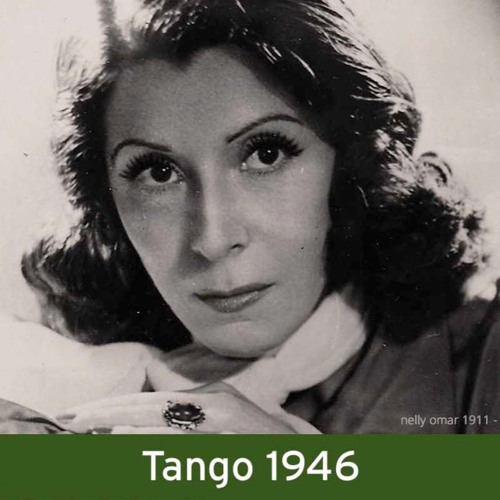
Nelly Omar made only about ten recordings with a tipica orchestra in her whole career, all with Canaro between 1946 and 1948.
Now playing
La Vie en RoseÉdith PiafCold-open contrast: a post-war Paris chanson before the show turns to 1946 tango.
Only in the episode
♪ Music · 0:50 ·

Opener chosen partly for the hosts' shared memory of the Remolino Tango Festival in Ukraine.
♪ Music · 3:43 ·

Compared to Pedro Laurenz's earlier version; Podestá holds one note for an unusually long time.

A lament of existential despair, handled very differently to Alfredo De Angelis's more joyful version of the same song.
♪ Music · 3:42 ·
Watch it danced · 5
One of several Di Sarli instrumental versions of this piece; this 1946 take is rarely heard, with a clear countermelody.
Only in the episode
A rare Di Sarli waltz; the hosts praise its dark, swinging phrasing and Durán's tasteful rubato within Di Sarli's tight limits.
Only in the episode
♪ Music · 2:28 ·
Chapter · 31:45
The ten recordings that made Nelly Omar immortal
She got ten songs with a tipica orchestra in her whole career. She made every one count.

Omar's alto voice opens the song almost like a tango-canción before the dance tango proper begins; one of only about ten tipica recordings of her career.
♪ Music · 3:17 ·
Compared to Di Sarli's favourite version and the earlier Carlos Gardel recording; Omar's alto is called magnificent for this waltz.
Only in the episode

Praised for the bandoneón's very slow, stretched-out notes behind the singer's voice.
♪ Music · 3:49 ·

Discussed as a sign of the times: more space given to the singer's voice than early Biagi.
Watch it danced · 1

Called 'a killer' by both hosts; Ruiz brings a smoother, rounder voice than labelmate Marino.
Watch it danced · 5

One of the songs of the year, recorded several times; compared to Pugliese's more dramatic version, but Troilo's is also superb.
The lyrics, on the song's page
Watch it danced · 61

A De Angelis waltz the hosts call genuinely good, despite their reservations about the orchestra overall.
♪ Music · 3:21 ·
Watch it danced · 383
Chapter · 1:02:56
The soloist who broke tango's rules
Before Alberto Castillo, singers needed an orchestra to be famous.

Castillo, tango's first truly successful solo singer, backed by Enrique Alessio's orchestra.
Only in the episode
♪ Music · 2:02 ·
Chapter · 1:05:53
The reissue that rewrote D'Arienzo's 1940s
A 230-track reissue landed the same week as this show.

First track showcased from the new Tango Time Travel reissue; praised for how Laborde stretches the vowels.
♪ Music · 2:37 ·
A rare D'Arienzo duet; the hosts note duets were uncommon for the orchestra, and remark on how well the two different voices combine.
Only in the episode

An old standard from the mid-1930s given the Héctor Varela arranging treatment, including a new bass line not in the original.
♪ Music · 3:42 ·

A classic paired with Sábado Inglés to close out this stretch of the D'Arienzo reissue.
♪ Music · 0:47 · The lyrics, on the song's page
Watch it danced · 43

A waltz duet from the new reissue, paired with the milonga La Espuela to close the D'Arienzo set.
♪ Music · 3:14 ·
Watch it danced · 14

Called 'the killer instrumental milonga'; many D'Arienzo milongas carry the feel of a galloping horse, like this one.
Watch it danced · 342
Recorded in Cuba with Demare's trio while on tour; the title refers to eleven o'clock mass, with church bells played on piano.
Only in the episode
♪ Music · 2:19 ·
Also recorded in Cuba; Michael notes it is known from a 1942 version with Miranda singing.
Only in the episode
Chapter · 1:43:01
Pugliese waited three years to record this
La Yumba almost didn't happen in 1946 either.

The defining recording of the year; Michael reads from his own book to describe its historic significance.
♪ Music · 2:30 ·
Watch it danced · 1
Chapter · 1:47:39
Why Troilo could never record La Yumba
Some tangos belong to everyone. This one belongs to one man.
Chapter · 1:49:03
Banned from the stage: why Pugliese's singer quit
The government tried to erase an entire orchestra.

Chanel's nasal street voice described as having class; one of his songs with Pugliese before he later quit the orchestra.
♪ Music · 2:12 · The lyrics, on the song's page
Watch it danced · 13

Noted for its 'drop' — a quiet opening before the piano's left hand kicks the whole arrangement into gear.
♪ Music · 2:44 ·
Watch it danced · 55

A more lyrical Pugliese-Morán composition, paired with Demasiado Tarde as two important songs of the year.
♪ Music · 2:41 ·
Watch it danced · 166

The last year Vargas recorded with D'Agostino; chosen partly to showcase D'Agostino's crystalline piano introduction.
♪ Music · 2:30 · The lyrics, on the song's page
Watch it danced · 1
A Cuban interval pick (not tango) for the drinks break, chosen over Louis Jordan; praised for the tres playing.
Only in the episode
♪ Music · 2:16 ·
Second Arsenio Rodríguez interval track; pianist Lilia Martínez is called the equal of Rubén González.
Only in the episode
Named for nicknames of Carlos Gardel ('El Morocho') and José Razzano ('El Oriental', from Uruguay).
Only in the episode
♪ Music · 2:38 ·
Introduced only as 'some Ignacio Corsini'; no specific title was announced before playback.
Only in the episode
An instrumental from Piazzolla's short-lived 1946 Típica; Michael says the instrumentals age better than the more cluttered vocal numbers.
Only in the episode
♪ Music · 1:40 · The lyrics, on the song's page
Chapter · 2:24:31
The orchestra where the piano sings
In this orchestra, the piano is the voice.

Maderna's tango-orchestra arrangement of Rimsky-Korsakov's Flight of the Bumblebee, with the piano carrying the melody.
Only in the episode
♪ Music · 1:59 ·
D'Arienzo recorded La Loca three times (1942, 1946, 1955); this 1946 version is more spacious and restrained than the famous 1955 take.
Only in the episode
♪ Music · 2:30 ·

Tanturi's singers changed during the year, from Enrique Campos to Ribó and Roberto Videla; this is Ribó's turn.
♪ Music · 2:26 ·

The second Tanturi singer featured, after Ribó.
♪ Music · 2:23 ·
Watch it danced · 2
Chapter · 2:38:05
Drink Di Sarli: tango's most reliable brand
You can never go wrong with Di Sarli - it's practically an advertising slogan.

A later, less-played Di Sarli instrumental; praised for the left-hand piano and closing pizzicato.
♪ Music · 5:00 ·

Introduced as one everybody already knows, opening a run of several Di Sarli-Durán tracks.
♪ Music · 2:52 ·

Called a neglected masterpiece that doesn't get played at milongas nearly often enough.
♪ Music · 2:27 ·

Called the most essential Di Sarli-Durán track, with an amazingly strong arrastre comparable to Pugliese's attack on the beat.
♪ Music · 2:29 ·
Watch it danced · 39

A lighter Canaro waltz played before the closing run of Pugliese and Troilo; the hosts admit the transfer quality isn't great.
♪ Music · 2:45 ·

Unusual for having Morán sing from the very first few seconds, with an unusually delicate opening for him.
♪ Music · 1:58 ·
Watch it danced · 1
A rare duet described only as being about watching the rain; no title was stated before playback.
Only in the episode
♪ Music · 2:05 ·

Chosen by Michael as the most lyrical Pugliese piece of 1946, the deliberate opposite of La Yumba.
♪ Music · 1:32 · The lyrics, on the song's page
Watch it danced · 129

Billed as 'one more power number' to pair with the softer Tarde Gris.
♪ Music · 3:06 · The lyrics, on the song's page
Watch it danced · 167

A soft, subtle, lesser-known autumnal tango, 'heartbreakingly beautiful and not played enough.'
♪ Music · 2:06 · The lyrics, on the song's page
Watch it danced · 3
A closing classical surprise: Debussy's piano piece performed by Josef Hofmann, a Polish-American former child prodigy.
Only in the episode
♪ Music · 5:30 ·
Follow through every episode
Tango By Year is Dag Stenvoll and Michael Lavocah's, published here with their permission. The audio plays from SoundCloud.