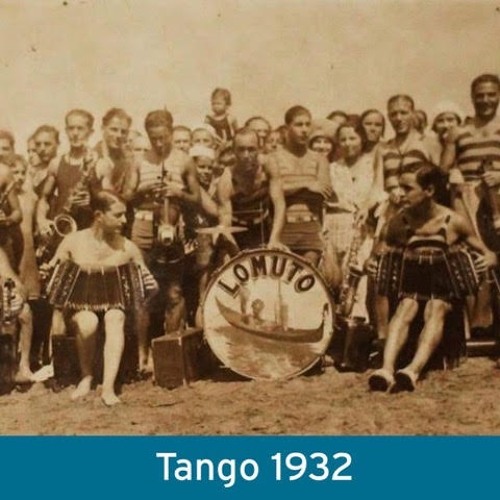
Tango 1932
Dag Stenvoll and Michael Lavocah · 17 Jun 2020 · 3:17:02
1932 is framed as a post-Depression year in name only: record labels are folding, orchestras are losing contracts, and output is falling, even as some bandleaders push past it, Fresedo deliberately turns upbeat again, and Canaro finds new money writing hit songs for a stage revue. It is notably a year of women singers and tango canción, including Mercedes Simone's own song blaming talking pictures for killing tango's fashion, and the accidental invention of the "city" milonga with Milonga Sentimental, a song its own commissioner rejected. Carlos Di Sarli, having lost his Victor contract, works anonymously backing a singer on Brunswick; a teenage Troilo sits as fourth bandoneón in a minor band; and Miguel Caló makes his first-ever recording, still following Julio De Caro's complex style rather than the simplified sound that later made him famous. Fresedo and De Caro, shut out of the cinemas by talking pictures, respond by expanding their bands with outside arrangers and coining the term "symphonic tango."
0% heard
3:17:02 left
Up next, as released
Tango 1950Episode 12 · 1 Jul 2020 · 3:47:48What this episode gave Tangopedia
Facts said in the episode, each now cited to the minute it is said.
1931 was the year the Depression really hit Argentina's tango business, with orchestras losing contracts and record companies going bust; by 1932 everyone hopes it's over, but it isn't, and Pugliese recalled unemployed musicians watching De Caro leave a gig in his top hat with envy.
First recorded as an instrumental by Firpo around 1922 under a different, weaker title, it flopped and was forgotten until Pedro Maffia revived it around 1929; only after that success did Luis Rubinstein write a lyric, a common way to monetize an already-successful instrumental through singers.
The Brunswick label withdrew entirely from the market in July 1932 and had effectively wound up by May; its house orchestra made about 50 recordings between 1930 and 1932 but only five in 1932.
Canaro's 1932 output collapsed to about 100 tangos and waltzes plus one milonga, down from roughly 300 recordings the previous year.
Facing the Depression, Odeon cut 50 cents off most record prices (previously 3.50 pesos, 3.75 for Gardel) and simplified its magazine advertising typography to save on agency fees.
Chapter · 4:44
The tango that blamed the movies
In 1932, a tango singer wrote a song accusing Hollywood of killing tango.
A song Lavocah had never come across before: its lyric blames talking pictures for making tango unfashionable, replaced by foxtrot and English words like yes, no and goodbye.
Only in the episode
♪ Music · 2:50 ·
The full sung version, with an unusual mid-song recitation, of a tune first recorded as an instrumental by Firpo around 1922 and revived by Pedro Maffia in the late 1920s.
Only in the episode
The Brunswick house orchestra, led from the piano by Juan Polito, in one of only five recordings it made in 1932 before the label folded.
Only in the episode
♪ Music · 3:52 ·

The Victor house orchestra's waltz, played to compare its more crowded, less characterful sound with Brunswick's.
Chapter · 24:00
900 nights of a stage-show hit
A love song written for a Buenos Aires musical ran for 900 nights and changed a bandleader's sound.
A hit from Canaro's stage show La Muchachada del Centro, sung in the show by Ernesto Famá but recorded for the label by Ada Falcón, said to dramatize their real-life romance.
Only in the episode
♪ Music · 4:58 ·
Another number from the same stage show, noted for its offbeat, playful rhythm and a hard new beat that replaces the earlier tenderness of Canaro and Charlo; the lyric turns out to reference the Depression directly.
Only in the episode
Chapter · 35:46
Seventeen years old, fourth chair
Before he was a legend, Troilo was the fourth bandoneon in a band nobody remembers.
An instrumental later known from D'Arienzo and Biagi, played here tender and introverted by a trio with guitars; Troilo was the band's fourth bandoneón at the time, though not necessarily on this take.
Only in the episode
♪ Music · 3:51 ·

One of four waltzes this band recorded in 1932, played by the same musicians as Típica Victor but reshaped by Siriaco Ortiz's own, sweeter direction.
Watch it danced · 5
Chapter · 44:36
The jazz man who built a tango orchestra
Victor handed its tango orchestra to a man who had never played tango.
An instrumental known from many other orchestras' versions, played by the band Carabelli organized for Victor though he soon stopped conducting it himself.
Only in the episode
♪ Music · 3:55 · The lyrics, on the song's page
A vocal number notable for the violinist Elvino Vardaro's unmistakable fast vibrato.
Only in the episode
Chapter · 54:16
The milonga its own commissioner turned down
The song that invented the city milonga was rejected by the singer who asked for it.
One of three 1932 recordings of this milonga, chosen as the fastest and most danceable; its history as a rejected commission later turned hit is the real story.
Only in the episode
♪ Music · 2:05 · The lyrics, on the song's page
Chapter · 1:00:14
Tango on the free beach
During Argentina's worst economic crisis, an orchestra played where nobody had to pay.

A song about the real, still-central barrio of San Telmo, sung by a singer who freelanced for the Odeon label rather than belonging to Lomuto's band.
Watch it danced · 2
Sung by a genuine Lomuto band member, who stayed with the orchestra through the 1930s alongside Jorge Omar.
Only in the episode
Recorded in Barcelona by a Buenos Aires-born singer who lived and recorded in Spain from 1927; a tango canción, not for dancing.
Only in the episode

The one 1932 Firpo track chosen, prized for the jazzy piano touches underneath a still-strong walking beat, and for its clear influence on Di Sarli.
♪ Music · 2:30 ·

One of only four recordings Maglio made in 1932, likely because of failing health; he died in 1934.
♪ Music · 2:06 ·
Watch it danced · 1
An instrumental waltz with a long introduction, of the kind later covered and often trimmed by D'Arienzo and others.
Only in the episode
A Discepolo lyric said to be based on a friend of his caught with a gun after a disastrous affair; backed by guitars.
Only in the episode
♪ Music · 1:41 ·

An instrumental built on the melody of Happy Days Are Here Again, from a cinema stage show where Fresedo deliberately played upbeat to signal the Depression was over for him.
♪ Music · 0:02 ·
A vocal number kept with some of 1931's sad flavour, in contrast to the upbeat El Espiante played just before it.
Only in the episode
A stripped-down piano-and-voice duo version of a song already heard in the series, obtained as a personal favour from a database runner so it could be a surprise.
Only in the episode
♪ Music · 2:28 · The lyrics, on the song's page
Chapter · 1:53:53
The pianist with no name
One of tango's biggest bandleaders spent part of 1932 playing anonymously.
A guessing game: the uncredited backing band, recorded while Di Sarli had no Victor contract, is revealed by its piano style to be his own.
Only in the episode
♪ Music · 1:45 ·

An extremely sad instrumental from a composer who, despite sounding European to Stenvoll, lived his whole life in La Boca.
♪ Music · 3:01 ·
A genuinely French tango-world recording, sung in French, played as the joyful counterpart to the French-sounding but actually Argentine Filiberto track.
Only in the episode
♪ Music · 2:11 ·
Chapter · 2:08:06
The bandleader who refused the curtain
Every orchestra played behind a curtain for the Rothschilds. Except one.

An older, much slower and heavier Brunswick-era recording, played to contrast with the new energy of El Huracan.
♪ Music · 3:34 ·
Donato's first Victor recording after Brunswick folded, marking a real leap in speed and energy though, Lavocah insists, not D'Arienzo's heavy beat.
Only in the episode
A tango with guitars, also recorded by Pugliese around 1950, from a singer not usually associated with tango.
Only in the episode
♪ Music · 2:18 ·
A waltz with guitars, paired with Hácelo por la vieja from the same singer.
Only in the episode
A third, unplanned track added on the spot, also known from other orchestras.
Only in the episode
The closing composite: of four 1932 recordings of the song, this canción version was chosen as the most interesting.
Only in the episode
♪ Music · 2:59 · The lyrics, on the song's page
An afterparty guessing game: an English band's 1932 recording whose riff, the chat claims, was later reused by John Williams in The Empire Strikes Back.
Only in the episode
♪ Music · 2:27 ·

A Firpo composition, played in the afterparty, that became hugely influential on Carlos Di Sarli's own later version.
♪ Music · 3:00 ·

Caló's first-ever recording, still firmly following Julio De Caro's complex style rather than the simplified sound he became known for in the 1940s.
♪ Music · 2:27 ·

A tango about being slaves to the milonga's rhythm, later also recorded by D'Arienzo in 1940.
♪ Music · 4:43 ·
An instrumental Sinfónica version of the same song heard sung by Libertad Lamarck earlier, with a violin solo instantly recognisable as Pischotto (Octavio Scaglione).
Only in the episode
♪ Music · 3:00 · The lyrics, on the song's page

A five-minute duet from La Muchachada del Centro, played out of free tempo with pauses, impossible to use at a milonga.
Only in the episode
♪ Music · 4:45 ·
One of four Canaro waltzes closing the show.
Only in the episode
♪ Music · 4:52 ·
A further Canaro waltz in the closing run, with pampa-themed lyrics.
Only in the episode
The last waltz of the night, introduced as such but with its title not clearly caught.
Only in the episode
♪ Music · 3:37 ·
Follow through every episode
Tango By Year is Dag Stenvoll and Michael Lavocah's, published here with their permission. The audio plays from SoundCloud.