Song
Quejas de bandoneón
Quejas de bandoneón is an instrumental tango composed by Juan de Dios Filiberto in 1918 that premiered under Augusto Berto and was self-published in 1920.[1][2] The 1944 recording by Aníbal Troilo, arranged by Astor Piazzolla, established it as a classic of the repertoire.[3][4]
1927: 3, 2; 1928: 1, 0; 1940: 1, 0; 1941: 1, 8; 1944: 1, 3; 1947: 1, 14; 1952: 3, 0; 1953: 2, 4; 1958: 1, 90; 1961: 1, 0; 1963: 1, 0; 1968: 1, 1; 1970: 2, 0; 1973: 1, 0; 1977: 1, 1; 1998: 1, 209; 2005: 1, 1; 2015: 1, 27
Orquesta Forever Tango’s 1998 version holds 58% of its dancing (209 of 360).
How we know
Of the dances to its 24 recordings in our catalogue. Dances count filmed Occasions on TangoTube.
Aníbal Troilo recorded it in 1944, 1952 and 1958. One other orchestra recorded it more than once.
How we know
Takes in our catalogue by the same orchestra in different years; the canon’s first orchestra is named.
Juan de Dios Filiberto composed Quejas de bandoneón in 1918 while studying at the Conservatorio Williams in Buenos Aires.[1] In the same year he wrote La vuelta de Rocha and introduced a technical novelty: the use of bass notes in the trio section, placing the melody in the piano’s left hand.[1][5] He entered both pieces, together with Brasil, in a tango contest sponsored by the Asistencia Pública; Alberto Williams sat on the jury. Filiberto later recalled that his optimism was disappointed when Athos Palma received the prize.[1][6]
One afternoon he met Augusto Berto on the street. Berto was then appearing at the cabaret L’Abbaye on Esmeralda between Lavalle and Tucumán with a quartet that included Peregrino Paulos on violin, Luis Teisseire on flute, José Sassone on piano, and Berto himself on bandoneón.[1][7] Berto asked for new tangos; Filiberto supplied the still-manuscript score of Quejas de bandoneón. The premiere received loud applause, yet no commercial publisher accepted the work.[1] Only a year and a half later, in 1920, Filiberto published it at his own expense.[1][8] An undated sheet-music copy preserved by researchers, lacking any publisher imprint, contains an otherwise unknown lyric signed only “Russo” that begins “Vaga la dulce ilusión / como un recuerdo que flota / y se pierde entre la nota del sonoro bandoneón.” Filiberto consistently refused to authorize any sung text for the piece.[1][9]
Early recordings appeared in the late 1920s: Juan Maglio “Pacho” on 27 February 1927, Julio De Caro on 9 March 1927, and Francisco Canaro on 16 April 1927, among others.[10] The work waited until the mid-1940s for definitive consecration. On 27 September 1944 Aníbal Troilo recorded it for RCA Victor with an arrangement by Astor Piazzolla; this version is widely regarded as the one that fixed the tango among the classics.[3][4][11] Troilo re-recorded it in 1952 (TK) and on 16 December 1958 (Odeon). Other notable versions include Rodolfo Biagi (7 October 1941, Odeon), Carlos Di Sarli (1952–53, Music Hall), Pedro Laurenz (25 June 1952, Pampa), and Osvaldo Pugliese (14 June 1977, Odeon).[4][12]
The piece is valued for its sustained melodic line and the expressive possibilities it offers the bandoneón. Filiberto’s early use of left-hand melody in the piano trio already pointed toward greater instrumental independence within the typical orchestra. Later arrangers, especially Piazzolla for Troilo, exploited the work’s harmonic space and dynamic contrasts while preserving its essential character.[3] Although Filiberto produced many more famous songs with lyrics (Caminito, Malevaje, El pañuelito), Quejas de bandoneón remains one of his most frequently performed instrumentals and a reference point for bandoneonists.[13]
Its place in the repertoire illustrates the gradual professionalization of the bandoneón and the shift from café and cabaret premieres to studio recordings that defined the Golden Age. The 1944 Troilo–Piazzolla collaboration in particular demonstrates how a 1918 composition could be reimagined within the richer orchestral palette of the 1940s without losing its identity.[3][11]
Composition, contest and premiere
Filiberto wrote the tango in 1918 and entered it in the Asistencia Pública contest, where it did not win.[1] Augusto Berto’s quartet premiered it at L’Abbaye after a chance street meeting; the audience responded with strong applause.[1][7]
Self-publication and early recordings
Unable to find a publisher, Filiberto issued the work himself in 1920.[1] An early sheet-music copy contains an unauthorized lyric by “Russo.” Recordings by Maglio, De Caro and Canaro appeared in 1927.[10]
Troilo–Piazzolla consecration
The 27 September 1944 RCA Victor recording by Aníbal Troilo, arranged by Astor Piazzolla, is the version that established the tango as a standard.[3][4] Subsequent Troilo takes in 1952 and 1958 and versions by Biagi, Di Sarli, Laurenz and Pugliese confirmed its place in the orchestral repertoire.[4]
References
- 1.Quejas de bandoneón - La historia · todotango.com“En 1918 compuse “La vuelta de Rocha” y “Quejas de bandoneón””
- 2.Quejas de bandoneón · es.wikipedia.org“compuesto por Juan de Dios Filiberto en 1918”
- 3.Quejas de bandoneón · todotango.com“Only a year and a half later, in 1920, I managed to publish it”
- 4.Quejas de bandoneón · es.wikipedia.org“Aníbal Troilo con su orquesta, 27 de septiembre de 1944”
- 5.Quejas de bandoneón · todotango.com“introduje la innovación del empleo de bajos en el trío”
- 6.Quejas de bandoneón · todotango.com
- 7.Quejas de bandoneón · todotango.com“cabaret L'Abbaye”
- 8.Quejas de bandoneón · es.wikipedia.org“pudo hacerlo, por su cuenta, en 1920”
- 9.Quejas de bandoneón · todotango.com“Vaga la dulce ilusión”
- 10.QUEJAS DE BANDONEON · tango.info
- 11.Quejas de bandoneón · es.wikipedia.org“con un arreglo realizado por Astor Piazzolla”
- 12.Quejas de bandoneón · todotango.com
- 13.Biografía de Juan de Dios Filiberto · todotango.com
Credit
Source: TangoCloud catalogue
Every recording
24 recordings · our catalogue, dances filmed on TangoTube · 23 more we know of
Choose A and B on two recordings to hear them one after the other.
- Juan D'ArienzoInstrumental · RCA Victor · Sep 2Not danced on film yet1963
- Carlos Di SarliInstrumental · Music Hall · Oct 304 dances1953
- Aníbal TroiloInstrumental · RCA Victor · Sep 273 dances1944
- Aníbal TroiloInstrumental · TKNot danced on film yet1952
- Aníbal TroiloInstrumental · Odeon · Dec 1690 dances1958
- Osvaldo PuglieseInstrumental · Odeon · Jun 141 dance1977
- Pedro LaurenzInstrumental · Pampa · Jun 25Not danced on film yet1952
- Rodolfo BiagiInstrumental · Odeon · Oct 78 dances1941
- Francisco CanaroEarliest we holdInstrumental · Odeon · Apr 161 dance1927
- Francisco CanaroInstrumental · Odeon · Mar 17Not danced on film yet1953
- Francisco CanaroInstrumental · Odeon · Dec 26Not danced on film yet1961
- Julio De CaroInstrumental1 dance1927
- Roberto FirpoInstrumental · Odeon · Dec 21Not danced on film yet1928
- Juan MaglioInstrumentalNot danced on film yet1927
- Domingo FedericoInstrumental · RCA Victor · Aug 201 dance1968
- José BassoInstrumentalNot danced on film yet1970
- Florindo SassoneInstrumental · CarmusicNot danced on film yet1973
- Astor PiazzollaInstrumental · Aug 2114 dances1947
- Tango BardoInstrumental · Aug 127 dances2015
- Orquesta Típica SilencioInstrumental1 dance2005
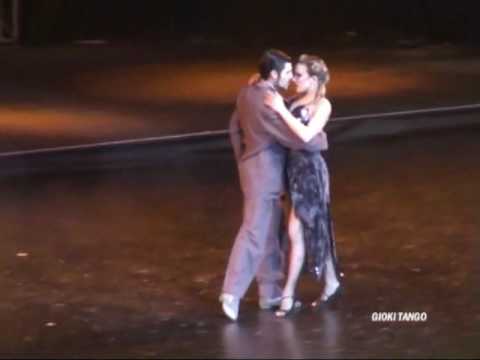
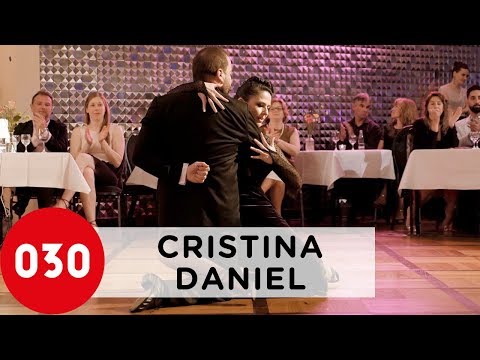
Danced to it
Music from 1927–2015 · danced on film 2005–2026
2005: 2, 2006: 1, 2007: 3, 2008: 1, 2009: 8, 2010: 7, 2011: 16, 2012: 9, 2013: 15, 2014: 11, 2015: 15, 2016: 14, 2017: 11, 2018: 32, 2019: 30, 2020: 3, 2021: 6, 2022: 20, 2023: 23, 2024: 18, 2025: 10, 2026: 4

Where it is danced
The places our videos show it danced, by performances filmed there.
- Salón CanningPalermo4 performances
- MarabúSan Nicolás3 performances
- Club GricelSan Cristóbal1 performance
- Club Sin RumboVilla Urquiza1 performance
- Club Social y Deportivo Glorias ArgentinasMataderos1 performance
- Confitería IdealSan Nicolás1 performance
- Espacio Riobamba (Club Castel)Balvanera1 performance
- La CatedralAlmagro1 performance
- Salón La NacionalMonserrat1 performance
- Sunderland ClubVilla Urquiza1 performance
What we don't know yet3 of 4 known
The year it was written.
Data: recordings, facts and sources
In other catalogues3
tango.info · T0370024955
Single sourceTodoTango · tema/691
Single sourceMusicBrainz · 25658f0b-7890-3a70-84ee-b5217c7dc50dsource
Single sourceComposer1
Composed by Juan de Dios Filiberto
Single sourceListen
- Quejas de bandoneónFrancisco Canaro1927
- Quejas de bandoneónJuan Maglio · no clip yet1927
- Quejas de bandoneónJulio De Caro1927
- Quejas de bandoneónRoberto Firpo1928
- Quejas de bandoneónQuinteto Don Pancho (Francisco Canaro) · no clip yet1940
- Quejas de bandoneónRodolfo Biagi1941
- Quejas de bandoneónAníbal Troilo1944
- Quejas de bandoneónAstor Piazzolla1947
- Quejas de bandoneónJuan Polito · no clip yet1952
- Quejas de bandoneónPedro Laurenz1952
- Quejas de bandoneónAníbal Troilo1952
- Quejas de bandoneónFrancisco Canaro1953
Ask Tangopedia
Answers only from cited facts, each with its source.