Song
Pavadita
Pavadita is an instrumental tango by Anselmo Aieta whose widespread recognition derives from the 25 June 1958 recording by Alfredo De Angelis y su Orquesta Típica. The title, meaning a small trifle, is associated with an anecdote in which Aieta composed the piece casually while playing bandoneón in a café.[18][19]
1958: 1, 43; 1998: 1, 21; 2015: 1, 1; 2017: 1, 0
Pavadita is an instrumental tango composed by the bandoneonist and prolific songwriter Anselmo Aieta. Exact composition date is not documented in standard catalogs, though Aieta's active compositional period spanned the 1920s through the 1940s. The work achieved lasting circulation through the recording made by Alfredo De Angelis y su Orquesta Típica on 25 June 1958 for Odeon. That version, lasting approximately two minutes and fifty-five seconds, entered the standard dance repertoire and continues to appear in milonga programming worldwide. The title derives from "pavada," denoting something trifling or of little consequence; one account states that Aieta produced the melody while playing bandoneón in a café and, when companions remarked on its quality and urged him to preserve it, replied that it was merely a pavada. Aieta, born in Buenos Aires on 5 November 1896, worked as a bandoneonist in ensembles including that of Francisco Canaro before leading his own groups and composing extensively for both vocal and instrumental forces. His output includes numerous tangos, milongas, and valses such as Palomita blanca. Pavadita exemplifies the lighter, melodically direct side of his writing, structured in the conventional multi-section form of the instrumental tango with a return to the principal theme. Because it lacks lyrics, the piece functions primarily as dance music, valued for its clear rhythmic profile and accessible melodic contour within the De Angelis interpretation. Subsequent recordings by later ensembles have kept the work available, but the 1958 De Angelis version remains the reference point for most performers and dancers. The piece illustrates how a composition of modest claimed origin could, through a well-timed orchestral recording in the late 1950s, secure a permanent place in the practical repertoire of Argentine tango. Its continued programming alongside both earlier classics and other mid-century instrumentals demonstrates the durability of Aieta's melodic invention even in works he himself described lightly.[18][19][20]
Composer and anecdote
Anselmo Alfredo Aieta was born in Buenos Aires on 5 November 1896 and died on 25 September 1964. He performed as a bandoneonist with Francisco Canaro and other ensembles in the late 1910s and early 1920s, later leading his own orchestra and composing a large body of works. Contemporary biographical notes list dozens of tangos, valses, and milongas under his name, many with lyrics by collaborators such as Francisco García Jiménez. One published recollection states that Aieta composed Pavadita in a café while improvising on the bandoneón. When others present suggested he retain the melody because of its appeal, he dismissed the idea with the remark that it was only a pavada. The anecdote aligns with descriptions of Aieta's facility for generating melodic ideas quickly, sometimes notating them later with the assistance of colleagues. No independent documentation of the precise year of composition has been located in major tango catalogs; the work appears in lists of Aieta's output without a specific date. The 1958 recording by De Angelis therefore serves as the primary fixed point in the piece's documented history.[18][19][20]
The 1958 De Angelis recording
Alfredo De Angelis y su Orquesta Típica recorded Pavadita on 25 June 1958 for the Odeon label. Discographic listings give the duration as approximately 2:55. The performance is instrumental and has been reissued on multiple compilations. Tango.info associates twelve tracks with this performance date. Dance practitioners and disc jockeys regularly include the recording in milonga sets, citing its clear structure and danceable character within the De Angelis style of the period. Later ensembles such as Color Tango have also recorded the work, but the 1958 version remains the most frequently referenced. The recording's commercial availability on compact disc and digital platforms has sustained the piece's presence in both historical surveys and practical dance repertoires. Its success illustrates the continued market for instrumental tangos in the late 1950s, a period when vocal works still dominated many catalogs yet orchestral instrumentals retained strong utility for dancing.[18][20]
Musical character and repertoire role
As an instrumental tango, Pavadita follows the conventional sectional layout of the genre, presenting contrasting themes and returning to the opening material. Commentators describe Aieta's melodic writing as clear in contour and balanced between earlier tango conventions and harmonic practices of the 1920s and 1930s. The De Angelis interpretation emphasizes rhythmic definition suitable for social dancing. Because the piece carries no lyrics, its identity rests entirely on the melodic and orchestral realization. In contemporary milonga programming it appears alongside both classic instrumentals and other mid-century works, functioning as a reliable selection for dancers familiar with the De Angelis sound. The modest title and associated anecdote have not prevented the work from achieving practical permanence; rather, they supply a narrative frame that accompanies its continued performance. The piece thus occupies a representative place within the instrumental wing of Aieta's output and within the broader dance repertoire of the late golden age and its aftermath.[18][19]
Later circulation
Beyond the 1958 De Angelis recording, Pavadita has appeared in releases by subsequent groups and in digital anthologies. Its inclusion in dance-oriented compilations and its occasional performance by contemporary ensembles indicate ongoing utility rather than purely archival interest. The work's relatively late popularization, decades after Aieta's most active compositional years, demonstrates how orchestral recordings of the 1950s could elevate earlier or undated pieces into the standard canon. No major disputes concerning authorship or dating appear in the sources consulted; the principal gap remains the absence of a documented composition year prior to the De Angelis session. Within the practical world of tango dancing and discography, however, the 1958 recording supplies a stable reference that has kept Pavadita in circulation for more than six decades.[18][20]
References
- 18.Pavadita | Obra de tango | LetrasTango · letrastango.com“«Pavadita» es una composición de Anselmo Aieta (1896-1964) cuya fama quedó atada a una grabación: la que Alfredo De Angelis registró el 25 de junio de 1958”
- 19.Anselmo Aieta. La comedia dell’arte · elsoldesantelmo.com.ar“respondió indiferente a quienes le sugirieron que lo guardara: «Dejalo. Si es apenas una pavada».”
- 20.PAVADITA - tango.info · tango.info“Pavadita | | tango | Anselmo A. Aieta”
- 21.Anselmo Aieta - Semblanza, historia, biografía · todotango.com
Credit
- Music
- Anselmo Aieta
Source: TangoCloud catalogue
Every recording
4 recordings · our catalogue, dances filmed on TangoTube
Choose A and B on two recordings to hear them one after the other.
Danced to it
Music from 1958–2017 · danced on film 2006–2026
2006: 3, 2007: 2, 2008: 4, 2009: 1, 2010: 1, 2011: 3, 2012: 8, 2013: 3, 2014: 3, 2015: 5, 2016: 1, 2018: 1, 2019: 1, 2020: 1, 2021: 3, 2023: 1, 2024: 1, 2025: 1, 2026: 2


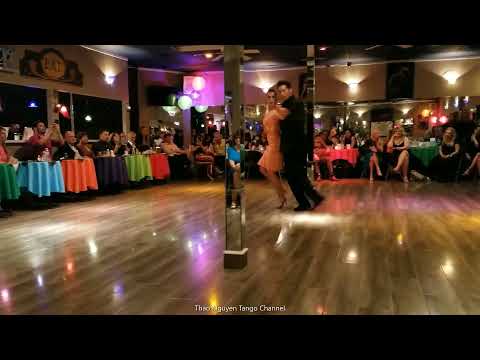
Where it is danced
The places our videos show it danced, by performances filmed there.
What we don't know yet3 of 4 known
The year it was written.
Data: recordings, facts and sources
Composer1
Composed by Anselmo Aieta
Supported · 2In other catalogues2
tango.info · T0370439410
Single sourceTodoTango · tema/2273
Single sourceListen
Ask Tangopedia
Answers only from cited facts, each with its source.