Song
Chiqué
Chiqué is a tango composed in 1920 by Ricardo Luis Brignolo, with both music and lyrics attributed to him (lyrics signed under the pseudonym Ricardo C. de León). The title derives from French argot meaning pretension or affectation, and the work became a lasting instrumental standard recorded by major orchestras including Osvaldo Pugliese and Aníbal Troilo.
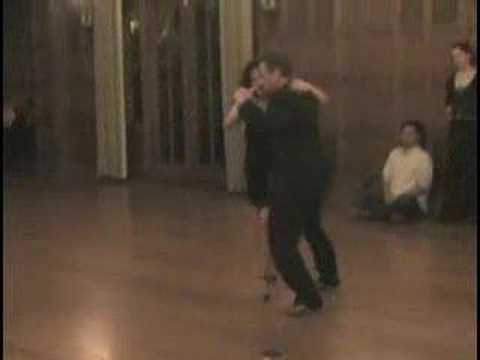
1927: 1, 0; 1928: 1, 0; 1929: 1, 1; 1936: 1, 0; 1942: 1, 2; 1944: 1, 15; 1946: 2, 0; 1950: 1, 2; 1951: 1, 0; 1952: 1, 0; 1953: 2, 317; 1957: 1, 0; 1960: 1, 6; 1965: 1, 0; 1970: 2, 0; 1973: 2, 0; 1985: 1, 11; 1988: 1, 1; 1998: 1, 68; 2003: 1, 0; 2013: 1, 0; 2014: 1, 0; 2017: 1, 49; 2020: 1, 2
Osvaldo Pugliese’s 1953 version holds 66% of its dancing (317 of 474).
How we know
Of the dances to its 28 recordings in our catalogue. Dances count filmed Occasions on TangoTube.
Aníbal Troilo recorded it in 1944 and 1952. 2 other orchestras recorded it more than once.
How we know
Takes in our catalogue by the same orchestra in different years; the canon’s first orchestra is named.
Chiqué is a tango published in 1920 whose music and lyrics are credited to Ricardo Luis Brignolo. [1][2] Brignolo, a bandoneonist, pianist, and composer born in Buenos Aires on 7 March 1892, signed the lyrics with the pseudonym Ricardo C. de León after the work's initial instrumental presentation. [1][3] The piece belongs to the later phase of the Guardia Vieja period and has endured primarily as an instrumental work, with its melodic contour receiving greater attention than its text in most subsequent performances. [4]
The title originates in French argot. According to accounts preserved by Héctor and Luis Bates in La Historia del Tango and by Francisco García Jiménez, Brignolo heard the expression "No hagás chíqué" spoken by a French dancer at the academia de baile La Olla Popular on Calle Sarmiento. [1] The term, linked to the jargon of French pimps active in Buenos Aires in the early decades of the twentieth century, carried senses of simulation, feigning, boasting, or affecting elegance. [4] García Jiménez recorded Brignolo's explanation that the melody contained a degree of pretension that seemed excessive for a danceable piece; the title was chosen partly to temper that impression. [1]
Sources differ on the precise authorship of the version that became standard. Oscar Del Priore and a study by the Instituto Nacional de Musicología indicate that a cellist known as the "Alemán" Fritz contributed an inspired counterpoint that gave the piece its definitive profile; some accounts also suggest possible involvement by Juan Carlos Cobián. [1] These contributions remain conjectural in the published literature. Brignolo added lyrics after the premiere and later allowed another set of lyrics by Juan Carlos Fernández Díaz, though the work has circulated overwhelmingly as an instrumental. [1][2]
Early recordings include versions by the composer himself and by orchestras such as those of Pedro Maffia and Roberto Firpo. [5] Ignacio Corsini recorded a vocal rendition in 1928, one of the few exceptions to the instrumental tradition. [4] In the 1940s the tango was retitled "El elegante" in certain recordings by Aníbal Troilo and Osmar Maderna under censorship measures that restricted lunfardo and expressions judged immoral. [1] The original title was restored after restrictions eased. Later instrumental versions by Osvaldo Pugliese (including a 1953 Odeon recording and later live performances) and by other orchestras established the piece as a fixture of the repertoire. [5][6]
The word "chiqué" itself entered broader lunfardo usage and appears in later tangos, among them works by Enrique Cadícamo and Manuel Romero. [4] The composition continues to be performed by contemporary ensembles for both listening and social dancing, its clear melodic line and rhythmic character supporting its longevity. [4]
Origin of the title and early history
The anecdote linking the title to a French dancer at La Olla Popular is reported by both the Bates brothers and Francisco García Jiménez. [1] Brignolo's own reported comment emphasized that the music struck him as pretentious for a danceable tango, prompting the choice of a title that acknowledged that quality. [1] The piece was first presented instrumentally in 1920; lyrics were added afterward and signed with a pseudonym. [1][2]
Authorship and musical development
While Brignolo is the credited composer, secondary sources note possible collaborative elements in the finalized score. [1] Del Priore and the Instituto Nacional de Musicología attribute a significant counterpoint to the cellist Fritz. [1] These claims are presented as informed conjecture rather than documented collaboration. The melodic material has proven more durable than the lyrics; most commercial recordings omit the vocal text. [4]
Recordings and censorship
Notable instrumental recordings include Pedro Maffia (1930), Aníbal Troilo (1944, under the title El elegante), Osmar Maderna (1946), and Osvaldo Pugliese (1953 and later). [5][6] The temporary substitution of "El elegante" occurred during the period of radio censorship that began in 1943. [1] Ignacio Corsini's 1928 vocal version remains a rare exception. [4] The piece has also been recorded by Julio De Caro, Juan D'Arienzo, Astor Piazzolla, and others. [2]
Legacy
Chiqué has remained in active repertoire for more than a century. [4] Its incorporation of a French-derived term into lunfardo illustrates the linguistic exchanges of the early tango period. [4] Contemporary dancers continue to use versions such as Pugliese's 1953 recording in social settings. [5]
References
- 1.Chiqué (tango) · es.wikipedia.org“Chiqué es un tango cuya letra y música pertenecen a Ricardo Luis Brignolo que se estrenó en 1920.”
- 2.Ricardo Luis Brignolo · es.wikipedia.org
- 3.Biography of Ricardo Brignolo · todotango.com“Bandoneonist, leader, composer and lyricist (7 March 1892 - 27 March 1954)”
- 4.Biography of Ricardo Brignolo · todotango.com“The melodic richness of “Chiqué” prevailed over his lyric”
- 5.Chiqué. Tango · todotango.com“Canta Instrumental / Orquesta Osvaldo Pugliese 28-5-1953 Buenos Aires Odeon 55695 18934”
- 6.Chiqué - tango.info · tango.info
- 7.La aventura del Tango: LA VAS DE ELEGANTE · agenciamundialdeprensa.com
- 8.Chiqué (tango) · es.wikipedia.org“se considera que en la versión definitiva de este tango intervinieron otras personas”
- 9.Chiqué. Tango · todotango.com
- 10.Global Faixa - tango.info · tango.info
- 11.Ricardo Luis Brignolo · es.wikipedia.org
- 12.Biography of Ricardo Brignolo · todotango.com“According to researchers, chiqué belongs to the jargon of French pimps”
Credit
- Music
- Ricardo Luis Brignolo
- Lyrics
- Ricardo Luis Brignolo
Source: TangoCloud catalogue
Every recording
28 recordings · our catalogue, dances filmed on TangoTube · 34 more we know of
Choose A and B on two recordings to hear them one after the other.
- Juan D'ArienzoRCA Victor · Dec 222 dances1942
- Aníbal TroiloRCA Victor · Mar 315 dances1944
- Aníbal TroiloTKNot danced on film yet1952
- Osvaldo PuglieseMost dancedOdeon · May 28317 dances1953
- Osvaldo PuglieseOdeon · Dec 2611 dances1985
- Edgardo DonatoRCA Victor · Jan 17Not danced on film yet1936
- Francisco CanaroOdeon · Nov 61 dance1929
- Francisco LomutoEarliest we holdOdeon · Jul 19Not danced on film yet1927
- Roberto FirpoOdeon · Mar 15Not danced on film yet1928
- Osmar MadernaRCA Victor · Jun 19Not danced on film yet1946
- Osmar MadernaSondor (Uruguay)Not danced on film yet1946
- Enrique FranciniCBS Columbia · May 20Not danced on film yet1970
- José BassoNot danced on film yet1970
- Orquesta Francini-PontierSep 22Not danced on film yet1953
- Orquesta Francini-PontierSnow Records JapanNot danced on film yet1973
- Florindo SassoneCarmusicNot danced on film yet1973
- Fulvio SalamancaMay 31Not danced on film yet1957
- Donato Racciatti6 dances1960
- Astor Piazzolla2 dances1950
- Color Tango (Roberto Alvarez)68 dances1998
Lyrics
Español · Underlined words are lunfardo: tap one for its meaning.
Ya me estoy poniendo mal de verte así con las pilchas tan de bute y ese que un de mucho te compró para tenerte a su lado. Si supiera que mañana te fugás para la vieja querencia, aquel donde los viejos recuerdos y alegrías que vivistes te hicieron tan feliz. Recuerdo que eras más linda que una guinda y un pelpa de cien, y venías paseando tarde a tarde con una piel de zorro y un encantador vaivén... Y la barra de muchachitos te acechaba por doquier... Te batían muchas cosas que te dije yo también. Y hoy que el tiempo aquel ya se ha fugado y sin grupo te amaré, porque manyo como te has portado y conmigo nunca empleastes un chiqué. Es por eso que te he respondido en todas las rachas de la vida… Mi encantito, mi querida, soy de línea, soy de línea yo también.
English · machine translation
I'm already getting sick to see you like this with the pilchas so bute and that little berretín that a very vento guy bought for you to have you by his side. If I knew that tomorrow you'd run away for the old querencia, that bulín where the old memories and joys that you lived made you so happy. I remember you were prettier than a cherry and a hundred times more beautiful than a cherry, and you came strolling around evening after evening with a fox fur and a charming sway... And the bar of little boys stalked you everywhere... They beat you with many things that I told you too. And today that time has already gone away and without a group I will love you because manyo as you have behaved and with me you have never used a child. That's why I have answered you in all the spells of life... My darling, my dearest girl, I'm a line, I'm a line too.
Danced to it
Music from 1927–2020 · danced on film 2006–2026
2006: 2, 2007: 1, 2008: 4, 2009: 3, 2010: 10, 2011: 5, 2012: 25, 2013: 20, 2014: 15, 2015: 13, 2016: 22, 2017: 25, 2018: 34, 2019: 36, 2020: 6, 2021: 5, 2022: 25, 2023: 32, 2024: 21, 2025: 36, 2026: 11


Where it is danced
The places our videos show it danced, by performances filmed there.
- Salón CanningPalermo6 performances
- Salón La NacionalMonserrat6 performances
- Sunderland ClubVilla Urquiza3 performances
- Club GricelSan Cristóbal1 performance
- Club Sin RumboVilla Urquiza1 performance
- El Yeite Tango ClubVilla Crespo1 performance
- Espacio Riobamba (Club Castel)Balvanera1 performance
- MarabúSan Nicolás1 performance
- Salón El Pial (La Baldosa)Flores1 performance
Data: recordings, facts and sources
Composer1
Composed by Ricardo Luis Brignolo
Supported · 2In other catalogues4
tango.info · T0370007901
Single sourceTodoTango · tema/1296
Single sourceMusicBrainz · 58095cf5-6ed6-4240-84b8-8afff4c64b7bsource
Single sourceExternal id 1296
Single sourceLyricist1
Lyrics by Ricardo Luis Brignolo
Single sourcePublished1
Published 1920
Single sourceNotes1
Chiqué, by Ricardo Brignolo, is premiered in 1920.1920
Single sourceListen
- ChiquéFrancisco Lomuto1927
- ChiquéRoberto Firpo · no clip yet1928
- ChiquéFrancisco Canaro · no clip yet1929
- ChiquéEdgardo Donato1936
- ChiquéJuan D'Arienzo1942
- ChiquéAníbal Troilo1944
- ChiquéOsmar Maderna1946
- ChiquéOsmar Maderna1946
- ChiquéAstor Piazzolla1950
- ChiquéEduardo Del Piano · no clip yet1951
- ChiquéAníbal Troilo1952
- ChiquéOsvaldo Pugliese1953
Ask Tangopedia
Answers only from cited facts, each with its source.