Tango 1958
Dag Stenvoll y Michael Lavocah · 3 de jun de 2020 · 3:11:16
1958 is presented as the last year the series would cover, two generations on from the first episode (1941), because by the hosts' own account there is little new tango music left to explore past this point. The golden age is agreed to have ended around 1955: dancer numbers have collapsed, famous venues like D'Arienzo's Chanteclerc Cabaret are closing, and even a French Eurovision winner gets turned into a tango for lack of new material. The Big Four diverge further: D'Arienzo churns out fifty simplified, fast-to-arrange recordings, Pugliese pushes further into modern, dancer-challenging territory, and Troilo, past his energetic peak, makes fewer but carefully chosen ones. It is also Carlos Di Sarli's last recording year before his death the following year, closing a thirty-year career with the deeply personal Bahía Blanca, and a year when necessity creates new sounds, from Fulvio Salamanca's accidental style after D'Arienzo's near-retirement to Argentino Galván's explicitly non-dance Los Astros del Tango project.
0% escuchado
faltan 3:11:16
Lo que sigue, como se publicó
Tango 1945Episodio 10 · 10 de jun de 2020 · 3:35:51Lo que este episodio dio a Tangopedia
Datos dichos en el episodio, cada uno citado al minuto en que se dice.
The golden age is generally agreed to end around 1955; by 1958 tango is in 'post golden age territory,' with far fewer people dancing and venues closing as a result.
the golden age of tango
By 1958 the Big Four sound more different from one another than ever: D'Arienzo has reverted to a traditional, simplified presentation while Pugliese keeps pushing forward, with many orchestras occupying a new 1950s 'middle ground.'
the Big Four in the late 1950s
Troilo has been losing energy since around 1956, though he is still producing good work.
Zucchi's ongoing multi-volume reference work on bandoneón players, started from 1890, had by 1958's broadcast still not reached the generation of 1940, despite roughly ten years between volumes.
Oscar Zucchi's bandoneón-player reference books
Maderna, a playboy-ish amateur pilot like Fresedo, died in a private plane crash around 1950 or 1951; his orchestra continued afterward as an 'Orquesta Símbolo' under violinist Aquiles Grugiero, a naming convention also later used for D'Arienzo's touring band after his own death.
Suena ahora
Dors, mon amourAndré Claveau · 1958The French winner of the 1958 Eurovision Song Contest, played as the night's opening puzzle: a respectable tango orchestra making a version of a Eurovision hit says something about how few new songs tango had left by this year.
Solo en el episodio
♪ Música · 0:54 ·
The year's big marathon-DJ hit, led since Maderna's 1950/51 plane-crash death by violinist Aquiles Grugiero under the orchestra's new 'Símbolo' name; a one-off, unlike anything else that year, with roots as a chamamé.
Solo en el episodio
♪ Música · 3:51 ·

Built on a classical Brahms piece, played to show pianist Orlando Tripodi's close approximation of Maderna's light, diaphanous piano style.
Verlo bailado · 10
Capítulo · 18:19
The club that died, and the song that mourned it
When his favourite cabaret closed, a songwriter wrote its eulogy.

Chosen to tie in with the Chanteclerc Cabaret's 1958 closure: lyricist Enrique Cadícamo, who used to hang out there, wrote it in grief when the club shut, and D'Arienzo is named in the lyric as one of its glories.
♪ Música · 2:41 ·
Verlo bailado · 4

An old Canaro composition sung with real venom and anger by Bustos, arguably its strongest version.

A duet milonga about being as unpredictable as a loose paving slab, with the two contrasting voices arranged so one climbs while the other descends.
♪ Música · 2:05 ·
Verlo bailado · 10
Capítulo · 32:30
The sound that happened by accident
A pianist forced to go it alone stumbled into a style that became his signature.

The year's big hit for Salamanca, D'Arienzo's former pianist, whose unique sound carries less piano and more of a floating solo violin.
♪ Música · 2:53 ·
Verlo bailado · 131
One of only four Biagi recordings this year, chosen partly to demonstrate the added studio reverberation that was becoming fashionable, and that Lavocah says tires the ear over time.
Solo en el episodio
♪ Música · 2:25 ·

A showcase for Godoy's unique voice, a singer Lavocah feels was born too late for Di Sarli's late-1930s band.
Verlo bailado · 2

A brand-new 1958 composition by old-timer Anselmo Aieta that sounds, deliberately, like it escaped from the 1920s.
Verlo bailado · 47
A light, decorative tango milonga composed by pianist Mariano Mores, played by Canaro's small quintet in the older, joyful pre-lyric style.
Solo en el episodio
♪ Música · 1:59 ·
Capítulo · 1:01:26
The song Pugliese turned down twice
He rejected a tune, watched it become a hit for someone else, then asked for it back.

One of only four 1958 Troilo vocals with Goyeneche, a nostalgic song about the old neighbourhood, recorded in much better fidelity now that Troilo has left the low-quality TK label for Odeón.
♪ Música · 4:46 · La letra, en la página del tango
Verlo bailado · 5
A modern instrumental loved by classical musicians but, Lavocah insists, nearly impossible to dance to because its sudden tempo changes are never telegraphed to the dancer.
Solo en el episodio
Compared to a 1941 Fresedo recording of the same song with a different singer (Ricardo Ruiz); Lavocah calls Floreal Ruiz, alongside Berón and Goyeneche, one of tango's very best singers.
Solo en el episodio
♪ Música · 2:31 ·
One of only three 1958 Rivero recordings, backed by guitars rather than orchestra, mocking a poor barrio girl's posh pretensions.
Solo en el episodio
♪ Música · 1:37 ·

An obscure find from a Bergen DJ friend; its simple style, well behind what Argentine bands were doing even in 1940, points to a Chilean or other non-Argentine origin.
Solo en el episodio
♪ Música · 2:29 ·
An old (1931-ish) tango with a sharp social-protest lyric, written in Milan after Argentine touring musicians witnessed real inequality in a cabaret there.
Solo en el episodio
Capítulo · 1:32:07
The lyric too scandalous for Milan
A tango about rich men and hungry workers was almost banned in Italy.

Called the song of the year: every 1958 version, Pugliese's included, is considered excellent.
La letra, en la página del tango
Verlo bailado · 28

Pugliese's own version of a tune he originally turned down when violinist Emilio/Elvino Balcarce offered it to him; he asked for a version once he saw how big Troilo's recording had become.
♪ Música · 3:00 ·
Verlo bailado · 89
A rare Morán recording backed by guitars instead of an orchestra, letting him sing without pushing his voice to its usual maximum volume.
Solo en el episodio
♪ Música · 2:31 · La letra, en la página del tango
Capítulo · 1:52:45
He taught the heartthrob how to whisper
A singer who always sang at full volume was taught restraint, and it made him a star.
Capítulo · 1:55:02
The take they wouldn't let him choose
A new manager took away one bandleader's say over his own records, so he walked out and never came back.

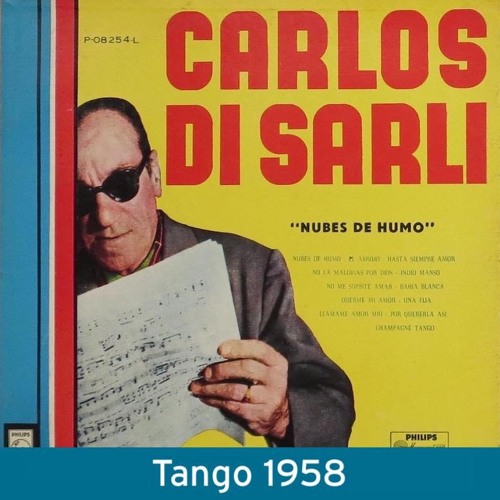
Title track of Di Sarli's final LP, released November 1958; a man smoking and regretting a lost love, closing on the idea that youth fades like smoke.
♪ Música · 2:46 ·

An instrumental whose title, a sure bet, matches the reaction: dancers in the chat immediately ask when they can dance to it again.

Lavocah's own favourite late Di Sarli tango, prized for the paired double-bass notes that frame each phrase beneath the seductive violins.
♪ Música · 2:52 ·
Verlo bailado · 401

Di Sarli's own composition, twenty years in the making, dedicated on the sheet music to the city that saw him born; his last tribute before his death the following year.
The customary composite close: Caldera, a former bandoneón player in Pugliese's orchestra who split off to form his own band, in a dramatic, intense 1958 version.
Solo en el episodio
♪ Música · 3:06 · La letra, en la página del tango
The second 1958 version, a strange and funny tango milonga arrangement with guitar and an unidentified wind instrument.
Solo en el episodio
Praised afterward as Dag's favourite 1950s D'Arienzo instrumental and, in his view, inexplicably never used by show dancers.
Solo en el episodio
Played to show a gentler, tender side of Valdéz, far from his usual high-octane delivery.
Solo en el episodio
♪ Música · 3:44 ·

A sincere tribute to mothers, offered as further proof that Bustos (and here Valdéz) had more emotional range than their tough-guy reputations suggest.
An instrumental showing Salamanca's lesser-known side, quoting a phrase from Toselli's classical Serenata (the section called Rimpianto, 'regret').
Solo en el episodio

An old 1926 Gardel number reworked by Montero, who changes the lyric so the singer ends up looking for 'a good soul' rather than just another lover.
Verlo bailado · 63
Proof Vargas, D'Agostino's star singer of the mid-40s, is still recording in 1958 with new backing orchestras, in an unchanging style some might call old-fashioned.
Solo en el episodio
♪ Música · 6:02 ·

An explicitly non-dance 1927 Francisco De Caro melody, arranged by Argentino Galván's experimental project, possible in 1958 only because good musicians had little regular tango work.
♪ Música · 2:19 ·
Capítulo · 2:57:05
The Troilo recording that wasn't
For decades, collectors swore this record was Troilo. It wasn't.
A third, little-known version: Maffia, retired from tango since the mid-1940s, came back in 1957 to back singer Alberto Gómez; this recording was mistakenly released decades later on a 1990s Mexican reissue label and long assumed to be Troilo.
Solo en el episodio
♪ Música · 2:30 ·
A closing cortina of American blues, unrelated to tango, used to wind the night down.
Solo en el episodio
Seguir por todos los episodios
Tango By Year es de Dag Stenvoll y Michael Lavocah, publicado aquí con su permiso. El audio se reproduce desde SoundCloud.