Song
Desde el alma (vals)
Desde el alma is a vals criollo composed in 1911 by the Uruguayan-Argentine pianist Rosita Melo when she was fourteen. Its melody became one of the most widely performed waltzes of the Río de la Plata, later gaining definitive lyrics by Homero Manzi for the 1948 film Pobre mi madre querida.
Desde el alma is among the earliest and most enduring vals criollos to enter the tango repertoire. Rosita Melo (Rosa Clotilde Mele), born in Montevideo on 9 July 1897, composed the piece in 1911 while still a teenager living in Buenos Aires.[1][2] According to the account preserved on Todo Tango, she sat at the piano one ordinary day, the notes rising “from the soul,” and gave the waltz its title.[1] The form is the slower Boston-style vals that had taken root along the Río de la Plata, favoring melody over the driving three-four of the Viennese waltz.[3] Melo’s other works—tangos such as Tatita and Oración, plus pasodobles, marches, and estilos—never achieved comparable recognition.[1]
The first known recording was made by Roberto Firpo’s orchestra; Todo Tango states that Melo later held that disc in her hands, though the precise session date is not given.[1] By the early 1920s the melody was already popular. In 1922 Melo married the poet Víctor Piuma Vélez, who supplied the first published lyrics, thematically linked to maternal love.[1][2] Additional, anonymous verses circulated, one beginning “Desde el alma te adora mi cariño.”[1] The lyrics that ultimately became standard were written in 1948 by Homero Manzi for the film Pobre mi madre querida. Hugo del Carril sang them in the picture; the published sheet music for the film also credits Piuma Vélez, apparently the result of an agreement between the two writers.[1][2] Manzi’s text (“Alma, si tanto te han herido, ¿por qué te niegas al olvido?”) remains the version most often heard today.[4]
Throughout the Golden Age the waltz was recorded by the major orquestas. Juan D’Arienzo’s mid-1930s sides, Francisco Canaro’s 1940 version, and later readings by Ricardo Tanturi and others kept it in active rotation.[5] One of the most admired late interpretations is Osvaldo Pugliese’s 1979 arrangement, which retains the original’s lyrical line while adding the orchestra’s characteristic dramatic weight. The piece continues to appear in milonga sets as a romantic vals, its relatively slow tempo and clear melody making it accessible to dancers of varying experience. Melo herself became a concert pianist, graduated from the Thibau-Piazzini conservatory, and performed both classical and popular repertoire until her death in Buenos Aires on 12 August 1981.[1][2] Desde el alma remains her defining contribution and one of the four Río de la Plata pieces (alongside La cumparsita, El choclo, and Adiós muchachos) most frequently cited as having traveled farthest beyond the region.[3]
Composition and Early Circulation
Rosita Melo composed the waltz in 1911 at the age of fourteen.[1][2] The Todo Tango chronicle describes the moment as an ordinary day at the piano when the melody “sprang from the soul.”[1] The first recording was by Roberto Firpo’s orchestra; Melo later possessed a copy of that disc.[1] By 1921 Firpo had already recorded four of her instrumental waltzes.[3]
Lyrics and the 1948 Film
Víctor Piuma Vélez, Melo’s husband from 1922, wrote the first set of lyrics.[1] Anonymous verses also circulated. In 1948 Homero Manzi supplied the definitive text for the film Pobre mi madre querida, in which Hugo del Carril sang the waltz.[1][2] The film’s sheet music lists both Manzi and Piuma Vélez, reflecting an agreement between them.[1]
Orchestral Tradition
The vals entered the standard Golden Age repertoire. D’Arienzo, Canaro, Tanturi, and later Pugliese all recorded it.[5] Its moderate tempo and singing melody have kept it in regular milonga rotation as a romantic vals.
References
- 1.Desde el alma - un vals criollo y romántico · todotango.com“a jovencita —apenas catorce años— ... lo bautizó, precisamente, “Desde el alma”. Era un día cualquiera de 1911”
- 2.Desde el alma, a romantic criollo waltz · todotango.com“Rosa Clotilde Mele, born in Montevideo on July 9, 1897 ... first recording of her waltz, made by the Roberto Firpo’s orchestra.”
- 3.Desde el alma: The Vals that Passed Through Many Hands · tangoroute.com“composed her first and now world-famous Boston-style vals criollo “Desde el Alma””
- 4.Desde el alma [Manzi]. Vals (1947) · todotango.com“Música: Rosita Melo Letra: Homero Manzi / Víctor Piuma Vélez”
- 5.DESDE EL ALMA - tango.info · tango.info“Multiple orchestral recordings listed including D’Arienzo and Canaro”
Credit
- Music
- Rosita Melo
- Lyrics
- Homero Manzi
Source: TangoCloud catalogue
Every recording
15 recordings · our catalogue, dances filmed on TangoTube · 23 more we know of
- Roberto FirpoEarliest we holdInstrumental · Odeon · Oct 20Not danced on film yet1927
- Nelly OmarNot in our cataloguetango.info1928
- Juan D'ArienzoInstrumental · RCA Victor · Jul 239 dances1935
- Roberto FirpoNot in our catalogueInstrumental · tango.info1937
- Francisco CanaroInstrumental · Odeon · May 2312 dances1940
- Ricardo TanturiInstrumental · RCA Victor · Aug 282 dances1944
- Cuarteto Típico Roberto FirpoInstrumental · May 25Not danced on film yet1947
- Francisco CanaroNelly Omar · Odeon · Oct 222 dances1947
- Juan CambareriNot in our catalogueInstrumental · Aug 10 · tango.info1948
- Carlos DemariaNot in our catalogueRoberto Cortés · Oct 10 · tango.info1950
- Quinteto Pirincho (Francisco Canaro)Instrumental · Odeon · Apr 153 dances1952
- Quinteto Pirincho, dir. Francisco CanaroNot in our catalogueInstrumental · Jul 15 · tango.info1952
- José SalaAlfredo Belusi · Columbia · Dec 29Not danced on film yet1953
- Horacio Salgán OrchestraInstrumental · TKNot danced on film yet1953
- Julia VidalNot in our cataloguetango.info1954
- Horacio SalgánNot in our catalogueInstrumental · tango.info1954
- Julia VidalNot in our catalogueJan 13 · tango.info1954
- Juan de Dios FilibertoInstrumental · Oct 14Not danced on film yet1959
- Hugo del CarrilNot in our cataloguetango.info1961
- Nelly OmarNot in our cataloguetango.info1965
Lyrics
Español
Alma, si tanto te han herido, ¿por qué te niegas al olvido? ¿Por qué prefieres llorar lo que has perdido, buscar lo que has querido, llamar lo que murió? Vives inútilmente triste y sé que nunca mereciste pagar con penas la culpa de ser buena, tan buena como fuiste por amor. Fue lo que empezó una vez, lo que después dejó de ser. Lo que al final por culpa de un error fue noche amarga del corazón. ¡Deja esas cartas! ¡Vuelve a tu antigua ilusión! Junto al dolor que abre una herida llega la vida trayendo otro amor. Alma, no entornes tu ventana al sol feliz de la mañana. No desesperes, que el sueño más querido es el que más nos hiere, es el que duele más. Vives inútilmente triste y sé que nunca mereciste pagar con penas la culpa de ser buena, tan buena como fuiste por amor.
English · machine translation
Soul, if you have been hurt so much, why do you refuse to forget? why do you refuse to forget? Why do you prefer to mourn what you have lost, seek what you have loved, to call what has died? You live uselessly sad and I know you never deserved to pay with sorrows the guilt of being good, as good as you were for love. It was what once began, what then ceased to be. What in the end because of a mistake was a bitter night of the heart. Leave those cards! Go back to your old illusion! Next to the pain that opens a wound comes life brings another love. Soul, do not close your window to the happy morning sun. Do not despair, that the dearest dream is the one that hurts us the most, it is the one that hurts the most. You live uselessly sad and I know you never deserved to pay with sorrows the guilt of being good, as good as you were for love.
Danced to it
Music from 1927–2014 · danced on film 1997–2026
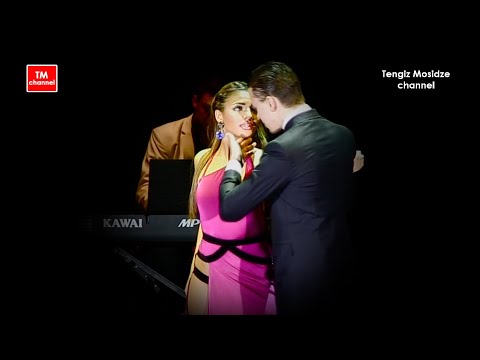
1997: 1, 1998: 1, 2000: 1, 2002: 1, 2005: 3, 2006: 4, 2007: 5, 2008: 11, 2009: 10, 2010: 17, 2011: 12, 2012: 13, 2013: 11, 2014: 18, 2015: 19, 2016: 24, 2017: 18, 2018: 14, 2019: 21, 2020: 5, 2021: 11, 2022: 16, 2023: 15, 2024: 19, 2025: 8, 2026: 8


Where it is danced
The places our videos show it danced, by performances filmed there.
What we don't know yet3 of 4 known
The year it was written.
Data: recordings, facts and sources
Recordings by year
Source: TangoCloud catalogue
1927: 1, 1935: 1, 1940: 1, 1944: 1, 1947: 2, 1952: 1, 1953: 2, 1959: 1, 1979: 1, 1985: 1, 1987: 1, 2003: 1, 2014: 1
Composer1
Composed by Rosita Melo
Supported · 2In other catalogues3
tango.info · T0370000046
Single sourceTodoTango · tema/1158
Single sourceMusicBrainz · 63817b18-2af0-468d-95a6-90ea9ad3dd63source
Single sourceLyricist1
Lyrics by Homero Manzi
Single sourceListen
- Desde el almaRoberto Firpo1927
- Desde el almaJuan D'Arienzo1935
- Desde el almaFrancisco Canaro1940
- Desde el almaRicardo Tanturi1944
- Desde el almaCuarteto Típico Roberto Firpo · no clip yet1947
- Desde el almaFrancisco Canaro · Nelly Omar1947
- Desde el almaQuinteto Pirincho (Francisco Canaro) · no clip yet1952
- Desde el almaJosé Sala · Alfredo Belusi · no clip yet1953
- Desde el almano clip yet1953
- Desde el almaJuan de Dios Filiberto1959
- Desde el almaOsvaldo Pugliese1979
- Desde el almaOsvaldo Pugliese1985
Ask Tangopedia
Answers only from cited facts, each with its source.