Venue
Café Tortoni
Café Tortoni, founded in 1858 by the French immigrant Jean Touan and relocated to its present site on Avenida de Mayo 825, is the oldest continuously operating café in Buenos Aires and a historic meeting place for writers, artists, and tango figures. Carlos Gardel maintained a preferred table and sang in its basement peña; the space continues to host tango and jazz performances today.[1][2]
Café Tortoni opened in 1858 under the direction of the French immigrant Jean Touan (sometimes spelled Touan or Toaun), who named it after the celebrated Café Tortoni on the Boulevard des Italiens in Paris. The first location was the northwest corner of Esmeralda and Rivadavia. In the early 1880s the café moved to the ground floor of a residence belonging to Saturnino Unzué on Rivadavia street in the Montserrat neighborhood. With the opening of Avenida de Mayo the building acquired a new façade designed by the Norwegian architect Alejandro Christophersen; the Avenida de Mayo entrance was inaugurated on 26 October 1894. Toward the end of the nineteenth century another Frenchman, Celestino Curutchet, acquired the establishment.[1][2][3]
From its earliest decades the Tortoni functioned as a gathering place for intellectuals, politicians, and artists. In 1926 the painter Benito Quinquela Martín founded La Peña (also called the Agrupación Gente de Artes y Letras) in the basement bodega. The peña operated until 1943, organizing poetry readings, literary contests, lectures, and musical evenings. Regular participants included Alfonsina Storni, Baldomero Fernández Moreno, Roberto Arlt, Jorge Luis Borges, Conrado Nalé Roxlo, and international visitors such as José Ortega y Gasset, Federico García Lorca, and Luigi Pirandello. Political figures including Lisandro de la Torre and Marcelo Torcuato de Alvear also frequented the tables.[1][2]
Carlos Gardel was a habitué. According to the testimony of Enrique Cadícamo, he preferred the table on the right-hand side of the main salon, beside the window when entering from Rivadavia, where he could meet friends away from admirers. Gardel sang at least twice in the Tortoni: once at a reception in the Bodega honoring the Spanish dramatist Jacinto Benavente (with José Razzano) and again in June 1927 during a homage to Luigi Pirandello. The café’s own materials and secondary accounts confirm these appearances.[2][4][5]
The tango “Viejo Tortoni,” with lyrics by Héctor Negro and music by Eladia Blázquez, later commemorated the café; Susana Rinaldi has recorded it. The text evokes the palco, the avenue, and the returning bohemians of earlier decades. Between 1962 and 1974 another writers’ peña associated with the magazine El Escarabajo de Oro met in the rear of the premises. Today the basement continues to present tango and jazz (including long-running Saturday appearances by the Fénix Jazz Band since 1978), book launches, and poetry contests, while the main floor retains its marble tables, oak furnishings, and nineteenth-century decoration. The Academia Nacional del Tango occupies space in the same building complex.[1][2]
In the history of Buenos Aires café culture the Tortoni occupies a singular position: it predates the mass immigration wave that reshaped the city after 1880, survived the opening of Avenida de Mayo, and absorbed successive generations of literary and musical life. Its association with Gardel is not that of a working milonga or cabaret but of a refined public space in which the leading tango singer could appear both as customer and as occasional performer. The peña of 1926–1943 further embedded the café in the artistic networks that ran parallel to, and sometimes intersected with, the commercial tango industry of the golden age. Its continued operation as both historic café and performance venue links the nineteenth-century porteño café tradition to the present-day tourist and local circuits that still center on Avenida de Mayo.[1][2][5]
Founding, relocation, and architecture
Jean Touan’s 1858 establishment on Esmeralda and Rivadavia, the 1880s move to the Unzué residence, and Christophersen’s 1890s façade for the new avenue produced the building that still stands. Curutchet’s ownership at the turn of the century stabilized the business that has operated without interruption since.[1][3]
La Peña and literary life
Quinquela Martín’s 1926 peña in the basement created a sustained forum for poets, painters, and musicians until 1943. The documented presence of Storni, Borges, Arlt, and international visitors such as Lorca and Pirandello situates the Tortoni at the center of porteño intellectual sociability in the interwar decades.[1][2]
Gardel and tango performance
Cadícamo’s recollection of Gardel’s preferred table and the two documented singing appearances (Benavente reception and the 1927 Pirandello homage) constitute the café’s direct tango legacy. The later composition “Viejo Tortoni” and the ongoing basement shows extend that connection into the present.[2][4][5]
References
- 1.Café Tortoni · es.wikipedia.org“Se sabe que fue inaugurado en 1858 ... En el café funcionó “La Peña”, inaugurada en 1926”
- 2.Café Tortoni · turismo.buenosaires.gob.ar“Fundado en 1858 ... Carlos Gardel ... tenía una mesa reservada”
- 3.Café Tortoni · buenosaires.gob.ar“Fue fundada en 1858 y es paradigma del café porteño”
- 4.Fue fundado en 1858 · clarin.com“En junio de 1927, también en La Bodega del Tortoni, Gardel contribuyó con su voz”
- 5.Gardel y el Tortoni · buenosaireshistoria.org“la más trascendente participación de Gardel en el Tortoni ... homenaje a Luigi Pirandello”
- 6.La peña y sus comienzos · cafetortoni.com.ar“La famosa Peña del Tortoni abarca un período de diecisiete años que va desde 1926 hasta 1943”
- 7.Café Tortoni · en.wikipedia.org“First opened in 1858 by a French immigrant whose surname was Touan”
- 8.Cafetines de Buenos Aires · infobae.com“Abrió en 1858 ... Su propietario fue un francés llamado Jean Touan”
Opening and closing
Our venue records; each note says what the year counts
- Opened
- 1858founded 1858; at Avenida de Mayo from 1880
By decade
Dated moments, each with its source, and what we filmed
2000s
2007Octavio Fernández: Begins dancing in 'Sensaciones de Tango' at the Café Tortoni.
source2008Ariadna Naveira: Starts dancing professionally with Fernando Sánchez, first in the Café Tortoni show.
source2008Fernando Sanchez: Starts dancing professionally with Naveira; first steps in the Café Tortoni show.
sourceMay 14, 2008Osvaldo Ribo: Honoured at Café Tortoni, Buenos Aires.
source
Dancers filmed here
On TangoTube, with the videos whose titles name it · our data
Filmed here
On TangoTube, with the videos whose titles name it · our data
 Café Tortoni - Buenos Aires - Tango2007 · 17,756 views
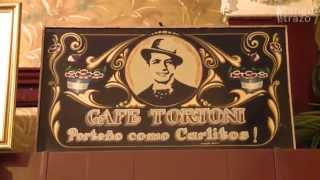 Café Tortoni2015 · 1,546 views
 Tango show and dining at Gran Cafe Tortoni Buenos Aires, #Argentina 🇦🇷 #dance #tango #buenosaires2024 · 1,474 views
 Tango en el Café Tortoni2010 · 1,470 views
 CAIO RODRIGUEZ - CAFE TORTONI 03.11.2008 BUENOS AIRES2008 · 1,285 views
 Silvia Nieves - Café Tortoni - 11-07-20112011 · 1,108 views
 Cafe Tortoni - Buenos Aires, Argentina. Part of tango history (English & Greek subs)2016 · 954 views
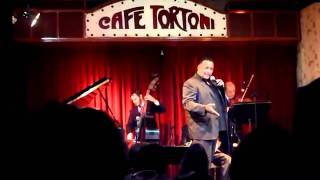 CAIO RODRIGUEZ - CAFE TORTONI BUENOS AIRES 20112011 · 945 views
What we don't know yet3 of 4 known
Events held here.
Data: recordings, facts and sources
In other catalogues2
OpenStreetMap · node/340141702Single source
Located in1
Located in MonserratSingle source
Open from1
Open from 1858Single source
Notes3
Moved around 1880 to the ground floor of the Unzué house on Rivadavia. The opening of Avenida de Mayo (begun 1888) cut off the back of the plot, so it was given a new front on the avenue, extended by Alejandro Christophersen and completed in 1898.Single source
Café Tortoni, inaugurated in 1858, is the setting of 'La mesa de Gardel': Carlos Gardel sang twice at the café and was for a time a regular; its cellar room La Bodega stages tango and jazz artistsSingle source
Address: Avenida de Mayo 825. Ciudad Autónoma de Buenos Aires. Argentinasource
Dates2
Guardia Nueva — took place at Café TortoniMay 24, 1926Single source
Golden Age — took place at Café Tortoni1943Single source
The city's oldest café, frequented by Gardel, with nightly tango shows in its basement and Blázquez's 'Viejo Tortoni' in its honour.
- Where
- Avenida de Mayo 825
Connected
From TangoTube's videos · our data
Within
Listen
No recordings to play yet.
Ask Tangopedia
Answers only from cited facts, each with its source.