Song
Mano a mano
Mano a mano is a tango with lyrics by Celedonio Flores and music by Carlos Gardel and José Razzano, first recorded by Gardel in 1923 for Odeon.[1][2] Written when Flores was about twenty-four, it is noted for its lunfardo language and its place in the early development of the tango-canción.[3][4]
Celedonio Flores presented the lyrics of Mano a mano to Carlos Gardel around 1920, when the poet was twenty-four years old.[1][5] The verses, written in dense lunfardo, portray a man recalling a former lover who has risen in social status while he remains behind; the narrative is said to have been inspired by the misfortunes of the singer Fernando Nunziatta.[1][6] Gardel, already familiar with Flores through the earlier success of Margot (derived from the poem Por la Pinta published in Última Hora), read the text and reportedly expressed surprise at the author’s youth, remarking that the experience described seemed to belong to an older man and suggesting that a father or uncle might have written it.[1][7] He then handed the lyrics to José Razzano and indicated that they would set them to music at once.[1]
The music, credited jointly to Gardel and Razzano, was composed in a style described as “al modo milonguero,” alternating instrumental and sung sections throughout.[2] The poem is organized in quintillas, an uncommon stanza for song at the time, which required careful adaptation.[2] The work was published in 1923 (some secondary sources list 1920) and first recorded by Gardel, accompanied by the guitars of José Ricardo and Guillermo Barbieri, for Odeon in 1923 (disc 18067 B, matrix related to later issues).[2][8] Gardel re-recorded it in Barcelona in 1927.[2] Subsequent versions include Charlo with Ciriaco Ortiz (1934), Francisco Canaro with Roberto Maida (1938), Alfredo De Angelis with Carlos Dante (1946), Julio Sosa with Leopoldo Federico (1962), and many others.[2][9]
The lyric’s heavy use of lunfardo (bacana, percanta, otario, morlacos, cafisho) made it characteristic of the early tango-canción period and later subjected it to censorship under the 1943 military government, which required “cleaned” versions for radio.[1] Francisco García Jiménez called it Flores’s “gran tango” and praised the poet’s ability to extract a recognizable porteño figure from the language of the arrabal.[2] Structurally, the piece consists of two twelve-bar sections, each containing an asymmetrical phrase of five plus seven bars that follows the poetic line lengths; it was originally published in F minor.[10]
Mano a mano occupies a transitional place between the more anecdotal tangos of the late 1910s and the fully developed Guardia Nueva song form. Its commercial success with Gardel helped confirm the viability of the sung tango with sophisticated lunfardo texts and contributed to the repertoire that Gardel later took to Europe and the United States. The collaboration also strengthened the working relationship between Flores, Gardel and Razzano that produced further classics. Later interpreters have continued to treat both the 1923 Odeon take and the 1927 Barcelona version as reference points, while orchestral arrangements from the 1930s onward adapted the piece to larger ensembles without erasing its original milonguero character.[2][9]
Lyrics, presentation to Gardel and composition
Flores, aged about twenty-four, brought the lunfardo text to Gardel around 1920.[1] Gardel’s reported reaction questioned the author’s age given the experienced tone, then passed the lyrics to Razzano for immediate musical setting.[1][7] The resulting piece alternates instrumental and vocal passages in the milonguero manner.[2]
First recording and early dissemination
Gardel recorded the tango in 1923 for Odeon with guitars by Ricardo and Barbieri.[2][8] A second version followed in Barcelona in 1927. Orchestral and vocal versions by Charlo, Canaro, De Angelis, Sosa and others appeared from the 1930s onward.[2]
Language, censorship and legacy
The dense lunfardo led to radio censorship in 1943 that required sanitized texts.[1] García Jiménez regarded it as Flores’s major tango.[2] It remains a standard of the early tango-canción repertoire and continues to be performed in both original and arranged forms.[9]
References
- 1.La historia del tango “Mano a mano” · infobae.com“Pibe, esta letra no la escribiste vos”
- 2.Mano a mano (canción) · es.wikipedia.org“Compuesto en 1920 fue grabado por primera vez por Gardel en 1923”
- 3.Mano a mano · todotango.com
- 4.MANO A MANO · tango.info
- 5.La historia del tango “Mano a mano” · infobae.com
- 6.Mano a mano (canción) · es.wikipedia.org
- 7.La historia del tango “Mano a mano” · infobae.com“Le vamos a poner música enseguida, pibe”
- 8.Mano A Mano (Odeon No.18067 B) · tangos78rpm.com
- 9.Mano a mano · todotango.com
- 10.Tres Tangos Gardelianos – Mano a mano · mateamargo.com.ar
Credit
- Music
- Carlos Gardel, José Razzano
- Lyrics
- Celedonio Flores
Source: TangoCloud catalogue
Every recording
10 recordings · our catalogue, dances filmed on TangoTube · 43 more we know of
- Guillermo Barbieri, José RicardoNot in our catalogueCarlos Gardel · tango.info1923
- Francisco CanaroEarliest we holdInstrumental · Odeon · Oct 191927
- -unspecified orchestra-Not in our catalogueRosita Quiroga · May 30 · tango.info1927
- Guillermo Barbieri, José RicardoNot in our catalogueCarlos Gardel · Dec 17 · tango.info1927
- Ciriaco OrtizNot in our catalogueInstrumental · Oct 3 · tango.info1933
- Ciriaco OrtizNot in our catalogueCharlo · Jan 8 · tango.info1934
- Francisco LomutoJorge Omar · RCA Victor · Oct 319365 dances
- Héctor PalaciosNot in our cataloguetango.info1936
- -unspecified guitars-Not in our catalogueHéctor Palacios · Oct 9 · tango.info1936
- Francisco CanaroRoberto Maida · Odeon · Dec 131938
- Hugo del CarrilNot in our cataloguetango.info1939
- Tito RiberoNot in our catalogueHugo del Carril · tango.info1939
- Francisco LomutoAlberto Rivera · RCA Victor · Aug 111944
- Alfredo De AngelisCarlos Dante · Odeon · Dec 2719461 dance
- Alberto MancioneFrancisco Fiorentino1950
- Virginia LuqueNot in our cataloguetango.info1951
- -unspecified orchestra-Not in our catalogueCharlo · Dec 18 · tango.info1951
- Donato RacciattiNot in our catalogueCarlos Roldán, Olga Delgrossi · tango.info1952
- Francisco CanaroAlberto Arenas · Odeon · Mar 2019532 dances
- -unspecified guitars-Not in our catalogueEdmundo Rivero · May 12 · tango.info1953
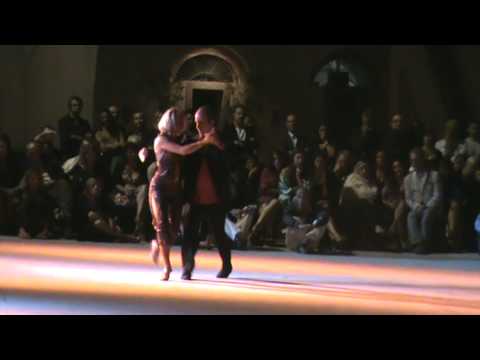
Danced to it
Music from 1927–1975 · danced on film 2008–2026
2008: 4, 2009: 4, 2010: 4, 2011: 4, 2012: 4, 2013: 1, 2014: 4, 2015: 3, 2016: 1, 2019: 4, 2020: 5, 2021: 1, 2022: 2, 2023: 1, 2024: 3, 2025: 5, 2026: 2


What we don't know yet3 of 4 known
The year it was written.
Data: recordings, facts and sources
Recordings by year
Source: TangoCloud catalogue
1927: 1, 1936: 1, 1938: 1, 1944: 1, 1946: 1, 1950: 1, 1953: 1, 1959: 1, 1965: 1, 1975: 1
In other catalogues3
tango.info · T0370017541
Single sourceTodoTango · tema/28
Single sourceMusicBrainz · e906d12d-c09a-4aef-b59b-137cde76465asource
Single sourceComposer2
Composed by Carlos Gardel
Single sourceComposed by José Razzano
Single sourceLyricist1
Lyrics by Celedonio Flores
Single sourceListen
- Mano a manoFrancisco Canaro1927
- Mano a manoFrancisco Lomuto · Jorge Omar1936
- Mano a manoFrancisco Canaro · Roberto Maida1938
- Mano a manoFrancisco Lomuto · Alberto Rivera1944
- Mano a manoAlfredo De Angelis · Carlos Dante1946
- Mano a manoAlberto Mancione · Francisco Fiorentino1950
- Mano a manoFrancisco Canaro · Alberto Arenas1953
- Mano a manoFlorindo Sassone · Fontán Luna · no clip yet1959
- Mano a manoMiguel Caló · Raúl del Mar, Héctor Gagliardi, Lucho Gatica · no clip yet1965
- Mano a manoHugo Diaz1975
Ask Tangopedia
Answers only from cited facts, each with its source.