Venue
Club Sunderland
Club Sunderland is a neighborhood social and sports club in Villa Urquiza, Buenos Aires, formally founded on 15 August 1921 by local residents who named it after an English benefactor.[28][29] Its Saturday milonga, long known as “La Milonga del Mundo,” has operated since the 1940s and is associated with the development of the elegant, walking-based Villa Urquiza dance style and with dancers who later appeared in the international production Tango Argentino.[30][31]
Club Sunderland occupies premises at Lugones 3161 (corner with Quesada) in the Villa Urquiza neighborhood of Buenos Aires, near the boundaries with Saavedra and Coghlan.[28][32] A group of young men who already played football on local pitches decided in 1919 to form a club; they obtained funds from an English resident known as Mr. Pitt on the condition that the club bear the name Sunderland.[29] Formal foundation took place on 15 August 1921 in meetings held at the home of Juan Bermúdez on Quesada street, with participants including Juan Laruccia, the Novoa brothers, Vicente Vijuescas, Ramón Loconte, and Manuel Sáenz.[29] The club initially rented neighboring premises, later purchased lots under mortgage, and obtained legal personality in 1952.[29] Sports—football, basketball, and others—have remained central, yet the upper hall and the basketball court itself have long been adapted for Saturday-night dancing.[32]
The milonga is reported to have begun in the 1940s under the organization of tango lyricist Mario Battistella.[30] After interruptions during the 1970s dictatorship, dancing resumed in the 1980s.[30] The Saturday event acquired the popular designation “La Milonga del Mundo” because numerous dancers who later performed internationally—among them figures linked to the 1980s production Tango Argentino—first developed their craft there.[30][31] The large open floor, originally a basketball court, favored a style characterized by long walking steps, close connection to the music, and relative restraint in ornamentation, contrasting with more decorative approaches associated with southern neighborhoods.[31] Teachers such as Carlitos Pérez and his wife Rosita, who taught at the club, are credited with refining and transmitting this “estilo Villa Urquiza.”[31]
Osvaldo Pugliese is among the orchestras said to have appeared at the venue.[28] In the 1990s, when social tango was scarce in the city, Sunderland, together with neighboring Sin Rumbo and Glorias Argentinas in Mataderos, remained one of the few places where regular milongas continued.[31] Organizers have included, in different periods, Graciela and Carlos Matera and, more recently, figures such as Norma Ruiz and Jorge Rodríguez.[30][32] The event continues to draw both neighborhood residents and international visitors; capacity has at times been restricted by municipal safety inspections, leading to temporary closures and reduced attendance limits.[33] The club’s dual identity as a sports institution and a major milonga illustrates how neighborhood associations sustained social tango through periods of low commercial visibility and later contributed to its global revival.
Foundation as a neighborhood club
Local football players formalized Club Sunderland on 15 August 1921 after securing equipment funds from an English resident in exchange for the name.[29] The club purchased land, obtained legal status in 1952, and developed facilities for multiple sports while maintaining a social hall.[29] Its location on Lugones street places it within the broader Villa Urquiza milonga circuit that also includes Sin Rumbo.[32]
Milonga from the 1940s
Mario Battistella, a tango lyricist, is credited with organizing the first regular milonga in the 1940s.[30] After a hiatus in the 1970s the event resumed in the 1980s and acquired the name “La Milonga del Mundo.”[30] The basketball-court floor encouraged a spacious, walking-centered style later identified with the neighborhood.[31]
Contribution to Tango Argentino and style
Dancers who appeared in the international stage production Tango Argentino are reported to have come from Sunderland and the surrounding Villa Urquiza scene.[28][31] Carlitos Pérez and Rosita taught classes emphasizing musical walking; their approach became a reference for the local style.[31] The club therefore functioned both as a social space and as an informal training ground during the decades when commercial milongas were scarce.
References
- 28.El Club Sunderland cumple 99 años · saavedraonline.com.ar“Fue fundado el 15 de agosto de 1921”
- 29.Sunderland Club - Institución (archive) · web.archive.org“El 15 de Agosto de 1921 en reuniones que se hacían en la casa de Juan Bermúdez”
- 30.Interview Five: Sunderland Club La Milonga del Mundo · inheritingthetango.blogspot.com“The milonga started in 1940s. The founder was a tango lyricist. His name is Mario Battistella”
- 31.Continúa la clausura del club Sunderland · lacomuna12.com.ar“Allí daba clases Carlitos Pérez con su esposa, Rosita, creadores del estilo Villa Urquiza”
- 32.Clubes Sin Rumbo y Sunderland · elbarriopueyrredon.com.ar“El Club Sunderland está ubicado en Lugones 3161”
- 33.Buscan fondos para reabrir la milonga más famosa · clarin.com
- 34.Los campeones mundiales de tango, en Sunderland · diariojornada.com.ar
Opening and closing
Our venue records; each note says what the year counts
- Opened
- 1921club founded 15 August 1921 (group formed 1919); Saturday milonga for decades
Milongas held here
Our records, with each night's published listing
- Milonga del Recuerdo
Milonga · Saturday · 21:30–02:00 · once a month · check the listing
Organised by Silvia Fassio y Tony Barrios · source
- Sunderland Clubfilmed 2005–2022
By decade
Dated moments, each with its source, and what we filmed
1990s
1996Carlos Perez: About now the couple take charge of the práctica at Club Sunderland, Villa Urquiza, after Lampazo's death.
source1996Rosa Forte: With Carlos, begins running the practica and classes at Club Sunderland.
source
2000s25 filmed
2006El Chino Perico: Filmed at Sunderland and with Silvina Damiani, his earliest dated footage on TangoTube.
source2007Pancho Martinez Pey: Filmed dancing with Gaby Amalfitani at Club Sunderland.
source2008-02-02Ayelén Morando: Among the dancers at a milonga final at Club Sunderland.
source
2010s191 filmed
2012Jesica Arfenoni: Exhibition with Roberto Zuccarino at Club Sunderland, February.
source2013-06-08Gallego Manolo: Canyengue with Martha Antón at the Sunderland milonga for the Corazón del Tango festival.
source
2020s1 filmed
Dancers filmed here
On TangoTube, with the videos whose titles name it · our data
Filmed here
On TangoTube, with the videos whose titles name it · our data
 José Luis Ferraro & Rika Fukuda en Milonga Malena Sunderland Club 4/42015
 Jonathan Saavedra & Clarisa Aragón en Milonga Malena Sunderland Club 1/22015
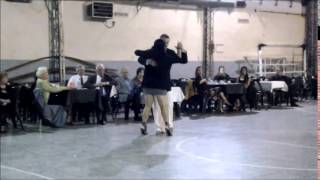 Konstantinos & Effie Chalntoupis bailan en la Milonga Malena (Sunderland Club, Buenos Aires)2014
 Corporación Tangos Alumnos - Milonga Malena Sunderland Club #32014
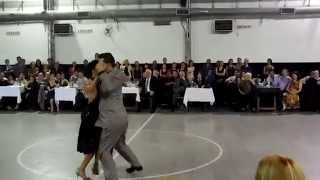 Javier Rodriguez & Fatima Vitale en Milonga Malena Sunderland Club 1/42015
 Sunderland Club Bs As.2011
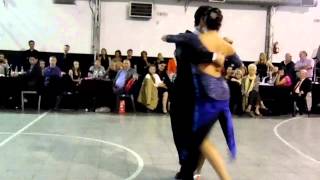 Vanesa Villalba & Facundo Piñero en Milonga Malena Sunderland Club 4/42015
 Marta Doctorovich & Luis Anchava en Milonga Malena Sunderland Club 3/42015
Data: recordings, facts and sources
Held at2
Sunderland Club — held at Sunderland ClubSingle source
Milonga del Recuerdo — held at Sunderland ClubSingle source
Villa Urquiza basketball club whose Saturday milonga on the court is a stronghold of the neighbourhood's elegant salón style.
- Where
- Lugones 3161
Connected
From TangoTube's videos · our data
Within
Events here
- Sunderland Club436 videos
- Milonga del Recuerdo
Listen
No recordings to play yet.
Ask Tangopedia
Answers only from cited facts, each with its source.