Dancer
Carlos Gavito
Carlos Eduardo Gavito (1942–2005) was an Argentine tango dancer and choreographer best known for his starring role in the 1990s production Forever Tango with Marcela Durán and for a minimalist milonguero style that emphasised deep embrace, shared axis and deliberate pauses. He is widely regarded as one of the principal figures of the global tango revival of that decade.
Carlos Eduardo Gavito was born on 27 April 1942 in Avellaneda, Buenos Aires province, and died on 1 July 2005 in Buenos Aires of lung cancer; he is buried in Cementerio de la Chacarita.[1][2] One biographical account places his birth in La Plata in 1943 and notes that he lived as a child in Avellaneda, but the majority of sources give 1942 and Avellaneda.[3] He began dancing socially in Buenos Aires in the mid-1950s and started his professional career in 1965 in the television programme Así canta Buenos Aires.[1][4] In 1974 he joined the company of Juan Carlos Copes; his first professional partner in that setting was Cristina Rey.[5] For many years he maintained his own dance company and performed internationally with his wife and partner Helen Gavito, who had trained at the Scottish Royal Ballet School.[4] When he joined Forever Tango in 1995, Helen was not invited; the production’s director, Luis Bravo, preferred exclusively Argentine dancers.[4]
Gavito’s international reputation was sealed by his work in Forever Tango, the theatrical revue that played extensively on the U.S. West Coast and later on Broadway.[1][4] With Marcela Durán he choreographed and performed signature pieces such as “S.V.P.” and “A Evaristo Carriego,” bringing a close-embrace, pause-driven style to large stages.[1][6] Subsequent partnerships included María Plazaola, with whom he taught and performed widely in the early 2000s, as well as appearances with Natalia Hills, Geraldine Rojas, Christy Cote, Noelia Hurtado and others.[1][7] He was the only English-speaker in the Forever Tango company, which facilitated his role as an ambassador to non-Argentine audiences.[4]
His dancing was characterised by a deep, shared-axis embrace (often described as apilado), economical movement and an insistence on musical pauses.[1][6] Contemporary observers noted that “the most fascinating thing about it was precisely how little he was in a hurry. He could stop. He could wait for the music.”[6] The phrase “less is more” became attached to his teaching; minimalism and the cadence of pauses, rather than acrobatic figures, governed the dance.[1] He is frequently called “the last milonguero,” a designation that reflects both his social-dance roots and the didactic clarity of his stage work.[1] Videos of his performances with Durán and Plazaola remain standard reference material for dancers studying close-embrace technique.[6][7]
Gavito devoted more than forty years to tango, seeking methods to transmit what he had learned on the floor.[1] Workshops he gave in Europe, North America and Asia in the 1990s and early 2000s introduced thousands of students to his approach.[5][6] The actress Eva Norvind filmed a documentary, Gavito, su vida y su tango.[1] After his death, books by Ricardo Plazaola (Yo quería bailar: Carlos Gavito, vida, pasión y tango) and Massimo di Marco further documented his life and method.[2] His influence on the 1990s revival is widely acknowledged: the combination of authentic milonga experience, theatrical visibility through Forever Tango, and a teaching style that prioritised connection over spectacle helped shape the aesthetic expectations of a new global generation of dancers.[1][6]
Early career and international company work
Gavito’s professional debut in 1965 on Así canta Buenos Aires was followed by nearly a decade of work that culminated in his engagement with Juan Carlos Copes in 1974.[1][5] The subsequent years were spent largely outside Argentina, travelling with his own company and with his wife Helen, whose classical ballet training complemented his tango background.[4] This long period of itinerant performance left him relatively unknown in Buenos Aires until the success of Forever Tango in the mid-1990s brought his name back to the city.[5]
Forever Tango and principal partnerships
From 1995 Gavito and Marcela Durán were central figures in Forever Tango, choreographing and performing numbers that demonstrated close-embrace possibilities on a theatrical scale.[1][6] Their partnership is repeatedly cited for its ability to preserve the intimacy of the milonga even under stage lighting.[6] Later work with María Plazaola extended the same aesthetic into workshops and festivals across Europe, Japan and Russia; Plazaola has continued to teach milonguero technique after Gavito’s death.[7]
Style, teaching and legacy
Gavito’s “less is more” approach treated the embrace as the generative centre of the dance: walk, turn, pause and musicality all grew from the shared axis rather than being imposed upon it.[1][6] The deliberate use of silence and the refusal to fill every musical moment with movement distinguished him from more spectacular stage styles of the period.[6] Students and observers frequently describe the experience of dancing or watching him as one in which connection itself became the subject of the dance.[5][6] The documentary by Eva Norvind and the subsequent books have helped fix this aesthetic in the historical record of the 1990s revival.[1][2]
References
- 1.Biografía de Carlos Gavito por Silvina Damiani · todotango.com“Nacido en Avellaneda... comenzó su carrera profesional en el año 1965... Forever Tango, junto con Marcela Durán... el 1 de julio del año 2005.”
- 2.Carlos Eduardo Gavito - Wikipedia · es.wikipedia.org“Carlos Eduardo Gavito (27 de abril de 1942 - 1 de julio de 2005) fue un bailarín de tango argentino... Fallece a los 62 años por un cáncer de pulmón.”
- 3.Yo quería bailar. Carlos Gavito, vida, pasión y tango - Ricardo Plazaola · books.google.com“CARLOS EDUARDO GAVITO (27-4-1943 – 1-7-2005) nació en La Plata... y vivió de chico en Avellaneda”
- 4.Carlos Eduardo Gavito - Wikipedia · en.wikipedia.org“Carlos Eduardo Gavito (April 27, 1942 – July 1, 2005)... In 1995, he went to dance with Forever Tango... Helen was not invited... buried in Cementerio de la Chacarita”
- 5.Carlos Gavito · web.archive.org“first professional dance partner when he joined the Copes company in 1974... partnership with Marcella Duran was the key.”
- 6.The Legacy of Marcela Durán and Carlos Gavito · endretango.com“For them, the embrace was not an imposed shape... Everything grew out of the embrace: the walk, the turn, the pause, the musicality.”
- 7.Ricardo Viqueira & Maria Plazaola · escuelatangoba.com“From March 2002 she danced professionally with Carlos Gavito... performed and taught workshops in Buenos Aires, as well as on tours”
- 8.Biography of Carlos Gavito by Silvina Damiani · todotango.com“Known as the last milonguero... the instructor of the school «less is more» in which minimalism and pauses govern the cadence of dance”
- 9.Carlos Eduardo Gavito - Wikidata · wikidata.org“date of birth 27 April 1942 | date of death 1 July 2005 | place of burial La Chacarita Cemetery”
- 10.Biography: Carlos Gavito - TANGO.AM · tango.am“His movements were often described as deliberate and economical, focusing on the elegance and intensity of the embrace.”
- 11.A NIGHT OF BUENOS EROS – New York Daily News · nydailynews.com“the most emotionally riveting dancing is done by an older man, Carlos Gavito. The intensity of feeling between him and his sultry young partner, Marcela Duran, is extraordinary.”
- 12.Carlos Gavito & Maria Plazaola · tangotube.tv
Data: recordings, facts and sources
Partnered with29
Partnered with Marcela DuranSingle source
Partnered with Maria PlazaolaSingle source
Miguel Angel Zotto — partnered with Carlos GavitoSingle source
Partnered with Natalia HillsSingle source
Partnered with Geraldine RojasSingle source
Javier Rodríguez — partnered with Carlos GavitoSingle source
Partnered with Christy CoteSingle source
Partnered with Noelia HurtadoSingle source
Partnered with Pancho Martinez PeySingle source
Suyay Quiroga — partnered with Carlos GavitoSingle source
Diego Ortega — partnered with Carlos GavitoSingle source
Fernando Carrasco — partnered with Carlos GavitoSingle source
Partnered with Martin VicenteSingle source
Partnered with Simone FacchiniSingle source
Partnered with Giselle AnneSingle source
Partnered with Gioia AbballeSingle source
Partnered with Fatima VitaleSingle source
Partnered with Ayelen UrrutiaSingle source
Partnered with Jonny CarvajalSingle source
Partnered with Maria NievesSingle source
Partnered with Maria Paz GiorgiSingle source
Partnered with CONSTANZA VIEYTOSingle source
Partnered with Olivia performSingle source
Partnered with Mario GavitoSingle source
Partnered with Ricardo AstradaSingle source
Partnered with Jennifer BorceaSingle source
Partnered with Varo BoyerSingle source
Partnered with Silvana GrillSingle source
Partnered with Juan D'Arienzo GeorginaSingle source
Described as8
Described as Starts dancing tango in Buenos Aires.1956Single source
Described as First professional appearance, on the programme 'Así canta Buenos Aires'.1965Single source
Described as Works with Juan Carlos Copes.1974Single source
Described as Stars in Forever Tango from the mid-1990s, touring US West Coast cities and later Broadway.1995Single source
Described as 'Una charla con Gavito', a conversation with him, is recorded in August in Buenos Aires.2004Single source
Described as Dies of cancer on 1 July, aged 62; buried at Chacarita.2005-07-01Single source
Described as El Beso marks the first anniversary of his death with a free showing of 'Una charla con Gavito'.2006Single source
Described as Ricardo Plazaola publishes the biography 'I Wanted to Dance – Carlos Gavito: Life, Passion and Tango'.2014Single source
Born on1
Born on 1942-04-271942-04-27source
Partners
Danced together in TangoTube's videos · our data
- Marcela Duran2008–2026 · 46 dances
- Maria Plazaola2004–2017 · 18 dances
- Pancho Martinez Pey2022–2025 · 7 dances
- Natalia Hills2013–2021 · 6 dances
- Noelia Hurtado2022–2024 · 5 dances
Timeline
1942-04-27Born on 27 April in Avellaneda (one source gives 1943 in La Plata).
1956Starts dancing tango in Buenos Aires.
1965First professional appearance, on the programme 'Así canta Buenos Aires'.
1974Works with Juan Carlos Copes.
1995Stars in Forever Tango from the mid-1990s, touring US West Coast cities and later Broadway.
2004'Una charla con Gavito', a conversation with him, is recorded in August in Buenos Aires.
2005-07-01Dies of cancer on 1 July, aged 62; buried at Chacarita.
2006El Beso marks the first anniversary of his death with a free showing of 'Una charla con Gavito'.
2014Ricardo Plazaola publishes the biography 'I Wanted to Dance – Carlos Gavito: Life, Passion and Tango'.
Most watched videos
On TangoTube · our data
 Carlos Gavito & Marcela Duran - Caffè Dominguez, Follow @tangoexpo Full video ⬆️ #tango2024
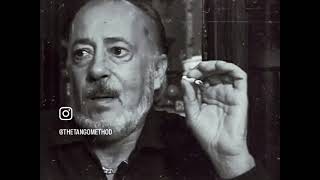 TRASNOCHANDO - Carlos Gavito2023
 Carlos Gavito & Maria Plazaola at Dandi2006
 Carlos Gavito class-nobody can teach you the feeling2006
 Homenaje a Carlos Gavito. parte 1. Erramouspe, Parra y Stasi.2020
 Nora's Tangoweek 2000 Carlos Gavito y Marcela Duran2010
Connected
From TangoTube's videos · our data
Danced at
- Gavito Tango Festival134 videos
- Nora's Tango Week3 videos
- Planetango2 videos
- Mundial de Baile de Tango1 video
- Southern California Tango Championship1 video
- Argentine Tango USA Championship1 video
Danced to
- Don Agustín Bardi · Osvaldo Pugliese · 196112 videos
- Café Domínguez · Ángel D'Agostino · 195510 videos
- Estampa de varón · Juan D'Arienzo · 19387 videos
- El ingeniero · Carlos Di Sarli · 19526 videos
- A mis compañeros · Osvaldo Pugliese · 19565 videos
- Te aconsejo que me olvides · Aníbal Troilo · 19415 videos
- Pata ancha · Osvaldo Pugliese · 19574 videos
- No mientas · Juan D'Arienzo · 19384 videos
- Decime qué pasó · Carlos Di Sarli · 19424 videos
- Organito de la tarde · Carlos Di Sarli · 19423 videos
- Champagne tango · Carlos Di Sarli · 19523 videos
- Gallo ciego · Osvaldo Pugliese · 19593 videos
Listen
- Don Agustín BardiOsvaldo Pugliese1961
- Café DomínguezÁngel D'Agostino · Julián Centeya1955
- Estampa de varónJuan D'Arienzo · Alberto Echagüe1938
- El ingenieroCarlos Di Sarli1952
- Te aconsejo que me olvidesAníbal Troilo · Francisco Fiorentino1941
- A mis compañerosOsvaldo Pugliese1956
- Pata anchaOsvaldo Pugliese1957
- No mientasJuan D'Arienzo · Alberto Echagüe1938
- Decime qué pasóCarlos Di Sarli · Roberto Rufino1942
- Organito de la tardeCarlos Di Sarli1942
- Gente amigaOsvaldo Pugliese1958
- Cardo y malvónOsvaldo Pugliese1962
Ask Tangopedia
Answers only from cited facts, each with its source.