Tango 1949
Dag Stenvoll and Michael Lavocah · 2021-03-17 · 3:54:37
Stenvoll and Lavocah describe 1949 as the year the 1940s party ends: the crisis that began with censorship and state pressure in 1948 is at its worst, Di Sarli gives up, Laurenz makes no records, Biagi makes four, and there are few new songs, hence the medleys. It is the last year the lyrical, singer-led style dominates Buenos Aires before the Piazzolla-influenced instrumental turn of 1950-51 (Troilo, Fresedo). D'Arienzo sounds softer and more joyful, with strong instrumentals that foreshadow the 1950s; Pugliese reaches his own style with Malandraca; Gobbi is the rising vanguard; Troilo is at his most lyrical, just before a break with RCA Victor. The second half is an afterparty with more Gobbi, Pugliese, Troilo and a bundle of one-offs, and ends on Julio Sosa's arrival, Jorge Vidal's discovery and a long lyric reading of La rodada.
What this episode gave Tangopedia
Facts said in the episode, each now cited to the minute it is said.
1949 is worse for the tango bands than 1948: more bands give up, Di Sarli stops, Laurenz makes no records and Biagi only four. Lavocah says the 1940s party is over.
The crisis comes from censorship, which is lifted too late, and a lack of new songs, since lyricists are uninspired by censorship. Many recordings are old songs or medleys.
Medleys appear as a way round the shortage of new songs; Stenvoll found at least four this year and notes dancers dislike them.
Lomuto spent nearly two years in Spain waiting out the difficult time and returned in 1949 with a sound similar to before.
Basso, pianist for Troilo after Goñi in 1943, formed his own orchestra in 1949; every pianist Troilo had eventually left to lead a band. Basso keeps good singers because by the late 40s the public comes for the singers.
Records played · 43
Transcript
Transcribed by machine from the audio, then punctuated; names may be misheard. Tap any line to hear it. The episode is in English, and so is its transcript.
So that was the big 1949 world hit, Joe the Schmo, with the Bernie Witovsky and the Silver Bell Orchestra. They weren't the only such band, were they? Um, I mean, everybody here must know the song Roll Out the Barrel in some version or other. Um, I always thought it was an English pub song, but it's not. It's, how's it go, roll out the barrel. Oh, exactly, you know that, that's, um, again a record that became famous in the United States but from Eastern Europe, in this case Slovak.
So there were Slovak orchestras doing polkas as well, so it was a whole thing. But that record is not just one off, it's part of a trend: émigrés making party music.
Hello, Dag, how are you doing? I'm really good. Nice to be back, and you? Yes, good to be here in 1949 and good to have a little bit of spring going on outside. Yeah, and you redecorated your room. I turned the whole room through 90 degrees. Exciting stuff. You know, you have to do what you have to do these times, get some change in life. I know. We can't do anything else new.
Chapter · 2:23
The year tango ran out of songs
In 1949 bands started recording medleys.
“The party is over. The 1940s party is over.”
Yeah. So I was listening to 1948, Michael, recording, and that year was a big crisis here in tango. And I guess 1949 is picking up a bit again after the post-war crisis in Argentina.
I don't think so. I think in many ways that the crisis is really coming to a head in 1949. I think things are even worse for the tango bands in 1948, because look at the situation.
So some bands quit already in 1948, like Piazzolla. Now in 1949, more bands just give up. De Sali gives up the ghost. Lots of bands, there are no recordings. Laurence, no recordings. Biagi has four. It's a very, very difficult year for tango. The party is over. The 1940s party is over.
For several reasons, but superficially, we see the continuation of the crisis brought about at the end of the 40s through censorship, which does finally get lifted, but it's kind of too late. Argentina has killed the goose that's laying the golden eggs, up to a point, you could say. That's not the whole story, it's some of the story. And when you look at the recordings, you've been looking through the recordings, one thing we can observe from them is a lot of them are old songs. There's not much inspiration to the lyricists because of censorship, because tango's in need of renewal, and there's a real dearth of good new songs. But despite that, of course, there's some fantastic material.
Yeah, I guess there is a fewer bands but still really good, uh, good recording some of them, and as you said, Disale is out, Alfredo De Angelis is out, so that's a loss. But, uh, I think we're gonna have a good night, uh, nevertheless. I think I'm sure we shall, and I'm particularly excited to listen to Gobbi, because, uh, Gobbi, who's that exactly? Yeah, he might be on my list, we'll see.
But what you said about the selection of music drying up, it's something you see maybe in the phenomenon of medleys at this time. And the first track I want to, I mean, a medley, a collection of, uh, or a recording with elements from several songs, and this is not something you hear at milongas, because it really upset dancers if you start playing that as a DJ usually. But it's quite common this year. I came across like at least four medleys, and I want to play, uh, I won by, uh, Francisco Lomuto, which is called Selección de tangos.
I think we played the Troilo selection de Julio de Caro in the Troilo special, which was back in the summertime. Because I remember, as we listened through it, I knew what most of the songs were, but not all of them, because you only get 15 seconds before it changes. Yeah, yeah. And we leveraged the collective brain of the community to fill in the blanks. So we have had a hint of this before, but this is a very interesting observation that it's a way to cover the lack of new songs, is to make medleys. Could be from a composer or by one composer. That's quite a common way to do it. So tell us about this Lomuto one.
Well, it's a selection of tangos, and it has six different ones. So you can see if you can listen, hear what they are. And there are two singers here, Alberto Rivera and Miguel Montero. Miguel Montero, that's the name we know from other orchestras later, right? He goes on to sing with, who is it? Troilo Pugliese? With Pugliese. Pugliese, yeah. That's right.
In 1956. So Lomuto has a bit different sound here than earlier, but he does have through the 40s a darker sound, I think, to his music than earlier. Yes, Lomuto has been waiting out the difficult time in Argentina by touring in Spain. He was in Spain for nearly two years, so in 1949 he comes back and picks up where he left off, and the sound is pretty similar to what he did before. So let's hear this, six different tangos, Selección de tangos with Francisco Lomuto.

A medley of six tangos, played to show how the shortage of new songs led bands to string old ones together; Lomuto is just back from nearly two years in Spain.
Now if I play this without introducing it, I'm curious if people will recognise this was Lomuto. I think you stand a good chance on the heavy beats. And they blend together fairly well, don't they? Yeah, this was danceable in a way. Actually, yes, someone's just had a really bad idea for when they start DJing again.
Yeah, you could, yeah, right. Let's go on to, uh, a pianist, um, that worked for Troilo until this year, José Basso. Uh, he took over after, uh, Orlando Goñi in '43, and, uh, do you know why he's formed, he formed his own orchestra this year? Do you have any idea about why he left Troilo?
I think he just got bored. Wanted to be his own man. Troilo is so boring. It's so boring. The Troilo Orchestra is a factory for orchestra leaders. Every single pianist that played for Troilo left him eventually and formed his own orchestra. So I think he wanted to go out on his own. I guess they were inspired.
And when you listen to the sound, he's wise. He doesn't really attempt to copy Troilo. He makes, we call it, elaboración intermedia, intermediate complexity. The sound has got Troilian features, but it's a little bit simpler overall. And the other thing that he's very wise about is he takes care to have always good singers in his band. Because by the late 40s, a lot of the public are coming to listen to their favourite singers. So if that means stealing them from other people, so be it, and that's something that happens a great deal during this year.
Yeah, and in this I'm going to play two tracks for him, and the great singer, one of the great singer you talk about is Francisco Fiorentino, of course. And, uh, they made a recording this year of a tango about heavy drinking. I guess I can relate to that in this pandemic time. Somehow I find myself drinking more and dancing less, so I hope that's going to change when the pandemic is over. Anyway, it's called Tabernero, barman or barkeeper. I think we've heard this before, have we? Nothing on this show, not from, not from José Basso. Yeah, yeah, of course, yeah, earlier.
And, uh, yeah, it's, uh, when is it recorded with Troilo in, uh, 42 maybe? Um, yeah, earlier. Anyway, it's a 41, and, uh, Teresa, Teresa, you with us? Uh, Teresa has a great, uh, comparison of this song across different orchestras. And she writes about how also how Fiorentino sounds more and more drunk at the end. So pay attention to that, especially the last 30 seconds. Interesting.
And it's a quite common theme in tango, isn't it, Michael? A guy at the bar drinking to forget. You'd think they'd find something else to sing about. Okay, so this first. And then I want to play the waltz, Un placer, with Fiorentino and Ricardo Ruiz in duets. And this is the words we know better from a D'Arienzo 36 version and also Troilo from 42.
Yes, this is intriguing to listen to, because had you said to me, let's imagine some duets that never existed, and you picked the voice of Fiorentino, Troilo's 41 singer, and the voice of Ricardo Ruiz, the buttoned up posh non-porteño sounding singer, or Fruscedo, you wouldn't have thought they'd go together. But here they are. But it works. Yeah. Let's hear it. But first it's a Tabernero, a tango with just Fiorentino singing. José Basso.

Basso's first year with his own orchestra; a tango about drinking to forget, where Fiorentino sounds more and more drunk by the end.
♪ Music · 3:55 ·

A duet of two voices nobody would pair, Fiorentino and the buttoned-up Ricardo Ruiz, which blend beautifully; the song is known from D'Arienzo 1936 and Troilo 1942.
Almost like a serenade. There are some serenade waters from this year as well. The two voices are interesting, aren't they? When I hear of one and just the other, I think, no, they don't match, but when they are both singing together, they blend very beautifully. So I feel slightly confused by the way the voices go together there. Yeah.
There aren't that many waltzes this year, and especially not many milongas. So it's a year for tangos mostly, I guess you could say. Yes, scant production overall. But also maybe about the heaviness of this era. There are a lot of quite emotionally heavy tangos, I'd say, and that maybe tone doesn't fit so well for waltzes and milongas.
Well, what are we looking at? The 1940s have been characterised by lyricism and ever increasing lyricism. D'Arienzo exemplifies that change, although he's not the pioneer. And we know that in 1950 and 1951, the more innovative bands, Troilo and Friseido, two really good examples, really changed their repertoire quite a lot to modernise what they were doing, shifting back to a more instrumental tango with a lot of influence from Piazzolla and his new ideas. So this is the last year of this old school, the lyrical vocal school being the dominant one in Buenos Aires. So I can't say exactly, but it's related to the same phenomenon, which makes it maybe because it's this kind of transition here, it makes me, for me, interesting.
I think there's a lot of special music from this year. One of the reasons I left it for one of the latest Tango By Year programs, because I thought it was special in a way. It is a very interesting year. Hard to sum up in a few words. And not the best music, but the most intriguing possibly is D'Arienzo's music, because you can hear what he's going to do in the 50s in the sounds that he makes. Yes, we'll listen to that in a while. So intriguing recordings, the D'Arienzo ones.
So before that, uh, let's hear one of the few, the few solo singers this year, because there aren't that many, or at least not that many good recordings in my view. So but there's a really nice one by Ángel Vargas, and this is one of the few milongas, actually, uh, Del Buenos Aires de ayer. It's, uh, there it's a very nostalgic lyric about the good old days, and, uh, it has a glossa also in the beginning, this kind of spoken poetry. And I think this is Vargas himself doing the Glossa, which is kind of unusual, I guess. Usually it's someone else doing the Glossa, isn't it?
It's normally somebody else, either someone brought in specially or quite often the bands would have an announcer working with them. It could be an announcer that's to do with that venue or someone who's been working with the same artist for a long time. So just the solo artist, let's see, Alberto Castillo's recording in 1949 as well, isn't he? And we've got Ángel Vargas. And there are some other soloists, but they're trying their luck abroad. So Raúl Iriarte and Roberto Arrieta, the former vocalists of Miguel Caló, they're both trying abroad. Iriarte has gone to Chile, and then other people who've gone solo have ended up taking jobs with orchestras just to get a job.
Fiorentino would be the classic example. Tried to run his own band, didn't really work. Now he's working with Typicas again. But yes, on disc, not so many recordings by the soloists and not so many of them. Well, let's hear this quite typical milonga, I'd say. Del Buenos Aires de ayer with Ángel Vargas singing. This is backed by Eduardo del Piano.
A nostalgic milonga, backed by Eduardo del Piano, with a spoken glosa at the start that is probably Vargas himself.
♪ Music · 2:25 ·
Super nostalgic, that one. Well, isn't it? And there's another layer of nostalgia being added because tango has become less popular. So they're not just being nostalgic for, for example, Buenos Aires before the streets were remodeled in the early 1940s or for their home country; now they're being nostalgic for just how much fun it was going out dancing even five short years previously. So many layers of nostalgia.
“They're not just being nostalgic for Buenos Aires before the streets were remodeled... now they're being nostalgic for just how much fun it was going out dancing even five short years previously.”
Yeah, and the sound on this, I think it's quite obvious that uh that Vargas wanted his backing to sound a bit like when he was singing for D'Agostino. Absolutely. Because it reminds me of D'Agostino very much.
Chapter · 27:47
Why D'Agostino's singer sounds like D'Agostino
D'Agostino wouldn't leave his cafe.
Well, basically what happened was D'Agostino didn't want to go on tour. I think this was in 1947. D'Agostino sat at the same cafe every day and had the same coffee. And when the band got an offer to go on tour, and it was becoming a bit more important to accept those offers because Buenos Aires wasn't so big as it was before, and it wasn't so lucrative, he didn't want to go but the rest of the band did, so he said, all right then, off you go. So Eduardo del Piano comes in, they reorganize the band and they go without him, that's how it happened.
Okay, let's move on, and the next one, uh, just for fun, I want to put it on without you telling you what it is and let's see who you guess who who is the orchestra and uh who is uh who's singing, and so points for both and if you know it from the beginning, don't type it right away. Yes, don't type it right away if you know. It's not super difficult but it'll be interesting to see what you think about this.
A blind guessing game: identified as Francini-Pontier by the violin opening and the strapatta bass effect, with Podestá back in the band.
♪ Music · 3:10 ·
Yeah, people gets the vocalist, Alberto Podestá. That wasn't too difficult, was it? Isn't it super? What a super track. Yeah.
That was also something that I found myself listening to, preparing for this show and liking... I love it. more than normal. So let's play the guessing game. It was a band that sounded a bit like one of the Caló offshoots. So then we start picking. How could we know it was Francini-Pontier and not, say, Domingo Federico?
Well, first of all, for me, the opening notes on the violin, the opening introduction is very similar to the introduction in the tango Margo. So for me, I recognise Francini in the first couple of seconds. But let's suppose we miss that, there was another bit later on when Podestá made this wonderful vocal crescendo and then in the background you heard this sound which is strapata when the double bass player bounces his bow across the strings and that's an effect that's very classically used by Francini-Pontier, for example in A los amigos, it's an integral part of the arrangement. So for me, that was another clue as well.
And then what's Podestá doing there? So he's come back, Francini and Pontier. It's the first ever case of a double poaching. So I mentioned earlier on how Caló's vocalists separately, Iriarte and Arrieta, have left him and gone solo. So first of all, Iriarte went, so without very much urgency, he thought, oh, I need a second vocalist now. And then suddenly the other one went, he went, I need some vocalists. And then, you know, he looks across the room to the Francini-Pontier orchestra, who've got Raul Beron, who used to sing with him before, and Roberto Rufino, and he says, I'll have them both. So he poaches them both. Francini and Pontier are left with nobody. So then they persuade Alberto Podestá to come back to them. And they're joined by a second vocalist who I don't know whether I should hold off mentioning, because possibly you're planning to introduce him a bit later on.
Chapter · 33:40
The first double poaching
Caló lost both singers, then stole two back.
And one more comment in the chat window. Florian made a joke about Troilo playing on bandagnon in that band. Armando Ponzi's bandagnon sound can be quite a bit like Troilo at times. In the introvert sense and certain techniques that he has there's an album from 1968 which for which Troilo and Pontier co-led the orchestra, which is a very unusual thing to say the least in my opinion. Troilo was ill, his health deteriorated in his later years because he just overdid the bohemian life and Pontier did the whole thing, so there's a relationship with their band of young styles. Yeah. So, yeah.
Second single to Francini-Pontier. Can I mention him now? Sure, yeah.
It's a guy, well, we don't know him so well because he's just about to come into his own. It's a guy from Uruguay called Julio Sosa who's decided to seek his fortune in Buenos Aires. He gets on the boat in June, comes over, and by July he's singing with Francini-Pontier because there's a vacancy. He's introduced by a friend and bang, he's in. And he goes on to be a very successful vocalist. A vocalist who divides opinion because it's an unsophisticated voice. So a certain kind of tango lover, maybe somebody who loves Troilo, for example, more than any other band, is a bit offended by the Sosa style. It's a bit too brash for them but it reflects the age that's coming, isn't it? The 50s and 60s, the age of rock and roll, maybe we need singers like that in tango as well.
Right, let's keep the mystery and continue the guessing game and listen to one more and I can say it's still in the Caló universe. So is it another Francini-Pontier maybe with Sosa? Is it, could it be Caló himself? Is it Maderna? Is it Federico? A lot of options here. So listen to this.
Second guessing-game track: many guessed Domingo Federico because of the plain walking bass; it was Maderna, restrained and grounded for once. The lyric is friendly advice to a young woman.
♪ Music · 2:40 ·
I think that's really difficult to guess. It is. Really difficult. Several people guessed Domingo Federico, and I totally agree. It sounds like him. Yes, me too. The simple walking bass points exactly to Domingo Federico and it's not him. It's Maderna. It's Carlos former pianist that usually plays much wilder on the piano. And there's nothing of that here. Much, much more, yeah, down to earth, grounded, like Federico, I'd say. It's a good guess, people, but it was Maderna. It's a trap. Yeah, it was a trap.
And the lyrics, someone said also the lyrics are quite heavy. Not heavy, but interesting. It's kind of unusual. Is someone who sings to a girl that when she's lost her youth and splendor, when time has dimmed the glow of her beautiful 20s and when no one loves her anymore, he'll be there to uh well I was expecting well I won't be there anymore so you can regret not coming with me now, but what he says is uh uh in the final um chorus he proclaims, I'll give you my whole life and forgetting the old days my heart will love you. So a forgiving happy ending tango. That's unusual. A tango of friendship, isn't it? Yeah, I guess maybe more friendship and friendly advice. I like the lyric very much. I would love to hear it from a more powerful vocalist like from Podestá, for example. I'd like to hear him deliver that lyric. So I'm glad to know the song. Let's call him up and ask him to record this one.
Right, let's have a little excursion to Europe and listen to a song by Quentin Verdu. And this one is called Viens m'embrasser. And if any of you uncivilized listeners don't understand French, I'll post an English translation of the lyrics also along with the French one.

A French tango with a strong dance beat; Stenvoll's 'excursion to Europe' and a sensual, very square beat.
Oh, this is an absolute killer. I was thinking you played this for your last song. Oh, yeah, it could have been. Which means come and kiss me. It is compelling, first of all, beautiful, really compelling tango with a strong dance beat, beautiful voice that's clearly not Argentine style singing in French, but also the style of the vocals. And whenever I hear it, what I see in my head is the scene in Cinema Paradiso where the guy sits in the cinema and sees the reel of edited kisses when the guy had to cut all the kisses out of the film because he kept them all and he strings more together and you just get kiss after kiss after kiss after kiss and that's what I see in my head whenever I hear this, saying go, it's wonderful.
It's a beautiful melody and very sensual in a sense and the singer's name is Claudie Gilles. The first thing she sings is, I love this phrase. Come kiss me, my love. Today, it's your turn. That's a great start, isn't it? Before the guy takes it too seriously. So listen to this. Quentin Verdu with Viens m'embrasser, Claudie Gilles singing.
When it ends, I don't want it to end. I want it to go on. Very sensual. And very European in the beat. So that's a bit, yeah, very square beat. But it really has charm, this song, I think. I'm totally charmed by it. I'd love to dance to it.
You mentioned in the introduction that Juan D'Arienzo is interesting this year because you can hear the change in his music. And preparing for this, I listened to all the 22 tracks that came out a couple of months ago by Tango Time Travel, which makes it a new experience to listen to D'Arienzo from the late 40s. They are sharper, you hear more the details in the instruments, and the voices of Echagüe and Laborde also, I think, are better. So what do you think about D'Arienzo at this point?
I have complex and mixed feelings. So when I listen to Laborde singing, I think he's beginning to sound like an Echagüe. I find the voices are beginning to become a little more strident. Then a tango like Farabute, which is an Echagüe number, comes along and I pay attention to the lyric, and the lyrics very interesting, and I'm almost convinced and I think, oh wow, I love it. And then I kind of snap out of it and decide that from the point of view of the vocal numbers, it's not really my favourite period, although there's some interesting things to listen to. I'm more convinced by the instrumental numbers, where you can hear the change of style that's about to happen for D'Arienzo in 1950, when he rejects the lyricism of the 40s and goes back to the simpler, clear beat. You can hear real strength coming through in the instrumentals, whether they be new recordings or more commonly new versions of old numbers from his repertoire. So, yeah, a complex picture for me.
Yeah, I guess also I'm sort of ambiguous about the vocal numbers, but I think there are a couple of nice ones. I want to play one by Echagüe, but it's a milonga, so it's not really so important. And the lyrics is more the milonga itself. It's called Un cambio te viene bien. A change would do you good. Yeah. It's a good type system. Yeah, so let's hear that first and see what you think about this one of the few milongas from this year. Un cambio te viene bien. Juan D'Arienzo with Alberto Echagüe singing.
A milonga whose lyric gives sharp but friendly advice to a girl who wants to be rich; Lavocah prefers D'Arienzo's earlier milongas.
♪ Music · 2:04 ·
I tried to understand what this was about, but it's really hard to translate because there's so much slonfardo in the lyrics. Yeah, I've never paid much attention to this number and certainly not to the lyric, but it strikes me that the lyric has got something in common with the one earlier, because it's about giving friendly advice. Quite sharp advice, but friendly advice. What does he say? He says, analyse your past. Analiza tu pasado. You've spent 30 años en alpargatas, 30 years in slippers, i.e. because you haven't got enough money to be better dressed. Sin conseguir, without getting it. Cumplir tu sueño dorado, fulfilling your golden dream. Then it says, forget your fantasy of finding this man who's going to make you rich. It's not going to happen. So there's a kind of disillusionment in the few new lyrics that we have, which is quite an interesting theme to pick out.
There's another milonga of D'Arienzo from 1949, an instrumental, El Potro, which we know from an early recording of Francisco Canaro, but again, fairly races along. They go like a horse, these D'Arienzo milongas. They do. Yeah. For dancing, I think the earlier D'Arienzo milongas are more stimulating, more varied in terms of the rhythm patterns. Yeah, more inspiring for dancing. This is true. And for us, it's completely easy to compare the different periods because, you know, we just press a different button on our computer. And that wasn't what it was like in the day. That's something I always have to keep reminding myself. Like, for example, why didn't RCA Victor bother reissuing D'Arienzo's old numbers, because they were still new ones in the 1970s? Why do you issue the band's old greatest hits when they've got new greatest hits? Yeah. Simple as that.
But yeah, comparing them, you can't compare to the earlier period for an Echagüe, I don't think. But let's hear one of the instrumentals. And I think this is a really nice one, La maleva. Lots of nice details and quite restrained, I think, for D'Arienzo at this time. Yes, this is really, really good. This is, I'm really interested to see the reaction of our guests to this one. Yeah, and finally, let's hear one with the Armando Laborde thing, and big hit, I guess you could say, from this is Yuyo brujo, which translates as something like bewitched weed. Or I mean the yuyo is a kind of grass, or yuyo means any kind of, possibly, herbs for herbal medicine, for example, or it could just mean weeds like in Juju Verde. But yes, yeah, here it's for casting a spell. Yeah, and I agree what you said earlier, that here Laborde sounds a little bit more like an Echagüe, there's more edge to his voice than earlier in the 40s. Well, let's hear this too first, the instrument to La maleva, and then Yuyo brujo.

A restrained instrumental with lots of detail, chosen to show the change of style that is coming.
♪ Music · 2:35 ·

The big hit of the year for D'Arienzo; Laborde has begun to sound a little like Echagüe, with more edge to his voice.


Jealous guy who's had too much weed. He's been smoking the hard stuff. Yeah, probably. That song is just irresistible. It's not my favourite sound at all. But it's irresistible. Yeah, I like to dance this. Powerful, really powerful stuff. Yeah.
Good, let's have a more romantic moment with a waltz by Alfredo De Angelis, or Angelis, I guess I should say. Mi cariñito, my little darling. This is like a serenade, there's a guy singing his love hoping that one gay girl will have him. Yeah, this is a beautiful waltz, and there are many beautiful waltzes from De Angelis in the late 40s, not just the early ones. There's even a D'Arienzo version of this waltz from 1939, if I'm not mistaken, 49, I'm not mistaken. Yeah, yeah, yeah, I noticed that, but I want to play this instead. I think it's better actually. At this point, De Angelis is better than D'Arienzo. Can I just say something a bit controversial? Even in the tangos, De Angelis is pretty good in 1949. He's not to be overlooked just because we think, oh, we don't like De Angelis. It's a strong sound. The rhythmic accompaniment, the marcato of the De Angelis orchestra is a lot more intense, so those of us who might find it a bit too light on occasion, that lightness is not really present in the 1949 recordings. It's really worth a look for the tangos. Yeah, for tangos this is quite light though, and the waltzes are always lovely from De Angelis. Yeah, everyone loves those. Let's hear it, Mi cariñito, and this is with Carlos Dante and Julio Martel singing a duet, which is nice in voices, I think.
A lovely De Angelis waltz, sung as a duet; the piano plays a two-against-three figure at each break, like Peruvian waltzes.
Very positive lyric in that one. I love it, so charming. Need a bit of that waltz joy. Yeah, it's a bit different from the more heavy emotional things that you find in 1949, I think. That's very true, and the music's not so simple, isn't it? Every time you get to the little break in the vocal, the piano is playing that two against three thing. Dun, dun, dun, dun, dun, dun, dun, dun, dun, dun, dun, which we associate with the waltzes from Peru. Mm, brilliant. Yeah.
Yeah, so let's move on. And first, a warning, because we're entering the hour of drama and strong feelings. It's going to be a lot of emotionally heavy stuff, so if your heart is faint, please turn into an online program where they play milongas and Donato. But if you like... You're listening to the wrong show. But if Michael and me are a bit introvert and have a tendency towards melancholy and the dark sides of life, stay with us. First, let's go to prison and listen to Alfredo Gobbi track No la traigas, Don't Bring Her. This is another tango with a prison theme, Michael. We talked about this before. I didn't know that, but I'm aware of some other tangos from 1949 with a prison theme, but I didn't realize this one was too.
It is. No, that's right. Don't bring her. I think it's a brother probably telling his brother who is in jail that he's not going to tell or bring his mom to prison to visit him because he doesn't want her to get hurt, because she'll get devastated by knowing he's in jail. Yes. So he has to wait to see her until he gets out. And who's the vocalist? Is this Ángel Díaz? Which is a name we know from way back in time, isn't it? Or isn't it? Díaz? Or maybe it's a different Díaz I'm thinking about. Well, there are a great many Díaz's. You might be thinking of one of the two Díaz's who sang with the typical Victor and the Victor de Caro. But we know Ángel Díaz, do we not, from recordings with Sal Gang that are coming after this in 50, 51? All right, so maybe it's a new Díaz in town. Yeah, could be.
All right, so this is Gobbi with No la traigas, but let's play a second one also, as you said in the introduction, Gobbi is great this year, and there is another waltz actually called Tu amargura. And this is with a singer, a duet with Ángel Díaz and a guy named Carlos Pellegrini, but we know he's better under his stage name, which is Jorge Maciel, who some years later moves on to sing with Pugliese and becomes a really famous Pugliese singer from the mid-50s and on. Yes, the way he sings with Gobbi is slightly different to the way he sings with Pugliese. So Pugliese gets a certain sound out of him, which we associate with Maciel, a more dramatic sound. But again, preparing for this night, I've come to appreciate the style of Jorge Maciel in this year. It has a different quality to his work with Pugliese, but a very nice quality.
And just to orient the listeners again, because Gobbi is not such a well-known orchestra. This is an orchestra in the vanguard that's making complex music. There's a relationship to the output of Pugliese, to the Pugliese style and repertoire, which is most noticeable in that the tempo isn't precisely fixed. There's a little bit of flexibility in the tempo, but not nearly as much as Pugliese. So it doesn't go to extremes in the way that Pugliese does in all kinds of ways. So something in the Pugliese direction, rich musically, but not showing off quite so much. So Gobbi's a violin player. When he plays a violin solo, it's small and modest. Everything fits together in a beautiful, harmonious whole.
Yeah, and this was a Peruvian also, and Tu amargura means your bitterness, which shows that, yeah, you can expect the kind of sad lyric on this. Waltz switches, well, it's not uncommon, but it's more common with happy waltzes, I guess we can say. I like the bittersweet ones too. Yeah, bittersweetness is nice in tango, isn't it? Create some contrast in the feelings. Like life. Yeah. Well, for most of us, I guess. For some it's just bitter and for others it's just sweet. Yes, there are some for whom it's just sweet. Right. So, Gobbi, Alfredo Gobbi with No la traigas, tango, and then Tu amargura, the waltz.

A tango with a prison theme: a man tells someone not to bring their mother to visit him in jail.
♪ Music · 3:35 ·

A Peruvian waltz sung as a duet; Maciel, later Pugliese's singer, sounds different here.
Danced to it · 2 of 3


♪ Music · 2:25 ·
Yeah, those voices go beautifully together, don't they? That's a beautiful voice, and Gobbi, Gobbi, Gobbi. Play more Gobbi. It's so interesting to listen to. You have to listen more carefully than with Pugliese, but there's so many little details going on in the background, but they don't overwhelm the song, so we're aware of the complexity kind of peripherally. Really interesting music. This is music of the future. It's still modern, it sounds modern. I'd love to hear that being played and to dance to it now. Yeah, let's play more. We're ready for that now, finally, as a community, aren't we?
Even a year ago, when the DJ played the Gobbi tandem, people were going, "Ooh, Gobbi. Don't know about that." No one would remember anyway what we were playing before the pandemic, so we can just play Gobbi like it's that end. So before the pandemic doesn't exist. There wasn't anything.
And as you said, Maciel sounded a bit different, but I guess as a singer it makes sense to go from Gobbi to Pugliese. There's this kind of, Gobbi is a little bit half Pugliese, if I can use that expression. It's not Pugliese, but there's some recognisable features about the music, I think. Yes, absolutely. It's going to bring out the dramatic qualities in Maciel's voice. But conversely, it's going to suppress the more subtle qualities to his voice. There were some wonderful moments of phrasing in Maciel's vocal delivery there. Really beautiful. I love listening to that. Yeah.
Different images being offered by people in the chat window. Gobbi's Pugliese without steroids. Yeah, we know what we mean by that. Of course, it's more complex than that. But yes, this is our first point of reference, isn't it? A less extreme version of Pugliese with a more rounded presentation.
And speaking of Pugliese, let's move on to Pugliese and the 1949 edition. It's where he's really found his unique style and has full force, Michael, isn't it? And this is the year of Malandraca. Oh, where do we start? Masterpiece. Yeah, let's play, let's hear that first, but please introduce this masterpiece. The third one, I think, as you write in your book, in the Pugliese, I don't know what you call it in your book, that is his statement. Yes, okay.
So just dealing with the theme Malandraca generally speaking, we say that the Pugliese style, as opposed to making Di Caro style with Pugliese, no, the truly uniquely Pugliese style, his oeuvre is defined by three works, which are La Yumba, 1946, Negracia, 1948, and Malandraca, 1949, works that are intense and complex. In Negracia, in particular, there's a lot of polyrhythm provided by the percussive element, but there's some polyrhythm in Malandraca as well. Now, it would be very easy to assume that because of the recording dates, 46, 48, 49, that's the order that the pieces are written in. But I'd like to suggest to all of you listening that if you just listen to your feelings, you'll know that's not true. Okay? Listen to your feelings, your reactions. It's clear that Negracia is the third one to be written. It's clear. Because it's the most dark and complex. And when you listen to Malandraca, it's clearly the most joyful of the three.
There are moments in Malandraca where I had an image in my head, I don't know how many decades ago, of the dance floor strewn with flower petals and with each of the offbeats that the Pugliese violins gives us in Malandraca. It's like I gather a handful of red rose petals and throw them in the air. It's a kind of violent joy. Absolutely extraordinary. I'm getting hot just thinking about it with you. So for my feeling, Malandraca was written first. And it's possible that that's true. And it merely took him six years to get it ready for recording. And we know that Pugliese spent years, even having tracks in his repertoire, he would be performing it years before he would consider it ready for recording, which is your fixed written record, literally the record of what you're doing. So for me, Malandraca is the beginning of the Pugliese style.
And let's remember as well that the crisis of 48, which is still going on, was particularly a crisis for the Pugliese orchestra, that the government made a concerted effort to wipe it off the map, to destroy it in 1948. And that's had some impact. Okay, the oppression has lifted a little bit. In 1949, Pugliese got permission to play carnival dances on the morning of carnival. On the morning. They still didn't know if they'd be able to play. Club Atalanta had booked Basso. I can't see any of the comments in the chat window, okay, because I'm having to think about what I'm saying to you. Club Atalanta, where he was booked, that's one of the football clubs, booked José Basso because they thought, well, Pugliese's banned, he's not going to be able to play. They booked José Basso and then on the morning they got permission, the ban was lifted, and both bands played.
“In Malandraca, you don't hear that. You just hear this incredibly violent joy.”
So we can talk about Jorge Vidal later, but this, the pressure on the orchestra is also having an impact on the style, and it makes it to me all the more remarkable, because you can hear that pressure in certain other tracks that you might be about to play a bit later on, like Catuzzo, but especially in the Goracha. But here in Malandraca, you don't hear that. You just hear this incredibly violent joy. Extraordinary tango. Shall we hear it? Hit it!

Third of the three works that define Pugliese's style, and to Lavocah the first written, the most joyful, 'violent joy' despite the pressure on the orchestra.
Danced to it · 5 of 88



♪ Music · 2:45 ·
Just play it again. It's a fantastic recording. Yeah, composition. Let's hear another instrumental, two more instrumentals. First I want to play Canaro in Paris. It's funny because last week we were listening to, well, we were in 27, 26, and then Canaro actually was in Paris. This tango is about that. But I love it. I mean, yeah, of course, this unique thing about this song is the long double bass solo. It must be the longest double bass solo ever in tango, isn't it? Yes. Amazing.
Now, the double bass solo began as an improvisation. When the band played in cafes, they would play, like tandas, they would play 12 minutes on, 12 minutes off. And the idea behind that was it was very important for the bands to stop playing for a bit, because then some people would get bored and leave the cafe and then new customers could come in, because people were coming in just buying one coffee and sitting there for a long time to listen to the bands. So that was the idea. But at the same time, it was important to show that there was a band present. So one person in the band would remain on the stage and just doodle. So on this particular occasion, the bass player, Niseta Rossi, was left on the stage. So he was just improvising these bass variations for Canaro in Paris. And Pugliese heard it and said, can you do that? And so they created this arrangement.
Now, in the arrangement, the opening is absolute genius. It's just two phrases before the marcato starts, before the band start. The first is this very soft thing, Pugliese himself on the piano going up, and then you hear, in response to that, already the double bass of Rossi going boom, boom, boom, boom, boom, boom, boom, boom. The introduction itself is five seconds of absolute genius. Creates a completely different mood. Who had thought that Pugliese would be making arrangements of Canaro numbers. It's not intuitive, and it's not the only one from 1949, nor the only good one. Genius arrangement. It's a very interesting song.
And the second instrumental here, it's the one you mentioned, Catuzzo, and it's not so much known, I think. It has all the Pugliese ingredients, I think, and I love it. Curious what you other think about it. Catuzzo is, yes, this is, it's not Pugliese light, not Pugliese for beginners. This is the real deal, you know, the 190 proof, 18 year old whiskey Pugliese. And it's Ruggiero, isn't it? It's Ruggiero's piece, the first band of Nyon. And it starts with a series of astonishing discords, not chords, harmonious chords, but discords. So the opening notes are discordant.
And then, how does it go? And then you get this chord, which is a discord, and he plays it as loud as he can for a long time. Why do they do this? Well, just to feel the effect that it has on you. It's like somebody throwing a bucket of water in your face. It really wakes you up. Yeah, it's wrong. Yes. Industrial. Not a comfortable Catuzzo. Genius and slightly shocking, but not comfortable. I love it. Yeah. So let's see these two fantastic instrumentals, Canaro in Paris and Catuzzo, Osvaldo Pugliese in 1949.
Chapter · 1:28:50
The longest bass solo in tango
A bass player was left on stage to doodle.
Lavocah tells the story of the double-bass solo that began as improvisation while the band rested in the cafes.
What a variation. This song is completely underplayed, I think. I don't think I've ever heard it in a milonga. I heard it only once, played it in a milonga, and it was played by this really quiet, shy German guy, and then he produced this. I couldn't believe it. That's put some fire in your tank, hasn't it, people? Incredible play, very typical variation for a giro, when he takes a little riff and repeats it in different octaves. That's so typically the regiro. Love it.
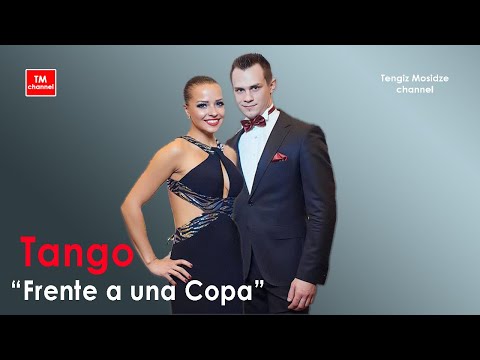
So we're not finished with Pugliese yet. This is a great year. We've got loads more, but he hasn't played Vidal. We've got to listen to Morán first. Listen to Frente a una copa, in front of a glass, another song of a guy drinking, desperate lyrics of a man drinking himself to oblivion. Yeah, so there are a few done as magnificently as in this version, I think. I really get goosebumps from Morán singing this song, it's fantastic. Yeah, he's on fire in 1949, he's really good.
And as if that wasn't enough, let's finish the previous chapter with another instrumental, Pinta brava, tough face, which has all the power and beauty, Michael, you talked about the power and beauty of Pugliese before, that he has to offer. Yeah, and an even more astonishing arrangement, because this is a Canaro number from 1915. Now how is that an obvious fit for the Pugliese orchestra? It's like saying, oh, Pugliese is going to perform El Chamuyo, you know, which we think of as OTV Kenjenge kind of thing. It shouldn't exist, but it's absolutely wonderful. It works and it rocks. Yes, he's beginning to do what he does with tangos such as La Mariposa, which is to transform them beyond the intention of their composer. Great. So first Frente a una copa, in front of a glass, with Morán singing, and an instrumental, Pinta brava.

Morán on fire in 1949; Stenvoll gets goosebumps.
Danced to it




♪ Music · 2:24 ·

A 1915 Canaro number that Pugliese transforms beyond its composer's intention, as he does with La mariposa.
So much happening in this song. It's just fantastic to listen to all these layers. Right, that's my Puddle Easy Tander for the first Melonga Backsorted. Yes, good.
Instrumental, Malandraca, Pinta brava. After those three you're going to need a drink. Yeah. Before we move on to more heavy emotional stuff, well, this is also in a sense emotional, I guess, but it's a different tone to this. Let's listen to another solo singer, Alberto Castillo, and, uh, you mentioned it earlier, Michael, and he has a fantastic, in my view, recording of Alma de bohemia this year. Yeah, I like it, it's outstanding.
Yeah, it's uh the intro is amazing, there's a cello there just, it's not for that, and it's interesting because we listened to this, uh, didn't we, last week in uh in some version, or maybe we just posted it in the Facebook group. I guess it was the Philipo was the composer of this and we posted it in the Facebook group from 1927. That's right, yes. So this is a much later and a very different recording, of course, 22 years later. Yes, interesting looking at who's working for him at this time, because he had different people leading his backing group in different years, and in this year and on this recording that you're about to play it's a guy called Eduardo Rovira. Now you might not know that, but this is a guy who was later as much in the vanguard as Pietzola was and makes some really advanced jazz sounding tango recordings. So this is quite um an adventurous musician and uh I really enjoy the arrangement that he's provided for Castillo here.
By the way, people are writing in the chat, when, why, why didn't I play Vidal? So I guess, Michael, you really have to do an after party and so we get to hear that as well. Yes. Yeah, I mean, I've been sitting here waiting for that and then you went on to Castillo. I thought, what? No Polisi Vidal? Sometimes I leave stuff just to force you to do an after party, you know. You wouldn't go to sleep if you weren't. I could hear some Vidal. That's true, yeah. But let's hear this one. Alberto Castillo, Alma de bohemia. Listen to this.
Castillo's outstanding take on a Filipo song, with an arrangement by Eduardo Rovira, later a jazz-leaning vanguard musician, and a cello in the introduction.
♪ Music · 3:06 ·
I love Castillo's voice, but this cello part is the most special, I guess, about this song. Yes, I think that's right, but Castillo's phrasing is very special. When a tango has become so famous with another way of doing it, it's not hard to establish your own style onto it, but he's got a big enough personality to do it. And Big posted in the chat window he played it at his first international gig. I can understand that people are a bit surprised or not too enthusiastic. Yes, it's not super good for dancing, but uh yeah, and Big has been playing internationally for quite a while, so I imagine that was quite a long time ago. The world wasn't ready. Yeah, maybe we can play it now. Well, it's beautiful, I guess at night, at uh late in an event, and people will be ready for this kind of music, just to really go introvert and move to this music, I think it would be wonderful. Yeah, we shan't be dropping that as the first tandem. Yeah, exactly. And the whole tandem of this, that's the other thing, it's difficult to make a tandem out of this, I guess. Um, yeah, and maybe it's too much with three or four songs like this, and to dance to, beautiful to listen to anyway.
So um, let's move on to Julio De Caro, which has a, this is a pretty good year for him, I think. And uh the first one we're gonna hear is De mi barrio, which has a female singer, and for me this was a bit mind-blowing, I think, because I mean, who would think that Julio De Caro, of all people, will have a woman singer in uh in this orchestra at this point? It's a surprise, isn't it? Yeah, Fanny Navarro. Yeah, you know anything about her? Because I, it's the only, yeah, so she came in just to sing this song probably, some some occasion. Um, not necessarily, but again, I'm sorry, I just don't know. It doesn't matter. Well, it matters, but we can't know anything, everything, can I mean.
And for new listeners, if there are any, Michael doesn't know what songs I'll be playing, so it's hard to comment on everything, but let's hear it. It's um I think it's a nice tango, and the combination of the car and a woman singer is unusual and nice, so let's hear that first. De mi barrio, Julio De Caro, with Fanny Navarro singing.

A surprise: De Caro with a woman singer, in a lyric about a woman who goes wrong that blames the social pressures of the time.
♪ Music · 2:59 ·
And this is accompanied with moral blame, but here the root of her taking a wrong turn is explained in another way, which I think is very honest to the social pressures of the time. Yeah, I like the lyric very much. Yeah, I think not a common song, so wonderful that De Caro chose to record it. It gives me a different feeling for him as a person, that he chose from a very small number of recordings. When he makes his comeback around this time and he goes on until 52, there's something like two dozen recordings in total. And a lot of those are new versions of his big old hits. So it's something quite special that he chooses this number. Yeah.
One of his big hits is Mala junta. And I think it was back in Tango 1938. I played this and there was discussion, well, is this the better one or the one from 26 or 27 or something? So I wasn't sure if I was going to play the one from 49, because people are just going to get back to that same old discussion, but I think it's interesting anyway to hear his own composition. Well, no, it's Lawrence's composition, isn't it, or is it his? Yeah. Both their names are on the sheet music. Basically Lawrence wrote it and De Caro put his name there. Yeah. But this is the one with the laughter and we know it's from Pugliese also. But let's hear it, because it's kind of interesting to hear it across time and see what changes.
Yes. And just to point out one thing, Carlos Puente has reminded us in the chat window that Julio De Caro is no longer playing violin in these recordings. And the first violin is the guy called Manuel Francia. All right. So if you hear a difference in the tone to what you remember from the 20s, okay, back in the 20s De Caro, Julio De Caro, was often playing the cornet violin. But there's an additional reason. But the second track we're gonna listen to, and this is not another one that is recorded before, it's a magnificent composition called Aníbal Troilo. This is an unmissable song to get a picture of the year. Fantastic. Yeah. It's a contributor obviously to Troilo's. But it's, yeah, I love this song. It's very special. It has a great dynamic.
So imagine if you're Julio De Caro and you're coming to the end of your career and you know you're coming to the end of your career. You're not as popular as you were before. You're not booked so often, but you see certain people following in your line, but in their own personal way, achieving great success. Troilo and Pugliese. De Caro referred to Pugliese as his spiritual son, his greatest son, rather, not a disciple or follower, son. And I imagine he might have had similar feelings about Troilo as well. Maybe. His musical son. So, Julio De Caro, instrumental time. First, the classic Mala junta that we know from earlier version by him and others, and then Aníbal Troilo, a really special track.

A new version of a De Caro classic; he no longer plays violin in these recordings, first violin is Manuel Francia.
Danced to it


A tribute to Troilo; Lavocah calls it more substantial than much De Caro, with the bandoneón standing out.



Isn't it plastic, you used to say, Michael, about this pulling out wonderful bandagnon. The bandagnon phrasing is just exquisite. It's a meaty, dense De Caro. It's really much more of a substantial meal. Okay, I'm not saying De Caro was ever short of ideas, but this has got more body to it. I love it. Bit of a wow moment listening to that one. And it's a great tribute to Troilo, because it's really the band announce that stands out. So in that sense, it fits really well. Yes, I think they're having a bit of a bromance, aren't they? I guess they have, yeah. Because at the same time, we've got the medley, Troilo does this medley, selections of Julio De Caro. Yeah. I would have played it if it wasn't that we already played it in the Love Special in December. But let's move on to Troilo anyway, which also has some great recordings this year.
And the first one I want to play is called Y volvemos a querernos. Ah, yes! Superb! Because it's one that we know maybe better from Pugliese and Morán, and I love the Pugliese and Morán version. But this I find also exquisite. And Y volvemos a querernos means the title, or we go back to loving each other. And an unusual voice here, the voice is Aldo Calderón, and it's not as, how shall I say, describe the voice, super soft, I'd say. Yeah, thank you. It doesn't have the kind of star quality of a Fiorentino or a Marino, and you can hear why he eventually was let go by the orchestra. But still I really love the vocal tone of Aldo Calderón. This is a special recording, and listen to the ending, it's like you're getting wrapped into silk or something, that's the feeling I get from the ending of this song. So, and it's probably difficult to play it in milongas because it's so, a little bit like some of those Rivero tracks, that they're so, the volume is so reduced that it might be difficult to listen to, to hear it at that. I understand what you're saying. Yes, and this is a general thing, isn't it, with these late 40s Troilo, they're quite soft in places, and if the milonga is noisy then there could be difficulties.
Well, we'll have to organize milongas where we take the chairs away. Have you seen that interview now, gosh, now who's it with, with Eduardo Arkimbao? It's only in Spanish, it's been kicking around the internet for about 10 years, and someone says to him, Chair Edward, what was it like at the milongas when you were little, and Eduardo goes, do you really want to know? And the guy says, yeah, yeah, tell me. What was it like? He says, right, I'll tell you. And he says, the first thing was, there were no chairs. And the interview says, what? No chairs? He said, chairs are for old people. We were teenagers. We just wanted to dance. And I said, what do I can buy? One of the greatest dancers of all time.
So let's take away the chairs for the next events. Yeah, I think we should. When we get back, no chairs. Then you can get more people in the room. Yeah, true. Well, let's hear this. Y volvemos a querernos with Troilo, Aldo Calderón singing. Yeah.

Known better from Pugliese and Morán; Calderón's soft voice and a silky ending.
Danced to it · 2 of 3


♪ Music · 3:08 ·
Oh, what an ending, so soft, it's beautiful, nuanced and subtle. I think we're ready for that, the world is ready for that, right? Uh, let's listen to another song that many of us know maybe better from Pugliese, but not from this year, but from 48, it's Patético. Yes, this is really interesting, isn't it, because the Troilo arrangement is also extremely interesting, very, very good arrangement, but it's a theme that's come out of the Pugliese orchestra and it sort of belongs to Pugliese, and it's really hard to tell your brain, no, there's another way of doing it than the Pugliese way. And it does stand very much on its own merits, providing we can escape the gravity of the Pugliese original.
Yeah, I noted in my comments, I noted less power, more feeling than Pugliese. And I really love this, I love both versions and we don't have to choose, that's the good thing, but I agree it's difficult not to think about Pugliese because it's so much more played. So should we hear it? Patético, instrumental, with Troilo. Let's hit it. Yes.

A theme from Pugliese's repertoire; Troilo's arrangement has less power and more feeling.


Magnificent version, someone said in the chat window. I totally agree. An exquisite work of art, particularly the moment when Troilo comes in on the bandignon very, very quietly, and then enters into this dialogue with David Diaz on the violin, which then becomes an interplay. That's an exquisite moment. Very nice.
So let's hear some more Troilo. Yes, we have to. We need to listen to a waltz by Troilo. That's a really nice one. A unos ojos. To some eyes. Or maybe to a pair of eyes. And this is Calderón singing in duet with Rivero. So that's a real jam, I think. They do it very, very beautifully. Yeah.

An introvert, bittersweet waltz sung as a duet.
Danced to it · 5 of 10


And after that, we'll listen to what I think maybe it's the best song or the best track of 1949. It's Rivero singing Mi noche triste. Ooh, that's a strong statement. The best track, maybe, of 1949. It's just fantastic. It's amazing. Yeah.
It's amazing. And I mean, this is an old Gardel number, isn't it? Don't forget around the same time, Rivero's version of Silencio was in the Troilo Orchestra's repertoire, which is the track we associate now with Gardel's death. So no surprise that Troilo makes lots of Gardelian references because he wanted his orchestra to sound like Gardel, that's what he said. Or on another occasion, to sound like it was accompanying Gardel. Yeah, this is really nice emotional stuff. We're getting close to the end. So, and this waltz is on the introvert sad side, I'd say. Bittersweet, I think you said earlier. A unos ojos. And then Mi noche triste, just Rivero singing.

An old Gardel number; Lavocah calls it the culmination of Troilo's lyricism and the end of an era.
Danced to it · 1 of 6

Mike, I've heard something. Yeah, I know what I want to say. These late 40s Troilos, instead of getting the big finish, each tango dies. Like the Troilo Rivero, Jo Te Bendigo. He just brings it down to a whisper and it fades away into nothingness, as also in Sur. And again here, which leaves a very strong emotion in the body. It's like the moment where you go, and you sort of finally express it. You don't get that moment and the feelings left kind of stuck inside. It's a very particular style.
It is, this is the culmination of Troilo's whole exploration of lyricism, isn't it, that he began, well, who knows when, let's call it 1938 something like that, when Fiorentino starts to take a bigger role in the orchestra. And now there's going to be a little break in his recorded output because there's a rupture with his record company, RCA Victor. They don't like the fact that he's becoming so modern and advanced. They'd like him just to carry on churning out hits in the old style. And Troilo hears about this and gets really pissed off and quits. And then when he comes back, he's making stuff that's even more modern, of course. A completely new style, Piazzolla-influenced style. But what that meant was that a certain amount of repertoire from this period was lost. So there are songs that Troilo didn't get to record in 1949, but also there's about four tracks or so that were recorded by RCA Vector, but then he left suddenly, so the matrices were never printed. Which, oh! There were four more that were recorded, people, and they were just thrown in the bin in 1962. A very special period.
Chapter · 2:24:04
Troilo's lyrical farewell
The last great lyrical year.
“The golden decade of the 1940s is coming to a close not just materially but emotionally or dare we even say spiritually.”
It's the end of an era. What we're listening to as that tango fades away into nothingness is the lyricism of the 40s kind of fading away, because that's not what we're going to be listening to in 1950, not from anybody. Trudy's the end of an era. It aligns absolutely perfectly with the decade, the golden decade of the 1940s is coming to a close, not just materially but emotionally, or dare we even say spiritually. So what can you play after that, Dag? Well, it's been a sad night, literally, and especially this last one. And just lift your spirits a bit in the end and make you ready for a possible after party, Michael. There's going to be an after party tonight. Great. We're happy to hear that. So let's hear the waltz, Ilusión de mi vida, the illusion of my life, and then La cumparsita. I know which orchestra you're going to play now. Yeah, exactly. It's a non-typical orchestra led by Feliciano Brunelli. What can you tell us about Brunelli?
Michael? Well, Feliciano Brunelli, an orchestra característica, he played accordion, not bandagnon. So it's a slightly different mood, but he sold a huge number of records. I think the first Argentine artist to get a gold disc. So this was very, very popular music. And you'll hear why. And the waltz Ilusión de mi vida, you'll probably recognise, or some of you will recognise it, because it was recorded and if you're going to guess a sort of popular orchestra like Brunelli, someone records one of their themes, who would it be? You might guess, I don't know, Enrique Rodriguez, someone like that. No, it's Salgan, Mr. Complexity himself, who completely transforms the number. So you may recognize it from elsewhere, but this, the original.
Yeah, and it's maybe because of the accordion, it feels much lighter and more joyful. It's party. Yeah, it's party time. Yeah, so with these two, yeah, we'll talk after, but let's listen to this first. The waltz Ilusión de mi vida and then La cumparsita, Feliciano Brunelli.

A party-time accordion orchestra, played to lift spirits; Salgán later transformed this waltz.
Danced to it · 4 of 9


♪ Music · 3:08 · The lyrics, on the song's page

Brunelli sold huge numbers of records and was perhaps the first Argentine artist to get a gold disc.
That's even more mad than I remember. The public have spoken. They love it. They love it. That's such a funny thing. All right. So that's it for the main program, people. Is that really it for the main program? Yeah.
Thanks to our sponsors, Tango Norfolk in Norwich and Tango Brass over in Bergen and the ATS, the Argentine Tango Society, and the Maribu Nightclub in Buenos Aires. And their sponsoring, of course, gives you this for free. And if you, like me, have steady incomes, please consider also supporting Michael's invaluable work through the link that you find in the event and the group. And let's just, before we go on, I will play you a song so that you can dash out and get a cup of tea.
Well, wait, I have some more things to say before you go. Oh, okay. I thought you had still got more. Okay. No, no. I was going to tell you first about in two weeks. That's what I wanted to say as well. All right. Okay. But let me say it first. No, it's you. You're wrong. All right.
Second last Tango by Year program next in two weeks will be the glorious year, 1931. And it's the year of depression, which might be a reason that there are so many good recordings from that year. Get some heavy feelings into the picture of this period, not good for the people at the time, but I think it's good for tango, ironically. So I think that's going to be a really nice program. Now it's your turn, Michael. The word and the music is yours.
Thank you so much, and thank you for your selections. Really enjoyable music as ever, started quietly and built up to a powerful ending. So let's just play something which isn't a tango, so you can all go and get a cup of tea without feeling guilty. I'd like to play you something from Cuba. This is Arsenio Rodríguez, for me, the greatest Cuban band of all time, up to and including the present day. He's the blind tres player. The tres is the small guitar that is sometimes used as a solo instrument.
I do have an announcement as well, but I'm going to save it for the tango section, so you've got to wait three minutes. In the meantime, those of you who aren't going anywhere, this is No me llores más. Don't cry for me anymore.
Lavocah's non-tango break: the blind tres player, 'the greatest Cuban band of all time'.
♪ Music · 3:15 ·
Cracking stuff. Why doesn't it sound that good nowadays? I don't know. It's enough to make you nostalgic. Now this is an after party and my main path is clear because I want to play some daddians and instrumentals. I find them intriguing and we didn't get enough. More Gobbi. More Gobbi. It has to be more gobby and again some really important instrumentals to play. Some of them historically important as well. It has to be a bit more Pugliese and I guess we'll fit in a bit more Troilo as well.
Now it's an after party so I don't really want to play lots of new orchestras, but I can't let 1949 go without playing De Angelis because it's better than you think. I'm just going to play one just as a little taster and those of you who attempted can go and check out some more after the show. This is the De Angelis version of a tango we all know and love, but 1949 style. This is Compadrón.

Played because De Angelis in 1949 is better than people think; the marcato is more intense.
Danced to it

♪ Music · 2:07 ·
What's wrong with that? Cracking stuff. So, Alfredo De Angelis with Carlos Dante, and let's just play only one by the other singer, who's working with him through these years, Julio Martel. This one is La limosna. La limosna is charity, giving money to someone you see begging in the street.

A lyric about a child begging outside a party, told to beg at churches and cemeteries instead.
So that's the tango version of the depression song Buddy, can you spare me a dime, and it's about advice that a rich man gives to a beggar. He sees a poor girl, it's August so that's winter in Buenos Aires, and she's begging outside a palace where there's a party going in and she's not getting any money, and a guy comes out and he says, don't, don't ask for money here where there's partying and rich people, because all these people know about is happiness, they don't know anything about pain. You'd be much better off begging near the churches and the cemeteries, because that's where you find good people.
Hmm, good intense. I wasn't expecting that. So, lots more good than De Angelis from 1949. If you'd like that sound, check it out.
Now let's listen to some of those D'Arienzo instrumentals, these intriguing D'Arienzo instrumentals on the cusp between the lyrical style of the 40s and the hard back to the 30s style of the 50s. Let's begin with a track that we think we know pretty well from a couple of other versions. La payanca, but in an arrangement that I think will not be familiar to most of us. So this is the 1949 D'Arienzo La payanca.

An arrangement few will know, more natural and acoustic than his 1950s sound.
Danced to it · 5 of 44


♪ Music · 2:47 · The lyrics, on the song's page
What I really love about that is that it still has some subtle moments. There's some subtlety to it, and the sound is a bit of a more natural, more acoustic kind of sound than the D'Arienzo sound in the 1950s. Even though he'll play a very similar arrangement and record it just a few years later, the impact on the soul is a little different. So that's one you know. Let's play one that probably most of us won't know. Not an obvious choice for the D'Arienzo repertoire. Again, with a subtle moment, this time provided by the left hand of the lead bandoneon player, Hector Varela, with a really unexpected solo towards the end of the piece. This is a tango honouring the composer Enrique Delfino, who wrote a lot of romantic pieces, and it's named for him, Delfino.

A tribute to Enrique Delfino with an unexpected left-hand solo by Héctor Varela on the bandoneón.
♪ Music · 2:23 ·
So that's D'Arienzo, clearly recognisably D'Arienzo, but a bit softer and more joyful. I'd really like to recommend this period, 48, 49, the instrumentals. Easy to build a nice tanda that's still D'Arienzo but with a slightly different mood. If you've got the Tango Time Travel recordings that's a really good album to have. Otherwise the Japanese Epoca de Oro Volume 7. What's a really good for listening to that? I think it's Volume 7. I'm just talking off the top of my head but you know what I mean.
Now before we go on, speaking of Tango Time Travel, you may or may not know they've been preparing a Laurens reissue, and in another half an hour or so this program will be over and you'll think, what can I do now? Well, I'll tell you what you can do, you can go over to their website and buy the new Laurens issue of Jens Ingo and Benedict. Finally, yes, yes, and I've just checked, it's not live yet, but I've been chatting all day so, you know, don't leave the party because it's not up yet. This is the greatest thing that's going to happen in 2021 and tango music, I think.
This edition, it's a complete edition, so you may or may not know Laurens didn't sell very well, especially in the early period before Podestá, because it was advanced music. So there's not many shellacks, and that means of the rare records just very difficult to find a shellac at all, let alone a good one. And Jens Ingo has been in contact with really important collectors in Montevideo like Boris Pulga, who is, you may have never heard that name, but I know him as a legendary and important collector, particularly of Carlos Gardel but more generally, and he's lent them some of the discs from his collection. So you're going to be able to listen to the Laurens Flores de alma in good fidelity for the first time ever. And if you're listening, Benedict, Jens Ingo, I love you. Me too, I love you. Just fantastic news. And others like Quédate tranquilo, Un poco suerte, that we've never heard in good fidelity. And it's complete. It also includes the final LP from 1968 where he's performing as a quintet.
So that's wonderful news coming our way in another half hour or so, if the website's updated in time. Mine isn't, but otherwise just go to bed and buy it in the morning. I'm not going to be able to sleep now, Michael. It's not going to be possible. No, no. The thought of listening to Flores de alma, in fact, after we finish the show I'm going to go and check. So.
So we really need to listen to some more Gobbi. I think Gobbi is an orchestra whose time has come. We as a community are ready. And I'm going to proceed in order of complexity. So that means instrumental, vocal, instrumental. Beginning with one that I think we know, but we don't hear at the milongas as often as we should. Rassinklub, named for a football team, full of Gobbi excitement, full of musical effects, all the different possibilities open to the orchestra are being exploited. Have a listen to this.
Lavocah's first Gobbi instrumental: the ears are satisfied and, if we were dancing, the body would be too.
Sensational! Why are we frightened of playing that rich? The ears are satisfied and if we were dancing the body would be too. Now a little bit more complex, I feel. A vocal with Maciel. Now we heard Maciel earlier in the evening from Dag. He doesn't quite sound the same as he does with Pugliese. Pugliese makes him more dramatic. Here he's a bit softer. Now this is a tango that I've never paid much attention to, it's called Sombras, shadows. The lyric is not special, it's nothing special, but the way Maciel expresses it I think is really quite stunning, so enjoy this. Alfredo Gobbi with Jorge Maciel, Sombras.

An ordinary lyric lifted by Maciel's remarkable phrasing and note-bending.


Wow! The phrasing of Maciel, the way he bent the notes. Not just once, you know, Chanel does it from time to time. Fiorentino does it from time to time. But throughout the entire vocal interpretation. Extra... I've never heard anything like that.
Third one now. You know, it would be unforgivable not to play the following tango in the Tango 1949 program, because this is Gobbi's tribute to his bohemian friend Orlando Goñi, who had drunk himself to death. It's taken him quite a few years to write this composition. It's an unusual tango for the period because it's in three parts. It's not a song. So in the very old days, by which I mean the 1910s, the standard form of an instrumental tango was established, which was A music, B music and C music. Verse, chorus and trio. Trio here meaning third piece of music, not for three people. In various different orders.
Chapter · 3:04:32
Gobbi's tribute to a friend who drank himself to death
A tango for Orlando Goñi.

Gobbi's tribute to his bohemian friend Orlando Goñi, who had drunk himself to death; unusually it has three sections, in the old style.



Then songs, of course, were always just verse and chorus. That's how songs are generally structured. And that dominated as tango song came to dominate the tango scene. All compositions became that way. But this is not. This is still in the old style of three sections of music. And each section is extremely interesting. But the most interesting one is the third one. So at the minute mark you hear the violin signal a change of key, and then if you listen very closely, I'll tap my earphones when you get there, you can hear this trick that the Gobbi orchestra has of making this real special dragging arrastre with the bandoneons. They have a special flavor with their bandoneon playing which you don't get in any other band.
So yes, Gobbi, Alfredo Gobbi and Orlando Goñi were childhood friends. There's a story of them going to the cinema when they were 12 or 13 years old to listen to the Julio De Caro orchestra playing, and lighting matches so they had enough light to write the musical notes down onto pieces of paper. That's a very touching story. Alfredo Gobbi, Orlando Goñi.
Advanced music making from 1949. Can we hear it again? I think we easily could and hear lots of new and interesting things, but why don't those of us who want to do that do that after the show? Because there's more good music that I'd really like to listen to together with you. And now we've got the perfect opportunity to build the bridge to the Pugliese orchestra, because a tango that they both recorded was Chuzas. And I have to say I narrowly prefer the Pugliese version. This is a tango of Agustín Bardi, who composed many wonderful tangos. He was also a musician but he kept a very low profile. He preferred to keep his normal day job. He worked for a railway company and just to be involved with music mostly during his holidays. So he could have had a much bigger role musically than the one he decided to take.

An Agustín Bardi tango; Lavocah narrowly prefers Pugliese's version to Gobbi's and finds it joyful.
Danced to it
And he died, I think, was it at the end of 1941? Something like that. So one of Pugliese's first recordings in 1943 is Adiós Bardi, saying farewell to him. And this is one of his compositions. And it still sounds extremely modern, and it's 1949. And this guy's been playing in bands since the 1910s. So really, un adelantado, you'd say in Spanish, someone who's ahead of his time. The Pugliese version I find really rather joyful. Enjoy. Osvaldo Pugliese, Chuzas.
Isn't that joyful? Could you stand another Pugliese instrumental? Let's listen then to Bien compadre. This is nice to play because the composer is Emilio Balcarce. Balcarce, you may have noticed, as leading backing orchestras for various soloists. He joins the Pugliese orchestra in 1948, and he also has given his name to the tango orchestra school that runs in modern times in Buenos Aires. Emilio Balcarce founded that orchestra school. So an important musician, an advanced musician, suiting the Pugliese orchestra.

By Emilio Balcarce, who joined Pugliese in 1948; listen for the bomba and a strange scratchy violin effect.

And there's some nice effects to listen out for in this tango. One is bomba, where you're hitting the instrument as though it's a drum. OK, we get that in other ones. But there's also this very strange, scratchy violin sound, which is not the chicharra, one that's produced on the strings, called escoba, which means broom. I will make some strange violin motions with my pencil here to try and clue you into when that happens. So, Osvaldo Pugliese, composition of Balcarce, Bien compadre.
Are you overheating? No, you're not overheating. Right. At least two more Pugliese tracks. Now, I would only play one Morán track, but I chose a different one.
So, Dag, you get to hear another selection with a tango where we really hear Alberto Morán using his mezzo voice when he pulls it right back and sings very, very softly for a moment, which of course creates such drama when he returns to full power and has all the girls falling at his feet on the stage. This is Descorazonado.

Morán using his soft mezzo voice; Lavocah says it raises the hairs on his arms.
Danced to it

♪ Music · 2:51 ·
How are you doing? All the hairs on my arms are standing up. Sensational. Can you imagine going to a malonga and Alberto Morán singing live? Morán said, I sang much better live than I did on the records. Think about that. Or turn that around. He's going, I'm not very good on the records. Right.
Jorge Vidal. There's only two tracks with Jorge Vidal in 1949. And I think I'm only going to play one. Keep you hungry. No. What's the story with Jorge Vidal? You know the story, but it's such a beautiful story, it's worth telling.
Alberto Morán has been the sole vocalist of the orchestra since Chanel quit out of fear in 1948, during that time when the orchestra was really being crushed by the state. Now the orchestra used to have a little tour bus. You may have seen the photograph of the D'Arienzo tour bus. So every band would have its own bus and when they had a gig out somewhere they'd all meet somewhere in town, get on the bus and go together. And the Pugliese bus used to meet somewhere two blocks away from a bar called the Bar Argentino in the Barrio of Chacarita.
And it's a bar where Pugliese himself had played and at one point in the middle of 1949 they noticed that there were huge crowds two blocks further down the street. So a couple of the musicians, not Pugliese, went to listen. And there was this guy called Jorge Vidal singing by himself with four guitars backing him. Very loud, powerful baritone voice and people standing out into the street. Sensational. And Jorge Vidal was penniless and homeless. After the gig, when everyone went home, he would take off his jacket, fold it up for a pillow and sleep on the snooker table. And then at seven o'clock in the morning, one of the waiters would wake him up because the cafe opened really early and say, you've got to go now. So he'd get up at seven o'clock in the morning, put his jacket on and try and find somewhere to spend the day. That's how he lived.
Chapter · 3:25:18
The singer who slept on a snooker table
Pugliese found his new singer asleep in a cafe.
And one morning, he's shaken awake. He opens his eyes and the person staring down at him is Osvaldo Pugliese. Pugliese says, do you know who I am? In a very polite, sweet voice. And Jorge Vidal says, yes, I know who you are. And he stands up really fast and he puts on his jacket and smooths it down and tries to make himself presentable. And Pugliese says, would you like to come and sing in my orchestra? And Vidal, now I put this in softer language in the book, but this is a live broadcast, what he actually said was, don't fuck with me, maestro.
And Pugliese, he said, no, I'm not messing. Come to the theatre, the Atlantic Theatre, down the block, tomorrow. We'll give you a voice test, pitch some numbers and arrange them for you. And he came the next day and it wasn't a rehearsal. They had three numbers ready for him to record. Now the first two were Isla de Flores, an old Gardel hit, and Titiriteros, excuse me if I pronounce that incorrectly, and they were recorded, but after the session Odeon realised that they'd made a mistake, and the matrices were no good, and they were discarded and never printed. And yeah, Dag's got his head in his hands again. Why's he got his head in his — because they only recorded 10 numbers. So it could have been 12.
“This is one of the greatest tangos of the 40s, has to be. Puente Alsina.”
But in the second recording session they recorded this. This is one of the greatest tangos of the 40s, has to be. Puente Alsina. A tango, I think we may have heard the really old version from Rosita Quiroga. Tonight the powerful voice of Jorge Vidal lamenting that his barrio is his mother that doesn't answer him any longer because it's been destroyed by redevelopment.

One of the greatest tangos of the 40s, recorded in Vidal's second session with Pugliese.



“Troilo turns up and does it better. That's fate, isn't it?”
Take a breath. Right. The other track you can go and listen to after the show, La Cieguita. Also a red hot number.
So I want to play three Troilo numbers and then I've got a surprise. And it's not a funny surprise, it's a good surprise. Not the Lauren surprise that the guys are working on. They're with us, if you can find them on the video, Benedict and Yenzingo. Now a different surprise, something I think most of you will never heard that I'm really excited about sharing with all of you.
So first a bit of Troilo. Now earlier on we heard from Dag the voice of Aldo Calderón, which Dag described as super soft, creating a very special atmosphere in the Troilo orchestra. So I agree that he's got a very special voice and I'd like to play in fact a duo recording with the voices of Rivero and Calderón. This again is one of the songs of the year. It really ought to belong to Francisco Canaro because the composer is Mariano Mores who's been Canaro's pianist right through the 40s. This is the extremely joyful Una lágrima tuya.

A Mariano Mores song that would have belonged to Canaro had Troilo not recorded it; Calderón enters first, very tenderly, then Rivero.
And had Troilo not recorded it, it would have belonged to Canaro, but as usual, Troilo turns up and does it better. That's fate, isn't it? You know, if you're a bandleader and Troilo records your song, in one way it's really great, but on the other hand, you know he's going to do it better than you did. Difficult feeling, huh? What would you prefer? You can listen to the Canaro version afterwards and decide for yourselves, but trust me on this one, this is the best version. And notice especially, the first voice to come in is the soft voice, so that's Calderón, and he comes in so so quietly and tenderly. It's a very special moment. And then Rivero joins him.
I find that really joyful and hopeful. Thanks for that word, Inesh. I think we need to listen to hopeful and joyful music at the moment, even those of us of a, what's the word, more introspective character who like the dark stuff. We need the joyful stuff too to get us through these days. So now two songs with Edmundo Rivero singing for Troilo's Orchestra and then the surprise.
Really great music, subtle music that Troilo's making in 1949 and needs to be listened to in fairly good fidelity as Dag's pointed out because often it's it's very quiet and soft and if you've got a very noisy source you're just not going to hear anything. First of all I'd like to play for you El viajero perdido. Edmundo Rivero singing solo with Troilo.
One of two Rivero songs Lavocah chose to show Troilo's subtle 1949 work, which needs good fidelity.
Time for our last tango, but not our last song. Still got the mystery song coming up. And it's going to be Troilo Rivero again. And it's Tú, You, which is one of the songs with a lyric by José María Contursi. So we could see it as part of the cycle of songs that begins with Grisel. And it's really an extraordinary lyric. I want to read a couple of bits from this lyric to us.

A lyric by José María Contursi, part of the cycle that begins with Gricel.
With the magic of your love and your goodness you taught me to smile and to forgive. That I think is not an emotion we hear very much expressed in tango music, something really quite complex. Here we go.
I don't think I can say anything to make that better than it was already. So now, the mystery song with a link to Troilo. Who was the singer before these guys? Well, we had Florio Ruiz and then we had Alberto Morán. Ruiz has gone off to other orchestras, but Morán has gone solo. And interestingly, he's signed to the Odeon label, which is the rival label to RCA Victor.
And those of you who really pay attention to these things will know that Odeon were capable of better recordings than Victor were. Partly it's probably down to the fact that they used a different brand of microphone. Partly it's due to their general technology. And there's a third factor at play here, which is that as a soloist, Morán is probably standing closer to the microphone than he was in the Troilo Orchestra. There's lots of anecdotes about Troilo telling people to sing quietly. So as a soloist, you can really hear the quality of his voice better than you can when he sings with Troilo. So that's the first thing to enjoy.
Marino, now a solo singer on the Odeon label, sings a countryside story of a rider whose horse crushed his legs.
Now if we were all together I would play this song twice. First of all we just play it, then I'd explain the lyric and then I'd play it again. But as we're together over Zoom that's a little bit over the top so I'm going to miss the first part and just tell you what it's about and then play it. So the title is La rodada, which it was really complicated decoding this lyric. Now if you type la rodada into the internet you will get videos of people falling off motorcycles because when they're really steeply into a corner and they lose it. So la rodada means the fall or the accident but when you fall off a horse or a motorcycle. So as this is set a long time ago we can assume that the song is about someone who's fallen off a horse.
And the lyric is one of these typical Argentine lyrics which is a story that it doesn't explain everything and you have to work it out for yourself. So the first lines tells us that this is set in the countryside. The afternoon drew to a close and in the wilderness that the chacha, the chacha is a bird in the Argentine Pampa that has a very strange cry. In the wilderness that the Chachal watches over, the night came on in its intense sorrow, and it seemed to bring, I know not what, some kind of mystery that gave me a shiver, and I even felt afraid. Afraid not of the traitor's dagger which strikes in the shadows, nor of the roar of the mountain lion, nor the savage cry of a band of marauding Indians, but rather afraid of your memory, your memory, Rosa, which has infected my soul.
He sings Abhi Chao. It's a really strong word. It's infected my soul and has got me in a fever. Then the music suddenly changes and he kind of rouses himself and he says, Ah, if I could only cure my legs and get back on my horse to follow your path. So suddenly we work out what's happened. He's gone after her. She's gone off with someone. He's gone after her. And he's had a riding accident and the horse has crushed his legs.
If only I could, I swear that that traitor, and he's talking about the horse now, the traitor will not roam free over the flatlands enjoying all the mares, the female horses. And then he starts screaming, he sings, Damn that accident and that old horse who's broken my legs. Away, juera, away, los recuerdos, away, memories, away, treacherous shadows, away, damn tonight. And you think that's going to be the close but then no, then the music changes again and he goes all intense and sorrowful and he closes the song with these words, close the door with lock and bolt and close my eyes, ábreme los ojos, tie my eyes shut because I don't want, I don't want to see her.
Stunning! What? Isn't that absolutely extraordinary? As somebody just said, it's an opera. The whole story, three minutes, absolutely fantastic. So, 1949, we don't have all the music we'd like, but what we've got is pretty good.
That's it from us for tonight. Um, thank you very much to Dag and for all of you for being with us. We will see you in two weeks' time for a very, very different year, 1931. Thanks, Michael. Thank you. Great after party. Some really strong music available for us to enjoy there. So as usual, we'll play you out with Pierre Gint. G'natterion.
Tango By Year is Dag Stenvoll and Michael Lavocah's, published here with their permission. The audio plays from SoundCloud.