Tango 1940
Dag Stenvoll and Michael Lavocah · 2020-05-20 · 2:34:06
1940 ends D'Arienzo's three-year monopoly on tango: Carlos Di Sarli returns from Paris, launches his own orchestra, and is crowned 'orchestra of the year' with a residency at the Marabú that outlasts anyone else's. D'Arienzo, meanwhile, loses his entire band over money and rebuilds a leaner, faster, more modern outfit around arranger Héctor Varela within about a month, ending the year with a new 19-year-old singer, Héctor Mauré. Pedro Laurenz, far less commercially successful (zero recordings in 1939), is doing, in Lavocah's words, everything Troilo would later be celebrated for, just a year early. With Europe already at war, the episode's one non-tango detour is 'When You Wish Upon a Star', 1940's big American hit about hope, set against the darker history of Fresedo's Plegaria, later used as a death march in Nazi camps.
What this episode gave Tangopedia
Facts said in the episode, each now cited to the minute it is said.
Carnival contracts for Buenos Aires venues were signed about a year ahead of the season, around March 1939, six months before D'Arienzo even had a record out, which is why he is missing from a well-known 1940 carnival photo despite being tango's biggest name by then.
Rodríguez's arrangements end on a quiet two-note tag played by a lone double bass; Lavocah found, by listening through the whole discography in date order, that recording engineers increasingly faded that note out over the years, worsening the effect on later records.
Across roughly 94 recordings with D'Agostino, Vargas sang all but 8 instrumentals; when the band tried a live instrumental after Vargas quit in 1943, the crowd booed and demanded him back.
Lavocah finds Ruiz's high, un-porteño-sounding voice completely wrong for Plegaria's solemn lyric about death, unlike the stately 1927 Bianco-Pachicha original.
Di Sarli became 1940's 'orchestra of the year', debuting in July at the Marabú cabaret in Buenos Aires (where Troilo had debuted in 1937) and holding that residency on and off for about four years, unusually long for a cabaret booking.
Records played · 32
Transcript
Transcribed by machine from the audio, then punctuated; names may be misheard. Tap any line to hear it. The episode is in English, and so is its transcript.
Good evening, friends. 1940, another great year for tango. I feel I say that every week, but it's true, isn't it? I'm Dag Stenvoll, tango DJ from Bergen, and with me I have a tango encyclopedia, Michael Lavocah, from Norwich.
“1940, another great year for tango, I feel. I say that every week, but it's true, isn't it?”
Hi, Dag. Hi, how are you? Have you entered the 1940 carnival mood?
Yeah, it's part. It's, um, we've got summer out the window here. It was 26 degrees today. For new listeners, our plot for tonight is, as usual, to play some music. I play some music from this year and we'll have a chat with Michael about the songs, the orchestras and whatever comes to our minds. And Michael still doesn't know what I'll be playing, and we do it this way to make it more, I guess, playful. Michael, are you feeling bad about not being able to play all your favourites?
Not at all, because there's so much good music we can't play it all anyway.
It's true, and there's always the after party, of course, where you can play some of it.
Possibly.
Last week, Michael, we saw what tango was like in 1937, the year that D'Arienzo became super popular.
A very significant year.
It was. And what can you say about the significance of 1940?
Well, in the intervening time, D'Arienzo has kind of had the field to himself. So, 37, 38, 39, he's had three years as the undisputed Tango King. And of course there are other bands, but they're not mature, or they don't have exposure, or they're just bubbling up. But 1940, and that's the most important thing about this year, 1940 is the year in which the competition really arrives. And the leader of the pack is Carlos Di Sarli, who's returned to Buenos Aires, in fact, a year before, the end of 38 even, after being walkabout, who knows where. Starts his orchestra and then right at the end of 39, he records Corazon with Rufino, and he's very successful very quickly. And 1940, people are calling him the orchestra of the year, and D'Arienzo doesn't have the field to himself anymore. So that's the first thing about the 1940s. And the second thing is that D'Arienzo has a crisis, because his entire orchestra quits. He's down to the last man.
Yeah, we'll listen to both those orchestras, I can promise. But on the event picture from the carnival season 1940, there are three guys, or three guys we know from tango, and Bizarrely is not among them. Why is that?
Carnival contracts were signed a year in advance, so probably in March 1939. I mean, that was six months before he'd even made a record, so he wasn't famous enough yet. Maybe somewhere small snapped him up at the last moment. I'll have to check, see if I can find out where he played.
Yeah, like last week, we'll start with the waltz. It's not the Canaro waltz this time, but we're going to start with Lomuto, who handles, in my view, the transition to this, uh, more energetic milonguera period much better than Canaro does. And in 1940, he records more than 20 titles. There are some foxtrots and other stuff, but there are 40 tangos and waltzes and many danceable ones, I think. And we'll listen to the waltz first, El Día Que Te Fuiste, with Fernando Díaz and Jorge Omar.

Opened the show because, per Lavocah, Lomuto handled the transition to the more energetic milonguera period better than Canaro.

♪ Music · 2:35 ·
It's a good swing to that song, isn't it, Michael?
Yes, and in fact, Heike has just pointed out in the chat window why that was. Because every other bar, they changed the emphasis. It went da-da-da-da-da, da-da-da-da-da. Now, that's something in the melody. That's not so much in the arrangement. But nevertheless, it makes the waltz sound a bit different.
Can you say something about the singers? Someone asked about who the singers were, Fernando Díaz and Jorge Omar.
Well, Lomuto worked with these two over a very long period, and they didn't do much else apart from singing with him. So they're good voices. They're not outstanding voices. And that's kind of like what you'd say about the orchestra, isn't it? Lomuto, solid orchestra. Excellent, but not outstanding.
Yeah, and they stayed for a long time. I want to play two tangos by them also, one with each of these vocalists. And the first one is Yo Nací Para Querer with Omar. And the second one is Riendo with Díaz. I like the lyrics of the first one. It's funny. He sings, I was born to love. I cannot help it. As soon as I see a woman, I want to win her. The other one is...
There's a few like that. There's a few like that where the guy says, I just can't help myself.
Exactly. And the other one is Riendo, which means laughing. It's more tragic. It's not a good laughter he's singing about, but about someone who loves to hide his or her pain. So let's listen to this, to Yo Nací Para Querer, I was born to love, and Riendo, laughing.

Stenvoll liked the playful lyric: a man who can't help trying to win over every woman he sees.
♪ Music · 2:13 ·

A sadder companion piece, about someone who hides pain behind a laugh.

Lomuto always has a very strong beat. Did you follow the chat window? I've started a new game, which is guessing people's profession from their favourite tango orchestra. So two people said, Lomuto, yeah, it's my favourite. And I said, are you in the government? And one of them is.
So because Lomuto, one of his brothers was a senior civil servant, and so he was friendly with government circles. When his mother died, Perón came to the funeral, and the Lomuto Orchestra played at government functions. So it was associated then, not with the aristocracy, but with the establishment in its most literal sense.
Nice strong energy. The first one, when it broke into syncopation at the end, that's a really satisfying moment. And then in the second one, we got that key change, which we spotted also last time, a modulation at the end of a song. Something that's very rare in tango. It's strange though that the energy and the excitement of the song is a little bit at odds with the sad lyrics. And I guess it's, as you said last time, it's because Troilo still hasn't made his impact.
Yes, and how much of an impact is it going to have on an old guy like Lomuto? I find, actually, one other recording of this Riendo song. It's a solo recording by Alberto Moran from 1956, so listen to that, people, after the program. It's much more coherent in terms of the music and the sad lyrics. It's really nice.
All right, that was the introduction. I'm glad many people liked Lomuto, as we talked about. It's a bit underplayed at milongas, maybe. So, yeah, next orchestra we haven't, uh, we did hear him last week actually from 37, Enrique Rodríguez, and this year he has a new singer on board. Last time we heard Flores, and I think the new singer, Armando Moreno, is a better voice for this more coming, more lyrical period. What do you think, Michael, about this new singer?
Well, I do like him, and maybe he is a better voice, but I wouldn't necessarily say adapted to the lyricism. Flores, it's very unusual the way that he goes. He's actually tempted away by the record company. They offer him a solo deal, so he quits, and Flores is the first singer to go solo.
Did he have any success, Flores? I can't remember having heard any vocal numbers.
There are a few recordings, but no, he didn't have a huge success. But then he wasn't one of the very, very top singers anyway. So, yeah, Moreno comes in to replace him. There are already some really big hits in the orchestra. So Moreno then has to sing those numbers as well.
Yeah. Is Danza Maligna one of them?
No. Oh gosh, I'd have to quickly check. It's some of the big ones. It's some of the really, really big ones.
Yeah. I like the song, and it has an interesting lyric also. I mean, it translates as Malignant or evil dance, maybe dangerous dance would also fit here. The Greek is very dark.
Yeah, and it refers to El Cuarto de Oro, the 15 minutes of tango, I suppose. So, and it's also about tango as religion. So, any worshippers out there who can relate to that? Let's listen to Danza Maligna with Armando Moreno, Enrique Rodríguez.
Chosen to showcase new singer Armando Moreno and Rodríguez's trademark vanishing final note.
♪ Music · 2:12 ·
Quote, everyone, everybody knows. Yeah, there's always these things everybody knows. Everybody knows that the ending is missing in Rodríguez. But did you hear the second note? Let's just, um, anyone? Anyone hear the ending? Because there was an ending, there were two notes. So normally tango goes, yeah, dun, dun, dun, dun, dun. But what happens in Rodríguez is that only one person plays that second note.
“Normally tango goes, dun, dun, dun, dun, dun. But what happens in Rodriguez is that... only one person plays that second note.”
So it's easier for me because I've got my headphones on. And what I heard was the whole band fell silent and the double bass went boom. And the double bass we know was normally not so loud on the records as in real life. So in the dance, you'd have heard that. But on the records, it often feels like he's locked there.
And I once arranged all the recordings of Rodríguez in date order, put my headphones on and went through. And you could hear that the problem got worse as time went on. And the reason that the problem got worse is because the record company, specifically the recording engineer, thought, oh, this is really interesting what the band are doing, this sort of quiet last note thing. I can make that better. And if you, I don't know, are you going to play another Rodríguez one?
No, no, that was the only one.
On the Como se pianta la vida, when you listen to the last five seconds you can hear the sound engineers fading the band out, just to make sure you can't hear that note, and then after that it's gone. So they added to the signature, the sound engineers, they, yeah, enhanced, enhanced, yeah.
Um, let's listen to another band, Ángel D'Agostino, and he makes his first two recordings in November this year. And I remember you said in the previous program, which was about the later year, Michael, that these earliest recordings with D'Agostino is a bit more energetic and faster than the later ones we know better.
Particularly, well, there's only two recordings in 1940, but they are both much quicker than what comes later.
What can you say about Vargas as a singer? He's perfect with D'Agostino, isn't he?
It's just perfect. It's what they'd call in Argentina a small voice. So it's not a voice like Tamoran that completely fills the room, it's a smaller voice, but exquisitely phrased, and yet they found the perfect match. There's something like 94 tracks of D'Agostino and Vargas, and in all that time there are 8 instrumentals. It's extraordinary.
Apparently, at a certain point in 1943, Vargas quit and took the first band, and then he tried to do his own thing, and when the band did one instrumental, the crowd booed. No, we're not having that, we're here for Vargas, stop that instrumental nonsense. And you say it has a small voice in that sense, and maybe that fits also with D'Agostino's piano playing, that he plays very subtle or very.
Yes, that's right. It's the texture of the orchestra is very spacious. You can always hear what each individual instrument is doing. So his voice fits that very well.
I was trying to find a translation of this song, Muchacho, and I had problems with the title itself. I found one by Paul Bottomer, the one I often use as translator, and he calls it Boy, but I don't think it really fits. How would you translate it, Michael?
In English, you'd have to say lad.
Lad, yeah.
Which is, it's not such a common word now, but that would be the right word.
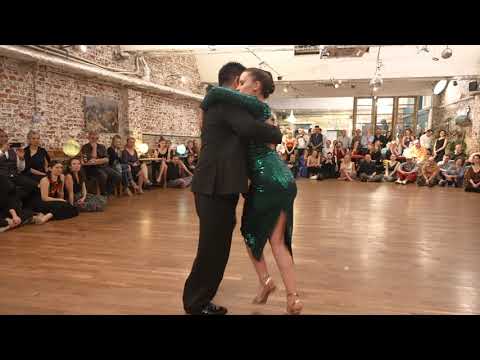
As we listen to Muchacho, let's just pay a little bit of attention to the double bass, okay? Muchacho by D'Agostino and Vargas.

Picked to highlight the double bass and D'Agostino's spacious piano texture behind Vargas's famously 'small' but exquisitely phrased voice.
♪ Music · 1:59 · The lyrics, on the song's page
So, the bass, Michael. Well, that's not the only thing to say about that song, but I did set up about that. So let's deal with that first.
The bass is terrible. He's all over the place. Peter thinks he's out of tune. Teresa says he's boring. And yeah, it's terrible. What's going on?
So let's just change our minds. So when a band is getting going, then the musicians are constantly coming and going because they're looking for other jobs. So it's not like D'Agostino was hugely successful and then finally got his record contract. No, he's bubbling under. He's at the second level.
And then RCA Victor say to him, OK, we're going to do a test recording for you. It's next Tuesday. Be there. And he hasn't got a bass player at the moment. Because in this way of people coming and going, he hasn't got to. He has to get someone in really quick who just hasn't played with the band before. And you can hear he's useless.
Any changes to the year after or the recordings? Yeah, it's another, I think it's another guy. And so they fixed that. But many people commented just how beautiful the opening was on D'Agostino's piano. Really, really beautiful. And then the lyric as well. That was a bit of a killer, wasn't it? Lad, you've never known what it is to weep tears on a woman's breast. God.
It's good. Yeah, it's not typical of D'Agostino's output. If you look at D'Agostino's output, many, many, many of the songs are about the life of the barrio, the everyday life. Teresa Esquinas describes where a particular street corner where three corners meet. El Jacare is about a jockey. So not about grand things, but about people's normal everyday life. So this one's a little bit untypical of his output.
Some more playful music will go to Edgardo Donato, and you're right, Michael, in Tango Stories that he doesn't really handle a transition to the more lyrical singer or anti-tango period after 42 and later, but this year he's still doing well, isn't he? He's still doing well. 41, yes, he can get away with not sounding lyrical and he hasn't had the explosion in his band yet, you know.
So yeah, Donato's sounding really good, and now he's got three vocalists, which is kind of unusual for an orchestra. I think it's the first time it happens on record, and of course one of them's a woman. There's Lita Morales, Horacio Lagos, who is her boyfriend. I don't know if they're married or not. And then to spice up the repertoire, Donato recruits Romeo. I mean, look at the name, Romeo.
He recruits Romeo Gavioli from Uruguay, and singers from Uruguay generally were specialists in milonga and candombe, they could bring that repertoire, not so much in this case. Anyway, you know the story: love triangle breaks out, orchestra implodes eventually. Before that happens we have some great music.
Yeah, let's listen to Sinfonía de Arrabal because that's one where they sing all three of them. And then also I want to play La Melodía del Corazón with Gavioli singing. It's very nice and it's inspired by a Chopin composition. The Tud opus 10, number three, Tristesse. So the B part of it, it's based on this. Let's talk about that a bit more afterwards. Sure.

Chosen because all three of Donato's vocalists sing on it, unusual for a recorded tango orchestra.

♪ Music · 3:34 ·

A tango built on Chopin's Tristesse Etude (Op. 10 No. 3), a melody that had already become a popular Paris tango before reaching Buenos Aires.

Some different opinions there on the use of Chopin. So first of all, let's say that it wasn't Donato's idea to make this into a tango. That had already happened in Paris. And I think actually it was Mario Melfi who did it for the first time a year or so earlier. And that popular song then in Paris was called Tristesse. And it's only from that time onwards, as far as I'm aware, that this Etude of Chopin became called the Tristesse Etude. Before that, it didn't have this name. It was just Opus 10, No. 3.
So that became a popular song, a popular tango in Paris in 1939 and then that made its way back to Argentina and I find it absolutely exquisite because it's this bittersweet thing, isn't it? On the one hand you've got an orchestra that likes to make very, very music but it's just for today it's giving itself a heavy beat and a touch of sadness. It's kind of pulling in these two directions at the same time. I think it's very special.
Love it. Let's go on to something maybe more sweet, sweet some would say, for said, oh, because he has had a change of singer, hasn't he, and Roberto Ray is gone and the new new guy is Ricardo Ruiz. The same but different. Well, let's say different but the same. So compared to Roberto Ray, Ruiz sings higher. He's a higher pitched voice. And that suits or follows, matches the development of Fresedo's orchestra, which is becoming ever more upper class, really. As time goes on, it plays less and less for dancing. By the end of the 40s, he's not playing for dancing at all. He only plays in posh hotels.
So the music's going this way. And you hear that in Ruiz's voice, but it's the same in that when you listen to the voice, it doesn't sound like a porteño voice. When you listen to Chanel singing or Fiorentino, you hear a porteño. But when you listen to Roberto Rai, no, you don't hear that. And it's similar with Ruiz. And that's why he's a good fit to the orchestra.
You remember you compared Rai to Maida and even Mauré maybe as this kind of type of vocalist, smooth and soft. Maida, yes, more in the sense of smoothness. Canaro, Maida and Roberto Rai and Fresedo were doing the same job.
And in Tango Stories you write something like Fresedo with Ruiz is very uneven from the, I think you say, exquisite Buscandote, which we heard in our 1941 program, to the ridiculous Plegaria, which is a 1940s song that I'm going to play now. I stand by that. Why is Plegaria ridiculous? Well, I think it's Rosado's interpretation. I'm just totally not convinced by it.
So if we just leave to one side, if we can, all the controversy about that song that arose much later. It was written 1926 or 1927, probably in Paris. And then we've got a wonderful recording by the Bianco Pachiccia Orchestra in Paris in 1927. And what you hear there, plegaria means prayer. And the lyrics suggest that the person making the prayer is going to die. So it's a very solemn lyric. And when you listen to Bianca and Pachiccia, that's what you get. Stately, solemn feeling. A deathly feeling, almost. And Ricardo Ruiz is completely incapable of delivering that kind of emotion.
So you've got a singer singing all the way up here with the tango that's meant to be about prayer and the possibility of death. Maybe that relates to your idea of religion. If you think religion is only about things that are up there but not also about things that are down here, then that works. But I don't believe that. No, it doesn't work at all for me. You know, you can all disagree. So it's a mismatch of music and lyrics again, like we've seen some Canaro songs from this period. Yeah, I feel it's terribly misjudged.
And the controversy around it, you mentioned, I mean, there are discussions on DJ forums about this song, should you play it or not? Because it's been related to the justice of World War II. Yes. What do you think? I really don't know. It's a very tough question.
So just in case people don't know, Eduardo Bianco, half of the Bianco Pachichichim, he's the composer of Plegaria. After the fall of the Spanish king in 1931, when Spain became a republic, he dedicated the song to the king of Spain, who's just been deposed, as the symbol of Spanish democracy. So people are always dedicating numbers to people in order to butter them up. Yeah, that's universal. You know, people would sell dedications. You could buy a dedication for a tango for 50 pesos in the early days. But this is something different. You know, Bianco is using his dedications to be a social climber. And it's always right-wing military leaders that are implicated. He dedicates two tangos to Mussolini. He plays before Hitler.
Well, having said that, he also plays before Stalin. Hitler really was impressed by Plegaria. Of course he didn't know what the lyrics meant, let's remember that. He just listened to this funereal sound that I spoke about before and he liked that tango. And we know from the testimony of Porcelain, who was a Romanian Jew who survived the camps he was in, Plegaria was played there. There were prison bands and they were forced to play this song. It became like a death march, and that happened in, we think, three camps.
Chapter · 43:18
The Tango That Became a Death March
A song written to flatter a deposed king ended up forced on prisoners in Nazi camps.
“It became like a death march, and that happened in, we think, three camps.”
So it's a two-part controversy. One, that the composer maybe had fascist tendons, and he didn't mind being associated with that. And secondly, this story, which I had no idea about when I first heard it, I have to say. If we don't play music because we don't approve of the individuals, we're going to get into sticky territory. For example, people, did you know that Ernesto Fama was a member of the Argentine fascist party?
Yeah, it was a very small party. Didn't do very much. It was short-lived. But he was a member. So with that knowledge, should I now go, oh, all Fama songs are bad and I won't play Ernesto Fama anymore? No, I'm not going to do that. But Plegaria is a special case. Yeah, it is.
Well, let's listen to it in this context, at least, where no one needs to dance to it. And if you don't like the song, you can just turn down the volume. Ricardo Ruiz singing, and it's Fresedo.

Played despite Lavocah calling Ruiz's high voice a bad fit for the song's solemn, deathly lyric, to frame the discussion of its dark wartime history.

♪ Music · 1:47 ·
I do see what you mean, Michael, when I listen to it after your talk about it. This is the power of ideas, isn't it? It persuades other people to hear things your way. But if you love it, go right ahead. But it doesn't do it for me.
“I do see what you mean, Michael, when I listen to it after your talk about it. This is the power of ideas, isn't it?”
To sum up what I was saying before, Fresedo is slowly losing contact with the public. But like Canara, he's been going a very, very long time. In earlier years, he makes fantastic music. 1932 is my favourite year for Fresedo. Just as the depression really strikes Argentina, he produces the most exquisite music. And this choir singing, it's a bit unusual for Tanguyston to have this kind of choir answering to the vocalist.
Well, it is now, but it isn't historically. So maybe we all know that Ciaro recorded these hundreds and hundreds of titles with Canaro and Lomuto back in the late 20s. But that was only on the records. He was not a member of either band. And when the band went out to play for dancers, they went without a singer. And if there was a little chorus that they needed to sing, like that one, the whole band would just sing it along. So actually in the early days, choir singing was really common.
There are some interesting comments in the chat so you can check that out. There are some links to the story about this song, and there's also a link to a Polish version the way through. This is interesting. I'll listen to that after. I'm really sorry that I didn't spot that before, and thank you very much to Agatha for the link. Because I know, first of all, the guy who runs that site, it's an absolutely beautiful site. It's an example about how to do a site that's loving old music. And secondly, the recording, because I just quickly looked, the recording that they reference on there, I know the collector did the transfer as well, so I went up with all these people, but somehow this had passed me by. I'm going to go and listen to that after the show tonight, definitely. I will too.
Well, enough of this bittersweet romantic stuff, let's move on to Rodolfo Biagi. And this is, I mean, later in the program I'm going to talk about D'Arienzo losing his orchestra, his whole band, but Biagi was lost a couple of years later. Wasn't lost, he was kicked out by D'Arienzo. What kind of person was Biagi, Michael? Did he bear any grudge to D'Arienzo? Were they on speaking terms? We don't know very much, Biagi actually kept his mouth shut. But he seems to have been actually quite a quiet and calm person from the little that we know. Liked to go horse racing on Sundays. Very proper person. Orchestra was a happy ship.
Did he jump or was he pushed? Well, he was pushed in the end, but I think he'd have gone in the end anyway. And we're glad because he makes great music and a different style than D'Arienzo. Yes, a very different style. And we're going to listen to the first recording with his new vocalist, Jorge Ortiz, Toda Te Nombra. It's from June this year.
This one, it's kind of sneaking in on you. Jorge Ortiz, it's like a hand in a glove. It's absolutely perfect fit for Biagi's orchestra. And the lyric's very beautiful. It's a simple lyric. Toda Te Nombra means everything names you. And what are the things that name you? Tango's normally a city music, but the metaphors that the lyricist chooses are not city things, they're country things or natural things, like, you know, the sound of the bird song, for example. Everything around me is naming you. So I love the lyric. It's very charming. Yeah. So let's listen to that. And after that, the instrumento, La Marca del Fuego, which is also a very nice song, I think.
Biagi's first recording with new singer Jorge Ortiz, called 'a hand in a glove' fit for the band.
♪ Music · 3:13 ·
An older Juan Maglio tango reworked by Biagi; praised for combining lyricism with his trademark 'machine gun' bandoneón variations.
I love that panellon finish. It's the highlight of the song, isn't it? La Marca del Fuego, I think it's a bit of a slow burner, because at the beginning, it's not so exciting and shiny as a lot of the others. It's an old tango by Juan Maglio, I think, but then at the end, it just goes mad. This is something very typical of Biagi, that the variation for the band de neons at the end is really short. And then the first one, isn't it interesting how he manages to combine lyricism with these mad offbeats? So it's not like he attenuates those mad offbeats because he's got a lyric to deliver. No, he does both, and it works perfectly. And this band de neons variation in the second song, I find them, it's like these bursts of energy is very different from, say, Laurenz's band on variations. It's a short verse. I mean, it reminds me of D'Arienzo. Exactly. I call them machine gun variations. Machine gun, that's it. Yeah, exactly.
And I think also a lot of the waltzes of Biagi, not just with the artists, but also the early ones are really nice. I want to play one, since we need to listen to Biagi waltz. El Último Adiós with Falgá singing. It's a great song. So we'll play that and then we move on to another great pianist.

Chosen to show an early Biagi waltz alongside his better-known tangos.

♪ Music · 0:59 ·
Such a great energy in this Biagi waltz. Yeah, and right at the beginning, he records loads, doesn't he? Just like D'Arienzo when he starts. I think there's six in the first recordings. But then after 1940, we get very few, actually. Probably he had many more that he just did a la Parigi, as they say, spontaneously for dancers. But yeah, we don't have so many. I'd love to have more. Yes.
Let's go to the other great pianist, Carlos Di Sarli. As you said in the introduction, 1940 is the big year for Di Sarli. It becomes orchestra of the year. And when I was going to choose songs for this, there were some hard choices because I tried to stick within the maximum four songs per orchestra. And that's hard when you listen to Di Sarli 1940.
Yeah, Di Sarli makes his debut at the Marabou. There were like four or five really big or important cabaret nightclubs in Buenos Aires, and one of them is the Marabou, and he opens there in July. It's where Troilo made his debut in 37, same place, but they like him so much that he stays on and off for about four years, and that's a real mark of success because normally in a cabaret, they have a band in, and then after eight weeks, ten weeks, they change it to another band, so there's always something fresh for the clientele to listen to, but not in Di Sarli's case. And there's a very interesting connection of the Marabou Club to tonight's program, which I'll tell you all about at the end of the show. All right, good.
And of course, Rufino is on board and he is a great vocalist and I love his songs, but I also love the instrumentals from this early Di Sarli period. They're so energetic. When we say Rufino is on board, Rufino is mostly on board because he keeps jumping ship. When you look at the discography, what Di Sarli's doing, from 39 when he starts, is in each session he records one instrumental and one vocal number. Yeah, but there are exceptions, like there's one in 1940 where Rufino doesn't sing but Rodríguez Lezcano is singing. Who's Rodríguez Lezcano, actually? He's a fantastic singer who doesn't want to work nights. He turned Troilo down. Can you imagine turning Troilo down? No, don't want to work nights. I've got a nice job here.
Chapter · 1:02:08
The Singer Who Said No to Troilo
He turned down Aníbal Troilo because he didn't want to work nights.
So, I mean, there was a newspaper report that says, oh, we're covering for Rufino because Rufino is ill. Well, maybe, but I don't think so, because a bit later on, there's another guy, Agustin Volpe, singing one number. What's happened there? Well, Rufino's gone off because he's this out-of-control young guy who's suddenly got money and girls. So he's totally out of control. He's just a kid, isn't he? Like 18, 19 or something. He's just a kid. And there were some people that age who were very mature, but he was not one of them, we're sad to say.
And the reason I'm telling this story is because of Milonguero Viejo. Because the session with Milonguero Viejo, which is the first of Di Sarli's four recordings, his first one, 1940, on that session, they're both instrumentals. Now, what happened there? Two interesting facts. One is normally he records one vocal, and second interesting fact is Milonguero Viejo as a vocal was in Rufino's repertoire. We know that. So what happened was Rufino wasn't there. I mean, this is kind of speculation, but all the pieces of the jigsaw puzzle fit. It should have been a vocal, but he wasn't there because he'd gone off. And that's how Milonguero Viejo becomes an instrumental number for Di Sarli. We're not going to listen to that one. I chose Catamarca for the instrumento. I really like this one.
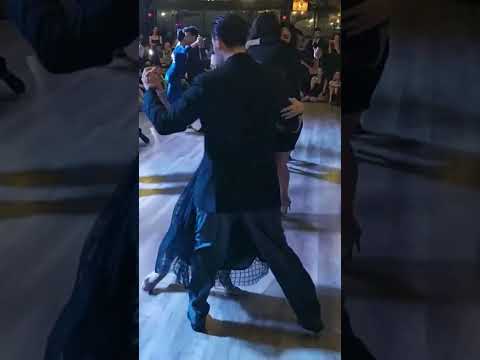
That's crazy. It's so jazzy and interesting. It is, isn't it? Rhythmically speaking, it's wild and advanced. And it has this super choppy rhythm, and then it has melting melody, and then the counter melody comes in at the end, and you have both of them. It's just a really, really nice combination. So we'll listen to this, and then the vocal En un Beso, la Vida with Rufino singing, Carlos Di Sarli.

Picked for its unusually jazzy, rhythmically wild piano and violin counter-melody, from Di Sarli's first 1940 session.
♪ Music · 2:32 · The lyrics, on the song's page
Shows how far Di Sarli's sound softened and smoothed out in just six or seven months compared to Catamarca.
♪ Music · 1:49 ·
There was quite a few interesting comments. Can I just pick up on a few in the chat window? The first thing I want to point out, Catamarca was in February and En un Beso, la Vida is in September. And the style really changed a lot in that time. What, six or seven months?
It's a real change in the style of the orchestra. Much more lyrical and soft. The rough edges are getting smoothed off. Not that they were disturbing.
In Catamarca, crazy rhythmic stuff going on. At the beginning, the left hand is playing, they'd say marcato in tres. He's playing in three. At the end, when Roberto Guisado, what a beautiful tone from his violin, really wooden tone. Gut strings, 100%, definitely gut strings. So this solo comes in, but at the same time as he does that, this song is crashing about with the left hand in the bass register.
And Teresa commented how few violin solos there are in Di Sarli, and that's absolutely right. And it's all the early tangos, like the first three recordings, there's a violin solo, and then Di Sarli slowly eliminates that from the style of the band. And it's replaced by Soli taking the violin line, which is a very different feeling. Yeah.
About the solos, because I want to play also a waltz and a milonga by Di Sarli. And the first one that Rufino recorded, the first two ones, it's Alma Mía, the voice, and this Milonga del Sentimiento. And although there is no Di Sarli solo there, there is some crazy piano playing going on that milonga.
Milonga del Sentimiento. I remember when I first heard this, because we didn't have this song for a long time. It wasn't printed on the CDs for ages and ages and ages. And finally, I got a CD with a new milonga on it, and I went, what? What is this? Because normally, Di Sarli, he's underpinning the orchestra with that left hand. So the right hand makes the little bells, but the little bells are in very defined moments, mostly. Linking phrases. That's what the right hand does a lot of the time in tango music, ever since Kobayán in 1923. But in Milonga del Sentimiento, it's like he says, I can't be bothered with all this restraint. I'm just going to show them what I can do, and he lets rip on the piano and puts himself at the front. It's fantastic.
Yeah, it's great. So first let's listen to Alma Mía, the waltz, and then Milonga del Sentimiento.

One of Rufino's first two Di Sarli recordings in 1940.

♪ Music · 1:40 ·

Notable for Di Sarli abandoning his usual restrained right-hand piano role to play a florid, attention-grabbing solo line throughout.

Fabulous complex timing from the piano and now Milonga del Sentimiento at the vertiginous 113 beats per minute.
Wow. Did you notice at a certain point, at the end of one of those, there's this crescendo phrase, and at one point the piano, I went like this with my hands, because he went down and up at the same time. He made a glissando going up, and at the very end of the glissando with the left hand, he would crash.
So from Di Sarli, let's go to Tanturi. He's back after two years without recording. And in November, he records two instrumentals, Aracá Rará and La Cumparsita. And we're going to listen to Aracá Rará. Tanturi and Aracá Rará. Just a fantastic number.
One of Tanturi's first instrumentals after a two-year gap without recording.
♪ Music · 2:00 ·
Great energy in that one. Fantastic. Somebody asked, is Tanturi playing? No, he's not, but he was last time. In the very first numbers that Tanturi records, he is playing on piano, but now he's employed another guy, Armando Posadas, I think is his name and he's just conducting the band.
I want to play one song by an orchestra that you, Michael, when we had our 41 program, you said that it lacks a marcato. It's the Carlos band. I really like one of his 1940 recordings. It's the Tango Mariposa, Butterfly, with singer Héctor Farrel. Do you know this song?
I've never heard it at Milonga. It's very strange, actually. I can't recall how it sounds, so I'm really looking forward to listening to it with you.
It's probably not played at Milonga, well there's several reasons, because it's not so good for dancing maybe, but it's also a bad song quality, so sorry for that. But listen to the double bass rhythm, I think it's really special and something I haven't heard much in tango, so it shows kind of De Caro's experimental attitude to the music.
Chapter · 1:20:49
The Song Even the Expert Had Never Heard
A tango so strange that tango's own historian drew a blank.

An obscure pick neither host nor guest knew well, noted for an unusually old-fashioned, habanera-like rocking rhythm.
♪ Music · 2:23 ·
Something different, isn't it? Really different. Lots of people are going, is that 1940? Yeah, it's a sad quality. It is 1940, people. It's September 1940.
Now, the rhythm is different, isn't it? And it's a bit like what nowadays we call tango milonga, or a little bit like an abanero rhythm. So you've got this old style, two, four, rocking kind of feeling. Not like the rest of the tangos, even that De Caro is doing. Maybe he's trying to do something old-fashioned to be trendy. I don't know. I don't know where that's from.
Very interesting. It's just very special. I would love to see that in a good sound quality from Tango Tunes, for instance. Yes. Yes.
Okay, Michael, it's Laurenz' time. In 1940, he recorded eight tracks, all with Casas, Juan Carlos Casas singing. Not nearly enough. No. Is he the best vocalist match for Laurenz, Casas?
He's a very good match for Laurenz, but Laurenz' orchestra is not predicated on having the super best vocalist match. So Martin Podesta, who comes after him, for example, also does very, very well.
Well, we're going to listen to one waltz, Mascarita, and one tango. And I had troubles in selecting the tango because there are so many nice ones. And since we did play Amorado, I think it was in 1947 program, the instrumental versions. Let's hear No Me Extraña today.
Oh, No Me Extraña is another one with what we call a variación corte, a running variación, one of these breathless variaciones that just goes on and on. Very exciting.
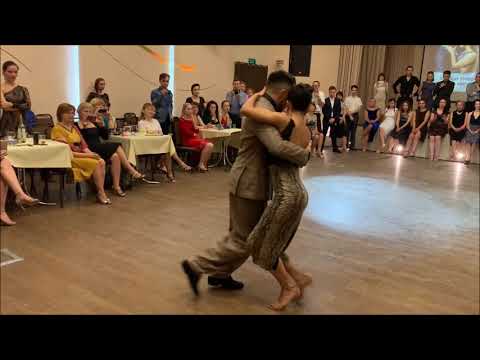
It is very exciting. And sometimes, I mean, if you go to tango events, you feel sometimes that you hear it a bit too often. But now it's several months since people have been dancing. It might be nice to listen to it. And also, I also love the lyric of No Me Extraña because it's a very simple message. The guy says, the guy's been behaving really badly with his girlfriend. So she gives him the push eventually. And he sings, no me extraña tu partida, which means I'm not surprised you left. And then the next line is, a mi misma sombra mi dolor, which means, but I was surprised how much it hurt. Think about it, guy. It's regretting, all right. So Mascarita first, the waltz, and then No Me Extraña, Pedro Laurenz.

Chosen alongside No Me Extraña as one of only eight Laurenz tracks recorded all year.

♪ Music · 4:00 · The lyrics, on the song's page

Prompted Lavocah's claim that Laurenz's 1940 work is more exciting than Troilo's at the same point.
Hot damn! Hot damn! Oh, God, it's like... Can I just say the unthinkable? In 1940 this is better than Troilo. Frank, Laurenz is doing everything that Troilo is doing, but it's more exciting, there's more dynamic. Oh my god, this is being recorded, and the whole thing that Troilo goes on to do, which is really integrating the lyric, that project is still a work in progress. It's going to bear its fruit next year. So wow. And it's not popular, it's too modern, too difficult for the mass buying public.
“Can I just say the unthinkable? In 1940 this is better than Troilo.”
You said there were 8 records. 8 tracks, that's 4 records. 8 tracks in 1940, anyone want to take a guess how many. So he's been contracted with Victor, he's at Victor at this time since 1937, when he records Arabal, you know one of the most important tango recordings of all time. So he's with the same company, let's guess how many recordings they gave him last year, 1939. Anyone like to guess? Yeah, well the answer is it's a big fat zero, zero. Best band in town, people aren't buying the records, but I mean now we go mad for it. And people commented maybe not played as often as it should be, well they just aren't enough records to choose from, are there? You know, if we play a Troilo 1941 tanda you've got 24 tracks to choose from, or 22, I'm not sure, I think it's 24, but if you choose Laurenz from this year you've got eight, you know, and from 39 you've got zero. So it's very difficult not to just keep repeating the same tracks, but so exciting, the sense of dynamic, that's what it is about Laurenz. What he's integrated, because he's got everything else, he's got all the rhythms, he's a brilliant bass player with a rock steady beat, he's got great soloists, but this sudden change of volume, just, you know, it takes me out of my chair. And when No Me Extraña came on I felt a rush of heat in my body sitting here in this chair, from the belly actually, my belly went hot.
Chapter · 1:32:46
Zero Records, Then History
The best band in Buenos Aires got zero recording sessions one year.
“The answer is it's a big fat zero. Best band in town, people aren't buying the records.”
Great, we're approaching the end almost, but I'm going to finish off with D'Arienzo this year also, but before we play D'Arienzo I want to go get into the obscure corner a little bit, because one of the fun parts with this program is that we can play some music that you don't never hear at Milongas. So I want to play two orchestras that honestly I didn't know them at all before I was preparing for this program. The first one is orchestra Mario Melfi and a song called La Trilla. Actually, it's not La, so it's different from the Di Sarli song that we know from the same year. Do you know this orchestra?
Well, Mario Melfi is one of the musicians in Paris, isn't he? And I think he's still there in 1940, so this will be a Paris recording. So I'm expecting to hear a European Parisian influence.
There is. And he's the guy who did the arrangement of Tristesse for the first time, to give you an orientation.
Nice connection. And I think I read that he's also the composer of Poema, the very... He wrote the music, that's correct. Music, yeah. And this is also his own composition and the second we're going to listen to is a band called Sebastián Piana, and he's the one who composed his milonga sentimental and he was Pedro Mafia's brother-in-law actually. What you'll hear in his recordings is there's a slight kind of milonga candombe drumming feeling to them. Exactly. The song is Felicia and it's printed in the database as, uh, Sebastián Piana, you see, orchestra típica candombe. So they actually added it. Yeah, okay, let's listen to this too. And the second thing is special about this song, Felicia, is that there's, in the beginning and near the end, this really high tone held, and I think it's a woman's voice, but I'm not quite sure. Could it be a string instrument? Let's see your opinion about that. Interesting too.
A Paris recording chosen to show the European sound Argentine bandleaders made with mostly non-Argentine sidemen.
♪ Music · 2:30 ·
An obscure candombe-tinged recording by the composer of Milonga Sentimental, picked for an unusual high sustained tone neither host could identify.
Yeah, that's something different. Fabulous. So let's just catch up. The Mario Melfi tango there. Lots of comments in the chat window, but let's put ourselves in his position. So the Argentines went over to Paris. Now, you would try to pick up musicians there. Good violinists, yes. They were fairly easy to come by, and they had quite good technique for tango often because they could play a wide variety of music. They weren't classical players.
Even a pianist you might be able to pick up. The problem was always band and young players, there weren't any local band and young players, there just weren't, you had to bring them with you. So what we heard in that recording was there was only one band and young player and that was Mario Melfi himself, so he's compensating with the orchestration that he's doing for this lack. And as well, of course, you've got this European thing that it's not syncopated. It just goes one, two, three, four.
Not quite as squarely as Canaro. Even with that, though, I'd have to agree with Birger that in terms of sophistication, it's way behind where Buenos Aires is. But it's 1940 now, isn't it? And that's from Paris. So the war's broken out and all the Argentines who can have gone home, really. And Melfi's still there. I don't know why. I'd have to look up, some of them stayed because they got married, or maybe he just thought, no, I'd like to stay on a bit longer. So there's probably fewer Argentines in that band than there were in his band even 12 months previously.
So that was the Mario Melfi. And then that wild Candombe piece. Yeah. I think it was a woman's voice. I do. Someone suggested a saw. No, I'm used to hearing musical saws on tango records, and they sound a bit different. I guess it's possible, but I don't think so.
Okay, let's get back to more well-known territory again, Juan D'Arienzo. And as you said in the introduction, he lost his whole orchestra, but he really quickly got a new one. I think already in April he starts recording. What's new with the D'Arienzo Varela Orchestra, as you call it in your book?
It's a brand new orchestra. It has nothing in common with the old one except D'Arienzo's name. So D'Arienzo knew what he wanted, and what worked and what didn't, but he wasn't a great musician. He was a second or properly third-rate violin player. He couldn't arrange, not that gifted as a composer. So he should have been ruined when he lost his whole band because all the ideas came from the band members. But he wasn't. He got a new band together, even while the old one was still playing, and Varela's in charge, and he's got a real musical education, so he updates the band.
Chapter · 1:44:02
The Orchestra Rebuilt in a Month
D'Arienzo's whole band quit on him. He had a new one recording within weeks.
“He was a second or properly third-rate violin player. He couldn't arrange, not that gifted as a composer. So he should have been ruined when he lost his whole band... But he wasn't.”
This band sounds a lot, lot different to the 1939 orchestra. And in a way, it's better able to adapt itself to the more sophisticated decade that we're now entering. And the other thing to say about the band, and picking up on comments, especially from Florian, it plays fast. Because in 1939, the D'Arienzo band was playing hard, and now they play not quite so hard, but they play really fast. And probably, I haven't checked the data, but I think this is even faster overall, because we've got more recordings in 41 than 40, but I think this is the fastest year for tango music. There's one D'Arienzo waltz that comes in at 79 beats a minute for a waltz, and it's fast. But more interesting, so in the D'Arienzo tangos you will hear that it doesn't just go syncopation and beats. You'll hear more rhythmic devices going on. Salamanca, he decorates much more and in a different way. And the first violin is a different guy, and that changes the character as well. So, yeah.
So let's listen to a couple of the songs. Entre Dos Fuegos is a great instrumental. I think it's from his first recording on the 12th of April. Yes, it's brilliant. And Salí de Perdedor, it's a milonga with Alberto Reynal singing. It's about gambling and love. And losing. Judging from the title, I came out losing.

The first recording of D'Arienzo's brand-new, Varela-arranged orchestra.
♪ Music · 3:20 ·

A milonga about gambling and love, with the title itself, 'I came out a loser,' noted as fitting.

It's a lot of energy. It's amazing that he can do this just after, some weeks after he got a new band. Well, he had the time parallel because they gave notice. So he got on the ferry. They were in Uruguay. He got on the ferry over to Buenos Aires, made Héctor Varela an offer he couldn't refuse, and then went back to Uruguay. So he's performing in Uruguay with an old band, while Héctor Varela is assembling and rehearsing the new band. They were still out of the studio for about a month, but still, you know, four weeks for a completely new band and a new sound is amazing.
And it's really different to the D'Arienzo that we heard in the last programme, isn't it? Much more sophisticated, not as heavy, more playful. And even in that, there's some sense of dynamic. He's going to lose that eventually, but for now there's a little bit of volume dynamic in it as well. And we heard about Reynal singing, and you also had Carlos Casares singing. I'm going to play Riendo. It's a tango. At the end of the year, his new vocalist, Héctor Mauré, comes in and listens to a waltz. But can you say something about Mauré, his entrance as a singer for D'Arienzo?
Chapter · 1:51:54
A Boxer's Voice
Before he sang tango, he fought for a living.
Well, Héctor Mauré was a boxer. And I think he'd been singing with the orchestra of Pugliese's brother, if I have it right, Alberto Pugliese. As we've just heard, this orchestra played fast. So that's another demand, a requirement upon the singer. You have to be able to sing that fast. And Carlos Casares couldn't really. He wasn't really up to the job. Reynal is kind of taking a Chagwe's job, not exactly because it's a new band with a new repertoire, but it's more at the sort of the harder tough guy lyrics. Then you need someone to do the romantic lyrics, and Casares, he's not the right man for that job, and he can't really keep up with the pace of the band. And Mauré comes in, and the most beautiful soft tone that he has really complements what the band is doing. And yeah, we know they go on for four years of great success and growing lyricism.
And this was Miedo. It's recorded on December 31st. So it's a Happy New Year song. They're often in the studio on New Year's Day. You don't get much rest when you're a tango musician. And as I said, one of the earlier programs, this is a boy band. I mean, Mauré is 19 year old. The pianist Salamanca is 19 year old. I mean, they're just kids. They are just kids, but they've been playing in their bedroom since they were nine or something. There wasn't Nintendo then, and you couldn't listen to music on your phone, so you had to make your own, and people did. So people got better younger. Not compared to today's virtuosos. All virtuosos start really young, but there was a far greater number of musicians. Every household had a musician in it.
Okay, let's listen to Río Paiso and Miedo by D'Arienzo.
Shown as an example of Casares struggling to keep pace with the new, much faster band, prompting the move to Mauré.
♪ Music · 3:04 ·

Mauré's debut recording with D'Arienzo, cut on New Year's Eve, opening a four-year partnership.

Hard to sit still to this kind of music, isn't it? They love it. Look at the comments. People love it. So exciting. The young Mauré there. Very mature voice, isn't it? Like when Podestá starts, right from the beginning, it sounds like a mature voice. And like Rufino, I mean the same year, it's also just like 18 or something. Yeah, spectacular voice, not so mature at the beginning, I'd say, but a spectacular voice for sure.
Okay, time's up. No. It's Compasita time. But before that, let's again thank everyone for attending, and thank you also for supporting us. I mean, we get a lot of really nice feedback comments, and also it's very nice, many of you have supported Michael's fundraiser so that he can keep working. Yeah, thank you all very much for that. I'm really touched by your support from everyone, and it's nice to see how many people have supported me, and yeah, I do really appreciate it. Thank you especially to our sponsors, which are our two tango clubs on either side of the water.
And I mentioned the Marabu nightclub in Buenos Aires, and they are now our sponsor as well. Can you believe that? The Marabu, which was rescued from demolition by some concerned people, which call themselves the ATS, the Argentine Tango Society. They rescued the Marabu and reopened it, and they're now also sponsoring the show. So we've got a direct connection to Carlos Di Sarli's redoubt for all those years, which is an amazing connection to have. So yeah, thank you to you all, we're enjoying it, and I want to keep going.
Yeah, yeah, you'll have the chance for your after party after the Compasita. Yeah, and since you're sponsored by a nightclub, it's only fitting that you do an after party. All right, okay, Compasita. There's only two recordings I found from this year actually, and one is with Tanturi from November. It's a nice one, but the problem with that one is I played it already in the 1941 program, because they were non-Compasitas from that year recorded that year. Yeah, and I wasn't really looking far ahead. I wasn't expecting maybe to have so many programs, we were just doing 1941 and see how it goes. And since there's only one other, I'll play that one, and it's not something you've heard often, I think. It's by the Japanese orchestra Sakurai Orchestra, and on vocals Shibata Mutsumi. I've never heard this. No, yeah.
Dag, can I just say, by the end of these programs you are going to be the world expert on Compasitas. You know them better than I do already. Like every week you go, well, this is very interesting, because there were only nine Compasitas in this particular year, or you say, I think you came out with this gem that in the whole golden age there's only two years that haven't got recordings of La Cumparsita. I mean, I never knew anything like that. You're amazing. I mean, there are more than 300 recordings in this period. So it's amazing. But actually, 1941 was one of the years, one of the two years there were no recordings. So, but let's listen to La Cumparsita with the Japanese orchestra Sakurai Orchestra with Shibata Mutsumi singing, and good night. And if you hang on, maybe there'll be an after party after, Michael playing music.
Well, we didn't actually talk about the next year. What we'll do next week, I've got no idea. Can you give me a clue? I don't have an idea either. I haven't decided yet. But it'll be some other year. I think I'm in favour of making a big jump. Maybe no way to 1950 or even back to 1930. Either or. What would you prefer, Michael? I think the bigger jump would be to go, because we've done 51. So I think the bigger jump would be to go back in time to 30 or even 29. Ooh, even 29. But that's just to suggest, it's your call. It's your call. But yeah, think about it.
We'll announce it in the group. So look at all the votes coming in, we should put a poll up. No, it's not a democracy. Okay, whatever Dag decides, that's what we do. But very interesting to see what the votes coming. Someone's voted for 1066. Yes, thank you, Charles. The great British sense of humor is not dead yet. Yeah, you can keep voting through the Compasita, and we'll count after and see what happens. Maybe listen to it.
Chapter · 2:03:46
Tango's Most Famous Song, Sung in Japanese
La Cumparsita, recorded in Tokyo, in 1940.
A Japanese-language recording of tango's most famous song, played as a curiosity to close the main set.
♪ Music · 2:27 · The lyrics, on the song's page
Absolutely beautiful and so interesting. It's beautiful. A lot of interesting instruments. Thank you so much, Dag. Thank you, Michael.
Selections, very interesting, and wow, who didn't we hear? We got through the year without listening to Canaro, I think, unless I blanked it out. I think no, we didn't listen to Canaro. No, we didn't have any Canaro, we didn't have any. We did have Rodríguez, but no Firpo. And so what do you think the really successful songs were? So not the songs that we like now, because there's two different things, isn't it? The songs that we like now and look back on as the great songs of a year, and the songs that were really big songs at the time, like Arabal, you know. What wasn't a big song in 1940?
The biggest song of the year probably was the waltz Isabelita, because it was used in the film. There were three big films that had a lot of tango in them, not tango films. There was one tango film, but then just normal films were beginning to have a lot of tango. And Isabelita, it's sort of sympathetic to the woman's point of view, isn't it? Because can you remember the lyric of Isabelita? Isabelita busco un amor. It's a girl who's looking for love. That's the lyric. Very simple thing. So instead of writing from the man's point of view, it's a lyric more identified with the woman's point of view. It was massively popular, and maybe we should listen to one of those.
Who recorded it? Well, there's two versions. There's one by Lomuto, which is really very nice as well, and there's one by Rodríguez. So I think what I'm going to do, I'm going to play three waltzes. Yeah. And then we're going to hit the Di Sarli, because if we just play it with D'Arienzo, we'll all go home in a box. We'll die of frustration. But I'll play three waltzes. I'm going to play Isabelita, which was probably the most successful song of the year. I'll pick a version. I don't know which one yet. And the super, super, super fast D'Arienzo waltz. Let's listen to that. And then a Firpo waltz, the Firpo version of Quién Será, which you probably know from Donato.
So this is going to be, you know, because we're not dancing, I could do a mixed waltz tanda. I never do mixed waltz tandas, okay? I've got a badge here that says no mixed waltz tandas. But just for tonight, we can do it. Let's start with the Rodríguez version because it's a bit more upbeat and fun, and you can hear the lyric better. So this is from a film.
Flagged as probably the single biggest tango hit of 1940, thanks to its use in a film and its woman's-eye-view lyric.
♪ Music · 3:19 ·
Advertised as the 'super, super, super fast' D'Arienzo waltz version of a tune better known via Donato.
Isn't that sweet? People are asking, why isn't it played more often? I don't know. I think people are a bit frightened of Firpo. It's very nice. Very nice voice. And I think also, it's quite a sentimental feeling, Firpo, isn't it? So, it's played often in Munich. Teresa, I'm glad to hear it.
So and now the third advertised waltz is Fibras. Preparing for the program tonight, I went and looked again, and you know it's so fast, Fibras, it's 80 beats a minute. And then I thought, well, maybe it's one of these which has been sped up and it's not really that fast. So I checked, and yes, it has been sped up. It's only 79 beats a minute in real life. Let's listen to how that one

Firpo's own, sentimental take on the same waltz, discovered by Stenvoll to be a sped-up transfer running at a true 79 bpm.
Wow. Great. Now, no more D'Arienzo. We'll get too frustrated. So I think what we'll do is we'll play three Di Sarlis while we sip a glass of wine. And then I've got one surprise song, a huge, huge hit from 1940, but not a tango, and then it's the end.
Now, Dag, you played, what did you play? You played Catamarca and Alma Mía. Is that right? And then we had Milonga del Sentimiento, and we had one with Cosas Olvidadas. Is that right? No, it was Bess Davida with Rufino. Ah, yes, okay. So then let's start with the other La Trilla, the Di Sarli La Trilla, the one we think we know. It's one of these early Di Sarli ones, which are a bit more crazy than the later ones, a bit more going on. And I noticed the comment I've written for myself is, great work on the double bass. So let's see if we can hear that. La Trilla, Di Sarli, instrumental, 1940.
So now two more 1940 Di Sarlis. Let's stick with the instrumentals, and maybe with these songs we'll get a feeling for why Di Sarli was catapulted to fame and became an orchestra of the year in 1940. I've decided to play El Pollo Ricardo, which there's several versions by Di Sarli, obviously now 1940, and Shusheta, which is just so different to anything else. El Pollo Ricardo is really interesting. This is not a teaching event, but in the opening notes, see if you can hear the bandoneons as well as the violins. That's your quiz task. And then Shusheta. Here we go, 1940, the orchestra of the year.

An early, busier Di Sarli instrumental; listeners were challenged to pick out bandoneóns against the violins in the opening bars.
♪ Music · 2:00 ·
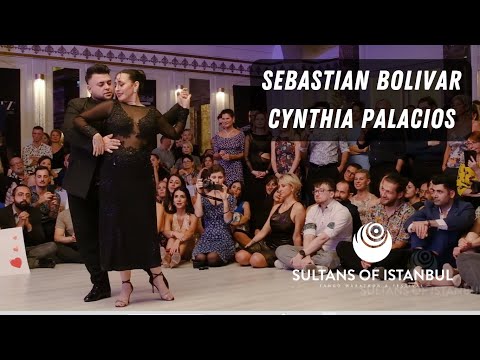
So that was El Pollo Ricardo. Sensational. Really exciting. Imagine dancing to that live at the Marabu. God, God. And now Shusheta, which this arrangement, I just have no reference points for it. I can't say, oh, it's like this or it's like that. It's a work of genius. Let's just listen.

Closed the Di Sarli set as an arrangement Lavocah called a 'work of genius' with no real comparison point.
♪ Music · 2:00 · The lyrics, on the song's page
Wow! There's just nothing like it. How did they think of that? How did they think of that? So, guys, I'm going to play my farewell song, and then it's good night. So Dag, thank you once again for a really beautiful, surprising and joyful evening. Same, Michael. Thank you so much.
And I'm so grateful to everyone who joins us, because listening to music on your own, it's not the same as listening with other people. It really isn't. When there are two people gathered together with focused attention, those of you who do that will know that it's different when there's two of you in the room rather than one. So I enjoy this very much. I'm not going to answer any more of the technical comments now. Sorry, that's enough for tonight. That's the big hit. Okay.
So, Dag, you posted on Facebook a track that you said, well, regretfully, I'm not going to have time to play this tonight, but here's something great that we can't play. And tell us the title of that track again with Mercedes Simone. I can't remember. It was something about when there's no hope left, something like that. Yeah, I slipped my mind. A tango whose message was absolute hopelessness. So I'm going to play something the opposite.
So in the United States of America, one of the biggest hits in 1940 was a song about hope. And let's remember, in 1940, if you're living in the Northern Hemisphere, you're not having a very good time. There's not yet a world war, but it's almost a world war. Occupies the whole of the Northern Hemisphere. Europe and Asia is at war. America's about to be sucked in. But a lot of people just don't know if they'll be alive tomorrow or if they'll see the people that they love ever again. And the biggest hit in the United States in 1940 is this song, which was actually recorded two years earlier but only released in 1940, and it's a song from the film Pinocchio called When You Wish Upon a Star.
The guy who sings it, a guy called Cliff Edwards, known as Ukulele Ike, he has a very, very particular voice. And what I want to say about this voice is that it's completely sincere, and that's how he manages to get away with the delivery that he has. It's not a voice you can find anymore. It's a voice that belongs to a bygone time. And I just want to read to you the middle section, so you all know the bit that goes, when you wish upon a star. But here's in the middle section, the lyric says to us, fate is kind, she brings to those who love the sweet fulfillment of their secret longing. So I dedicate this song to anybody who wishes for something. This song is for you.
“So I dedicate this song to anybody who wishes for something. This song is for you.”
The episode's non-tango closer: 1940's biggest US hit (from Pinocchio), chosen to contrast wartime dread in Europe with a song about hope.
♪ Music · 3:21 ·
Tango By Year is Dag Stenvoll and Michael Lavocah's, published here with their permission. The audio plays from SoundCloud.