Song
El Choclo
El Choclo is an early tango composed by Ángel Villoldo and premiered in 1903 at the El Americano restaurant in Buenos Aires by José Luis Roncallo’s orchestra, presented as a “danza criolla.” It became one of the most internationally successful tangos of the Guardia Vieja, later acquiring definitive lyrics by Enrique Santos Discépolo in 1947 and an English-language adaptation as “Kiss of Fire” that reached number one in the United States in 1952.[1][2][3]
1929: 1, 1; 1937: 2, 15; 1940: 1, 0; 1941: 1, 2; 1947: 1, 0; 1948: 2, 1; 1952: 2, 2; 1953: 1, 0; 1954: 3, 0; 1956: 1, 0; 1957: 1, 3; 1958: 1, 0; 1959: 2, 1; 1960: 1, 0; 1962: 1, 0; 1963: 2, 0; 1964: 1, 0; 1968: 1, 0; 1970: 2, 0; 1971: 1, 0; 1973: 2, 0; 1977: 1, 0; 1987: 2, 0; 1998: 1, 1; 2002: 1, 0; 2005: 1, 0
Juan D'Arienzo recorded it in 1937, 1948, 1954 and 1963. 3 other orchestras recorded it more than once.
How we know
Takes in our catalogue by the same orchestra in different years; the canon’s first orchestra is named.
El Choclo belongs to the earliest documented generation of Argentine tango. Its melody is attributed to Ángel Gregorio Villoldo Arroyo (16 February 1861 – 14 October 1919), a multi-instrumentalist, singer, lyricist and composer who helped transform Spanish tanguillos, habaneras and cuplés into the emerging porteño genre. Some researchers suggest the tune may have circulated as early as 1898 and that the violinist Casimiro Alcorta, an Afro-Argentine musician who died in poverty, contributed to or originated the melody; Villoldo is universally credited with its orchestration and publication. The sheet music appeared around 1905, dedicated to José Luis Roncallo.[1][2][4]
The public premiere took place in 1903 at the fashionable Restaurant El Americano on Cangallo Street (today Presidente Juan Perón) near Carabelas. Roncallo, who led a light-classical and popular orchestra, introduced the piece under the title “danza criolla” because the establishment’s management and clientele regarded tango as associated with marginal or brothel settings. Contemporary programs from the venue list “danzas criollas,” and later biographical research on Roncallo confirms he was still in Buenos Aires in 1903 before moving to Rosario. The performance was well received. Villoldo himself did not read or write conventional notation; Roncallo transcribed the melody. The title “choclo” refers in Rioplatense Spanish to an ear of corn. Villoldo’s sister Irene later told singer Juan Carlos Marambio Catán that it was the nickname of a blond-haired pimp active near Junín and Lavalle; other explanations link it simply to the composer’s fondness for the ingredient in puchero. Villoldo’s earliest lyrics celebrate the food itself (“Hay choclos que tienen las espigas de oro…”); a later set of his verses under the title “Cariño puro” exists but did not appear on the original published sheet music.[1][2][5]
During the first decades of the twentieth century El Choclo spread rapidly. Villoldo traveled to Paris in 1907 under contract with the department store Gath & Chaves and made early European recordings. Anecdotes from the First World War period claim that German military bands sometimes played the melody in place of the Argentine national anthem when the proper score was unavailable. In the 1930s Marambio Catán supplied another lyric set that was recorded by Ángel Vargas. The version that became standard in the Argentine repertoire was written in 1947 by Enrique Santos Discépolo: “Con este tango que es burlón y compadrito se ató dos alas la ambición de mi suburbio.” Libertad Lamarque introduced it in the Mexican film Gran Casino directed by Luis Buñuel; Tita Merello’s interpretation is also frequently cited. Francisco Canaro, Juan D’Arienzo and many other orchestras recorded instrumental and vocal versions throughout the golden age.[1][3][6]
In 1952 the melody was adapted in the United States by Lester Allen and Robert Hill under the title “Kiss of Fire.” The English text is unrelated to any Spanish lyric; the adapters altered the final bars of the first section, added short flamenco-inflected phrases and omitted the third part. The original sheet music acknowledged the Villoldo source. Georgia Gibbs’s recording reached number one on the Billboard chart and sold over a million copies; Louis Armstrong, Tony Martin, Billy Eckstine and others also recorded it. When the Armstrong disc was issued in Argentina the label added the names of Villoldo, Discépolo and Marambio Catán. The adaptation generated later copyright disputes involving performers such as Julio Iglesias. El Choclo remains one of the two most internationally recognized tangos alongside La Cumparsita, regularly programmed by dance orchestras and appearing in film and popular-music contexts worldwide.[1][3][7]
Origins and premiere
Villoldo, born in the Barracas neighborhood of Buenos Aires, was an early pioneer who performed with guitar and harmonica and published collections of criollo songs. The 1903 premiere at El Americano is documented by venue programs and Roncallo’s biography. The “danza criolla” disguise allowed the piece to be heard in a respectable central restaurant at a time when tango was still socially restricted. Authorship claims involving Casimiro Alcorta appear in later secondary literature but lack contemporary documentation confirming priority over Villoldo’s published version.[2][4][5]
Lyrics and international adaptations
Villoldo’s original verses focus on the corn cob as food. Discépolo’s 1947 text reframes the tango itself as a vehicle of suburban ambition and has become the version most often sung in Argentina. The 1952 “Kiss of Fire” adaptation by Allen and Hill transformed the instrumental into a pop standard; its chart success in the United States introduced the melody to audiences unfamiliar with tango. Subsequent Spanish-language versions titled “Beso de fuego” circulated in Latin America.[1][3][6]
Recordings and enduring presence
Early acoustic recordings include those made in Paris in 1907 and later Argentine discs by Villoldo’s contemporaries. Orchestral versions by Canaro, D’Arienzo, Troilo and Piazzolla appear across decades. The piece’s simple, driving melody and clear rhythmic profile have made it a staple of milonga programs and a frequent choice for film scores and crossover projects.[1][7]
References
- 1.El choclo and its curious adaptation into English · todotango.com“The piece was premiered in 1903 – the date appears on a program of the venue – at the elegant restaurant El Americano”
- 2.El choclo · es.wikipedia.org“El choclo es un tango criollo con orquestación de Ángel Villoldo, estrenado en 1903”
- 3.El Choclo · en.wikipedia.org“The song became popular in the United States under the name Kiss of Fire”
- 4.Ángel Villoldo · en.wikipedia.org“His most famous works include El Choclo and La Morocha”
- 5.The legend of a premiere · todotango.com“Generally José Luis Roncallo is remembered by the fact of having premiered the Ángel Villoldo’s tango: El choclo”
- 6.Biography of Ángel Villoldo · todotango.com“But the most important was undoubtedly El choclo”
- 7.El Choclo (Angel Villoldo) · brisbanehouseoftango.com.au“El Choclo was premiered in 1903 at the elegant restaurant El Americano”
Credit
- Music
- Ángel Villoldo
Source: TangoCloud catalogue
Every recording
36 recordings · our catalogue, dances filmed on TangoTube · 72 more we know of
Choose A and B on two recordings to hear them one after the other.
- Juan D'ArienzoMost dancedInstrumental · RCA Victor · Jul 2615 dances1937
- Juan D'ArienzoInstrumental · RCA Victor · May 7Not danced on film yet1948
- Juan D'ArienzoInstrumental · RCA Victor · Aug 13Not danced on film yet1954
- Juan D'ArienzoInstrumental · RCA Victor · Dec 4Not danced on film yet1963
- Carlos Di SarliInstrumental · Music Hall · Apr 21Not danced on film yet1954
- Carlos Di SarliInstrumental · RCA Victor · Jun 30Not danced on film yet1954
- Aníbal TroiloRaúl Berón · TK2 dances1952
- Miguel CalóInstrumental · Odeon · Apr 7Not danced on film yet1964
- Ángel D'AgostinoÁngel Vargas · RCA Victor · Nov 132 dances1941
- Osvaldo FresedoInstrumental · RCA Victor · Sep 11Not danced on film yet1947
- Alfredo De AngelisInstrumental · Odeon · Aug 5Not danced on film yet1952
- Alfredo De AngelisInstrumental · Odeon · May 17Not danced on film yet1971
- Francisco CanaroAlberto Arenas · Odeon · Jan 151 dance1948
- Típica VictorEarliest we holdInstrumental · RCA Victor · Aug 271 dance1929
- Quinteto Pirincho (Francisco Canaro)Instrumental · Odeon · Apr 151 dance1959
- Cuarteto Típico Roberto FirpoInstrumental · Aug 29Not danced on film yet1940
- Domingo FedericoRubén Sánchez, Ruben Maciel · TríoNot danced on film yet1960
- Armando PontierInstrumental · CBS Columbia · Jul 4Not danced on film yet1958
- Enrique FranciniInstrumental · CBS Columbia · Jun 18Not danced on film yet1970
- Enrique FranciniInstrumental · CBS ColumbiaNot danced on film yet1977
Danced to it
Music from 1929–2005 · danced on film 2008–2024
2008: 1, 2010: 1, 2012: 1, 2014: 1, 2015: 1, 2017: 2, 2018: 1, 2019: 4, 2020: 1, 2022: 2, 2023: 2, 2024: 1
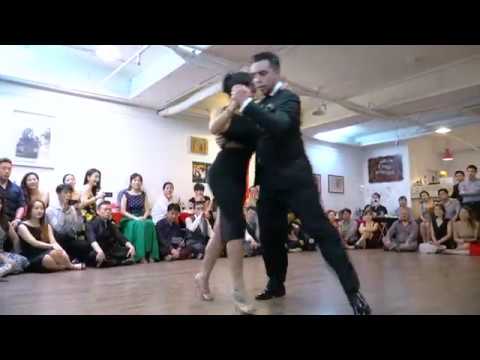


Where it is danced
The places our videos show it danced, by performances filmed there.
Data: recordings, facts and sources
Composer2
Composed by Casimiro Alcorta1898
Sources disagreeComposed by Ángel Villoldo
Sources disagreePublished2
Published score published 19051905
Sources disagreePublished 1905
Sources disagreePremiered at4
Premiered
Sources disagreePremiered at Buenos AiresNov 3, 1903, Nov 3, 1905
Sources disagree · 2Premiered at 3 de noviembre de 1903Nov 3, 1903
Sources disagreePremiered at El Americano restaurant, Buenos Aires1903
Sources disagreeDates16
Partitura editada1905
Sources disagreePublication date1903
Sources disagreeComposed, according to a circulating tradition1898
Sources disagreeCreada1903
Sources disagreeBilled as danza criolla1903, Nov 3, 1905
Sources disagree · 2Billed as danza criolla
Sources disagree · 2Premiere placed in 1903 by some authors and in 1905 by others
Sources disagreePartitura publicada1905
Sources disagreeMelody probably composed1898
Sources disagreeTook place at Casimiro Alcorta
Sources disagreeTook place at Ángel Villoldo1903, Nov 1905
Sources disagree · 3Written circa 1898–19031898–1903
Sources disagreeTradition of composition1898
Sources disagreePage heading year1903
Sources disagreePresented as danza criolla
Sources disagreeTango.info work Date1947
Sources disagreeEras and styles1
Belongs to Guardia Vieja
Single sourceCommented on1
Commented on La morocha
Single sourceFirst recording1
First recorded 1910
Single sourceIn other catalogues1
tango.info · T0370007990
Single sourceListen
- El chocloTípica Victor1929
- El chocloJuan D'Arienzo1937
- El chocloQuinteto Don Pancho (Francisco Canaro) · no clip yet1937
- El chocloCuarteto Típico Roberto Firpo1940
- El chocloÁngel D'Agostino · Ángel Vargas1941
- El chocloOsvaldo Fresedo1947
- El chocloFrancisco Canaro · Alberto Arenas1948
- El chocloJuan D'Arienzo1948
- El chocloAlfredo De Angelis1952
- El chocloAníbal Troilo · Raúl Berón · no clip yet1952
- El chocloEduardo Del Piano · no clip yet1953
- El chocloCarlos Di Sarli1954
Ask Tangopedia
Answers only from cited facts, each with its source.